



Spindle Gallery Table
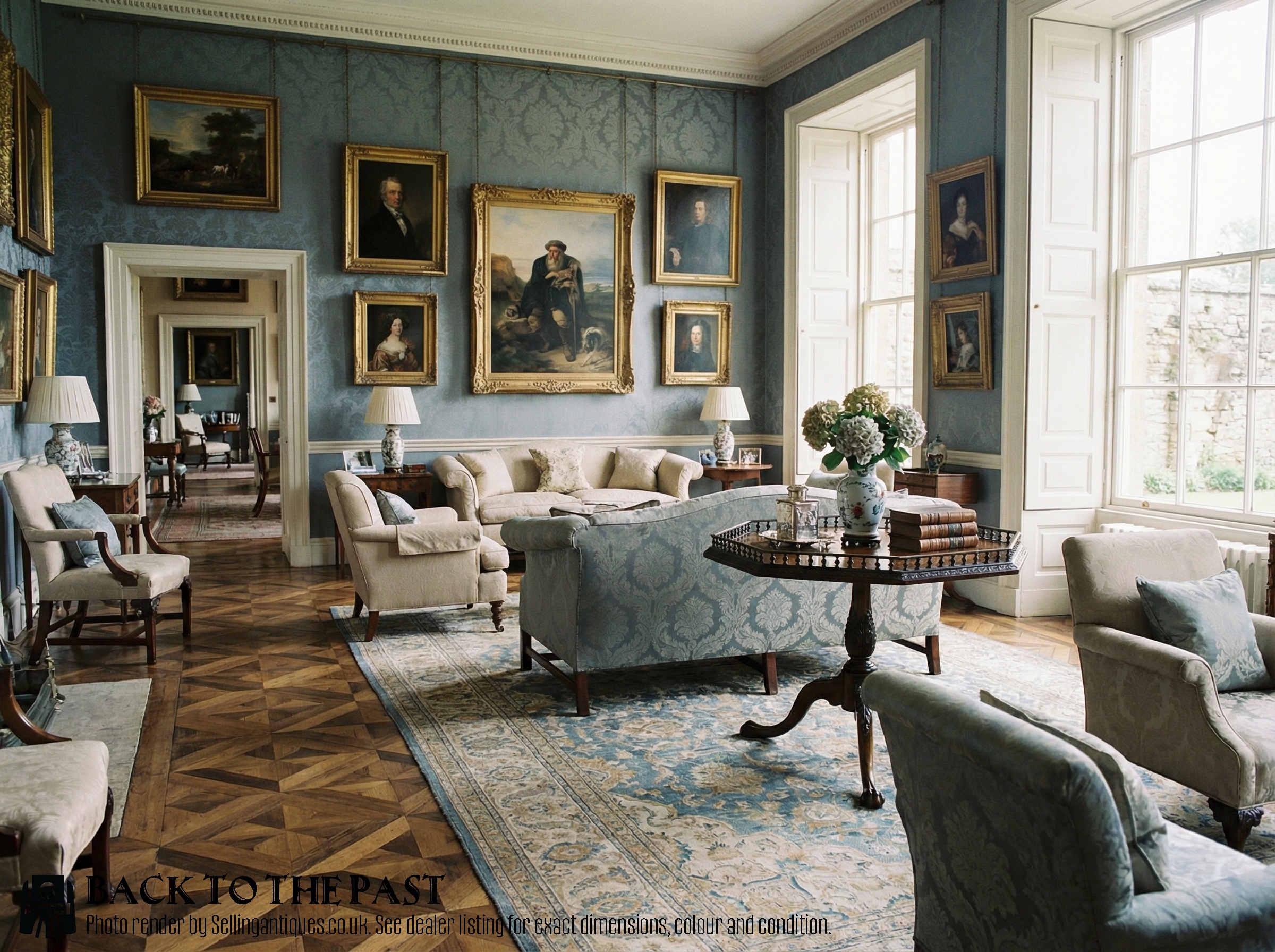
A spindle gallery table brings raised timber surrounds and turned spindles together, offering small-scale display surfaces suited to sitting rooms and libraries.
Spindle Gallery Table
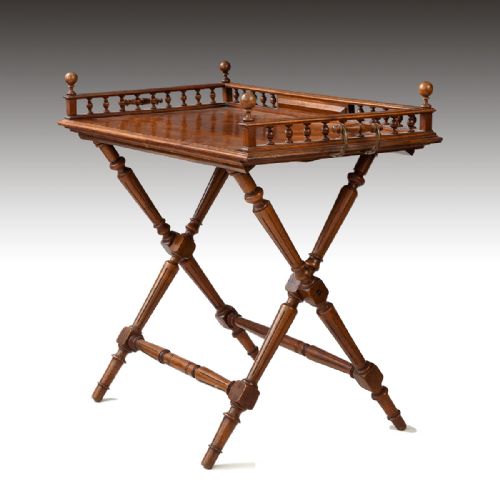
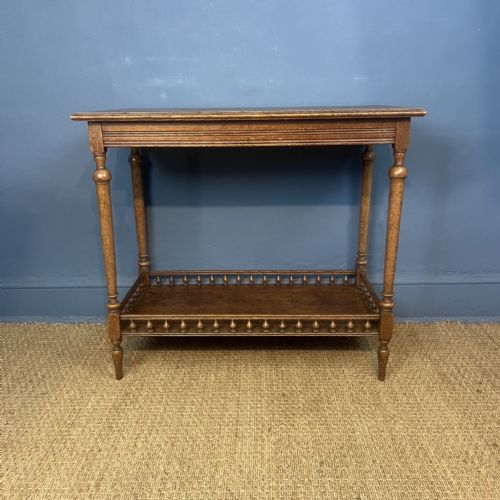
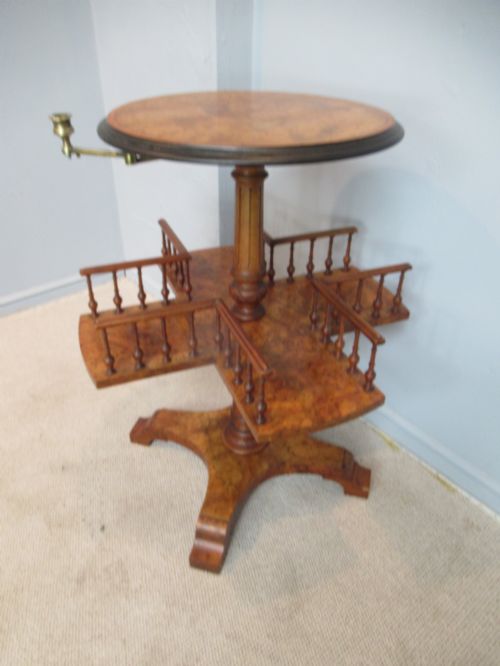
A spindle gallery table provides a compact surface framed by a decorative perimeter of turned wooden spindles and raised ledges. These pieces appear across various forms including occasional tables, wine tables, two-tier tables, and revolving bookstands originating from the eighteenth and nineteenth centuries.
The version most commonly met on this page is the Victorian circular or rectangular occasional table, frequently constructed from mahogany, walnut, or rosewood. Makers of these pieces applied raised galleries to prevent items from sliding off small tabletops used for lamps, books, or decorative objects.
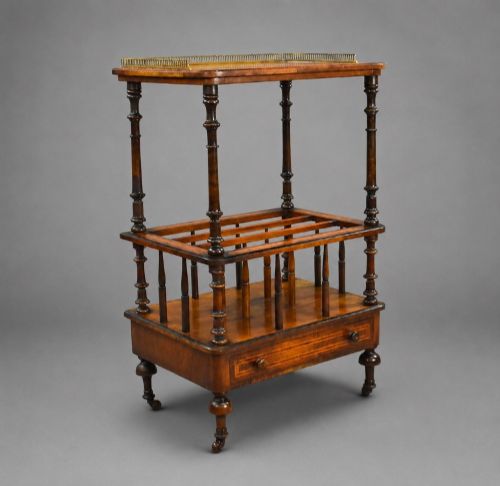
Examples stretch from George III styles through Aesthetic Movement and Victorian designs, encompassing specialised furniture like canterburys, etageres, and bedside cabinets. Each configuration retains the defining raised gallery perimeter that characterises the grouping.
How they were made
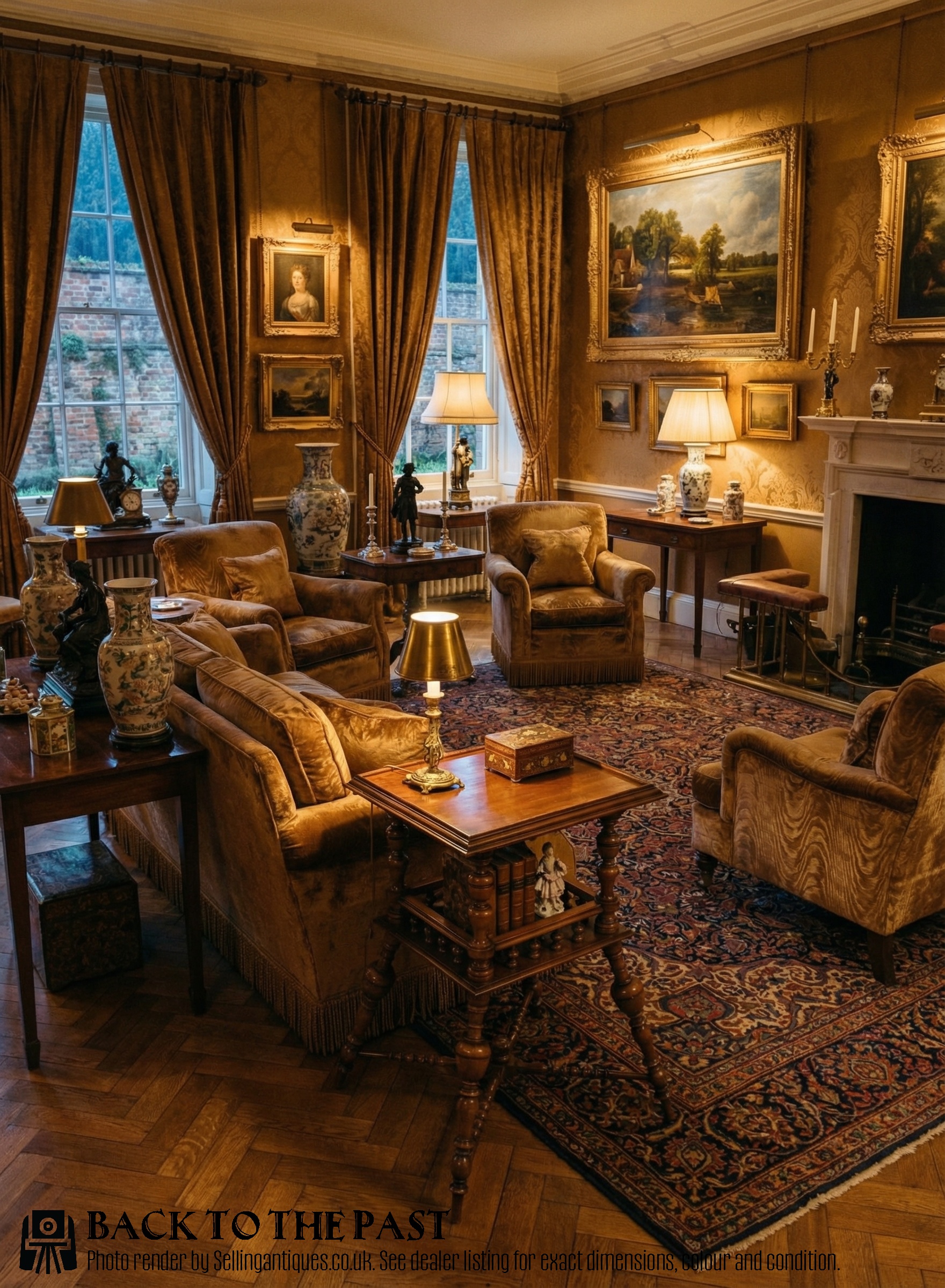
Cabinet makers utilised dense hardwoods such as mahogany, walnut, burr walnut, and rosewood, alongside ebonised wood and oak. These timbers provided the structural stability needed for slender turned spindles and delicate gallery rails.
Joinery techniques combined traditional frame construction with delicate turning for the gallery uprights and brass fittings for castors or hinges. Surfaces were finished to highlight the natural grain of the wood, whether through polished mahogany or inlaid burr walnut.
Spindle Gallery Table Retail Price Guide 2026
Typical asking prices for spindle gallery table among the pieces listed under this phrase on Sellingantiques today, from the lower quarter to the upper quarter. They describe what is for sale here now, not the wider market.
Listings feature pieces spanning the eighteenth to the twentieth centuries, utilising mahogany, walnut, rosewood, and ebonised wood across occasional and side table forms.
What varies in quality
The distinction between standard examples and finer pieces lies in the crispness of the spindle turnings and the selection of timber veneers, such as burr walnut or figured mahogany. Superior items display meticulous attention to joint construction and balanced proportions across multi-tiered or revolving frameworks.
Design sophistication also marks out the better pieces, seen in Aesthetic Movement ebonising or serpentine gallery tops that require advanced woodworking skill. Simpler occasional tables rely on straightforward construction, whereas specialised forms like revolving bookstands and dumb waiters incorporate complex internal turning mechanisms.
Heals
The Spindle Gallery Table Glossary
- Gallery
- A raised miniature balustrade or railing surrounding the edge of a tabletop. It prevents small items from falling and adds a decorative architectural border.
- Canterbury
- A low multi-partitioned stand designed for holding sheet music, books, or portfolios. These pieces often feature spindle galleries on their upper tiers.
- Etagere
- A set of open shelves or tiers used for displaying ornaments and small objects. They typically incorporate delicate spindle supports between levels.
- Dumb waiter
- A tiered serving table with rotating or fixed circular trays mounted on a central pillar. These structures frequently employ raised galleries on each tier.
- Purdonium
- A decorative coal box or cabinet designed for domestic hearth use. Some nineteenth-century examples incorporate stylistic woodwork and elevated gallery details.
Spindle Gallery Table: Frequently Asked Questions
What is a spindle gallery table used for?
These tables function as surface spaces for small lamps, books, and decorative objects in sitting rooms and studies. The raised railing ensures items remain secure on the compact surface.
Specialised forms like canterburys and wine tables also provide designated storage for reading materials and serving vessels within domestic interiors.
How do I date a Victorian gallery table?
Dating relies on examining the timber species, construction methods, and stylistic cues such as Aesthetic Movement ebonising or heavy Victorian turnings. Nineteenth-century pieces often display hand-cut joinery and specific secondary woods beneath the primary veneers.
Comparing the turned spindle profiles and hardware like brass castors against known period examples helps narrow down the decade of manufacture.
Where should I place a gallery table?
These compact tables fit well beside armchairs, in narrow hallways, or as freestanding accent pieces in reception rooms. Their modest footprints allow them to occupy corners and small wall spaces without crowding the room.
Multi-tiered versions work effectively as lamp stands or display surfaces for collections of small ceramics and books.
How do I care for antique mahogany and walnut?
Maintain the timber by keeping pieces away from direct heat sources and sudden humidity changes that cause wood to crack. Dust gently with a dry cloth and apply traditional beeswax sparingly to preserve the polished finish.
Avoid chemical cleaning products that can strip the historic polish and damage the delicate grain of burr walnut or rosewood surfaces.