
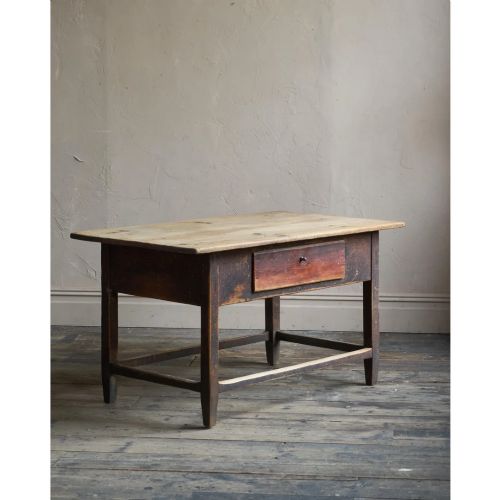
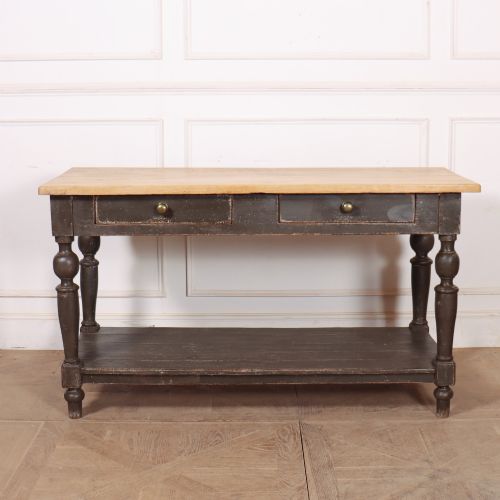
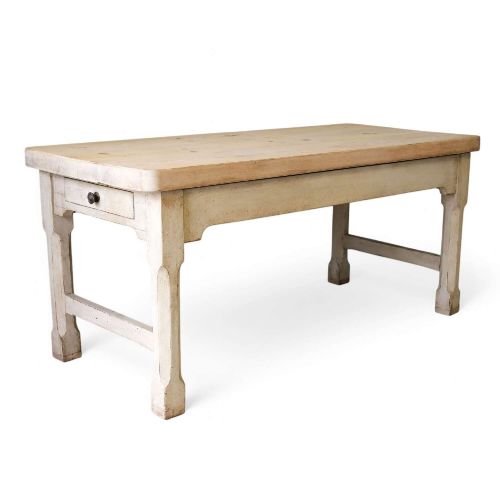
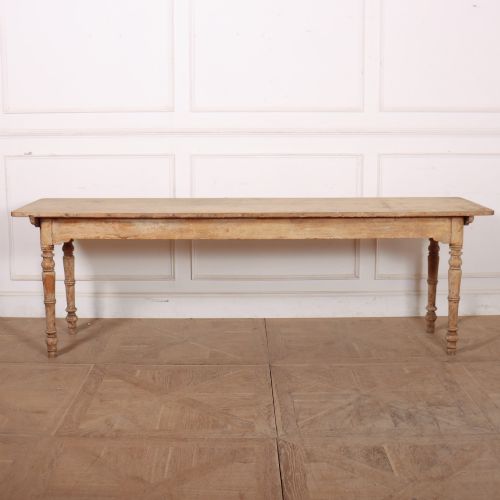
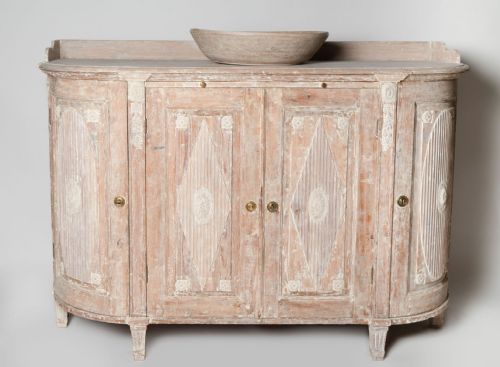
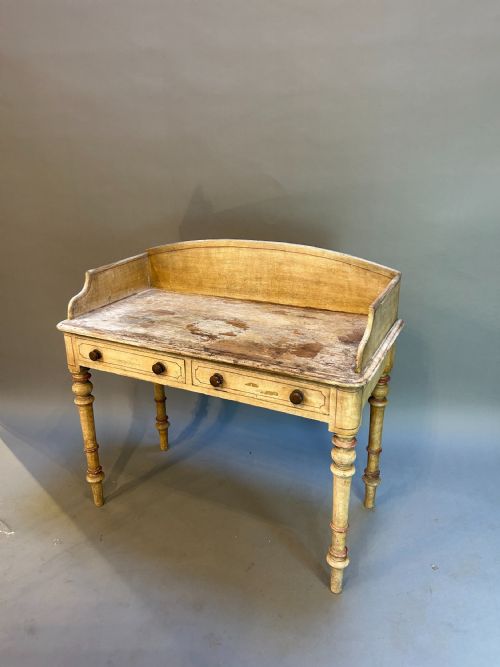
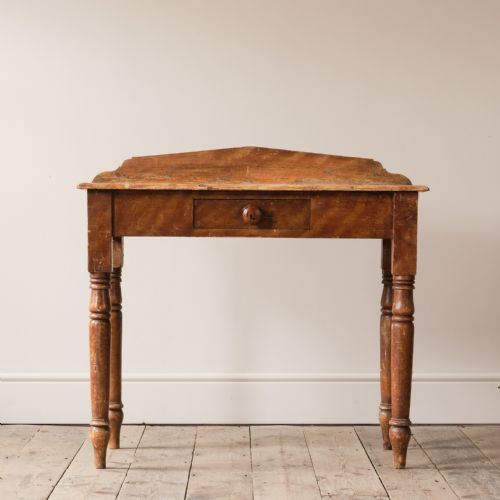

Painted Pine Side Table
A painted pine side table brings warmth to a room through honest timber and weathered pigment, offering a utilitarian surface rooted in country houses.
What They Are
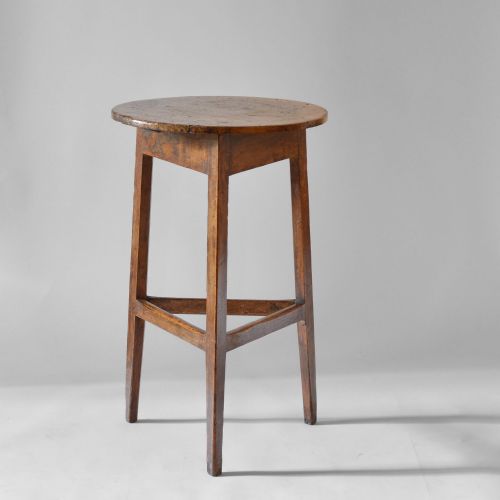
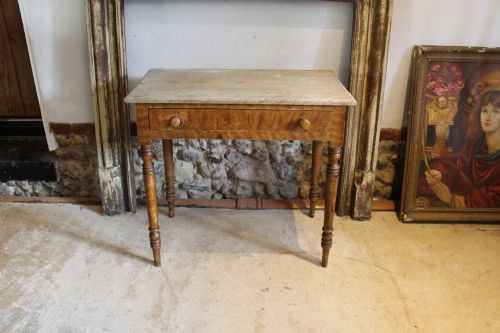
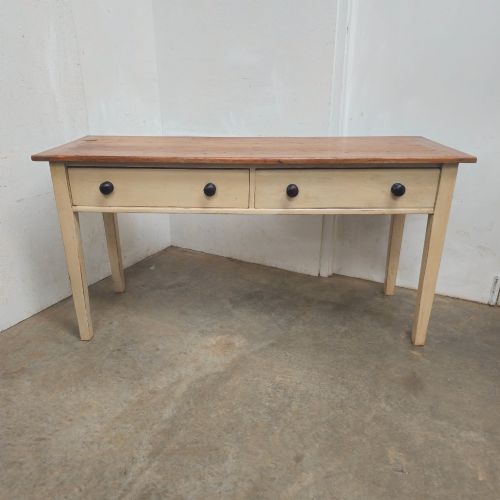
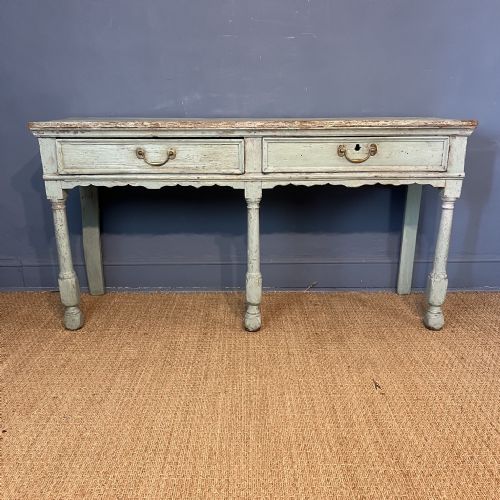
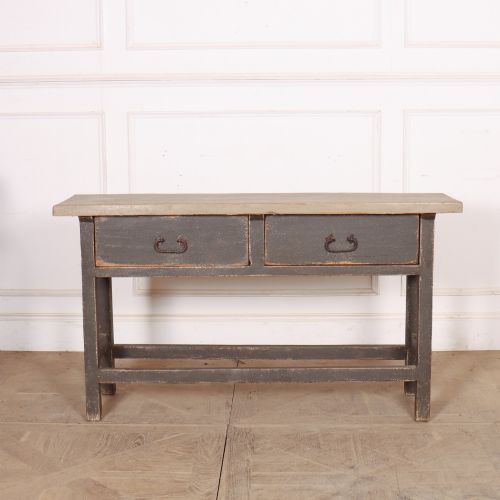
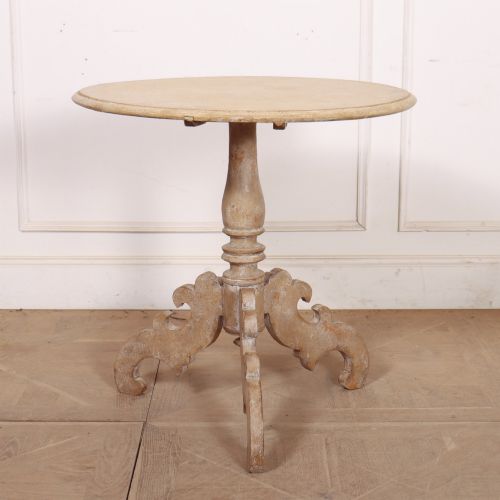
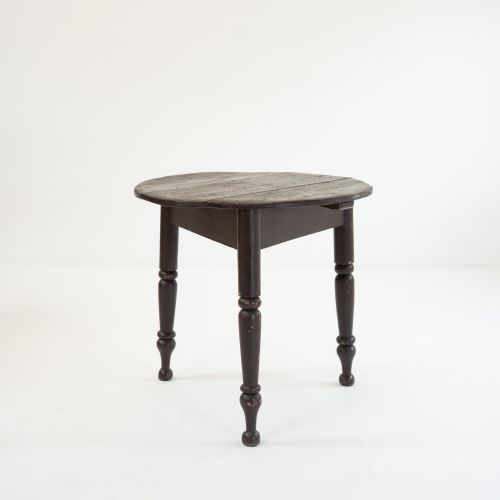
A painted pine side table is a domestic surface built from softwood and finished with pigmented coatings, spanning forms from simple servers to compact cricket tables and console tables. These pieces emerge from English country, British vernacular, Scandinavian country, and Victorian country traditions, alongside Georgian and Regency periods.
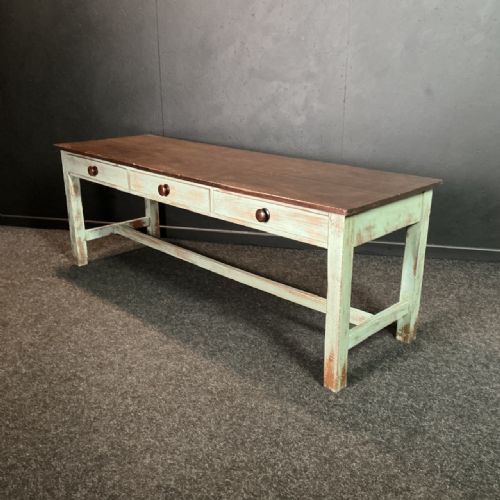
The pieces listed on this page focus heavily on 19th-century examples, complemented by Georgian and 1920s variants. Buyers frequently encounter formats featuring box stretchers, two-tier bedside layouts, or small lamp tables alongside larger console variants.
How They Were Made
Makers constructed these tables primarily using pine, employing iron and brass for structural or decorative fittings such as hinges, handles, or brackets. Surfaces were finished in paint or left as painted wood, often retaining layers of original pigment applied across generations.
Joinery remained straightforward and robust, designed for everyday utility in domestic settings rather than formal display. Structural supports ranged from simple legs to box stretchers, ensuring stability for practical tasks.
Retail Price Guide 2026
Typical UK retail prices for painted pine side table, calculated from the Sellingantiques database of over a million retail prices indexed since 2003. This retail price guide relies exclusively on Sellingantiques data; no external sources or auction records are used, so the figures do not describe the wider market.
Even a humble bedside table can moonlight as a grand console when given a coat of honest blue paint.
What Varies in Quality
The distinction between ordinary and exceptional pieces lies in the survival of original paint surfaces and the integrity of the underlying timber. Tables retaining untouched, layered historic pigment carry greater character than those stripped or aggressively refinished.
Proportion and construction detail also separate standard utilitarian items from finer examples, such as those with shaped aprons, bow fronts, or specialised forms like double-sided writing tables and cricket tables.
Heal & Sons
The Painted Pine Side Table Glossary
- Cricket table
- A small, lightweight three-legged table with a round top, traditionally used in vernacular English settings.
- Box stretcher
- An interconnected frame of horizontal wooden stretchers running between the lower legs to add rigidity to a table.
- Console table
- A wall-mounted or freestanding table designed to stand flat against a surface, often serving as a server or side piece.
- Original paint
- The initial decorative or protective pigmented coating applied to a wooden object, surviving from its period of manufacture.
Frequently Asked Questions
Where did these tables originate?
These tables stem primarily from English, British, and Scandinavian country traditions, reflecting local vernacular furniture-making practices. Workshops produced them for domestic interiors ranging from modest farmhouses to larger country residences.
Designs naturally varied by region and period, encompassing English country aesthetics alongside distinct Scandinavian forms featuring characteristic box stretchers.
How were painted side tables used?
Households utilised these versatile surfaces as side tables, bedside stands, lamp tables, or servers for holding daily objects. Their modest footprint allowed them to fit easily into hallways, bedrooms, and reception rooms.
Some specialised variants, such as double-sided writing tables with drawers, accommodated administrative tasks within domestic studies or parlours.
How do I care for original paint?
Preserving historic painted surfaces requires keeping tables away from direct sunlight, excess moisture, and extreme temperature fluctuations. Gentle dusting with a dry cloth is sufficient for routine maintenance.
Avoid chemical cleaners, abrasive pads, or modern polishes that can soften or lift fragile historic pigment layers over time.
How do I identify a Georgian period table?
Georgian and late Georgian examples typically display simpler, proportioned lines rooted in 18th-century design principles before the stylistic shifts of the Regency era. Construction details, timber density, and the character of the underlying pine help indicate earlier periods.
Original paint layers on these older pieces often exhibit a fine, organic craquelure developed through decades of environmental exposure.