
Victorian Oak Library Table
A victorian oak library table is a heavy, purposeful work surface built to anchor a serious study or large room.
Identifying a victorian oak library table
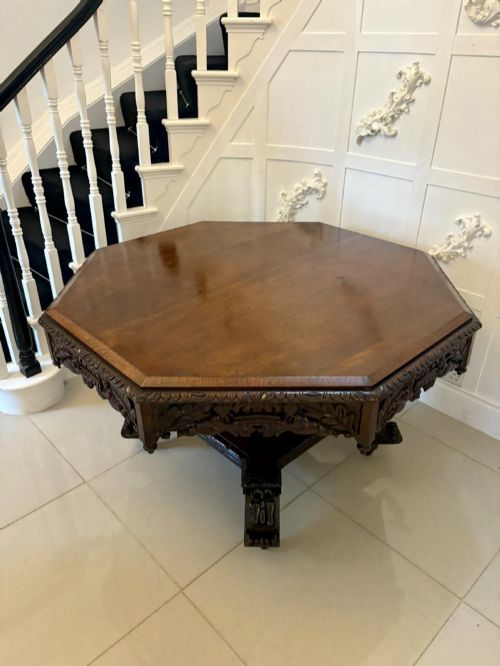
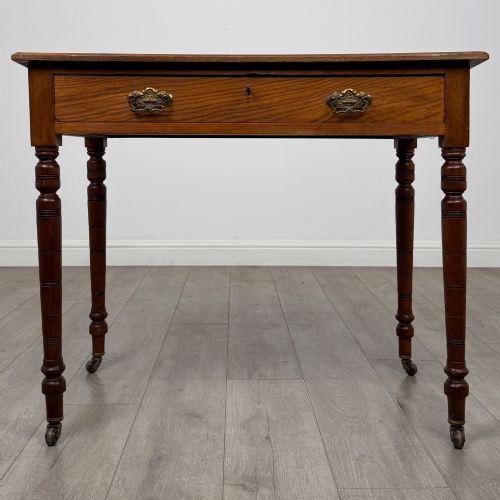
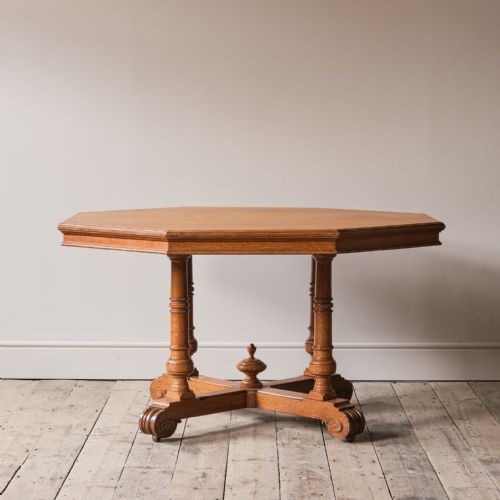
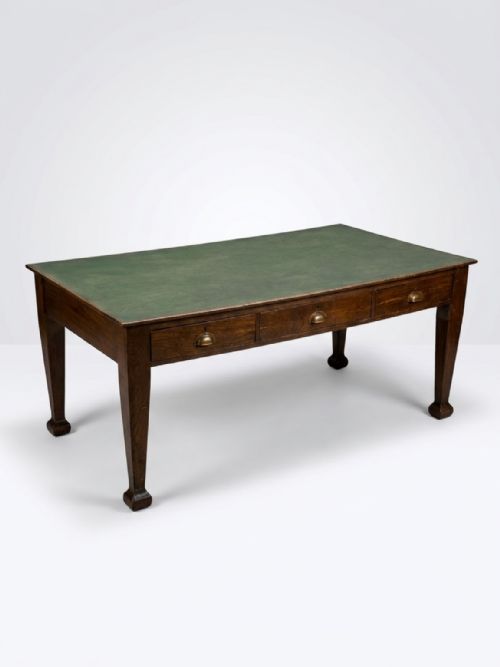
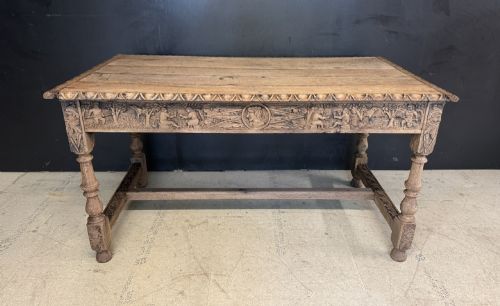
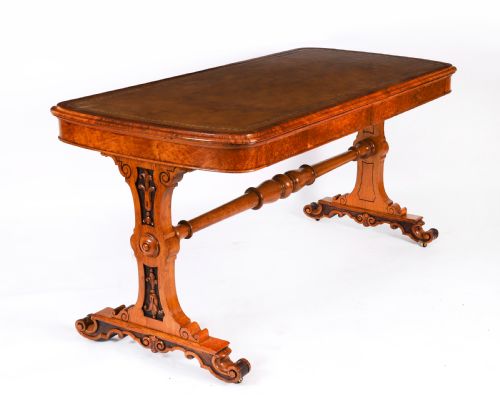
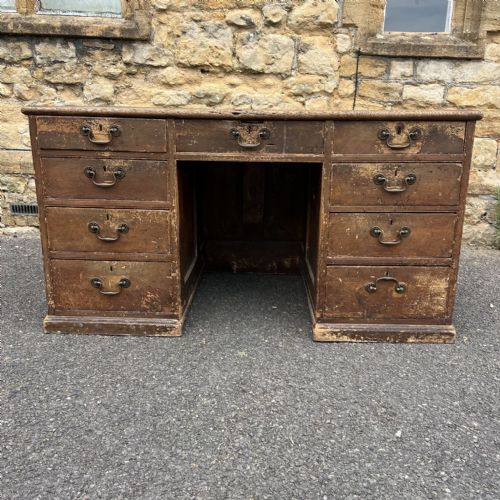
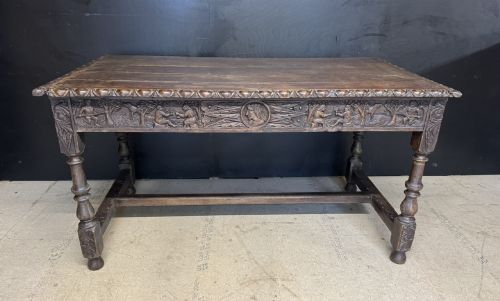
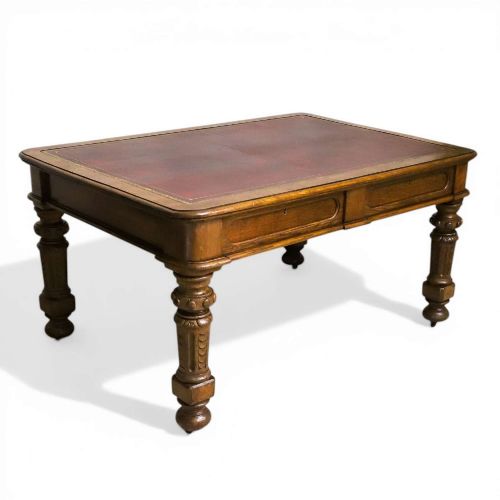
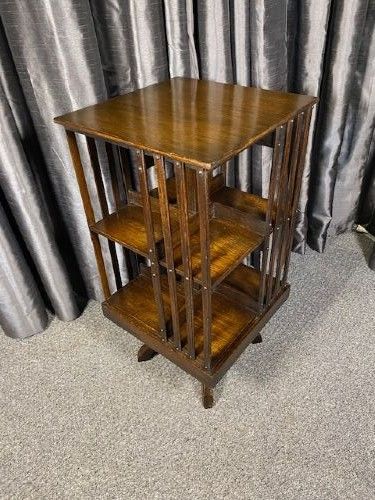
A victorian oak library table is a substantial piece of furniture designed for heavy service, appearing in forms such as writing tables, centre tables, and drum or rent tables. These pieces emerge primarily from the Victorian period, with dates spanning the mid to late nineteenth century.
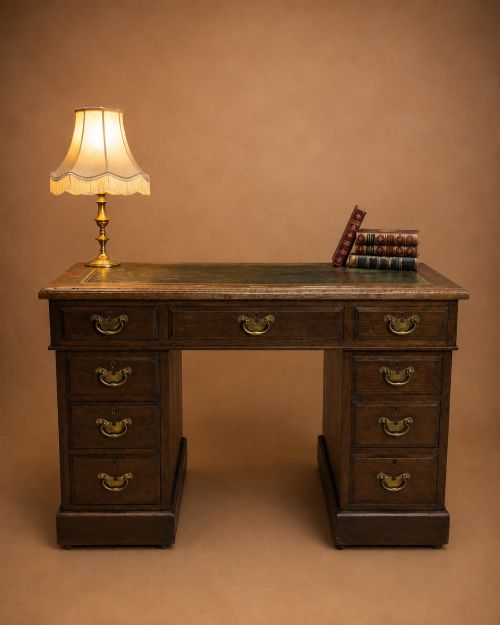
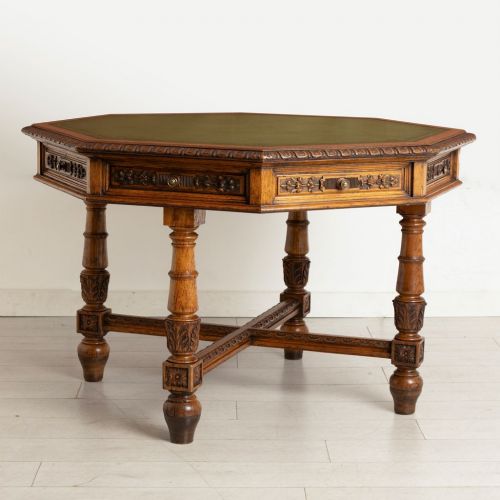
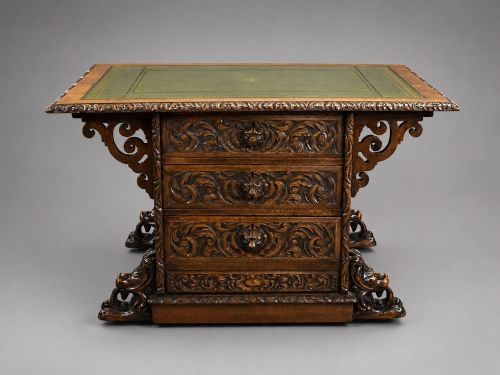
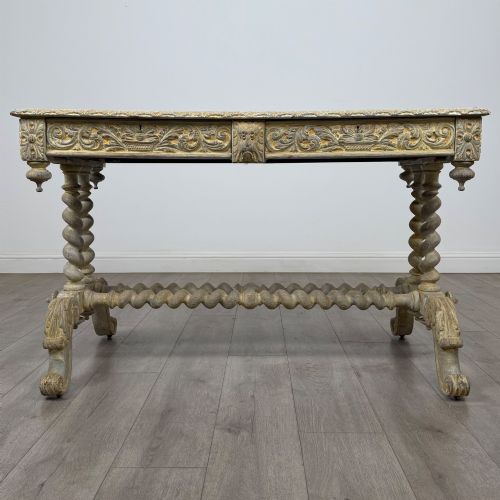
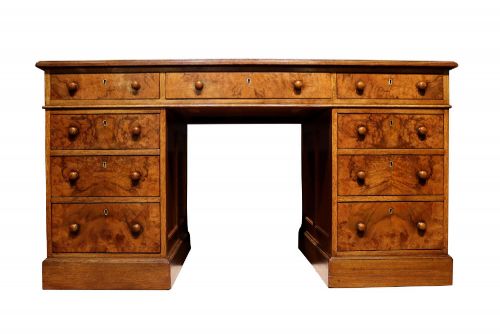
Buyers will encounter rectangular writing formats fitted with drawers, as well as octagonal centre tables. Many examples show distinct Gothic Revival or Gothic Reform influences, alongside variations in light, golden, or ebonised oak.
The scale of these tables ranges from compact side pieces to grand six-foot partner desks suitable for central placement in a room.
Materials and construction methods
Makers utilised solid oak as the primary structural timber, occasionally pairing it with contrasting woods such as coromandel inlay or ebonised wood details. Leather frequently inserts into the upper writing surface to provide a smooth plane for work.
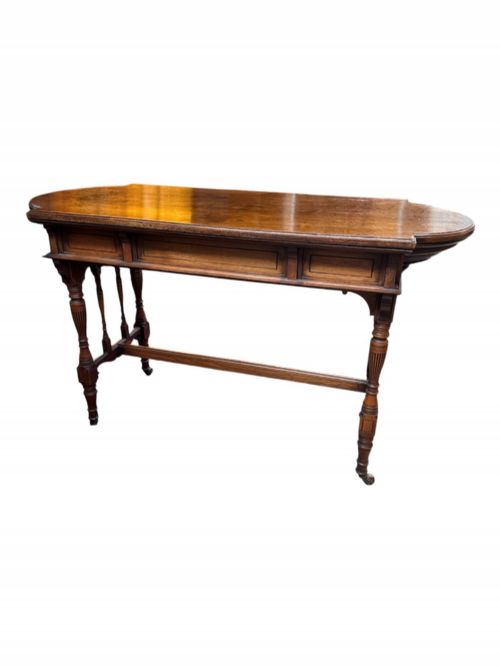
Hardware components incorporate brass, seen in drawer handles, castors, and caps on turned and reeded tapering supports. Carving appears directly on the timber framework, whilst specialised forms employ stretcher bases or dolphin feet for stability.
Retail Price Guide 2026
Typical UK retail prices for victorian oak library table, calculated from the Sellingantiques database of over a million retail prices indexed since 2003. This retail price guide relies exclusively on Sellingantiques data; no external sources or auction records are used, so the figures do not describe the wider market.
Listings feature oak tables from the Victorian period alongside materials including leather, brass, and ebonised wood.
Judging the grade of a piece
Quality rests in the ambition of the design and the crispness of the carved ornamentation, moving from simple two-drawer writing formats to elaborate Gothic Revival octagonal centrepieces. The integration of specialised details, such as brass-handled drawers, quality leather inserts, and secondary timbers like coromandel, elevates a piece.
Proportion and structural framing define the upper tier, where turned and reeded supports meet brass-capped castors with precision, ensuring the table functions effectively as a freestanding centre object.
W Williamson And Sons·Heals·Lamb Of Manchester·Gillows·Waring And Gillow
The Victorian Oak Library Table Glossary
- Centre table
- A freestanding table finished on all sides so it can sit in the middle of a room rather than against a wall.
- Gothic Revival
- A nineteenth-century design style drawing on medieval architectural motifs, pointed arches, and heavy carved ornamentation.
- Drum table
- A circular library table containing a deep frieze with alternating real and dummy drawers, often revolving on a central pillar.
- Partners desk
- A large double-sided writing table designed for two people to work opposite one another with drawers on both faces.
- Reeded support
- A vertical furniture leg decorated with parallel convex mouldings resembling inverted fluting.
Frequently Asked Questions
Where should a library table go?
These pieces function best when positioned centrally in a room or anchored behind a sofa, owing to their finished backs and substantial proportions.
They require adequate floor space to allow movement around their rectangular or octagonal footprints.
How do I care for the leather top?
The leather surface benefits from occasional cleaning with a damp cloth followed by a neutral leather cream to keep the hide supple.
Avoid placing excessive moisture or unpadded hot items directly onto the leather.
Are these tables suitable for daily writing?
The sturdy oak construction and integrated drawer space make these tables highly practical for active daily use as desks.
The writing height and expansive surface accommodate modern study requirements comfortably.
How do I spot a Gothic Revival example?
Gothic Revival pieces display characteristic architectural details such as pointed arches, heavy carved oak, and sometimes octagonal top shapes.
These elements reflect mid-nineteenth-century interest in medieval design forms.