

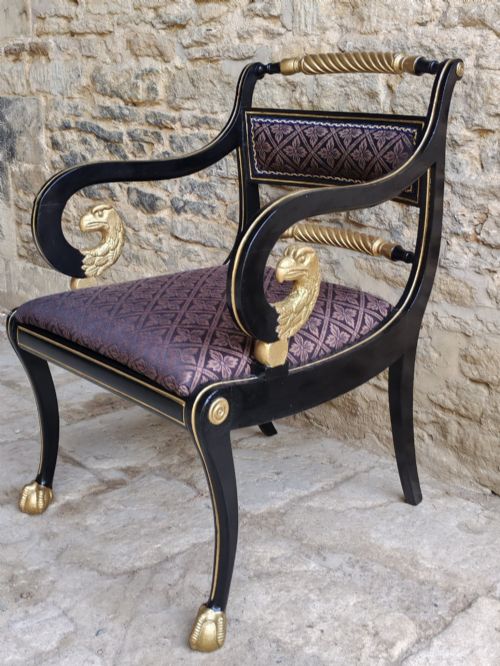
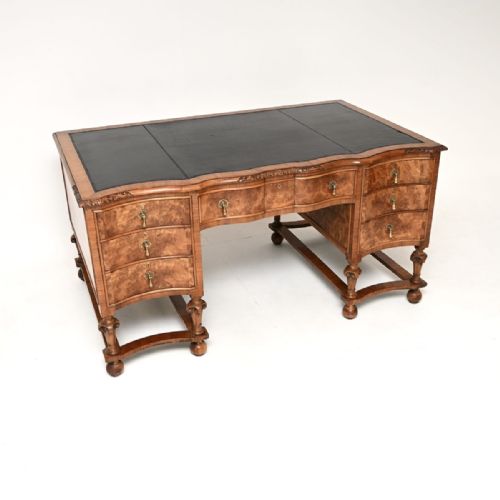
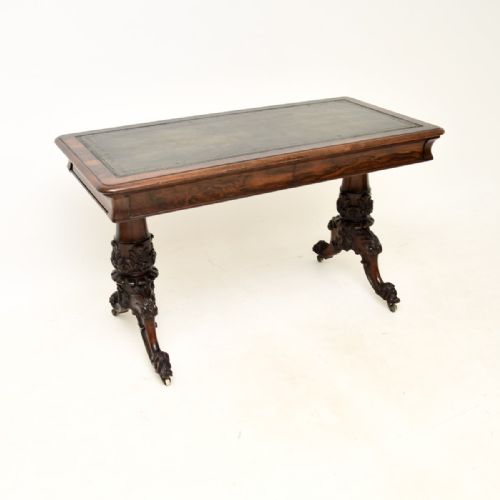
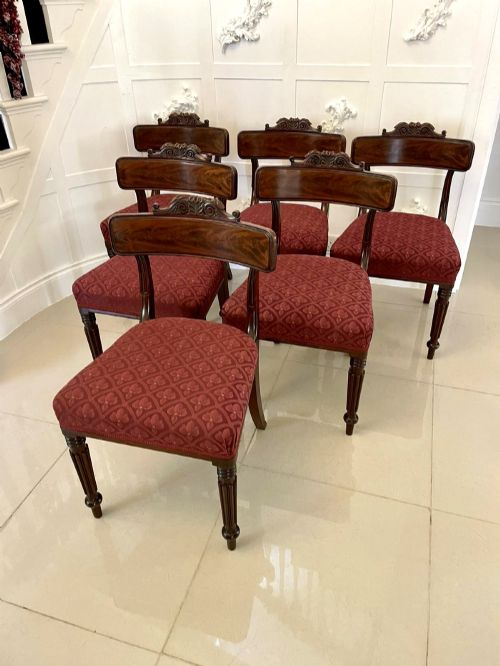
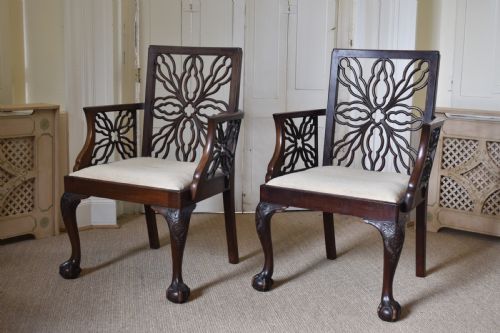
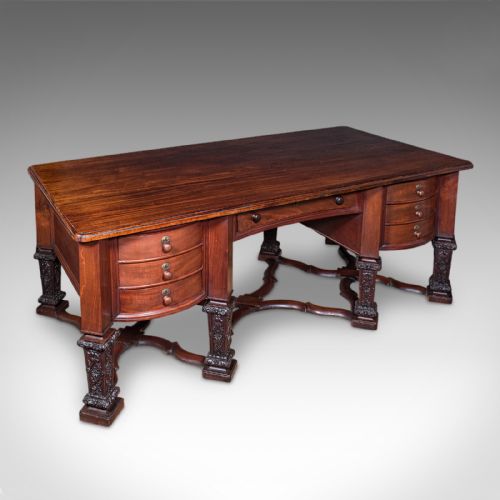
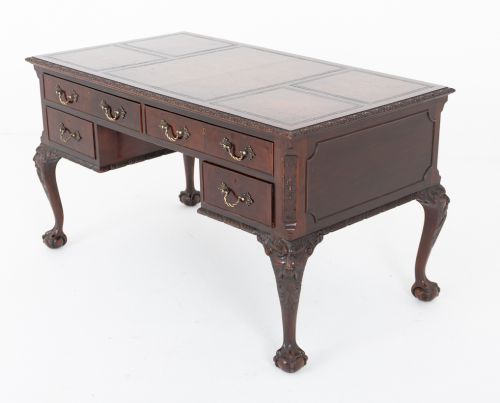
Carved Library Desk
These carved library desk pieces bring solid period presence to a room, offering functional workspace built with rich traditional timbers.
Carved Library Desk
A carved library desk combines heavy timber construction with decorative handwork, often appearing in forms such as partner's desks, pedestal desks, and writing tables.
The pieces on this page span the Georgian, Victorian, and Edwardian eras, reflecting the shifting tastes of centuries past.
Mahogany and oak dominate the selections, frequently paired with inset leather writing surfaces and elaborate pedestal bases.
Materials and construction
Cabinetmakers relied heavily on dense hardwoods like mahogany, walnut, and oak to provide the structural integrity required for heavy library furniture.
Surface decoration frequently took the form of hand-carved mouldings, blind fretwork, and barley twist turnings executed directly into the solid timber framing.
Listings feature pieces spanning the Georgian, Victorian, and Edwardian periods, constructed in mahogany, oak, walnut, and rosewood.
Assessing quality
The standard of carving sets the better examples apart, showing crisp depth and deliberate chisel work rather than soft or mechanical shaping.
Original secondary timbers in drawer linings and consistent patination across the primary wood surfaces indicate superior period integrity.
Maple and Co·Gillows·Mein of Kelso
The Carved Library Desk Glossary
- Partners desk
- A large double-sided desk designed for two people to work opposite one another, typically featuring drawers on both faces.
- Pedestal desk
- A desk comprising a rectangular top resting on two separate pedestals containing banks of drawers.
- Leather top
- A writing surface inset into the wooden top, often gold-tooled and made from coloured hide or leather.
- Blind carving
- Low-relief ornamentation carved directly onto a flat wooden surface without applied mouldings.
Carved Library Desk: Frequently Asked Questions
What is a carved library desk?
A carved library desk is a traditional wooden writing table or pedestal desk featuring decorative hand-carved elements, built during periods such as the Georgian and Victorian eras.
These pieces served as functional workspaces in studies and libraries, combining sturdy hardwood construction with ornamental details.
How do I date a library desk?
Dating relies on examining the secondary timbers, construction methods, hardware styles, and the specific decorative motifs characteristic of eras like the Victorian or Georgian periods.
Cabinetmaking techniques evolved over time, shifting from hand-cut dovetails to more mechanised production by the early twentieth century.
Are these desks suitable for daily work?
Most antique desks provide ample surface area and sturdy construction, making them well-suited for everyday writing and administrative tasks.
Care should be taken to protect the leather or wood writing surfaces using blotters and proper maintenance.
What woods were used for these desks?
Mahogany, oak, and walnut are the primary timbers found across these listings, occasionally supplemented by rosewood or satinwood veneers.
These dense hardwoods were chosen for their durability and capacity to hold intricate carved details.