
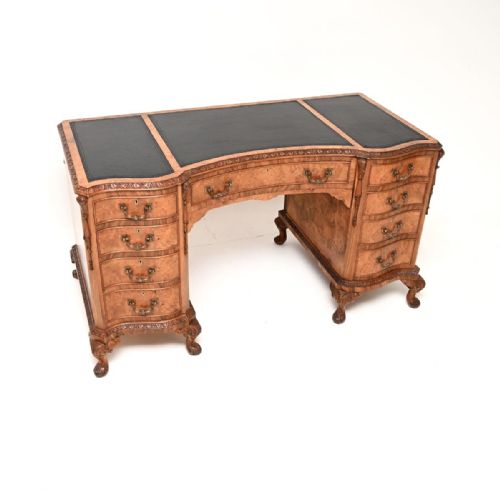
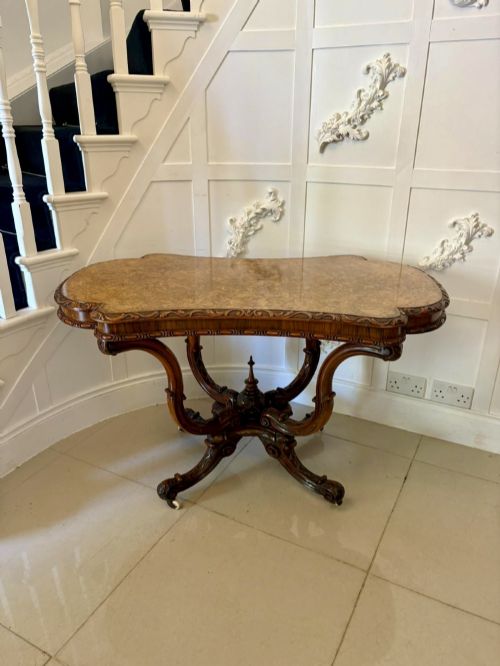
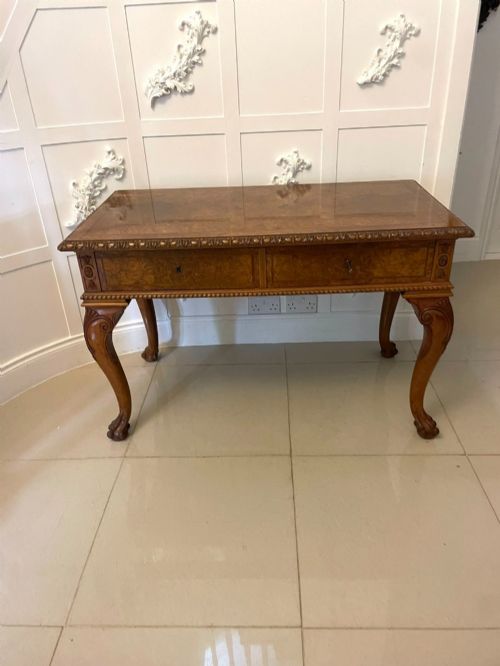
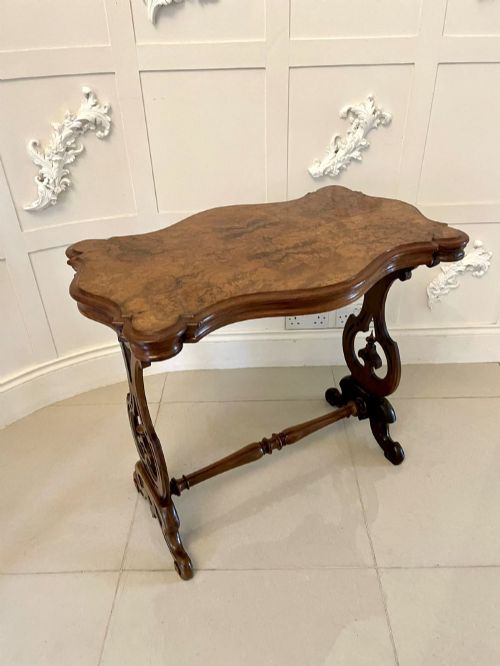
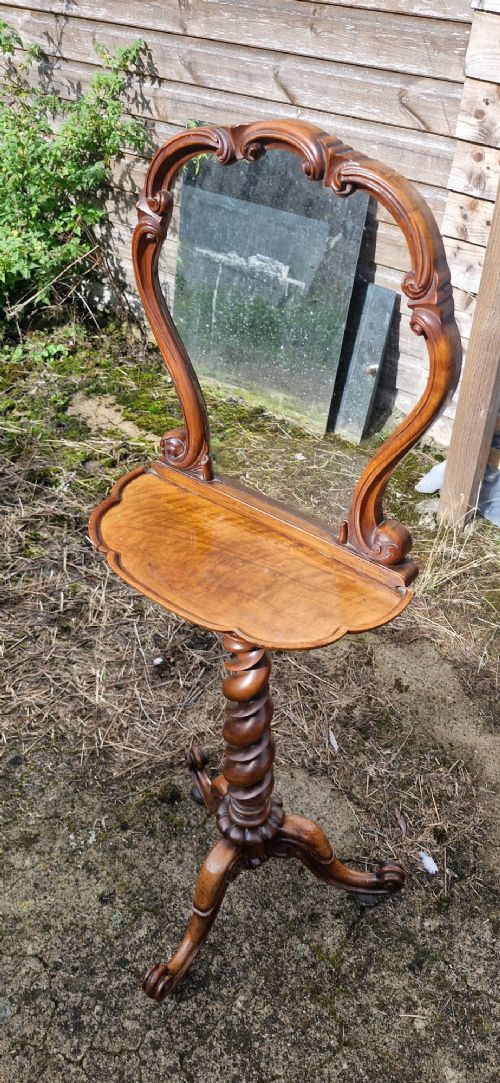
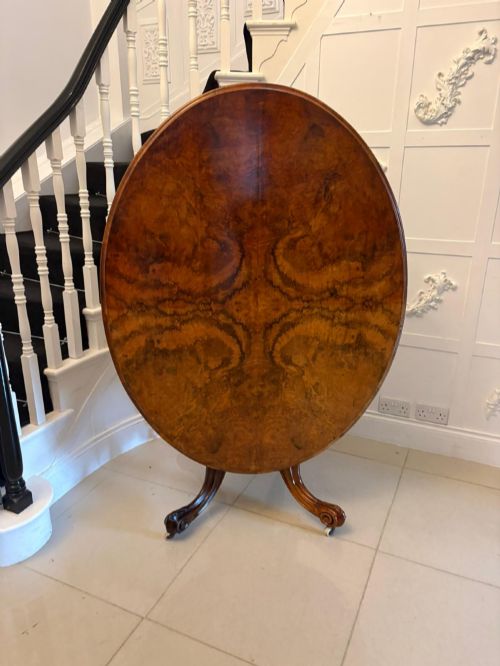


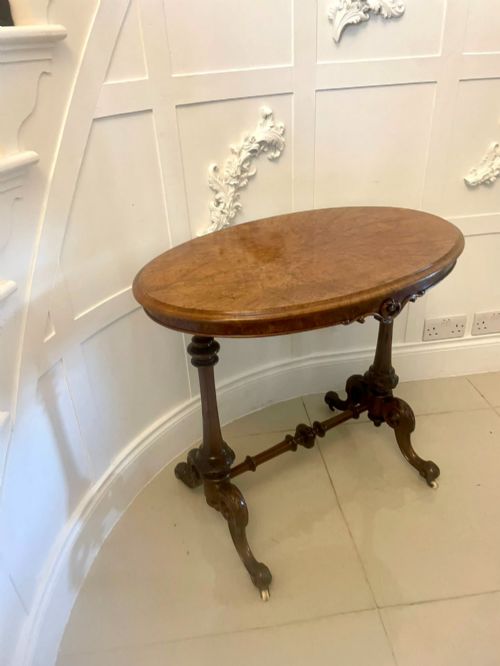
Victorian Carved Walnut Table
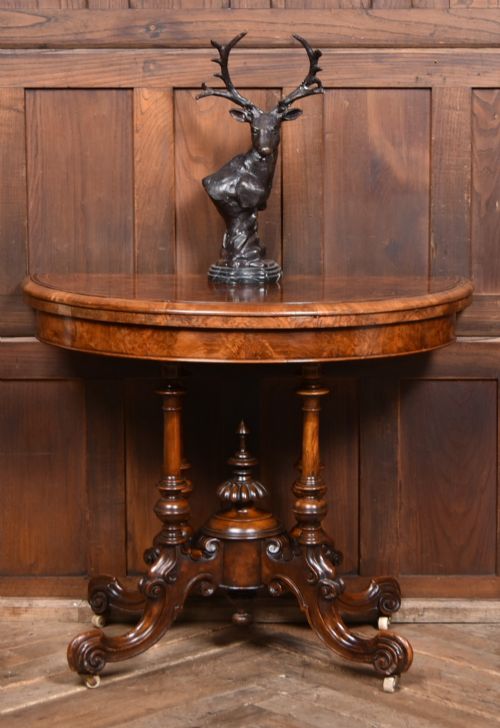
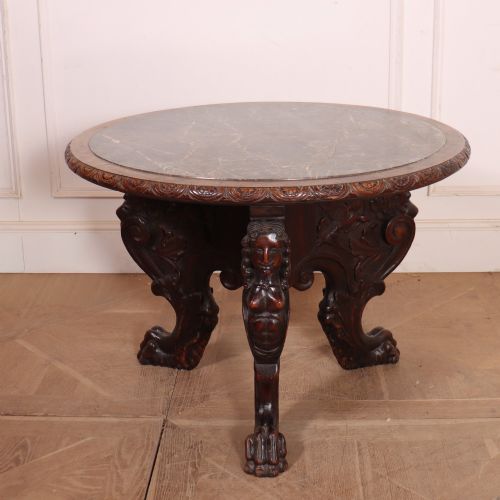
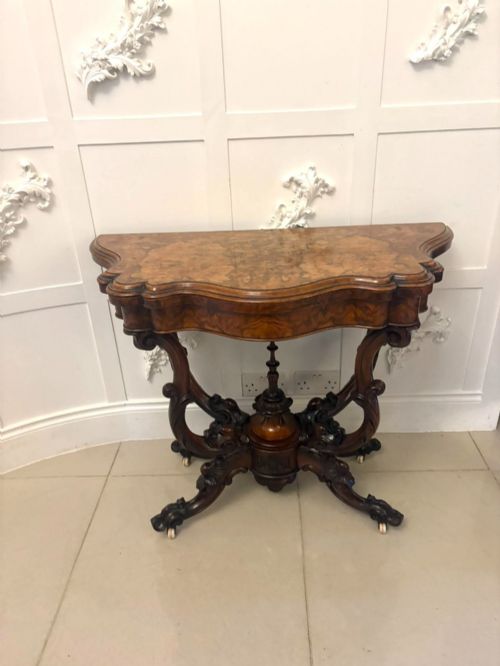
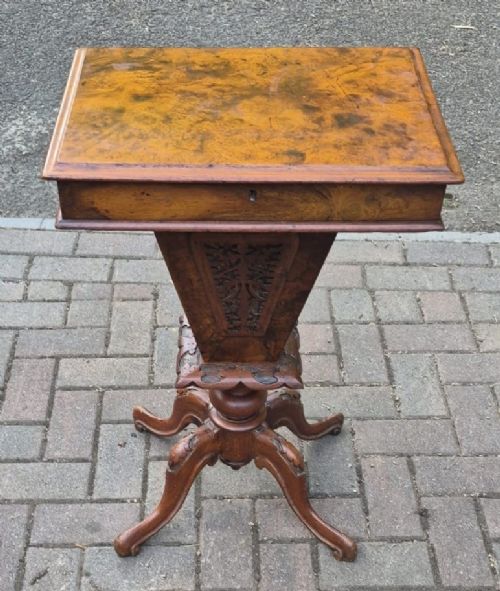
A victorian carved walnut table brings warmth and rich grain to a room through dense, figured timber and confident nineteenth-century carving.
Understanding the Victorian Carved Walnut Table
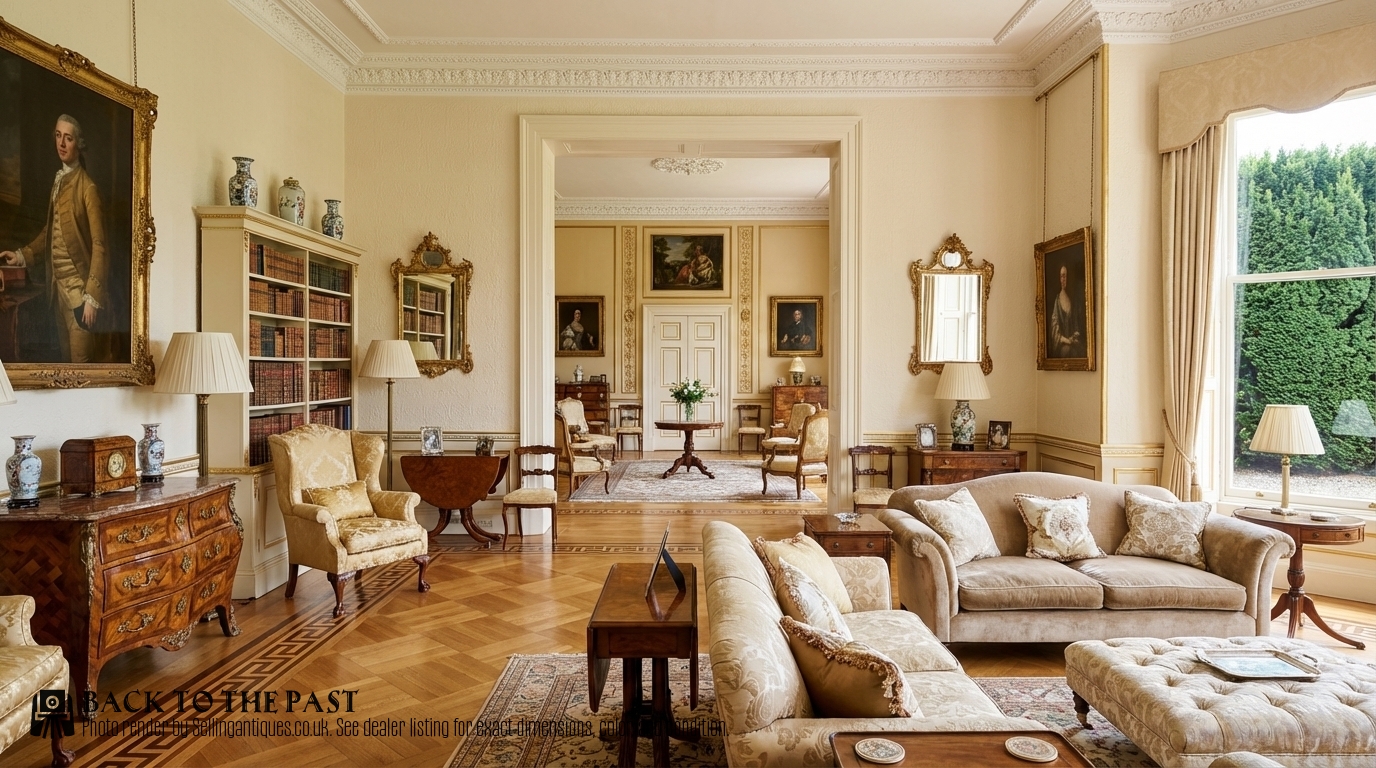
A victorian carved walnut table encompasses a diverse group of nineteenth-century furnishings designed for drawing rooms, parlours, and libraries. Buyers seeking these items will find versatile formats ranging from compact occasional stands to grand centrepieces.
Makers of the period utilised richly figured timbers to construct functional items that doubled as decorative focal points. Whether configured as a card table, a lamp table, or a larger dining piece, each form demonstrates the adaptability of walnut in domestic interiors.
Distinctions in Quality
The finest examples display exceptional exhibition-quality craftsmanship, featuring profuse, deeply chiselled carving and meticulously matched burr walnut veneers across expansive surfaces. These superior pieces often incorporate complex mechanisms or sculptural pedestal bases.
Standard production items demonstrate simpler geometric forms and restrained decorative carving. While soundly constructed from solid walnut or plainer veneers, they lack the dramatic grain selection and sculptural depth found at the top of the range.
Retail Price Guide 2026
Typical UK retail prices for victorian carved walnut table, calculated from the Sellingantiques database of over a million retail prices indexed since 2003. This retail price guide relies exclusively on Sellingantiques data; no external sources or auction records are used, so the figures do not describe the wider market.
The Victorian Carved Walnut Table Glossary
- Burr walnut
- A specialised timber veneer harvested from the irregular growths of a walnut tree, yielding dense, swirling grain patterns highly valued by Victorian cabinetmakers. It forms the decorative top surface on many finer tables.
- Sutherland table
- A narrow drop-leaf table with hinged flaps supported by swing legs, designed to fold down flat for compact storage against a wall. This practical form frequently appears in burr walnut.
- Centre table
- A freestanding piece finished on all sides to sit in the middle of a room rather than against a wall. Victorian examples often feature carved central pedestals and circular or serpentine tops.
- Marquetry
- The art of applying small pieces of veneer to a structure to form decorative patterns or pictures. This technique adorns the tops of select lamp and occasional tables.
- Rococo Revival
- A nineteenth-century design style drawing on mid-eighteenth-century French motifs, characterised by asymmetrical curves, scrolling foliage, and naturalistic floral carving.
Frequently Asked Questions
Where did they put a centre table?
Victorian centre tables stood freestanding in the middle of a principal reception room or parlour, intended to be viewed from all sides. They served as display surfaces for books, lamps, and decorative objects.
In larger houses, these tables occupied the focal point of a drawing room, often positioned beneath a central ceiling rose and chandelier.
How do I use an occasional table?
An occasional table provides a movable surface for everyday domestic tasks, easily shifted to wherever a prop is required in the room. They suit corners, beside seating, or as lamp stands.
Their compact scale allows them to integrate into modern living spaces while retaining nineteenth-century character.
What is a sutherland table used for?
A sutherland table functions as a flexible dining or tea table with drop leaves that lower when not in use. This design saves floor space in smaller rooms.
When the leaves are raised and supported by the swinging gate legs, the surface expands to accommodate dining or writing.
How do I tell Victorian from Edwardian walnut?
Victorian walnut furniture generally displays heavier, deeper carving with naturalistic floral or foliate motifs and substantial pedestals. Construction often relies on solid walnut or thick burr veneers.
Later Edwardian pieces frequently exhibit lighter proportions, more restrained neoclassical inlay, and thinner veneers applied to alternative carcass woods.