






Victorian Green Man Desk
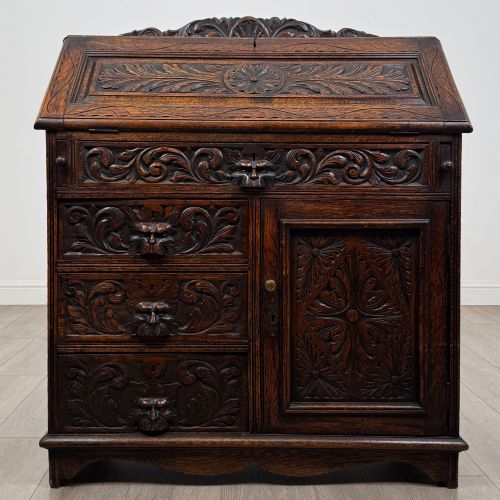
A Victorian green man desk brings imposing forest mythology into the study through bold, deeply carved foliage and mask motifs.

Victorian Green Man Desk
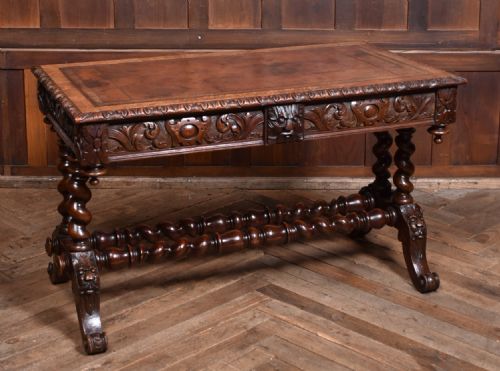
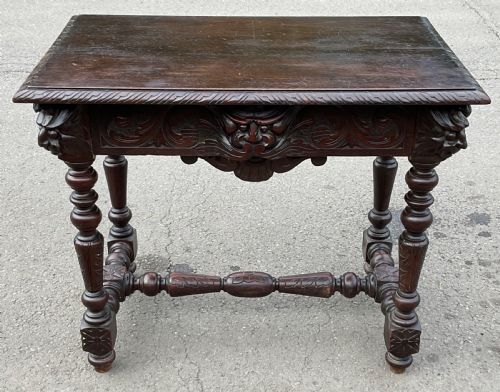
A victorian green man desk is a substantial nineteenth-century writing station defined by carved foliate faces peering from timber panels and drawer fronts. These pieces emerge predominantly in oak, drawing upon revival styles that favoured heavy ornamentation and architectural presence.
Buyers meet pedestal desks, writing tables, and bureaux most frequently across these listings. The form ranges from compact Davenport models and side tables to grand twin pedestal partners desks flanked by lion heads and gothic detailing.
What varies in quality
Proportion and scale dictate the tier of the piece, moving from straightforward side tables up to monumental partners desks with intricate lion head accents and fitted three-part pedestals.
Some green man masks hide secret keyholes behind leafy foliage.
The Victorian Green Man Desk Glossary
- Green man
- A sculptural motif of a human face emerging from or entwined with leaves, vines, and branches. It symbolises rebirth and spring in architectural and furniture carving.
- Pedestal desk
- A heavy writing table supported by two banks of drawers resting on the floor. These forms often provide storage on both sides in partners variants.
- Gothic revival
- An architectural and decorative style popular during the nineteenth century that revived medieval forms, pointed arches, and heavy timberwork.
- Bureau
- A sloping writing cabinet enclosing small drawers and pigeonholes above a set of lower storage drawers. They appear frequently in carved oak iterations.
- Davenport desk
- A compact nineteenth-century writing desk featuring a sloping top hinged over a pedestal of drawers. The side often houses pen trays and stationery compartments.
Victorian Green Man Desk: Frequently Asked Questions
What is a green man desk?
A green man desk is a nineteenth-century writing table or pedestal desk featuring hand-carved foliage masks symbolising nature and rebirth. These pieces emerged during revival periods in solid timber.
Cabinetmakers integrated the masks into drawer fronts, pedestals, and upstands, often pairing them with lion heads or gothic motifs to create an imposing study centrepiece.
How do I style a victorian desk?
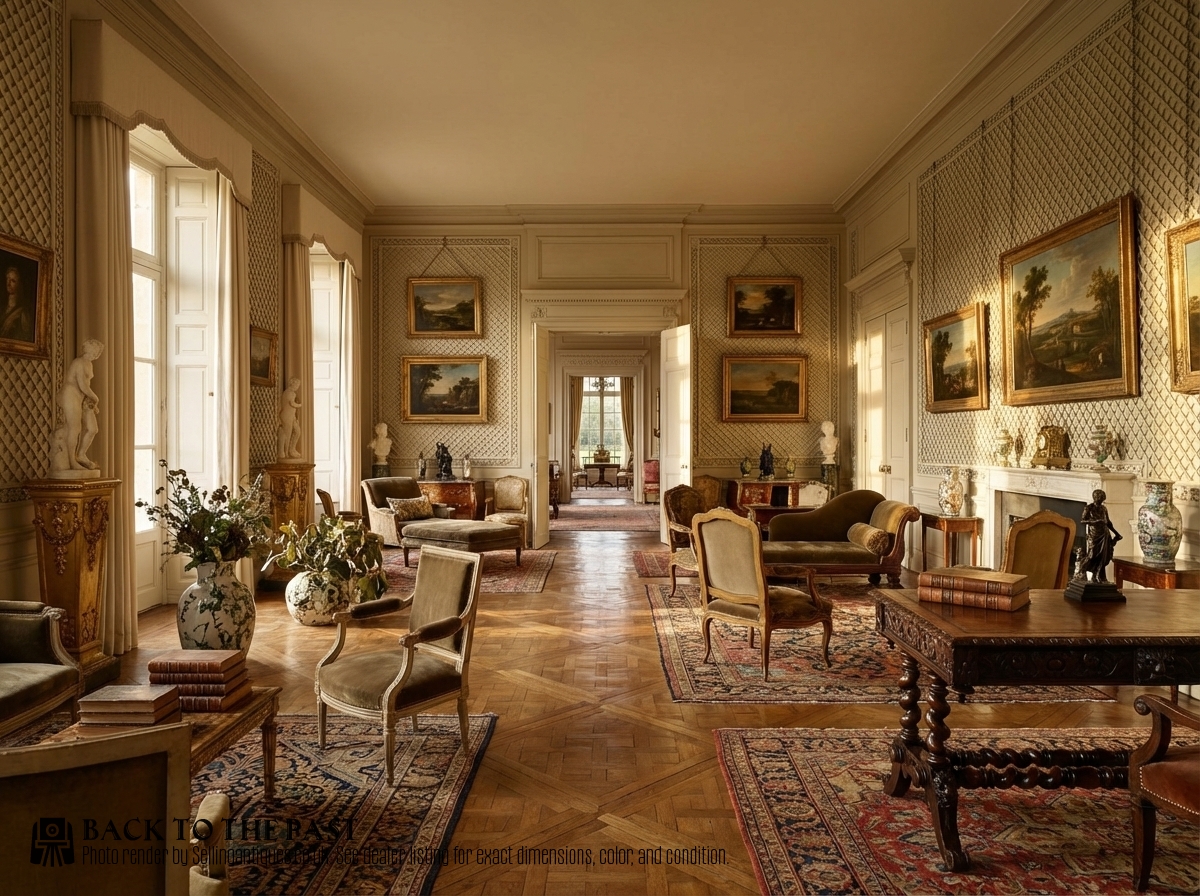
These desks suit traditional studies, libraries, or spacious rooms where their dark timber and heavy carving can anchor the space. Pair them with leather library armchairs and traditional brass desk lamps.
Keep surrounding decor classic to let the detailed woodwork and brass hardware stand out without visual clutter competing against the carved facade.
Are these desks made of solid oak?
Most pieces utilise solid oak as the primary framing and drawer material, though some examples incorporate mahogany or alternative secondary timbers. The density of the wood supported the deep relief carving demanded by the style.
Leather insets and brass castors complete the construction of the larger pedestal and writing table formats found in the records.
How do I date a carved desk?
Dating relies on stylistic markers from the nineteenth century, including Victorian gothic and jacobean revival elements. Construction methods such as hand-cut dovetails and brass hardware also help place the piece.
Many examples date from the middle to late nineteenth century, reflecting periods when ornate carved furniture enjoyed widespread popularity in British homes.