
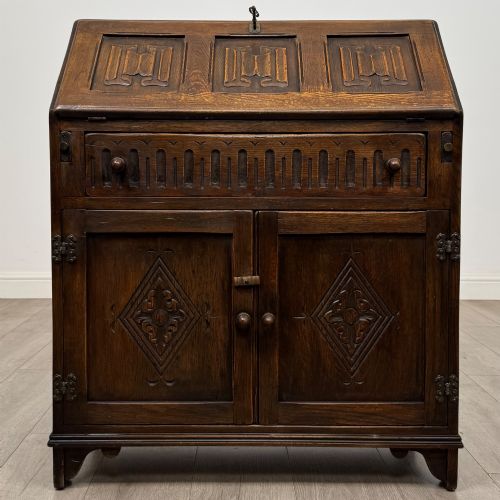
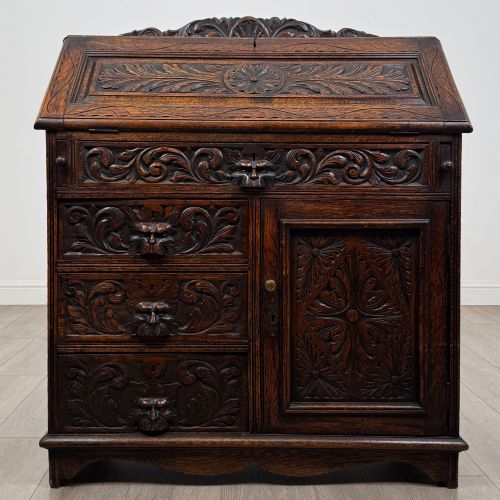
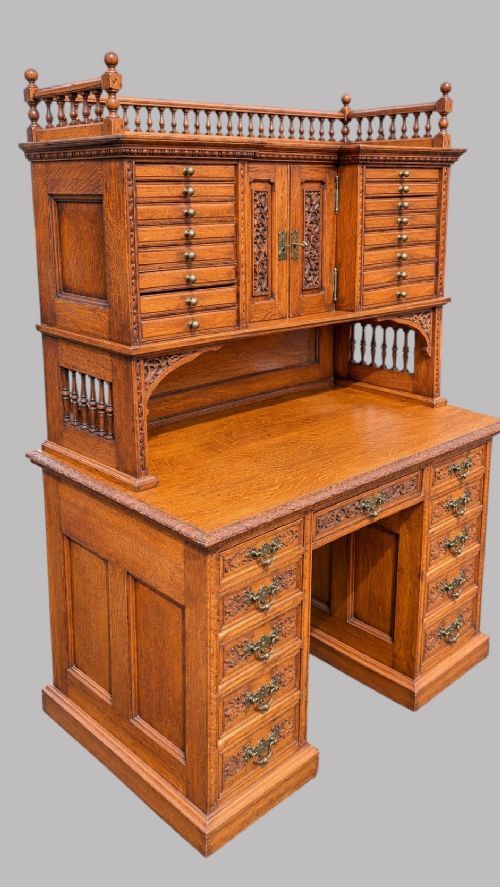
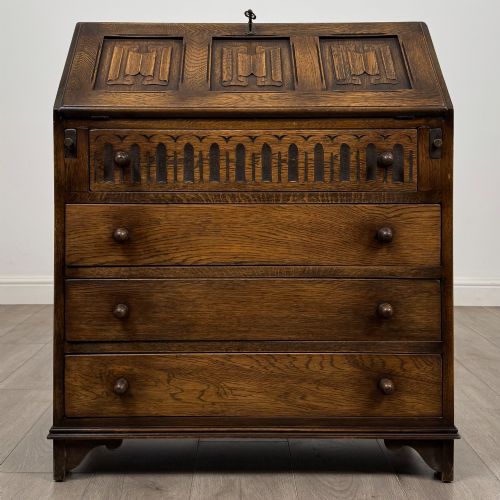
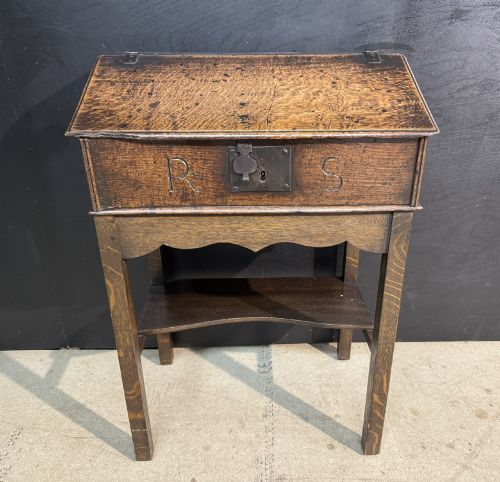
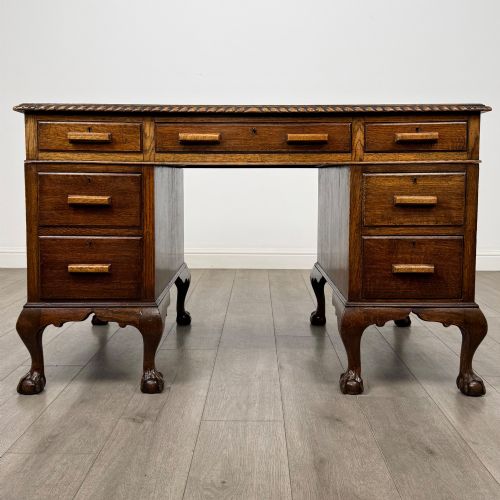
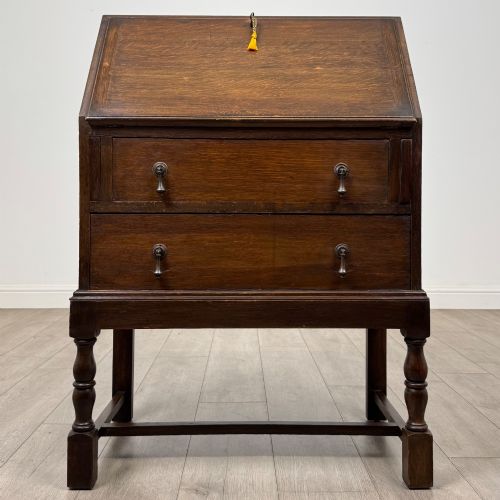
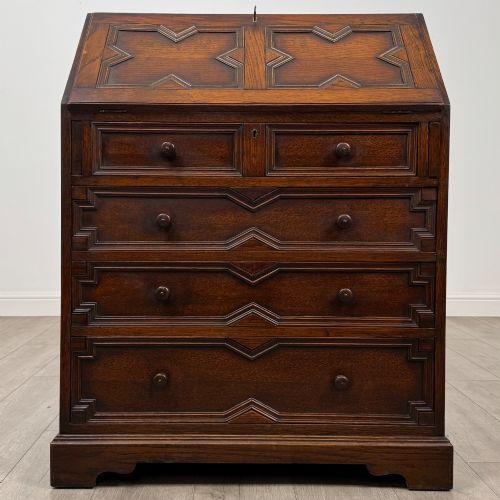
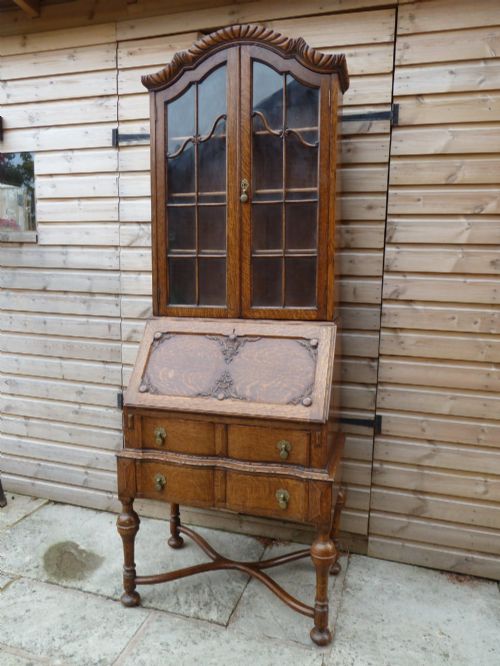
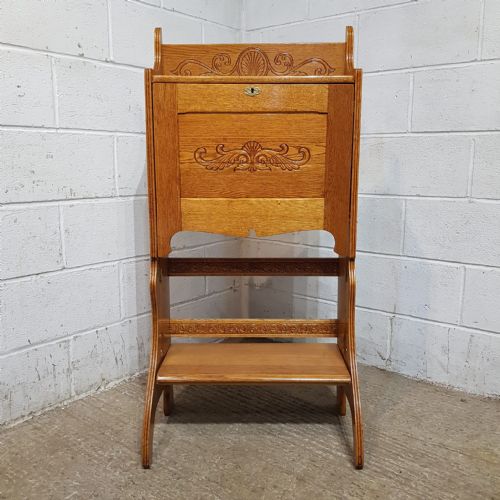
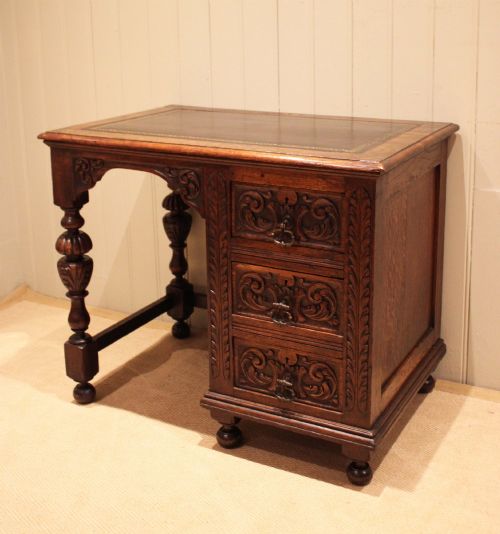
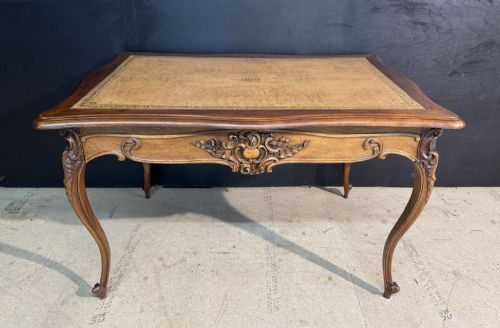
Carved Oak Bureau Desk
These carved oak bureau desk pieces offer fitted compartments and drop-front writing surfaces, combining solid timber construction with historic Revival styles for the home.
What carved oak bureau desk pieces are
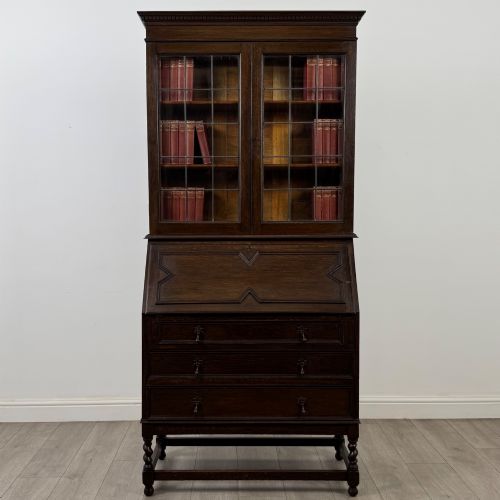
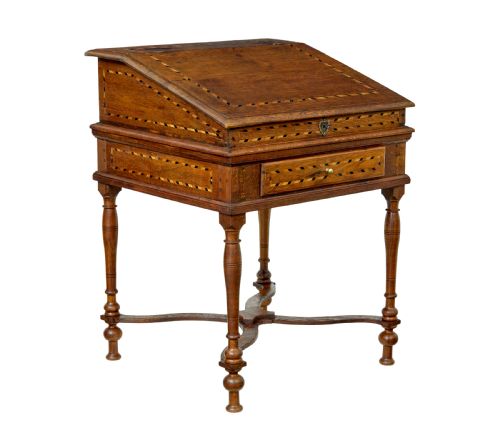
A carved oak bureau desk combines a sloping front flap that lowers to form a writing surface with a series of internal compartments and drawers below. When searching for a carved oak bureau desk, buyers encounter forms ranging from compact writing cabinets to large bookcase combinations featuring dedicated stationery storage.
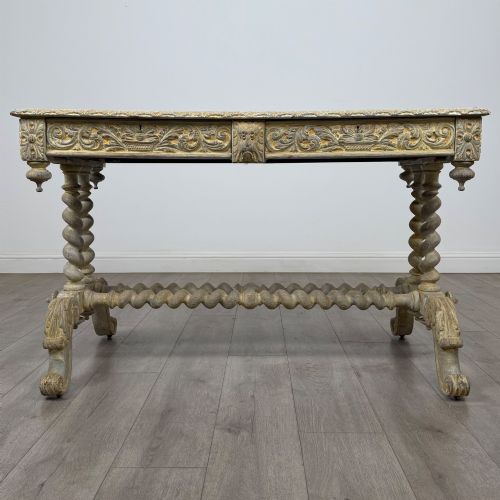
The surviving pieces span multiple eras, including Georgian examples, Victorian interpretations with green man carvings or Flemish Gothic motifs, and later Edwardian or nineteen-twenty iterations. These designs draw upon Jacobean Revival, Renaissance Revival, and Aesthetic Movement traditions, reflecting centuries of cabinet-making heritage.
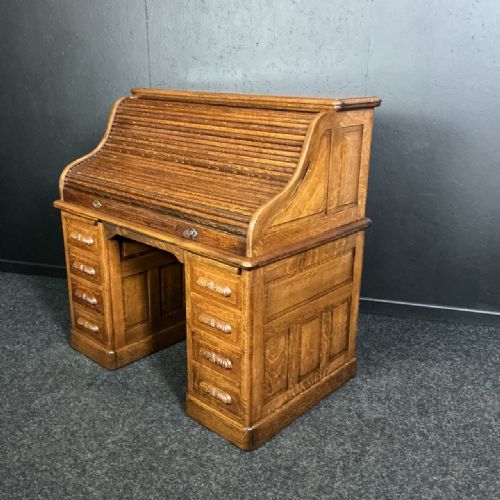
Common formats include standard bureau chests, clerk desks, and tall bureau bookcases with glazed upper sections. Oak remains the principal timber throughout, often paired with brass handles and fitted leather writing inserts.
How they were made
Makers utilised solid oak alongside oak veneer, shaping panels and framing with traditional joinery techniques. Surfaces were heavily carved with strapwork, floral motifs, and mythological figures, particularly within Gothic and Renaissance Revival styles.
Internal components incorporate small drawers, pigeonholes, and occasionally telescopic mechanisms to secure valuables. Hardware such as brass drop handles, escutcheons, and metal hinges completed the construction of these writing pieces.
Retail Price Guide 2026
Typical UK retail prices for carved oak bureau desk, calculated from the Sellingantiques database of over a million retail prices indexed since 2003. This retail price guide relies exclusively on Sellingantiques data; no external sources or auction records are used, so the figures do not describe the wider market.
The recorded pieces utilise oak, oak veneer, brass, leather, metal, and glass across various Revival styles.
What varies in quality
Depth and crispness of the hand-carved ornamentation separate standard production from superior examples. Sharp relief work on panels and mouldings demonstrates the carver's skill, whereas shallow or mechanical stamping indicates lesser execution.
Internal configuration and timber selection further distinguish the pieces. Superior examples feature well-figured solid oak, intricate pigeonhole layouts with secret compartments, and integrated leather writing surfaces rather than plain timber flaps.
Blyth and Son London
The Carved Oak Bureau Desk Glossary
- Bureau
- A writing desk featuring a sloping hinged lid that opens to reveal internal compartments. It typically sits above a set of graduated drawers.
- Bureau Bookcase
- A two-part furniture form combining a lower writing bureau with an upper shelved cabinet, often enclosed by glass doors.
- Aesthetic Movement
- A late nineteenth-century design style emphasising visual beauty over narrative subject matter, sometimes incorporating Anglo-Japanese influences.
- Flemish Gothic
- A decorative revival style characterised by heavy relief carving, architectural arches, and mythical motifs derived from northern European traditions.
- Green Man
- An architectural and furniture ornament depicting a human face carved with leaves and vines, symbolising rebirth.
Frequently Asked Questions
What is inside a carved oak bureau desk?
Opening the drop-front reveals an arrangement of small drawers, pigeonholes, and central compartments designed for storing letters and writing implements.
Many examples also incorporate hidden compartments or sliding wells for securing valuables.
How do I identify the period of a desk?
Dating relies on stylistic clues, construction methods, and hardware types. Georgian pieces tend to show simpler cock-beaded drawer framing, while Victorian and later examples frequently feature heavy relief carving.
Revival styles from the nineteenth and twentieth centuries often borrow motifs from earlier centuries, such as Jacobean strapwork or Gothic tracery.
Where were these desks placed?
These pieces functioned as working furniture in studies, libraries, and home offices for managing correspondence and household accounts.
The drop-front provided a concealed writing surface that could be closed quickly to keep papers tidy when not in use.
How do I care for oak furniture?
Maintaining the wood involves keeping it away from direct heat sources and sudden humidity changes to prevent timber splitting.
Regular dusting and occasional application of appropriate furniture wax preserve the finish and nourish the grain.