
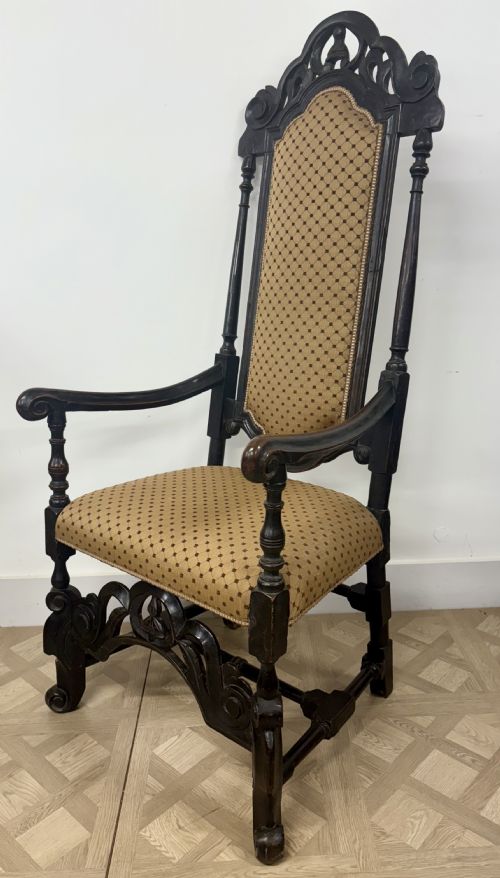
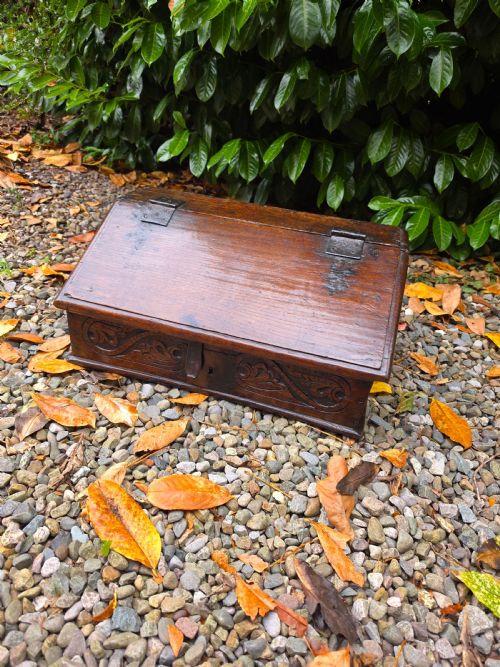
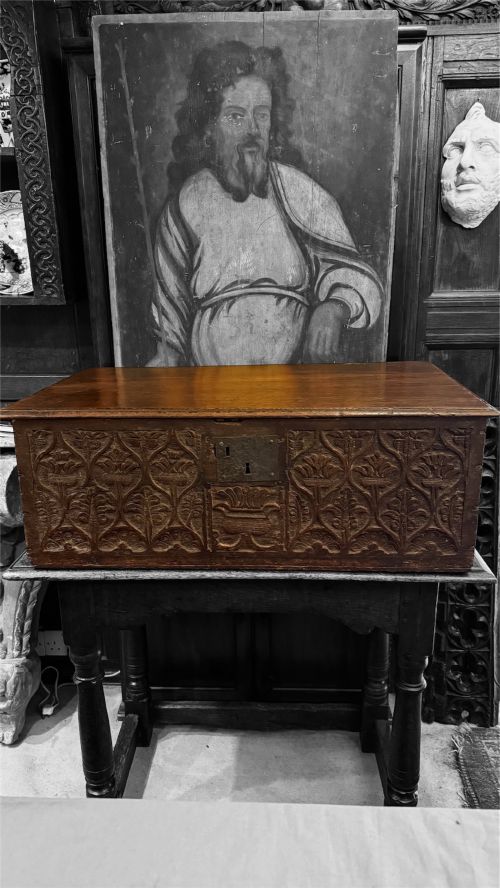
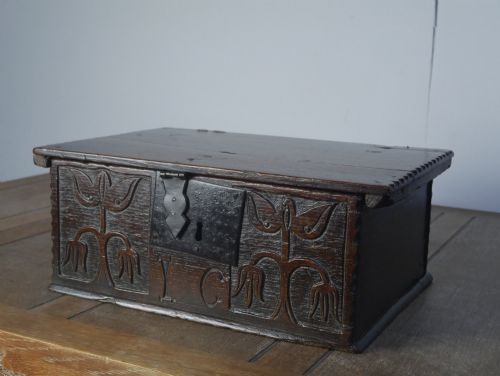


17th Century Carved Desk
These pieces for a 17th century carved desk bring heavy oak and walnut surfaces into a room to hold papers and books.
17th Century Carved Desk
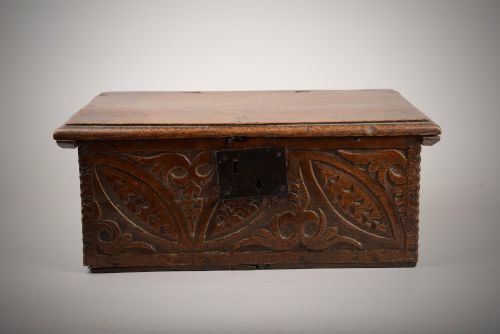
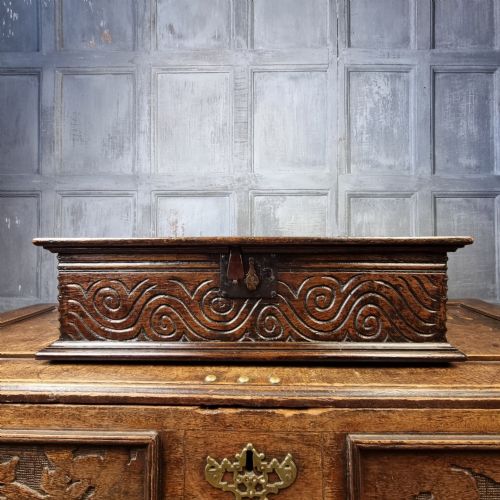
When a buyer searches for a 17th century carved desk, the listings present compact writing slope boxes, slant front bible boxes, and bureau forms alongside walnut cabinets and partner desks. These items span periods from the seventeenth century through later revival eras, reflecting both English and Spanish origins.
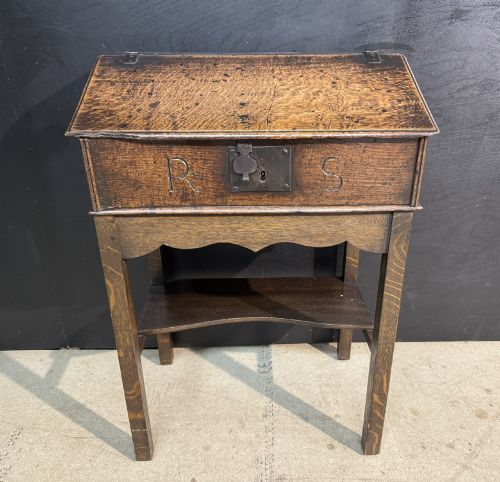
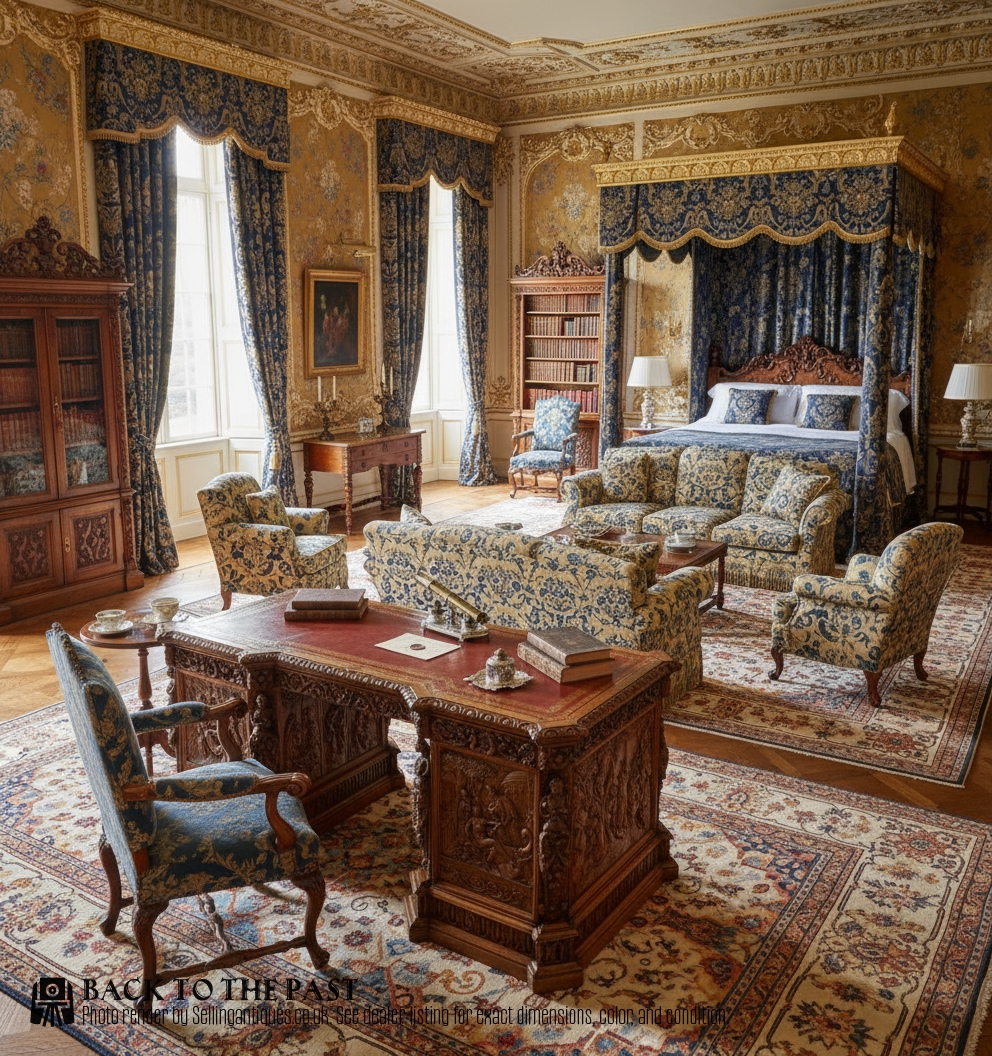
The most frequent forms found in this category are desk boxes and table boxes designed to sit upon existing surfaces for correspondence. Larger bureau forms with fitted interiors and drop fronts also appear, alongside walnut escritoires and partner desks carrying carved panels.
Materials and construction
Solid oak and walnut provide the primary structural timber for these pieces, joined by iron, brass, and wrought hardware such as hinges and locks. Beech and textile elements also emerge in related seating and surface items.
Carpenters utilised traditional joints and hand carving to decorate panels, styles, and rails with geometric or figurative motifs. Surfaces developed patinas over centuries of use, retaining the marks of hand tools and early finishes.
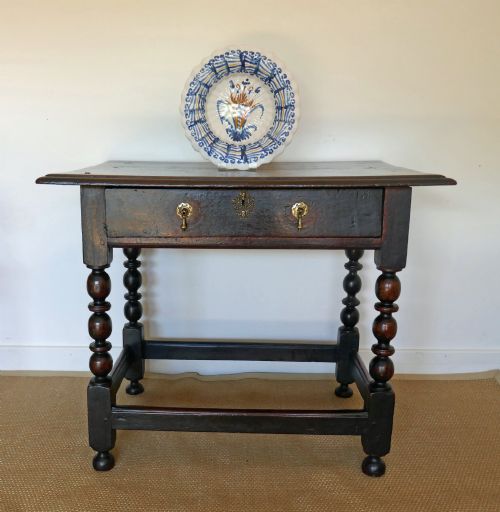
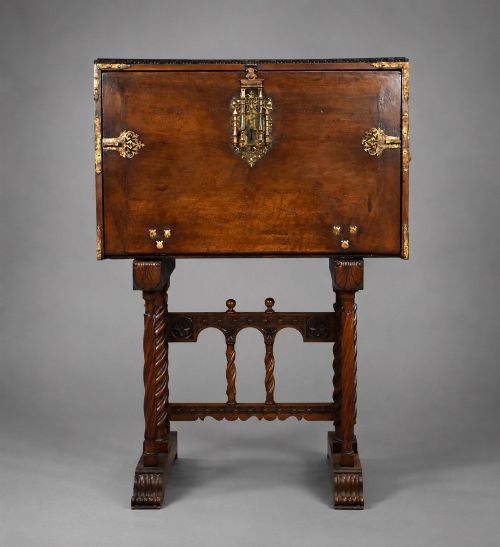
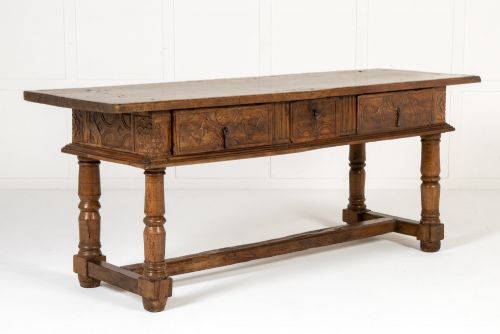
Form variations range from small slant-front bible boxes and side tables to large partner desks and Spanish vargueno cabinets.
Variations in quality
Quality rests upon the crispness of the hand carving and the integrity of the timber selection across the panels and lid. Bold proportions and untouched original surfaces separate superior examples from plainer or heavily restored pieces.
Internal arrangement drives distinction in desk boxes and bureaus, where fitted small drawers and secret compartments demonstrate the maker's skill. The survival of original brass or iron hardware and hinges further elevates an item's standing.
The 17th Century Carved Desk Glossary
- Bible Box
- A small wooden box with a sloping lid, originally intended to hold a family bible or legal documents. These items often double as portable writing desks.
- Bureau
- A desk featuring a sloping lid that drops down to form a writing surface, revealing internal drawers and pigeonholes. Early examples date to the seventeenth century and later periods.
- Escritoire
- A tall cabinet with a fall-front writing flap that conceals a complex interior of small drawers and compartments. Walnut forms of this type date to the William and Mary period.
- Bargueño
- A Spanish cabinet on a stand or table, featuring a drop front that opens to reveal ornate small drawers and gilt details. These pieces utilise walnut and often display intricate parquetry.
- Patina
- The surface sheen and colour acquired by wood over long periods of handling and exposure. Good original patina indicates minimal harsh intervention by later restorers.
17th Century Carved Desk: Frequently Asked Questions
What is a 17th century carved desk box?
A desk box is a portable wooden container with a sloping lid used for writing letters and storing documents. They were placed on tables before dedicated writing furniture became common.
Many examples feature carved decoration on the front panel and retain internal compartments for ink and quills.
How do I tell an original 17th century desk from a revival piece?
Original pieces show period construction methods, timber shrinkage appropriate to age, and hand-cut joinery without modern machine marks. Revival pieces made in the nineteenth century often display softer carving and different secondary woods.
Examining the underside, interior boards, and hardware helps clarify the date of manufacture.
Were these desks used sitting down?
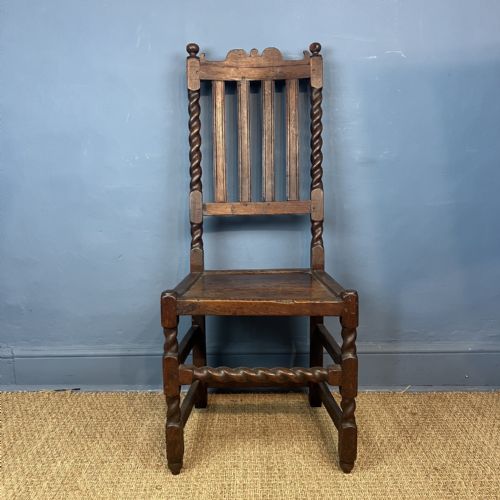
Smaller desk boxes and bible boxes were placed on top of tables while the user sat on a side chair or armchair. Larger bureaus and partner desks provided built-in writing heights for standing or seated work.
Writing habits in the seventeenth century often involved portable storage rather than fixed heavy furniture.
How should I care for antique oak furniture?
Antique oak and walnut benefit from stable indoor humidity away from direct heat sources and strong sunlight. Regular dusting with a dry cloth maintains the finish without needing heavy polishes.
Applying occasional wax preserves the dry surface sheen characteristic of early timber.