
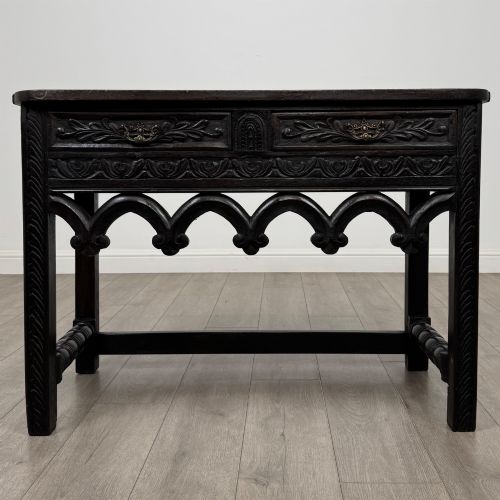
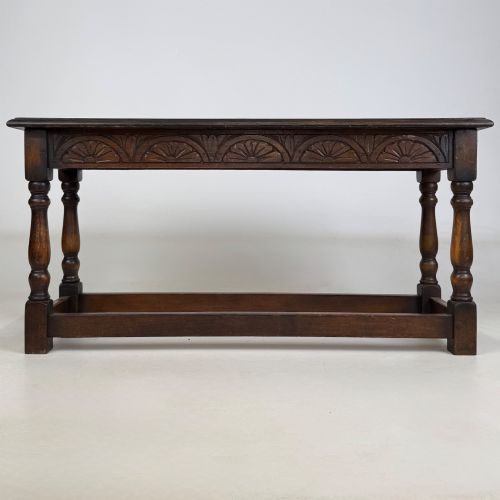
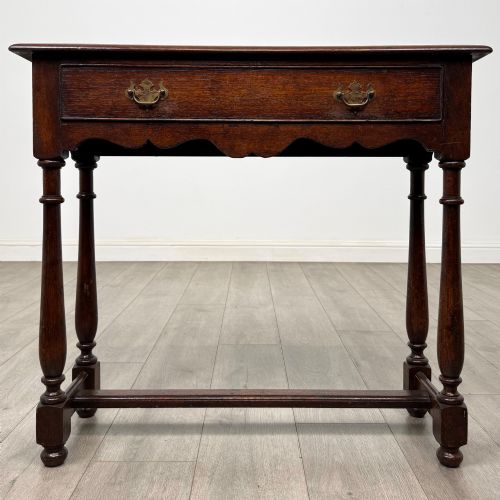
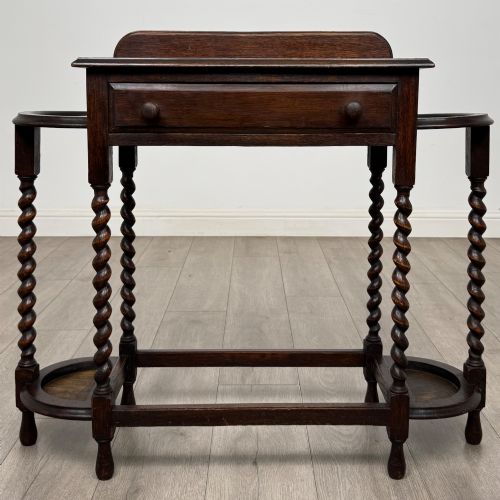
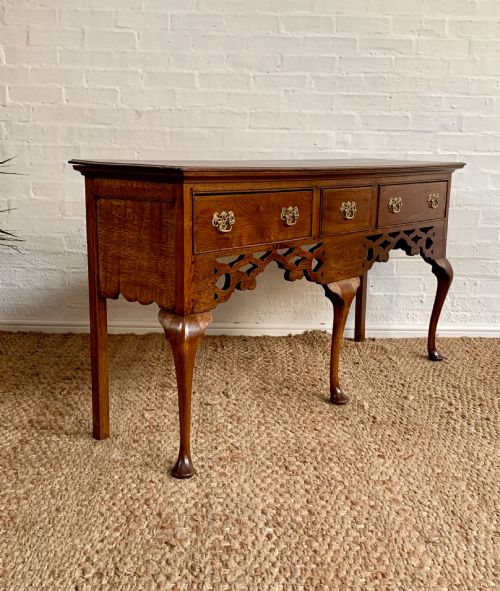
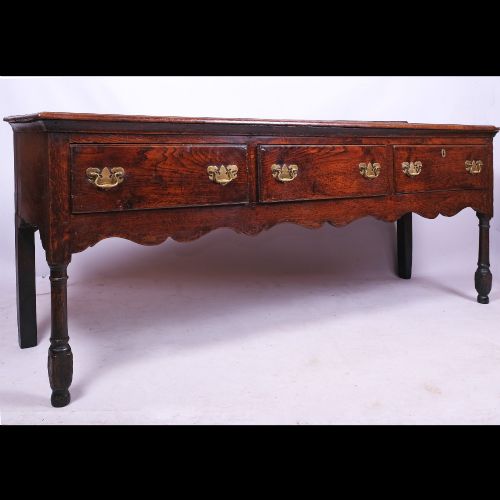
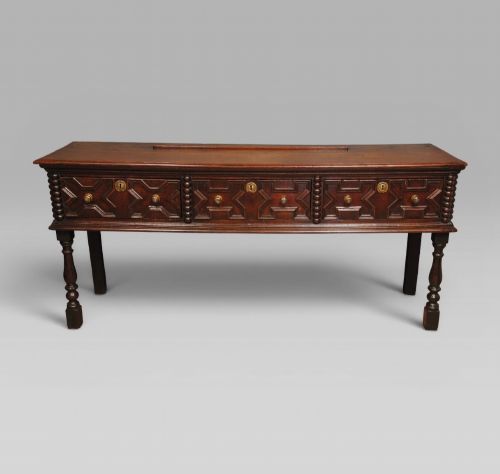
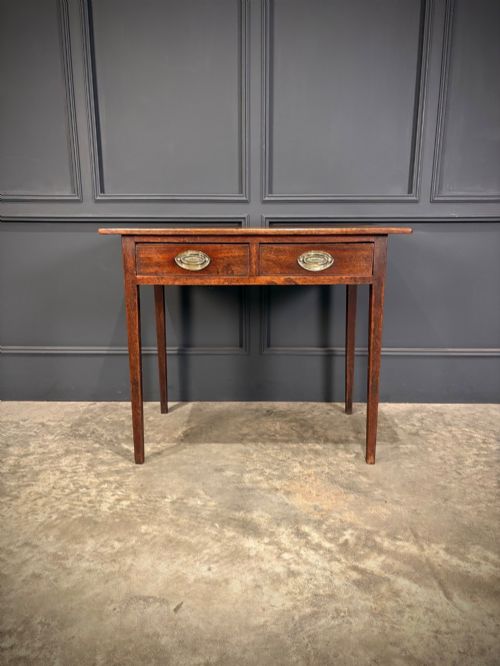
Dark Oak Hallway Table
A dark oak hallway table brings sturdy character and rich timber tone to an entrance, offering a practical surface for daily essentials.
Dark Oak Hallway Table
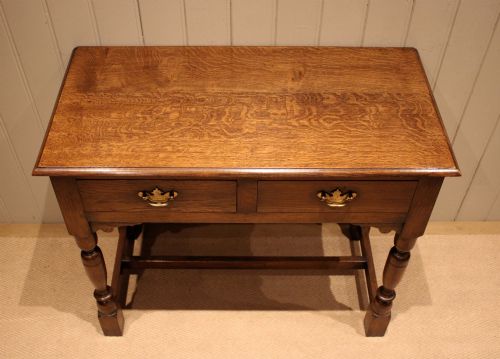
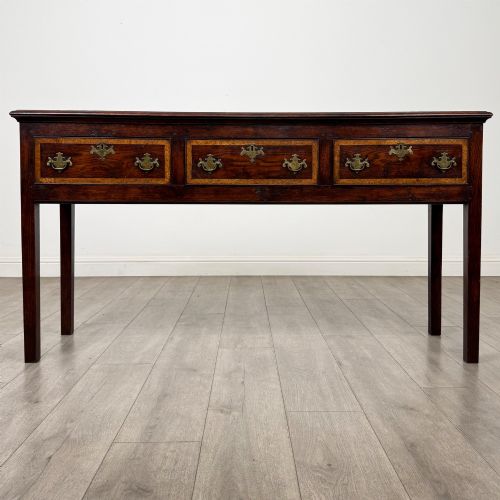
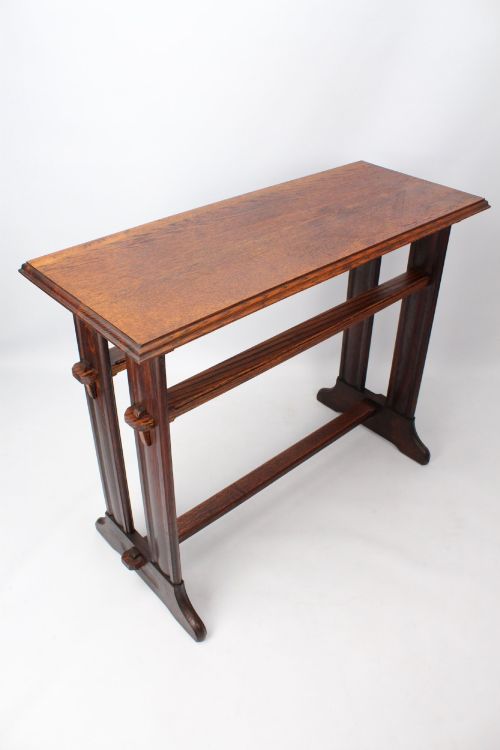
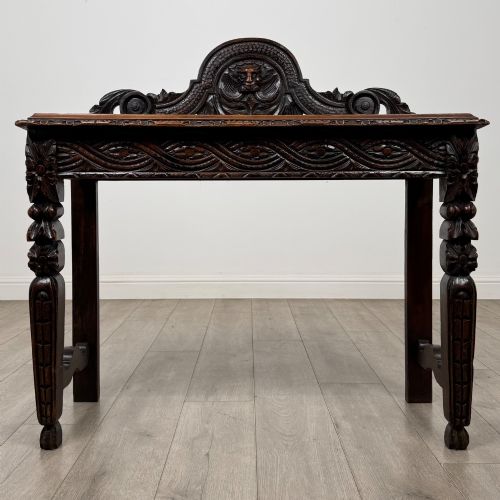
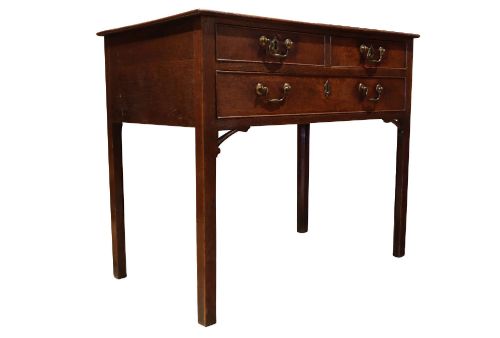
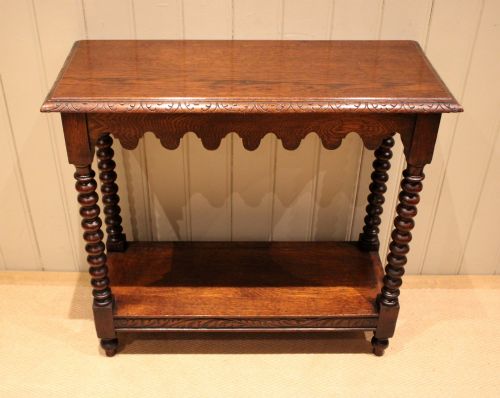
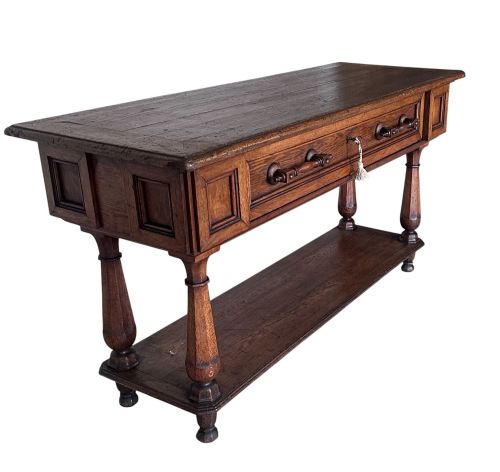
When searching for a dark oak hallway table, buyers encounter a variety of forms designed for narrow spaces, predominantly side tables, console tables, and dresser bases spanning several centuries. These pieces originate from domestic and regional traditions across Britain and continental Europe, utilising robust timber with deep, aged patination.
The selection ranges from seventeenth-century provincial pieces and eighteenth-century lowboys to Edwardian narrow side tables and twentieth-century Jacobean revival designs. Side tables and console tables dominate the available forms, often featuring single drawers or turned supports suited to compact entrance areas.
How they were made
Construction relies heavily on solid oak timbers joined with traditional methods, frequently complemented by brass hardware, iron fittings, and occasional leather inserts. Carved details appear across various periods, from formal Georgian moulding to elaborate Gothic revival and Arts and Crafts motifs.
Makers utilised local woods alongside primary oak frames, shaping surfaces with hand planes and assembling joints through pegged mortise and tenon techniques. Finish was traditionally developed through wax or oil applications that deepened the natural grain over decades of use.
Listings feature oak alongside secondary materials such as brass, iron, glass, leather, and walnut across multiple centuries.
What varies in quality
Quality in these pieces rests upon timber selection, structural integrity, and the crispness of hand-carved ornamentation. Earlier examples from the seventeenth and eighteenth centuries demonstrate superior joinery and dense, quarter-sawn grain that ages differently than later revival pieces.
The proportion of the form dictates utility in a passage, where shallow depths and balanced drawer configurations separate everyday utilitarian items from finer architectural furniture.
The Dark Oak Hallway Table Glossary
- Lowboy
- A small oak or mahogany table with drawers, typically originating in the eighteenth century and standing on relatively tall legs. This form functions well as a compact surface in a narrow entrance.
- Dresser base
- A long, low table featuring multiple drawers and occasionally a pot board shelf underneath. These pieces provide substantial storage for household linen or tableware.
- Console table
- A table designed to stand flat against a wall, frequently supported by brackets or legs at the front. They serve narrow spaces effectively by projecting minimally into the walkway.
- Demi-lune
- A half-moon shape utilised in the design of console and side tables. This curved profile allows the furniture to fit snugly against entrance walls.
- Jacobean Revival
- A nineteenth and twentieth-century style imitating seventeenth-century English furniture. Pieces in this idiom display heavy turning, geometric moulding, and dark finishes.
Dark Oak Hallway Table: Frequently Asked Questions
What periods do these tables come from?
The pieces span from the seventeenth century through the Georgian and Victorian eras into the Edwardian period and the early twentieth century. Each era brings distinct proportions and decorative styles to the oak timber.
Revival movements from the late nineteenth and early twentieth centuries also contribute pieces that replicate earlier historical aesthetics.
How do I measure for a hallway table?
Consider both the floor footprint and the clearance needed for passage past the piece. Narrow side tables and console tables offer shallow depths specifically suited to confined corridors.
Height should also be checked against wall fixtures, light switches, and radiators in the entryway.
How do I care for dark oak furniture?
Maintain the timber by applying a microcrystalline wax periodically to nourish the grain and protect the surface from moisture. Avoid placing oak furniture in direct sunlight or near heat sources to prevent timber splitting.
Dust regularly with a dry, soft cloth rather than using silicone sprays.
What is the difference between a side table and a console table?
Side tables are generally freestanding pieces finished on all sides for placement anywhere in a room. Console tables are traditionally intended to stand flat against a wall, sometimes secured to the masonry for stability.
In modern usage within narrow spaces, both terms often describe shallow surfaces suitable for keys and post.
Are these tables practical for daily use?
Solid oak construction provides exceptional durability and resilience for everyday hallway demands. Drawers offer convenient containment for clutter, while the sturdy surface handles bags and post.
Their historical nature simply requires consideration for placing damp items directly onto unsealed antique wood.