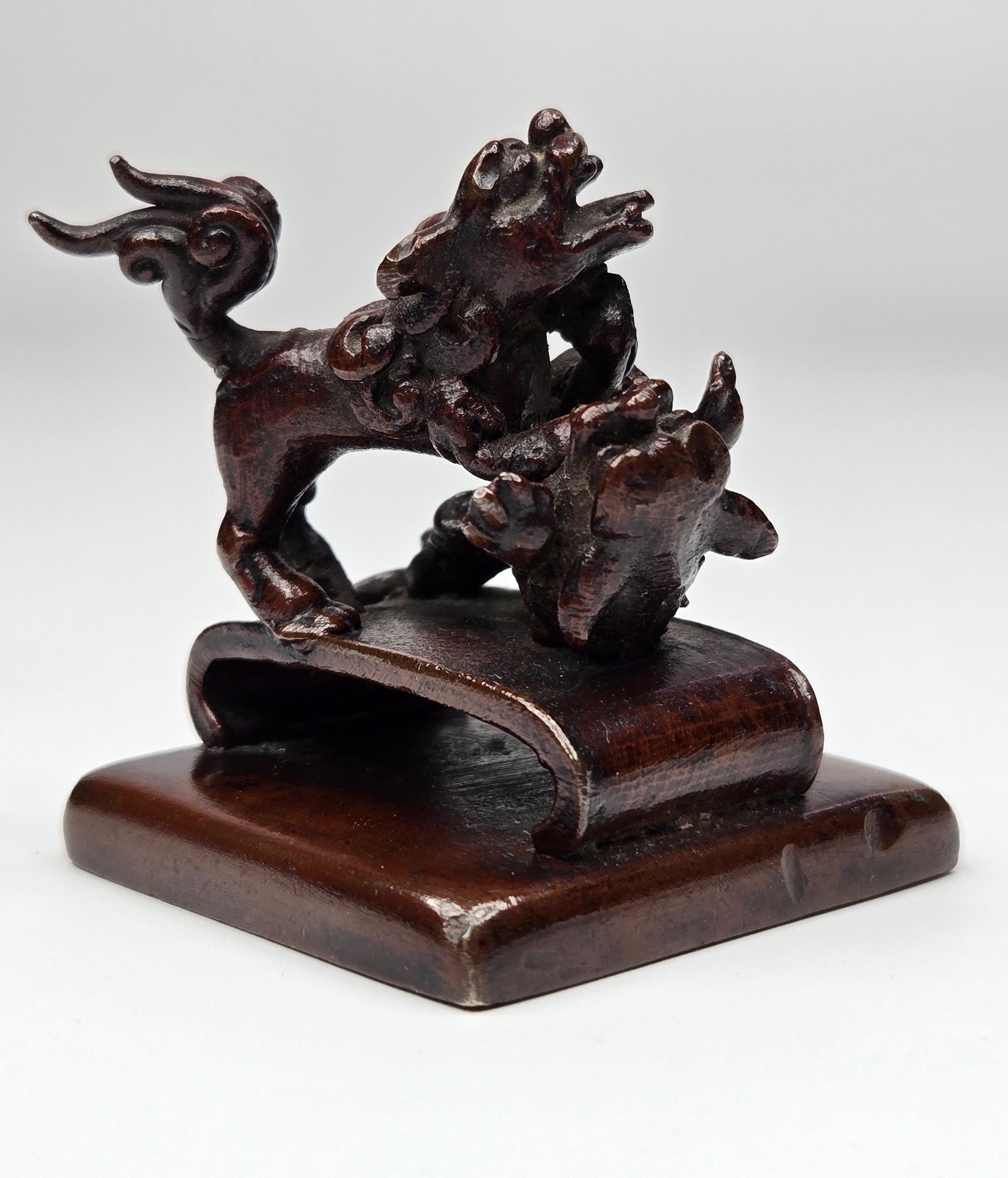
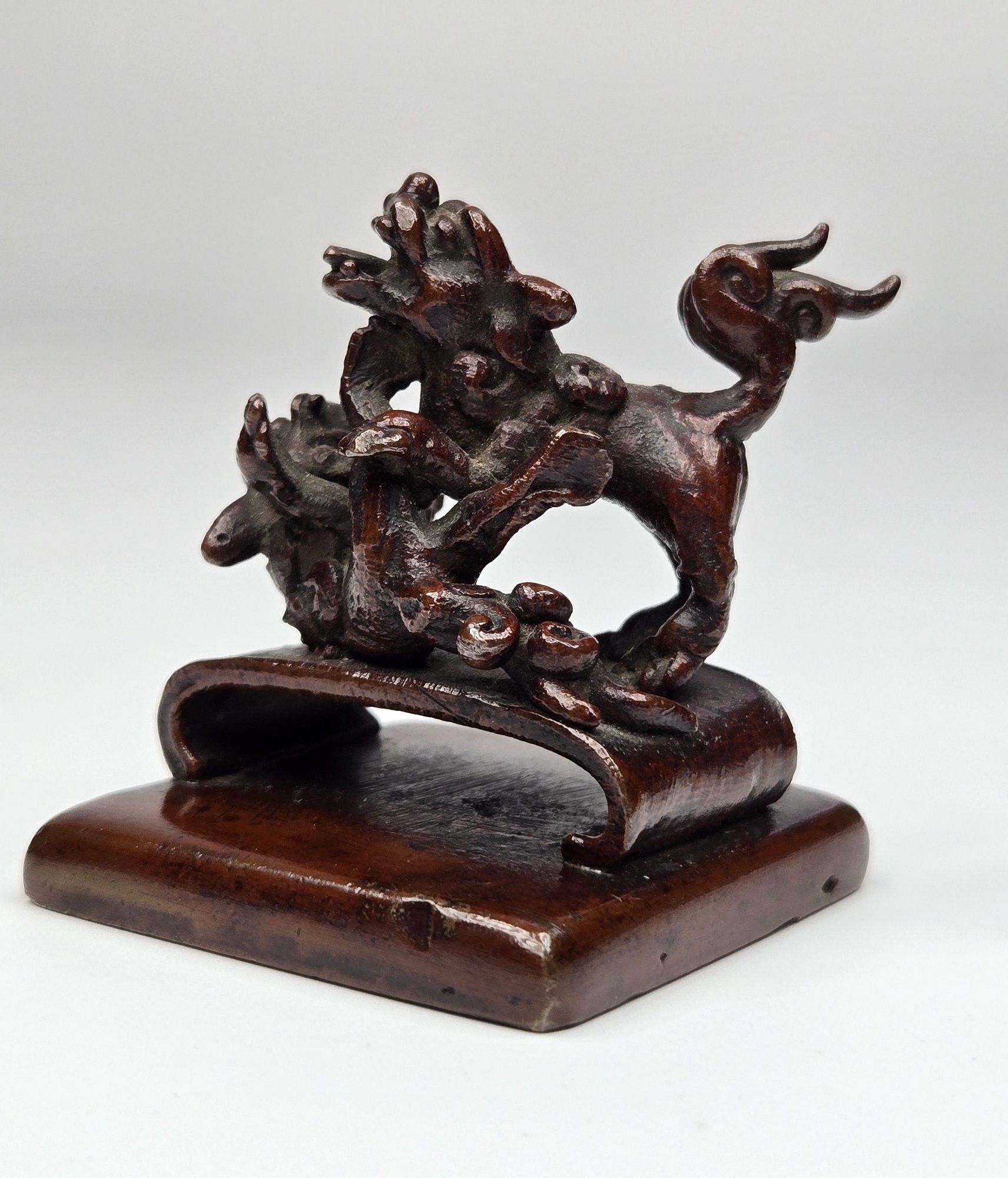
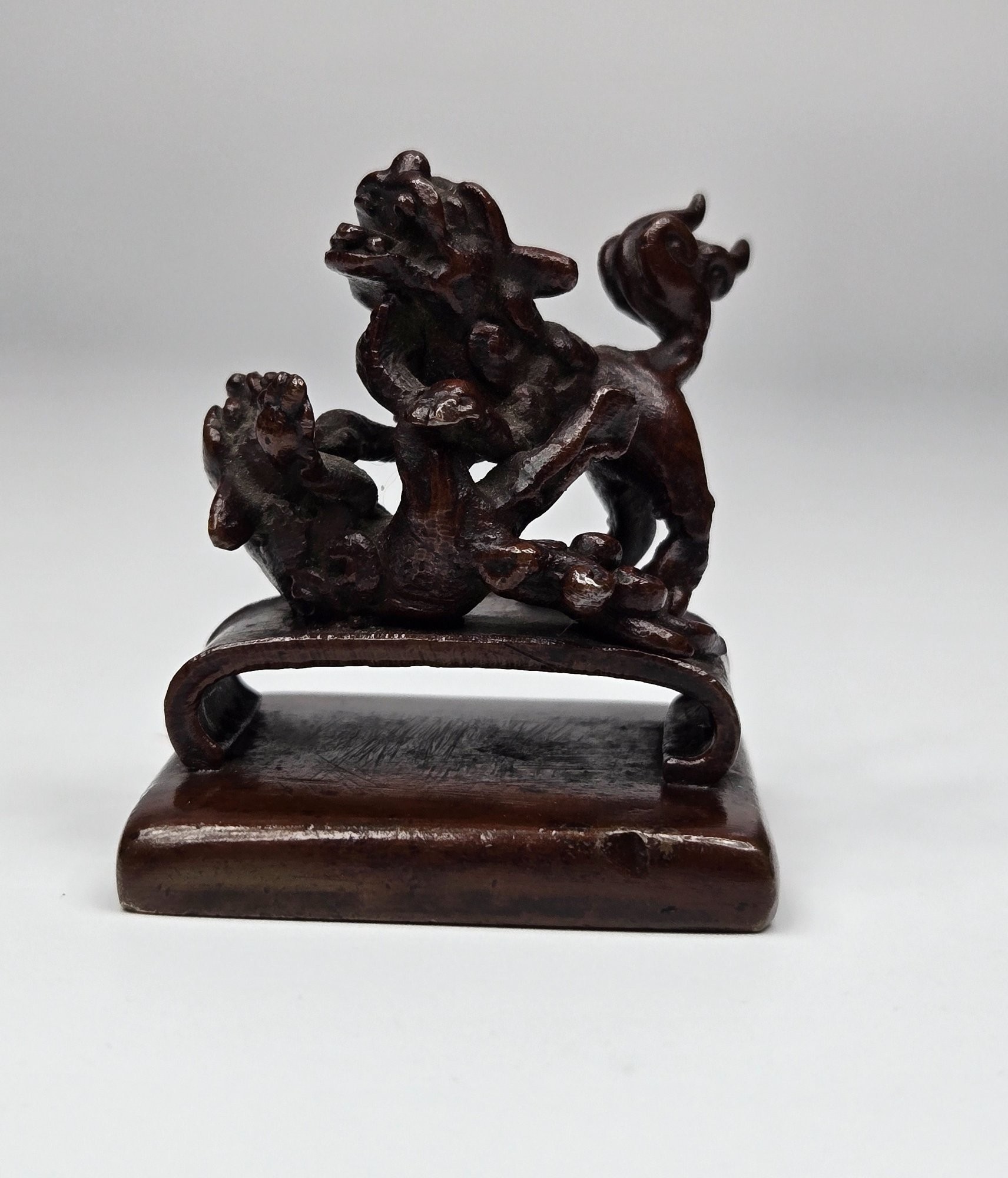
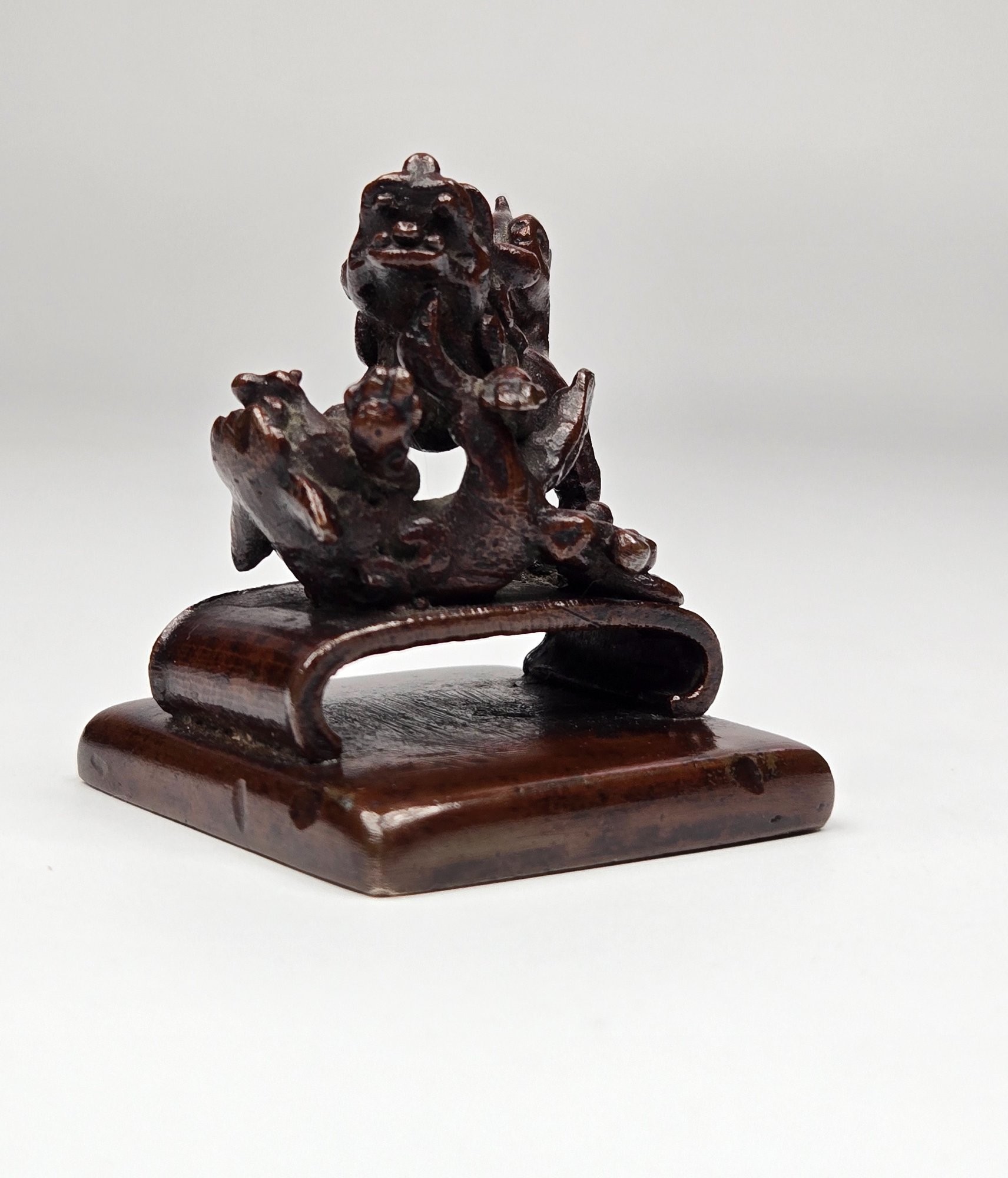
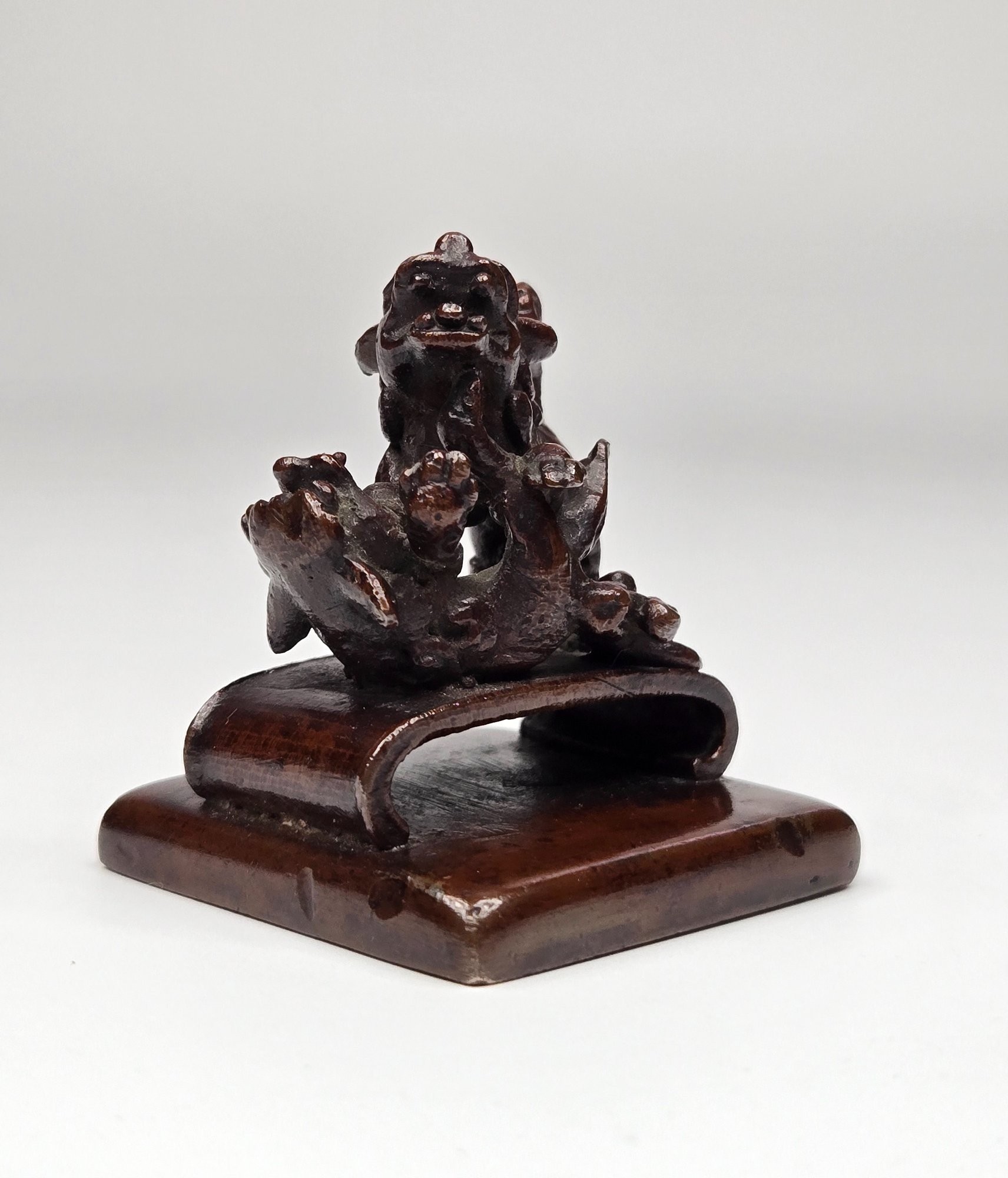
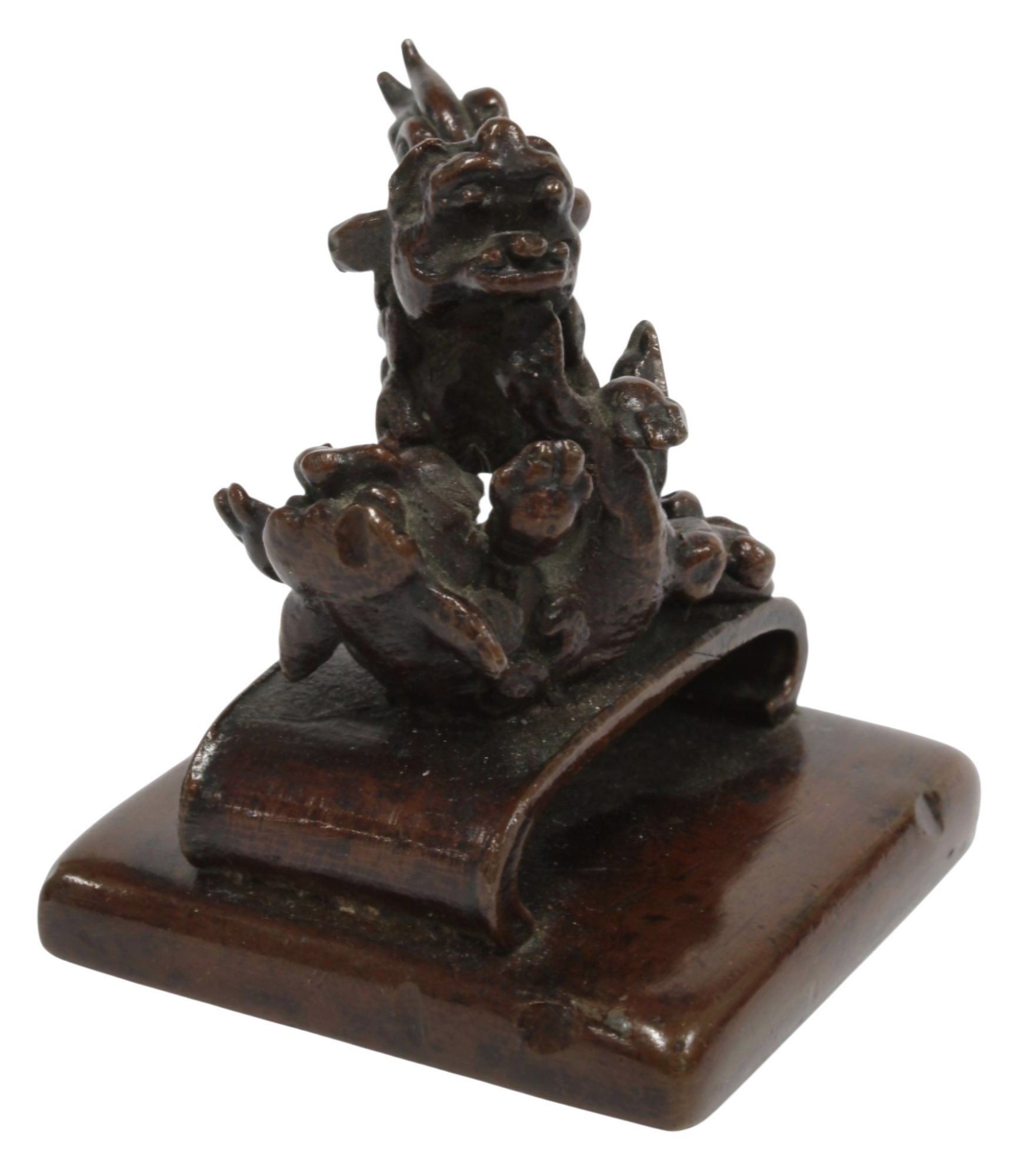
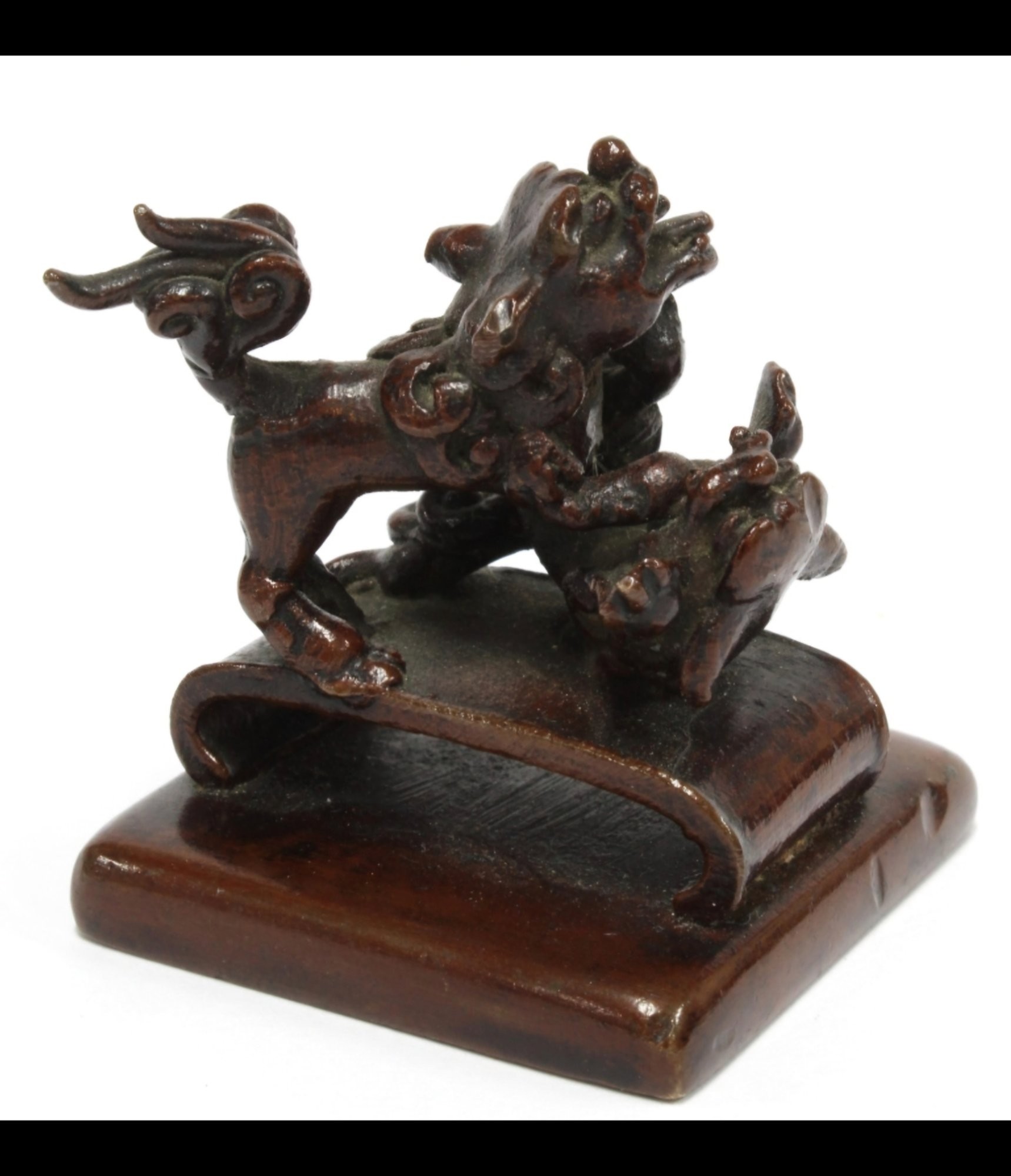
Sandbanks Antiques has dated this Chinese Bronze Scholar Seal to the 17th Century.
Late Ming Dynasty, 17th Century (c. 1620–1680)
Dimensions: Height: 5 cm | Width: 4 cm
Weight: 136 grams
Provenance: The G.S. May Esquire Private Collection, London
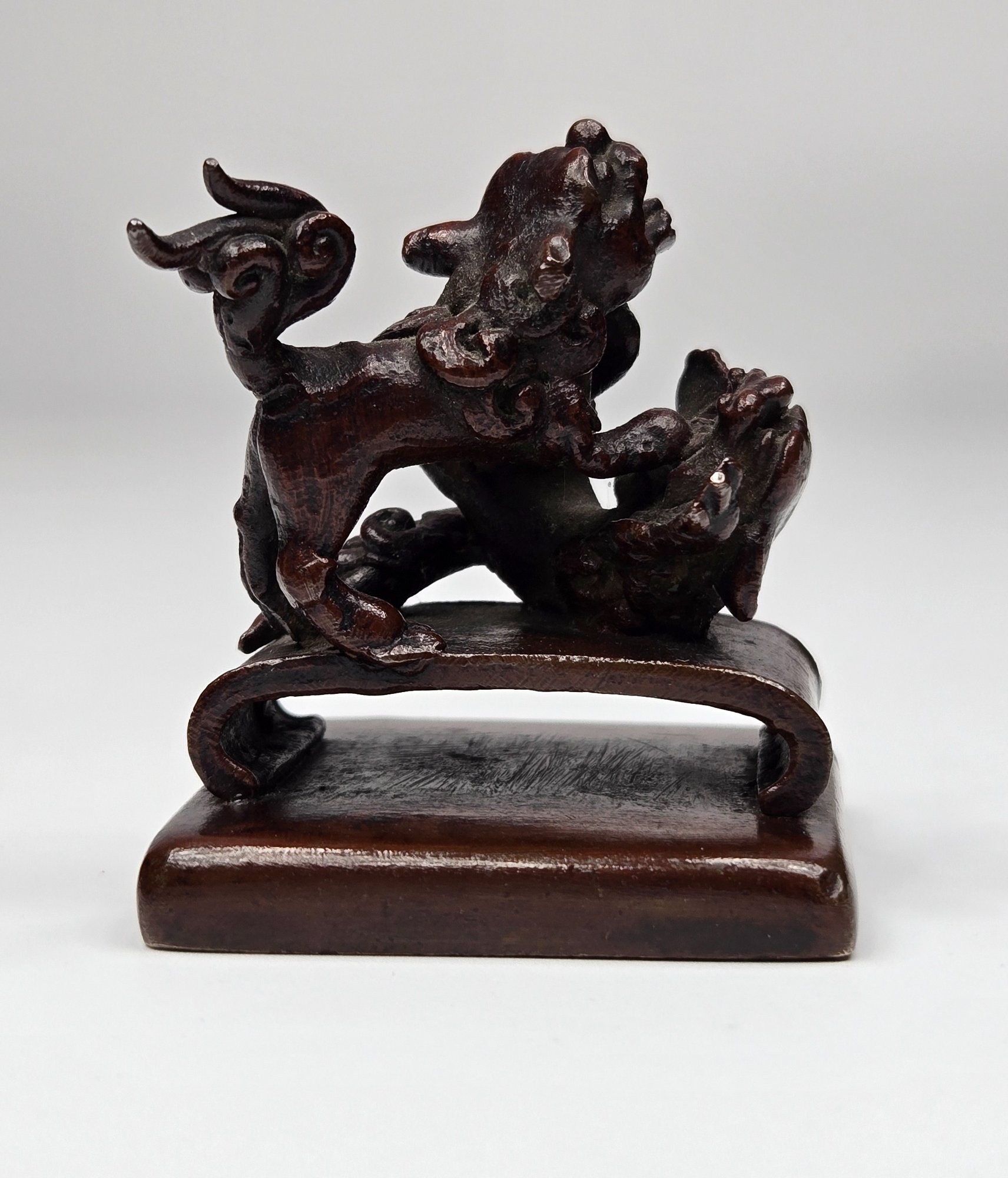
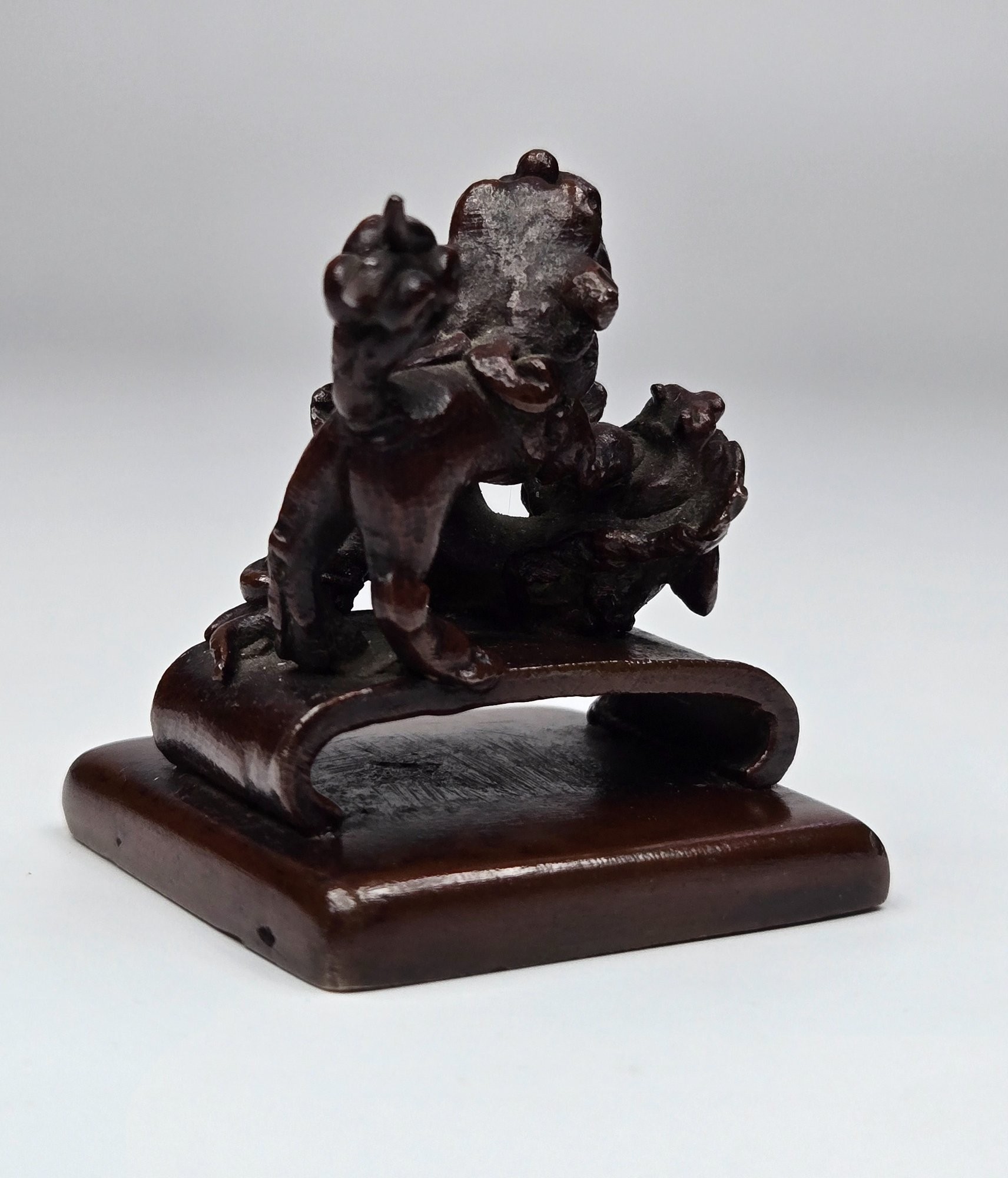
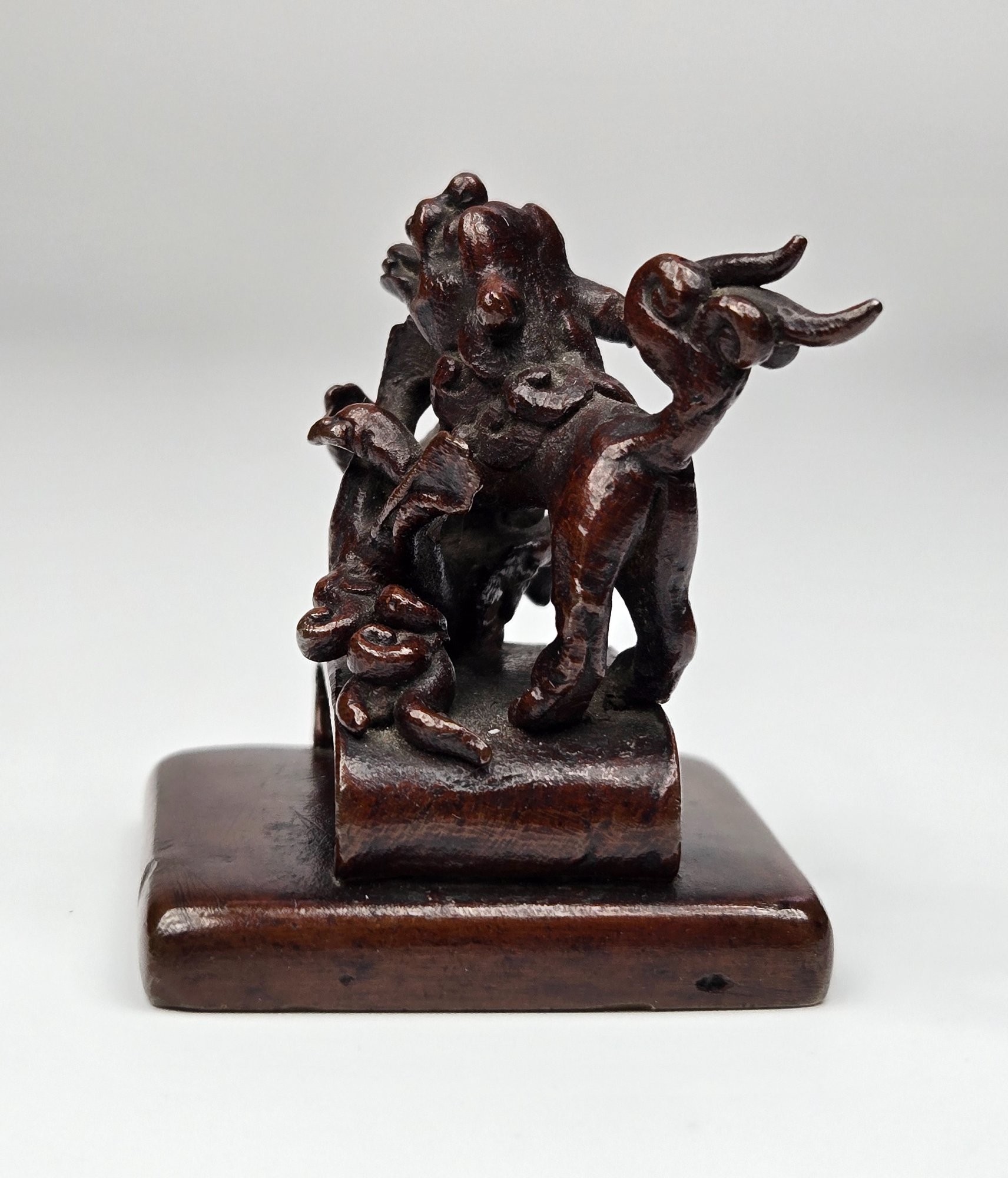
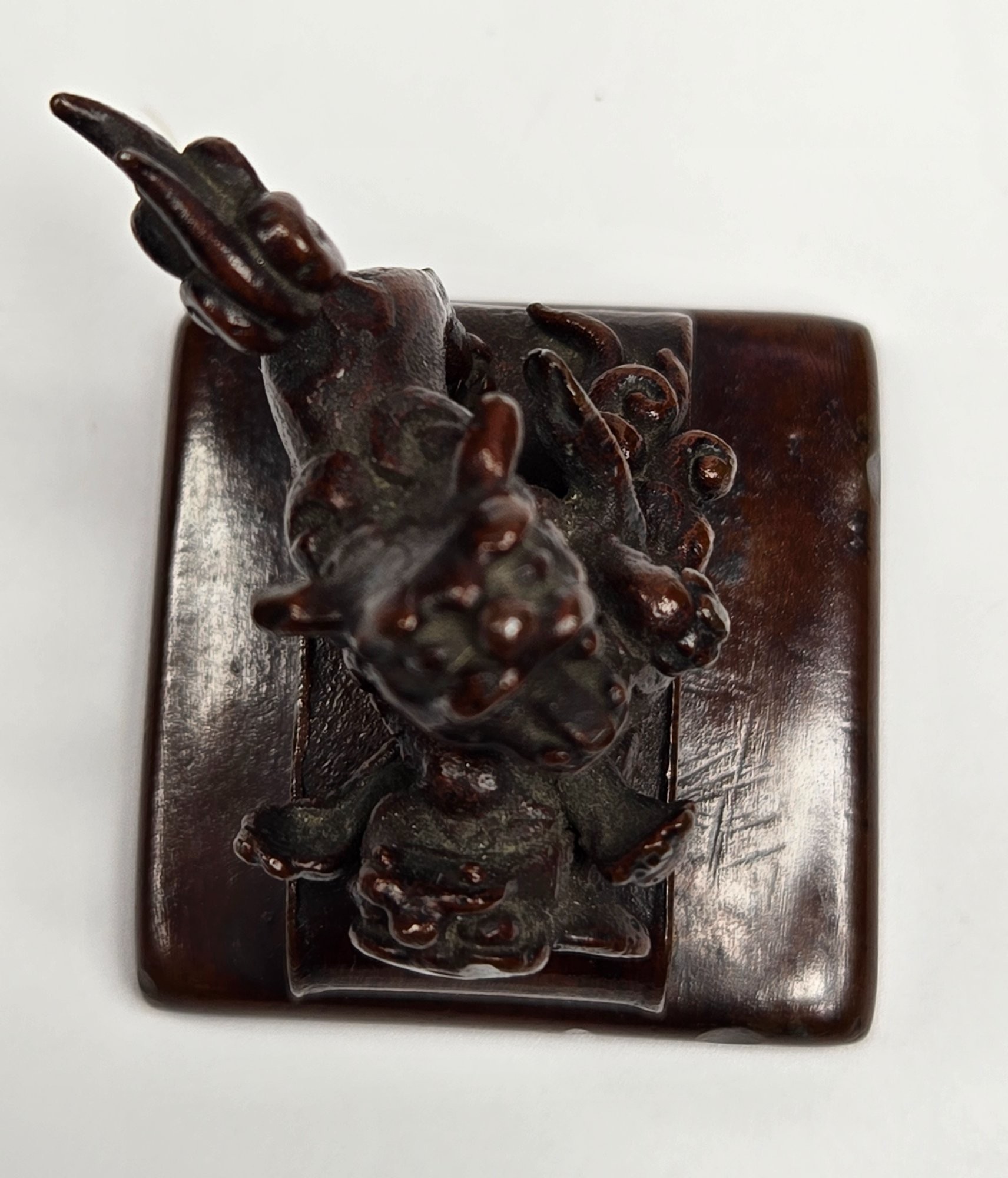
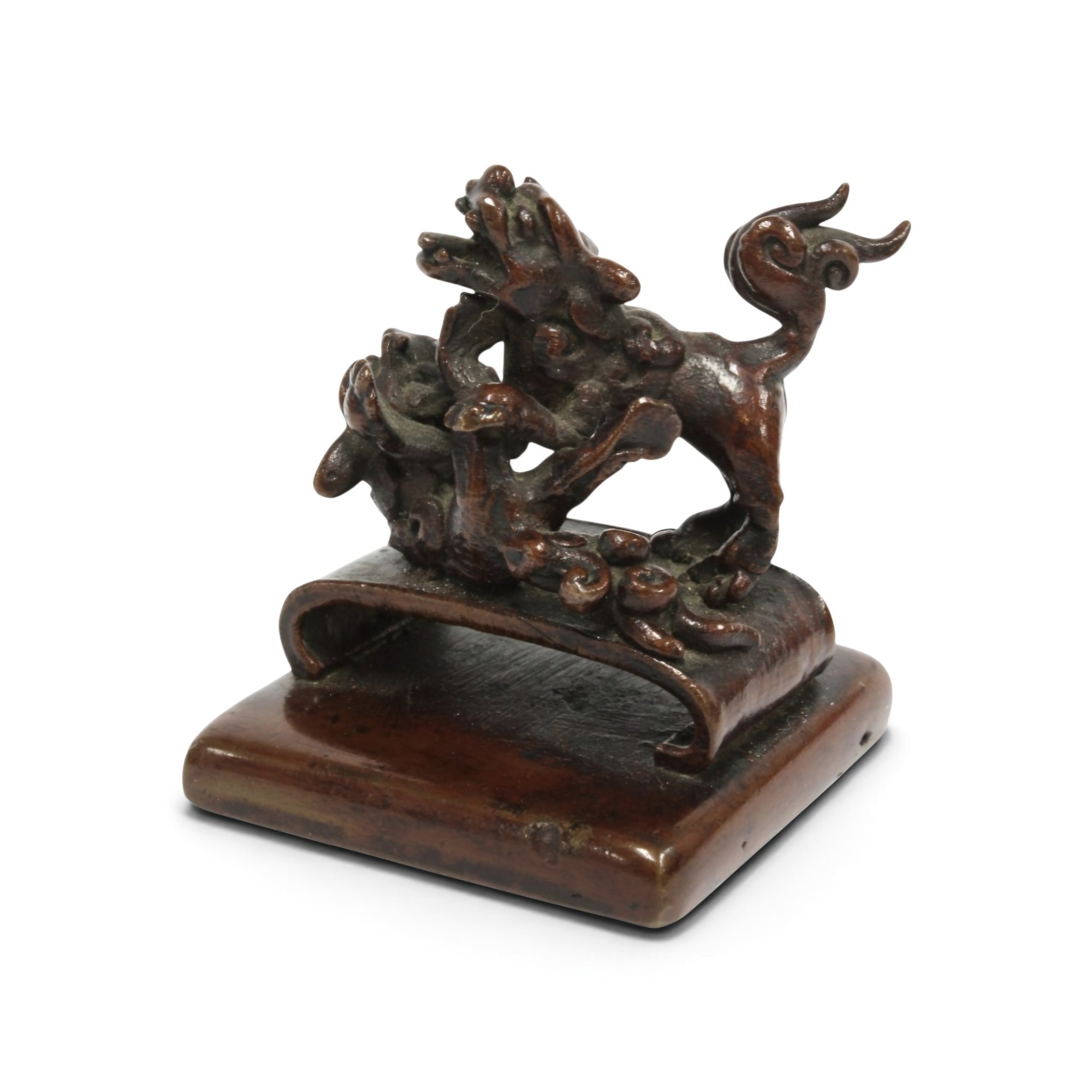
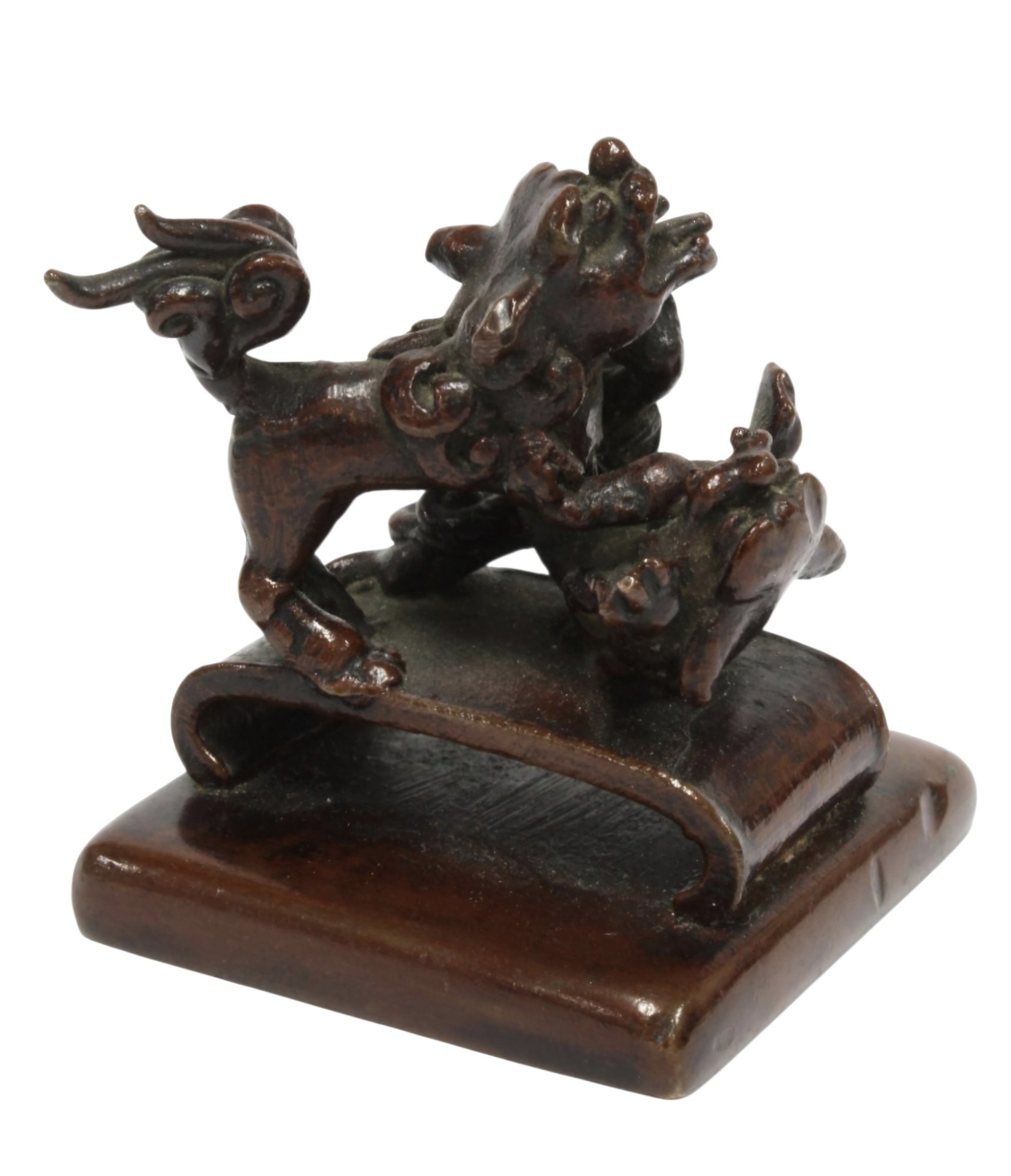
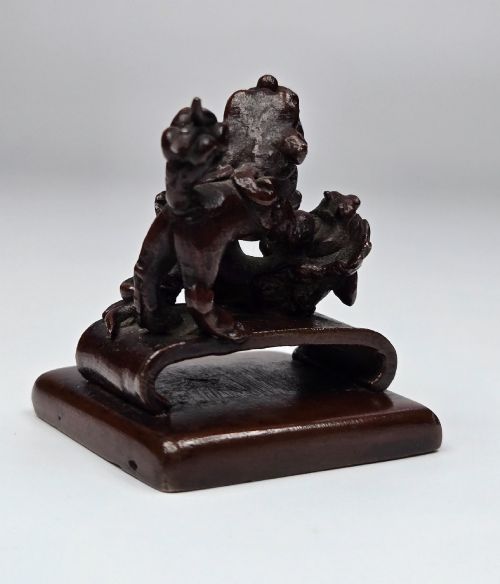
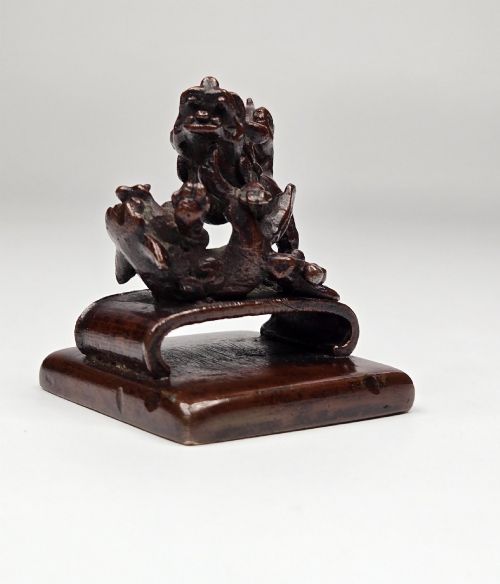
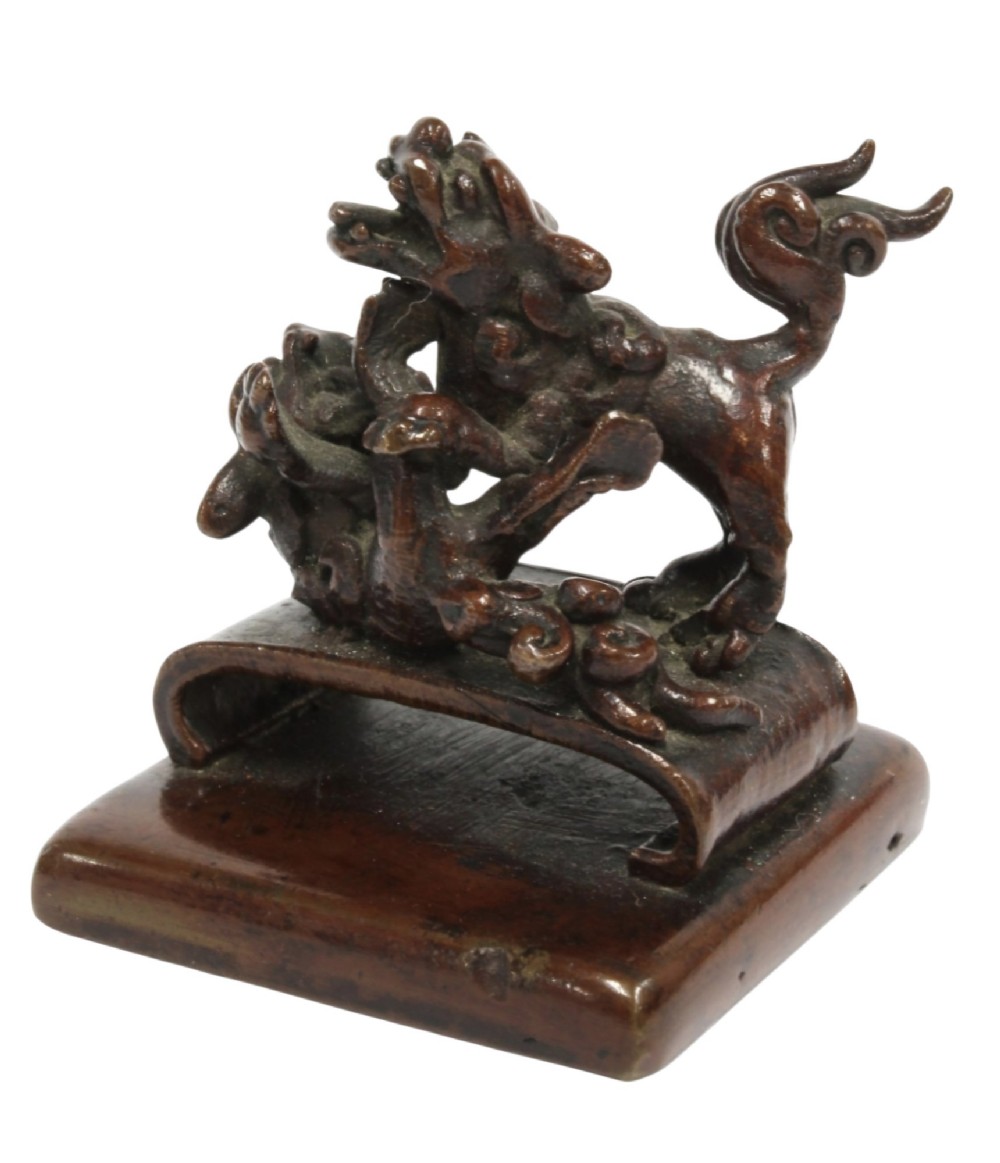
Cast with exceptional provincial character and robust material integrity, this scholar's desk seal is surmounted by a dynamic, high-relief figural finial depicting two wrestling shishi (guardian lion dogs) locked in a spirited and energetic engagement.
The creatures exhibit expressive, rounded facial features, stylized manes, and tactile swirling details that demonstrate the organic freedom of regional literati workshops rather than rigid imperial standards.
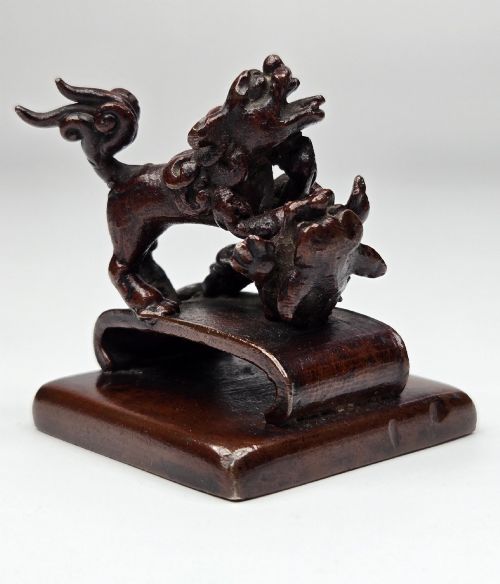
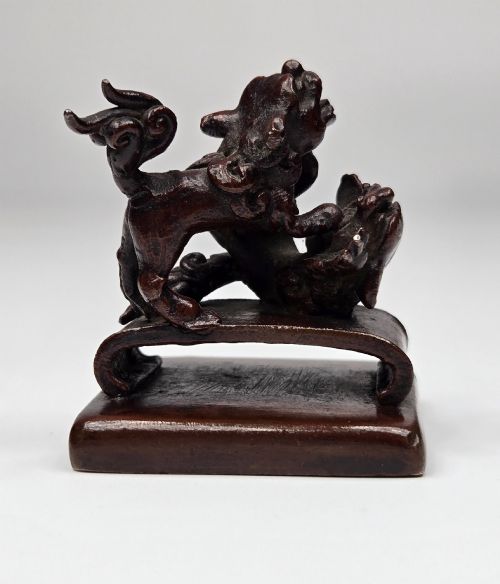
The figural group is elevated upon a hollow, arched saddle-form bridge mount that spans gracefully across the top of a heavy, square-section base block with softened, historically rubbed corners. Under close examination, the bronze reveals a rich, deep chocolate-brown patina punctuated by natural micro-pitting across the flat planes and smooth, buttery high-point friction on the raised contours, pointing directly to centuries of genuine handling in a scholar's studio.
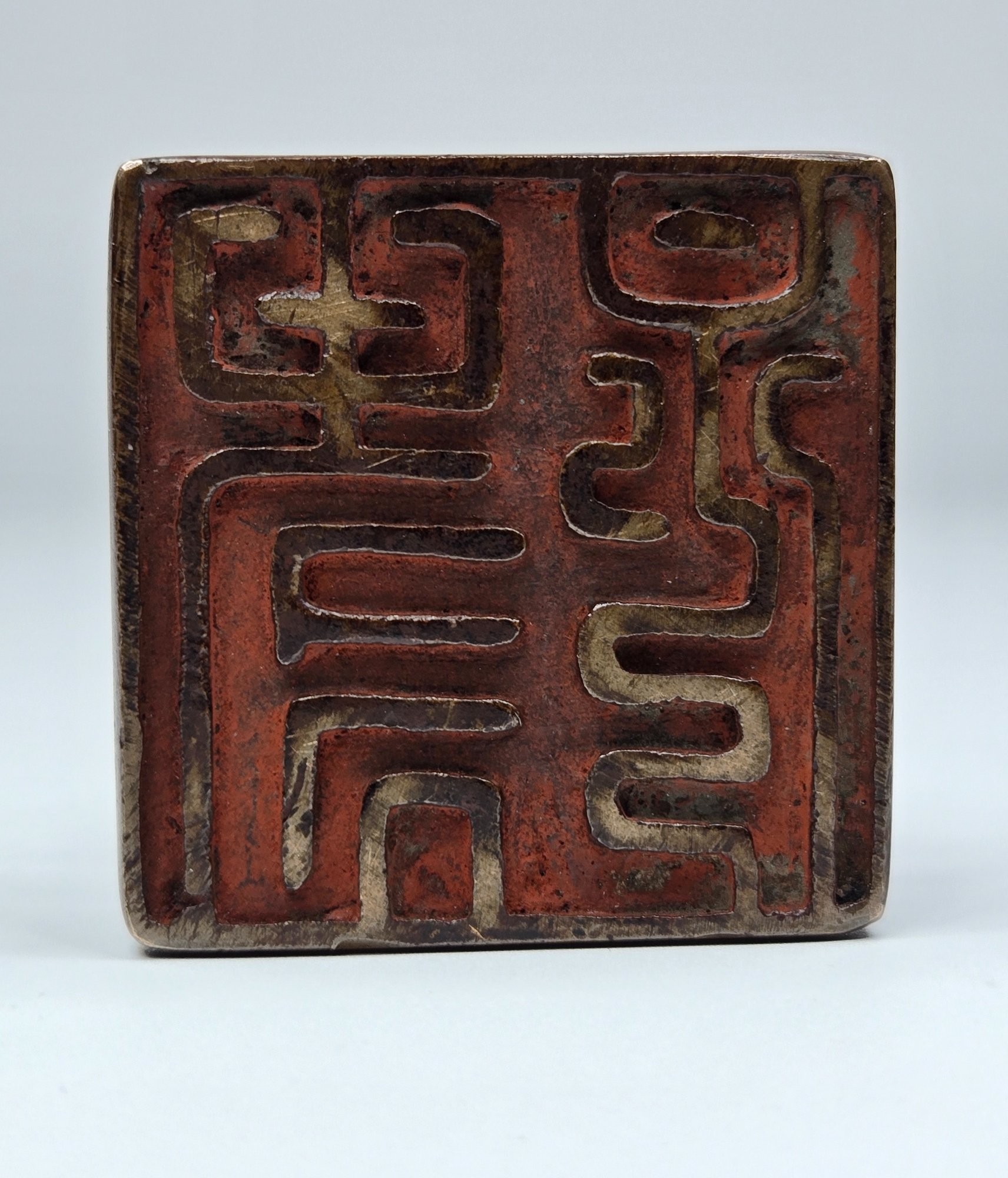
The underside of the base features a deeply channeled, blocky layout of archaistic script, densely packed with dry, aged traces of historical red cinnabar seal paste.
Condition Report
Good antique condition commensurate with age and handling. The bronze exhibits authentic, age-related surface wear, including minor edge knocks, soft bruises, and light casting irregularities along the lower base and corners that bear witness to a long, genuine history of use. There are no structural cracks or modern repairs, and the integrity of the original surface skin and patina remains completely undisturbed.
Dating Rationale & Material Analysis (17th Century)
Substantial Mass and Alloy Quality: Weighing an impressive 136 grams within a compact 5 cm by 4 cm footprint, the base is cast solid using a high-density traditional copper alloy. This substantial weight-to-size ratio was prized in the late Ming and early Qing periods to ensure a clean, steady impression when stamping documents.
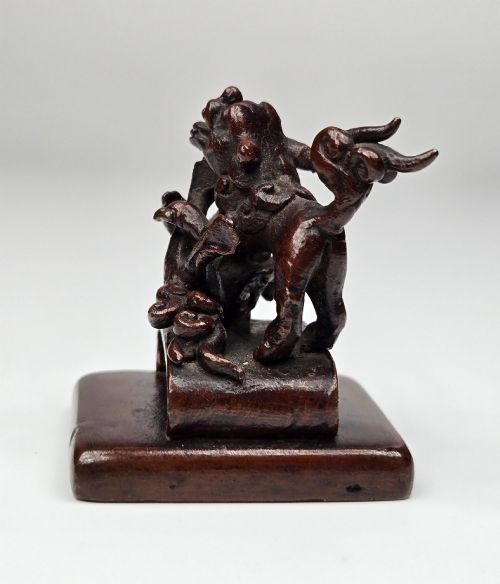
Patina and Surface Evolution: The deep, warm chocolate hue and genuine micro-pitting point directly to long-term oxidation and natural handling wear characteristic of the transitional period, distinguishing it entirely from modern reproductions.
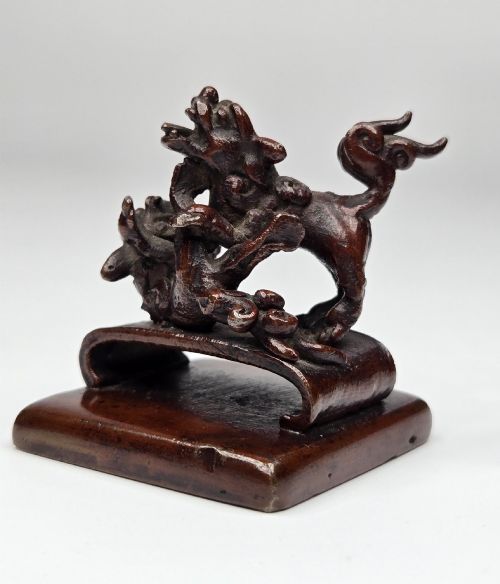
Sculptural Vigor and Casting: The proportions of the shishi and the provincial softening of the casting details reflect traditional 17th-century production standards, where regional workshops prioritized tactile narrative and expressive energy.
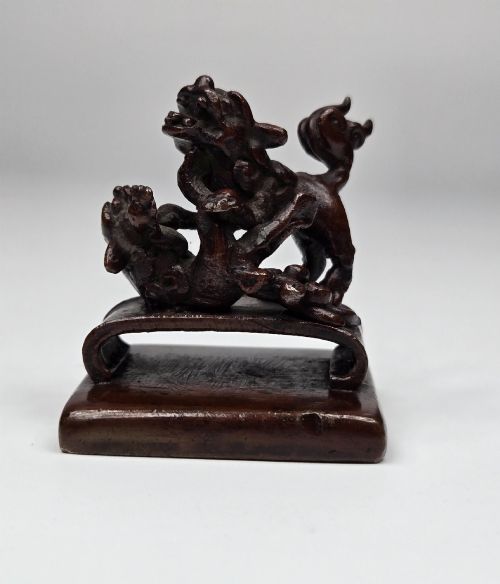
Base and Seal Integrity: The archaic script channels display natural shoulder wear and a heavy accumulation of historical seal paste, confirming a genuine functional history rather than an artificial finish.
Rarity and Market Context
Intimate scholar's desk items like functional personal seals were frequently lost, discarded, or melted down over the centuries, making surviving examples with undisturbed historical surfaces increasingly scarce. While single-animal finials are common, an animated, multi-figure wrestling shishi composition paired with an arched bridge mount and a heavy 136-gram solid-alloy body represents a desirable and uncommon find within literati art. In premier global art markets such as Mayfair in London or the Upper East Side in New York, an authentic, cabinet-ready piece of this caliber commands strong collector interest as an executive desk centerpiece or cabinet of curiosities highlight.
Sandbanks Antiques has dated this Chinese Bronze Scholar Seal to the 17th Century.
Specialising in antique silver, gold boxes, gold coins and objects de vertu. Rare fine-quality imperial chinese porcelain, jades, cloisonné
You can view the stock and full dealer information on the Sandbanks Antiques Profile Page
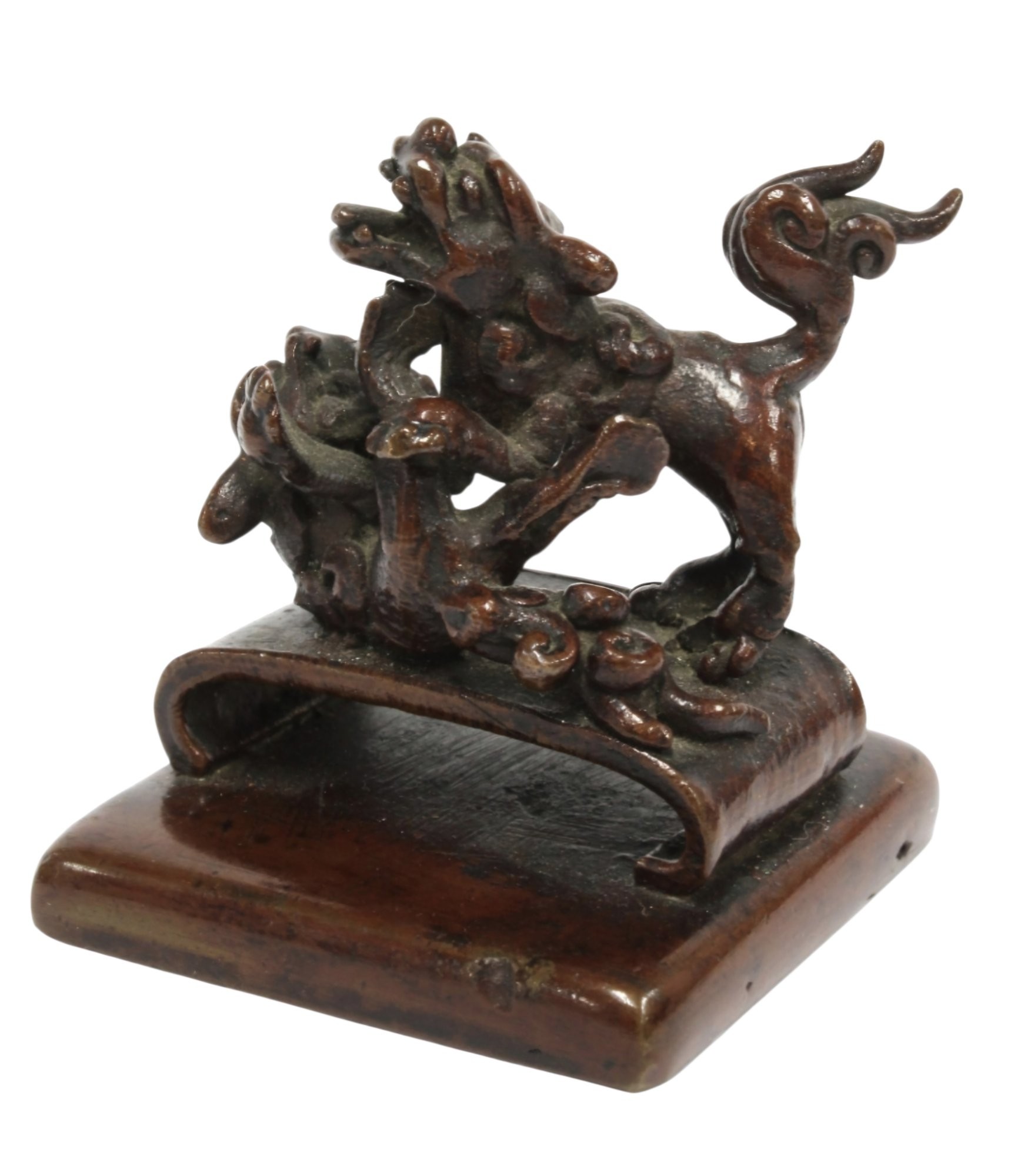
A Fine and Rare Chinese Bronze Scholar’s Seal with Wrestling Shishi Late Ming Dynasty, 17th Century (C. 1620–1680)