


Antique Bronze Sculptures
Free-standing cast metal figures made for a room rather than a building, running from palm-sized animal studies to near life-size groups.

Antique Bronze Sculptures
The bronze made to stand on a table or a chimneypiece is a 19th-century idea. Reduction machines and commercial foundries let publishers issue a sculptor's model at cabinet size, and the drawing room bought them. The same trade supplied travellers with souvenir reductions after famous antiquities.
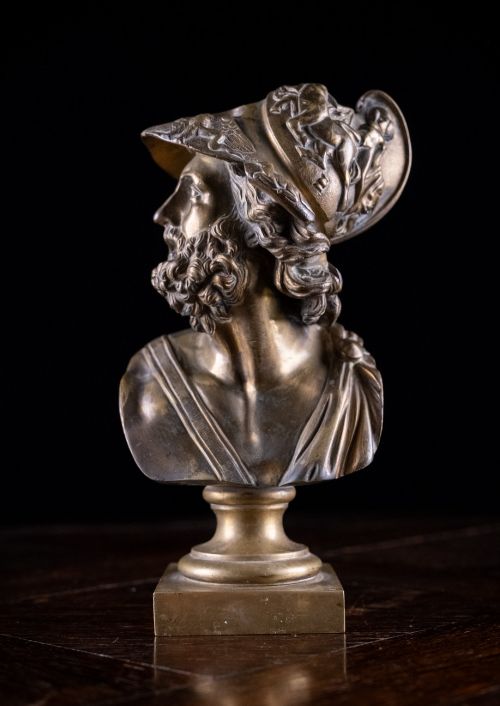
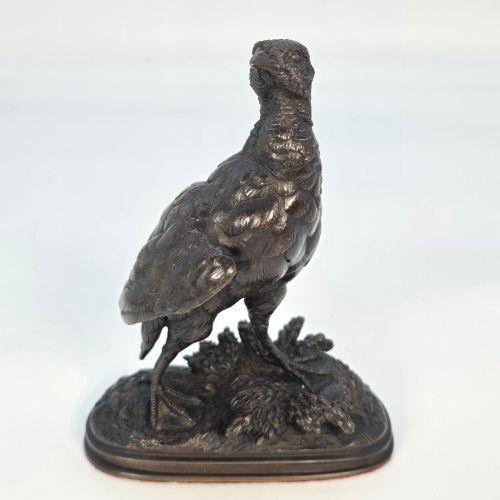
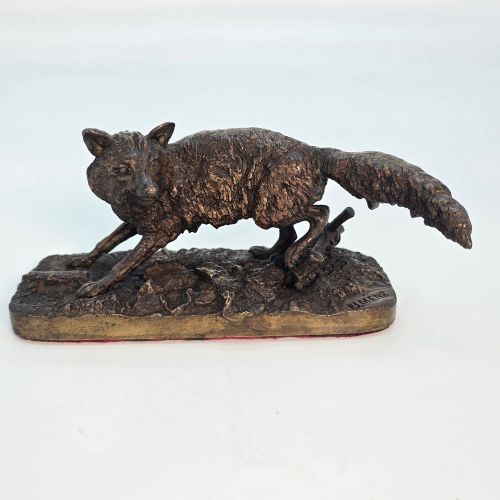
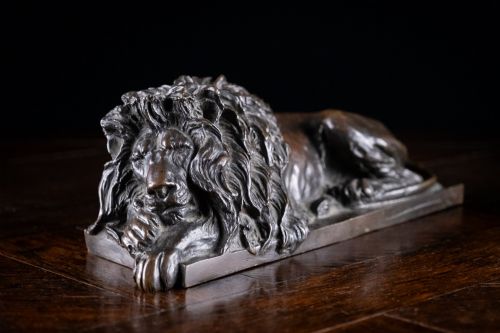
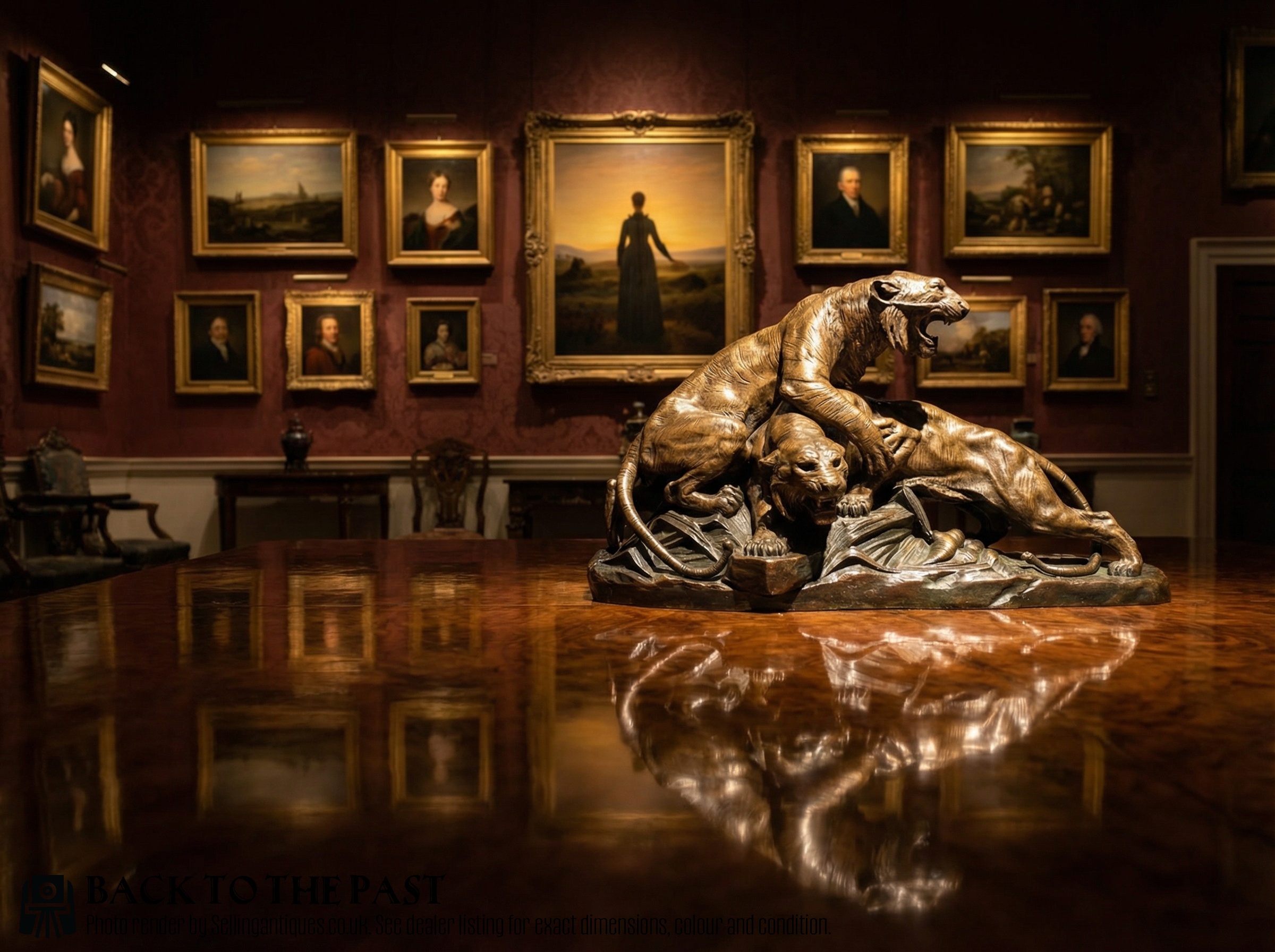
What dominates on Sellingantiques is a single 19th-century French figure or animal study. 'French' sits in 424 titles, 'sculpture' in 407, 'figure' in 286, and singles outnumber pairs by a wide margin. Busts, nudes, horses, dogs and lions repeat throughout, and 'large' turns up in 267 titles because scale is worth stating.
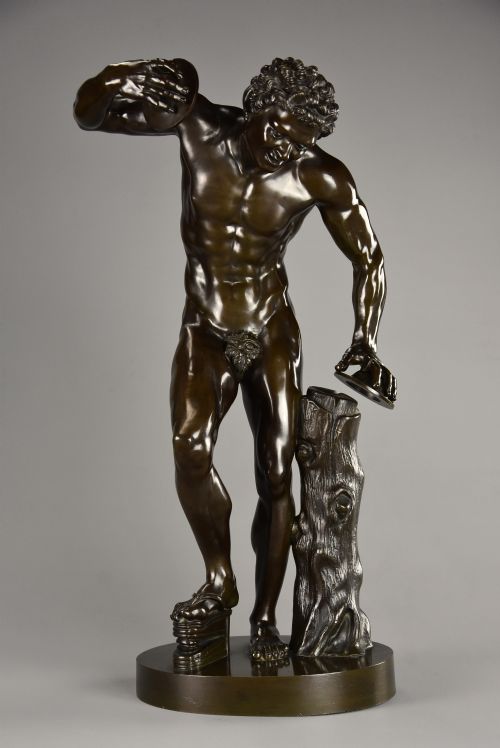
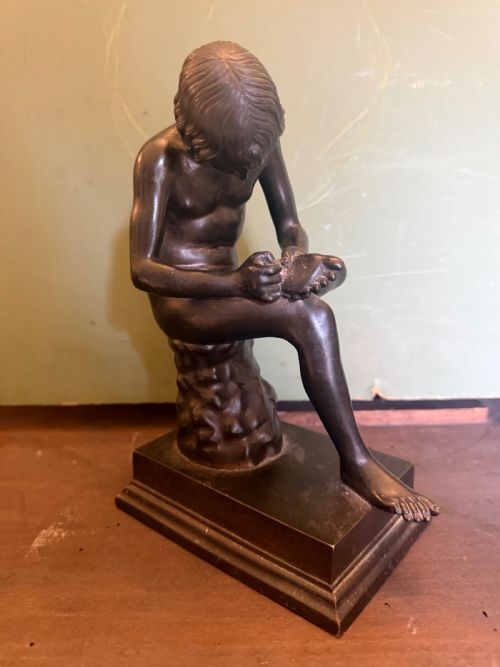
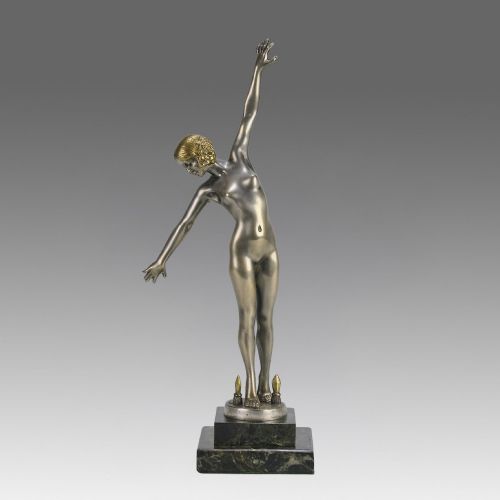
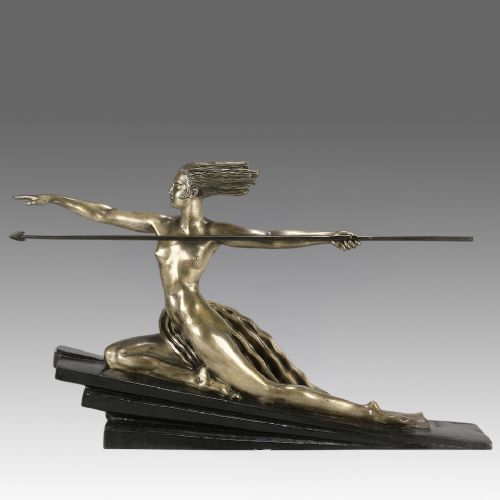
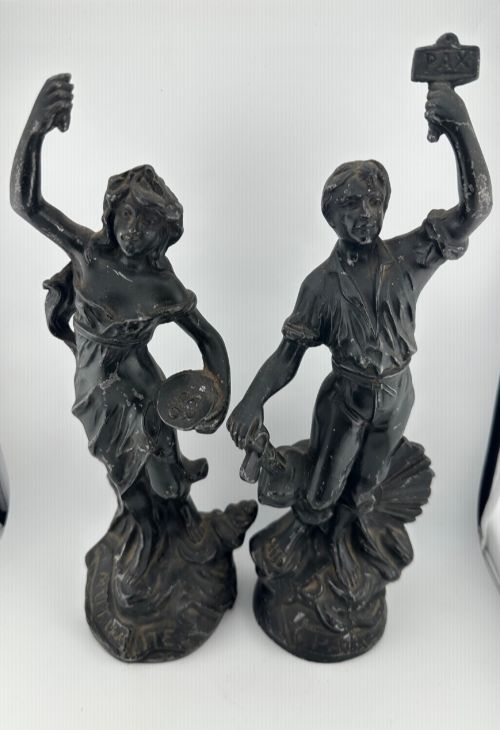
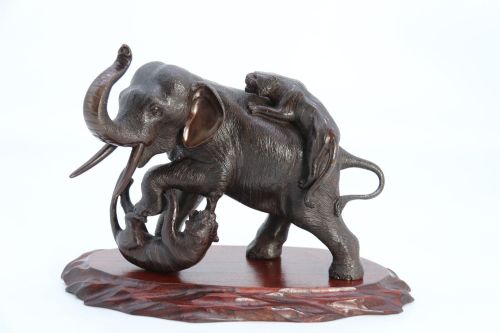
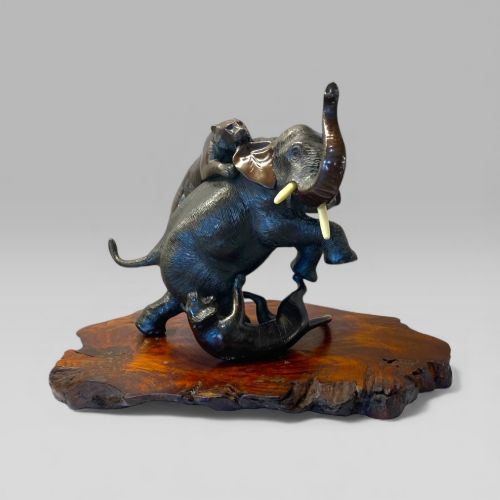
Four other groups sit alongside it. Japanese bronzes and okimono are about one in eight of the category, Meiji-labelled hawks, tigers, monkeys and Buddhist figures among them. Grand Tour reductions are just under a tenth, the Dancing Faun of Pompeii the most repeated subject in the whole archive. Art Deco and Art Nouveau figures, dancers above all, make up around a tenth, and cold-painted Austrian bronzes a smaller run of birds, dogs and Orientalist subjects.
Dating is loose more often than not. The dealer-entered field runs 1750 to 1960, but its largest single bucket is the vague '19th Century' at 645 listings, and titles echo that with '19th', '19thc', 'c19th' and 'late 19th'. Where decades are given they cluster between the 1860s and 1930s. Anything before 1800 is scarce. A minority of listings are related materials sold in the same category: spelter, bronzed spelter, plaster, terracotta and chalk, plus a few bronze-and-ivory or bronze-and-marble combinations.
Top And Bottom
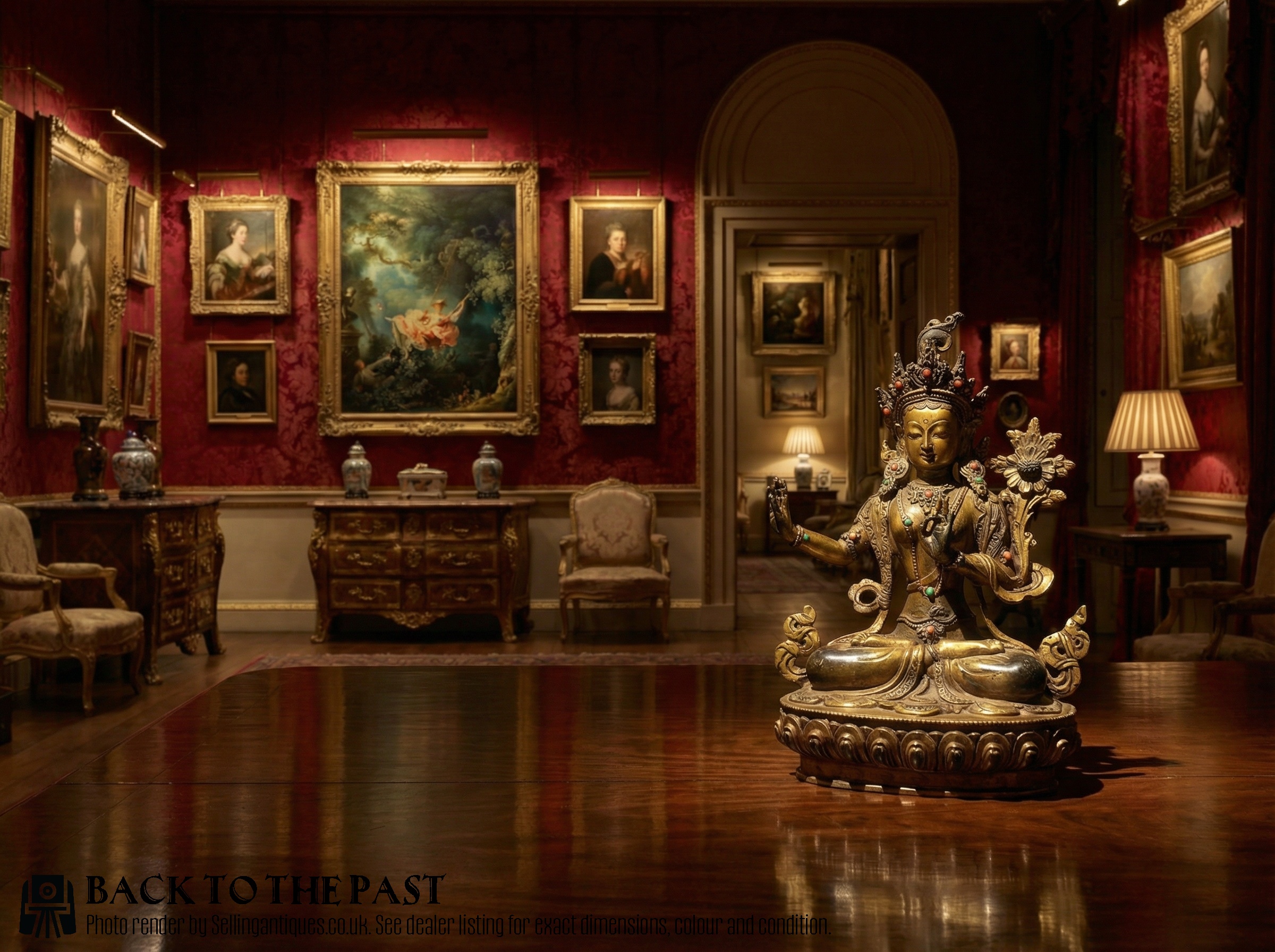
A name does most of the work. The upper reaches of the archive are almost all attributed, with a sculptor signed and often a cast title quoted as well: 'signed' appears in 126 titles and 'entitled' in 49. The lower reaches read 'Bronze figure' or 'An Early 20th Century Bronze' and stop there.
Scale follows the same line. Figures quoted at 97cm, 79cm, 68cm and life-size busts sit in the dearer half, while 'small', 'miniature' and 'cabinet' mark the other end, down to thumb-sized okimono and miniature cold-painted rabbits. Metal matters too: spelter, bronzed spelter, plaster, chalk and terracotta figures live almost entirely in the lower part of the range.
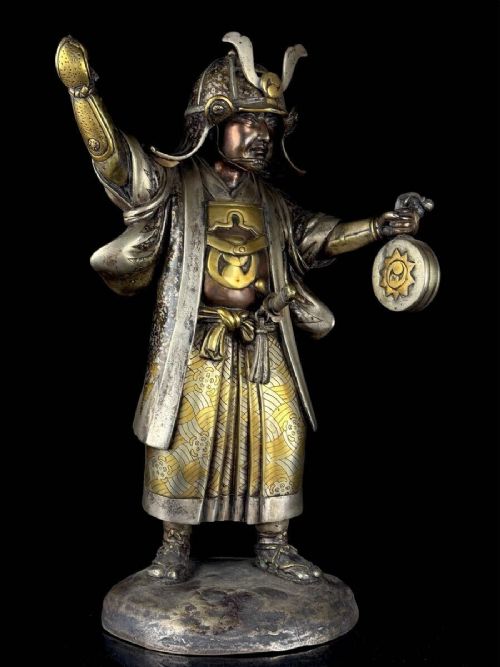
Then surface and mounting. Plain patina is the baseline, so silvered, gilded and parcel-gilt finishes stand apart, as do inlaid Japanese bronzes in shakudo and gold. Marble is named in 95 titles, with onyx, malachite, breccia, serpentine and Portoro plinths cited most often on the dearer figures. The very top of the range is held by Japanese work rather than European, large gilded okimono and samurai groups.
Antique Bronze Sculptures Retail Price Guide 2026
Typical UK retail prices for bronze sculptures, calculated from the Sellingantiques database of over a million retail prices indexed since 2003. This retail price guide relies exclusively on Sellingantiques data; no external sources or auction records are used, so the figures do not describe the wider market.
19th Century is the period label used most on Sellingantiques for bronze sculptures, with the 1920s next and the 1900s third.
Franz Xaver Bergman·Barbedienne·Pierre-Jules Mene·Demetre Chiparus·Louis Auguste Moreau·Josef Lorenzl·Bruno Zach·Emmanuel Villanis·Claire Colinet·Alfred Dubucand·Louis Riche·Clodion·Miyao Eisuke·Coustou·Henri Ple·Eutrope Bouret·Pierre Jules Cavelier·Antoine Bofill·Mathurin Moreau·Charles Anfrie
The Antique Bronze Sculptures Glossary
- After
- A cast taken from or copying another sculptor's model rather than an original by that hand. It sits in 158 titles and is the honest way of saying the model is borrowed.
- Cold painted
- Unfired paint applied to the cast surface after founding, the usual treatment on Vienna bronzes. Named in 117 titles.
- Grand Tour
- A souvenir reduction after a famous antique statue, bought by travellers. The phrase appears in 211 titles, 46 of them pairing it with 'souvenir'.
- Okimono
- A Japanese object made purely for display. Used in 81 titles, mostly for small bronze animals and figures.
- Patinated
- A chemically or naturally coloured surface. Sixty titles say patinated; others specify silvered, gilded or verdigris.
- Jizai
- A Japanese articulated model whose segments move. Crabs, lobsters, a hermit crab, a tarantula and one scorpion turn up in this form.
Antique Bronze Sculptures: Frequently Asked Questions
Are most of these French?
French casts are the biggest single group, roughly half the category, and 'french' appears in 424 titles. Figures, busts, nudes and animalier subjects such as horses, dogs and lions carry most of it.
Italian and Austrian work follows, with 87 and 75 title mentions. Beyond Europe, the Japanese group is substantial in its own right.
What does Grand Tour mean on a bronze?
It means a reduction after a famous antique statue, made as a souvenir for travellers. The phrase runs through 211 titles on Sellingantiques.
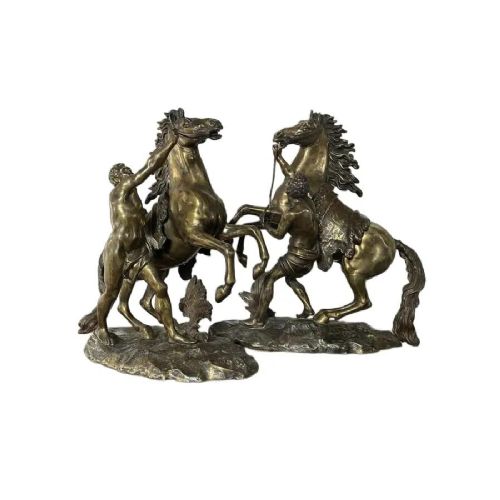
The subjects repeat. The Dancing Faun of Pompeii is the most-repeated single subject in the archive, with the Marly Horses after Coustou, the Venus de Milo, Diane de Gabii and the Medici Lion close behind.
Why are so many listed only as 19th century?
Because that is what the dealer entered. The vague '19th Century' bracket holds 645 listings, the largest bucket in the whole dated field, and 'Victorian' is similarly broad.
Where a decade is given it usually falls between the 1860s and the 1930s, with the 1920s, 1900s and 1880s the fullest. Only 1,322 of 2,172 listings carry a clean year at all.
Is spelter sold in this category too?
Yes. Spelter and bronzed spelter appear in a small but distinct run of listings, along with plaster, terracotta and chalk figures.
They sit almost entirely in the lower part of the range. Bronze-and-ivory and bronze-and-marble combinations turn up as well, the ivory ones described as chryselephantine.
How many come up each year?
Around 265 a year, and 214 different dealers have listed one. That is one of the broadest dealer bases in sculpture, so no single specialist controls what reaches the market.
Singles outnumber pairs heavily. 'Pair' appears in only 218 titles.
Which Japanese pieces turn up?
Meiji-period work leads, with 'meiji' in 137 titles and 'okimono' in 81. Hawks, tigers, horses, monkeys, turtles and Buddhist figures are the recurring subjects.
Articulated jizai models are far scarcer: a crab, a lobster, a hermit crab, a tarantula and a single scorpion across the entire archive.
At the top of the range, large gilded okimono and samurai groups outrank the European figures.