


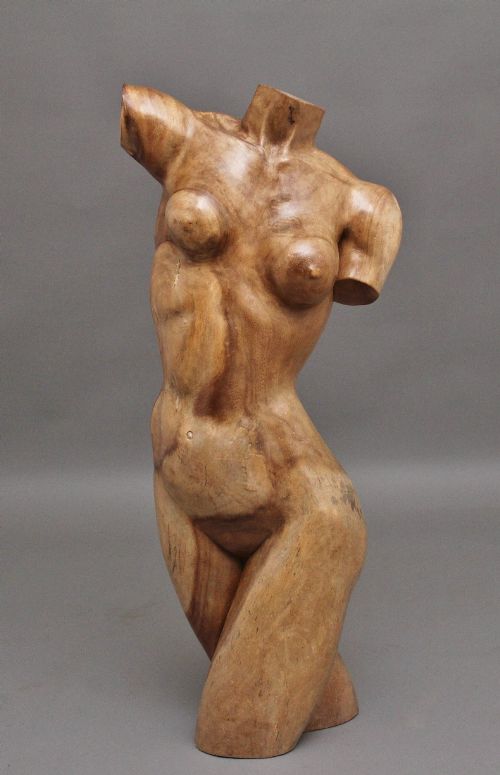
Antique Busts
A bust is head-and-shoulders sculpture, made to commemorate a person or to carry a famous classical head into a hall, a library or a drawing room.
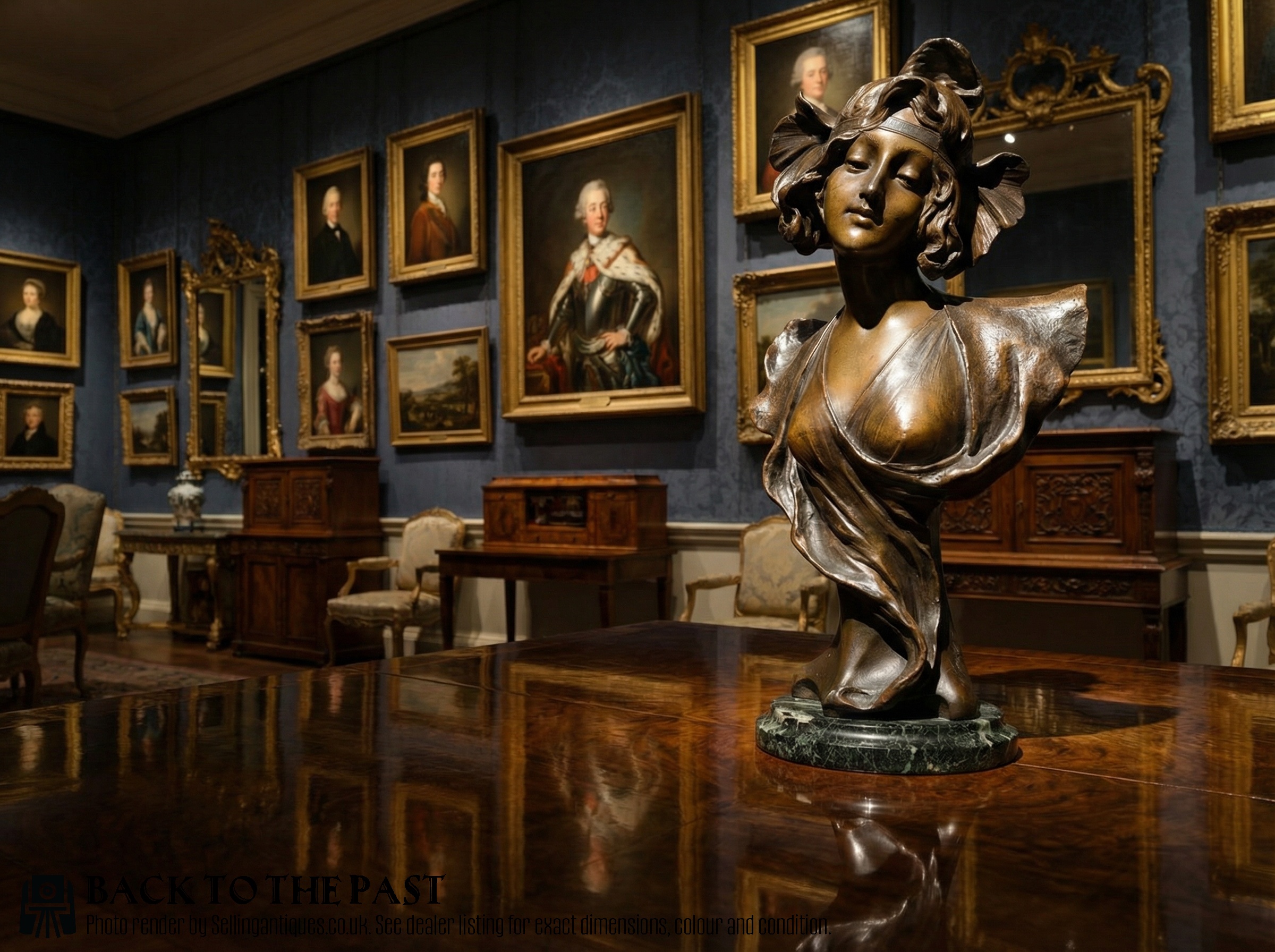
Antique Busts
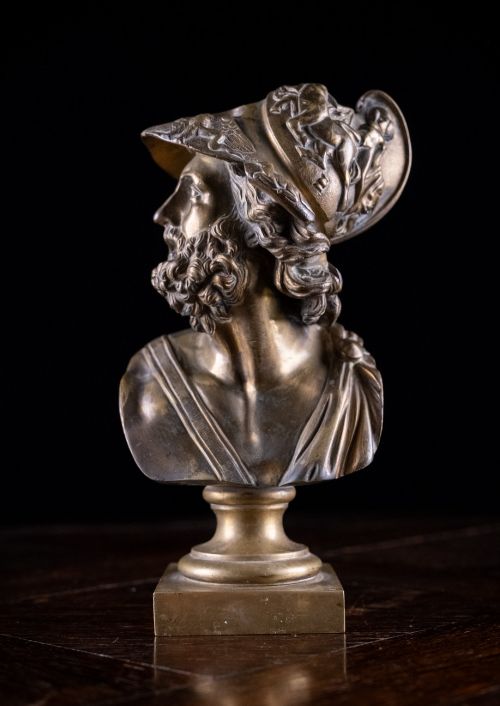
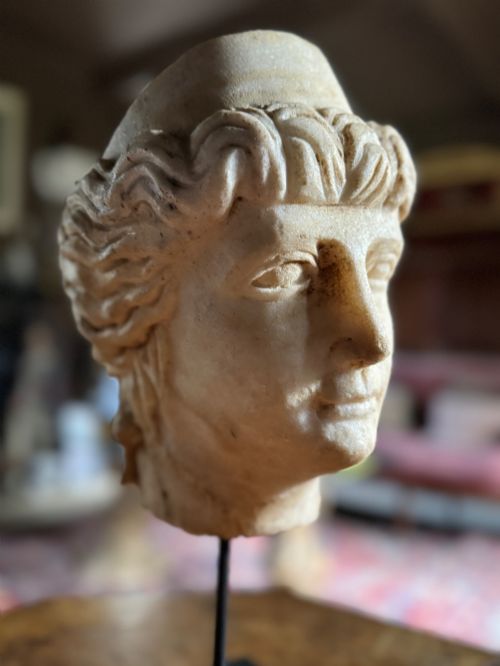
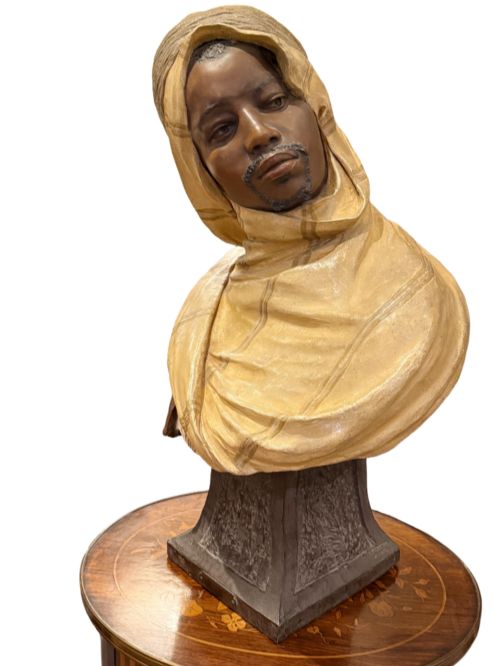
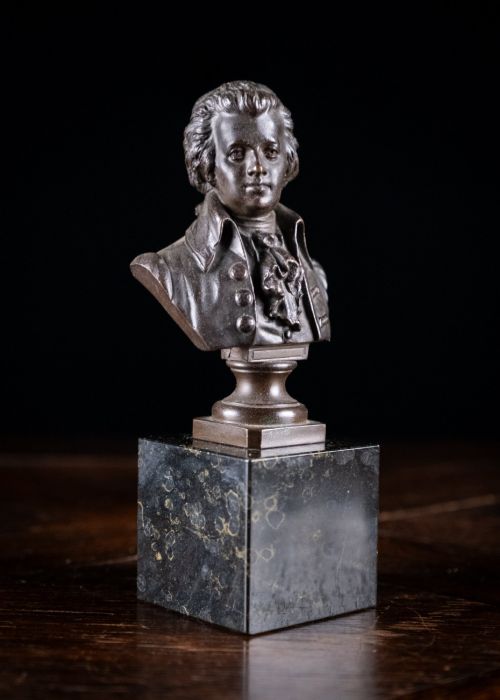
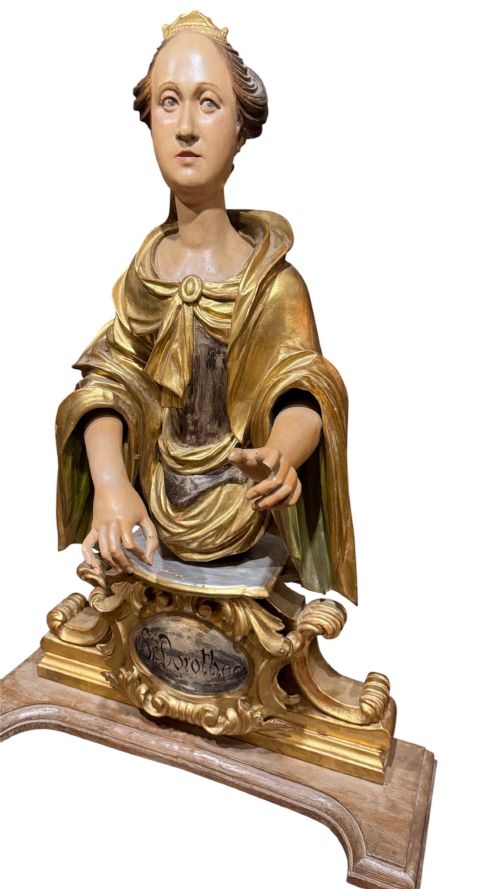
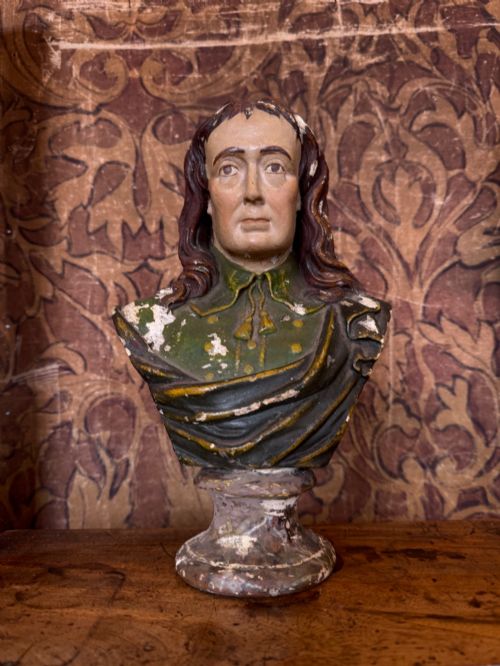
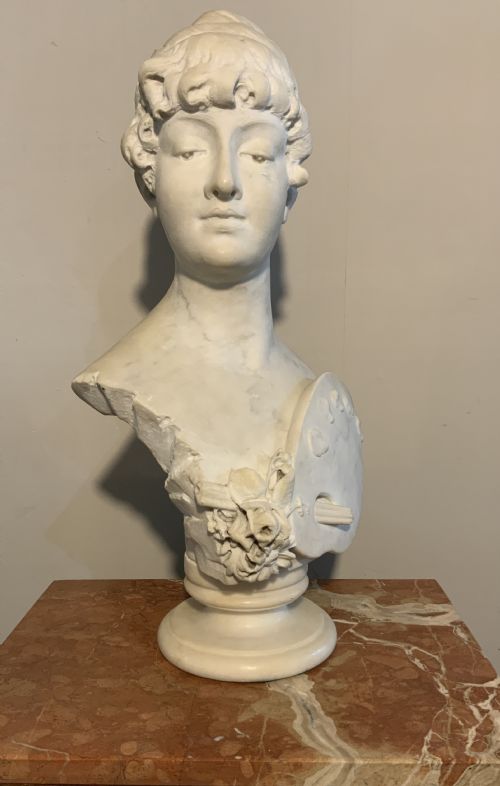
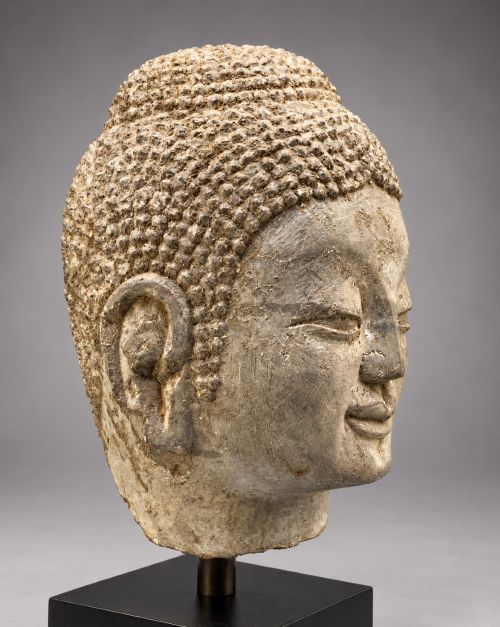
Most of what falls under the heading is free-standing portrait sculpture: head, shoulders and upper chest, on an integral socle or a separate marble or wood plinth. Heads, masks and half-figure studies turn up as well, in smaller numbers. Subjects divide between named sitters and classical or allegorical types.
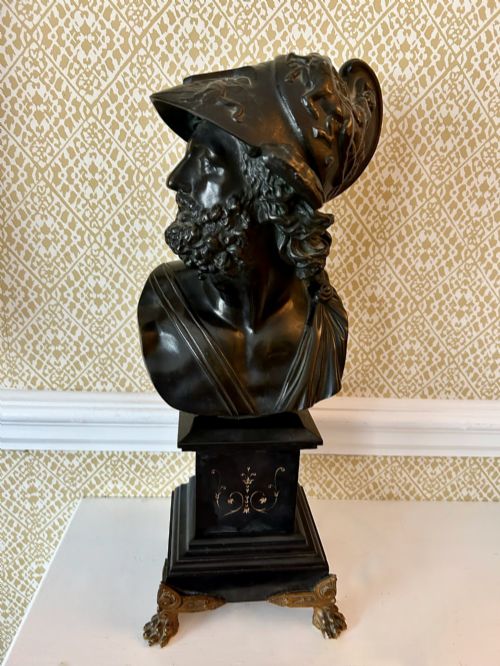
Bronze and marble lead the archive at almost exactly level numbers, with plaster and alabaster forming a second tier and terracotta, parian, wood and stone behind them. The form the site sees most is a 19th-century bronze or marble of a named classical or literary figure, standing on a base of contrasting material. French and Italian attributions dominate where a nationality is stated at all.
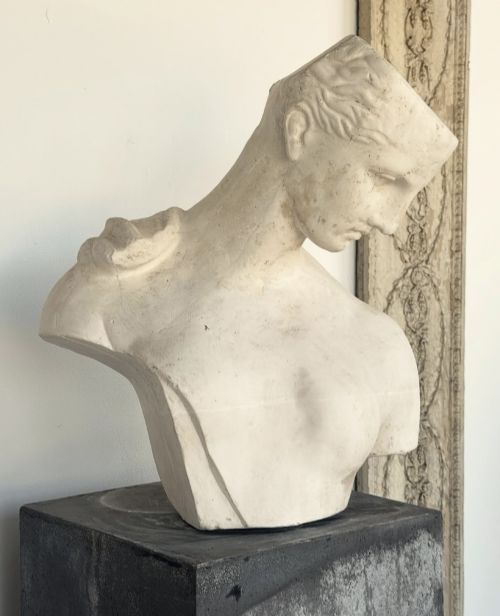
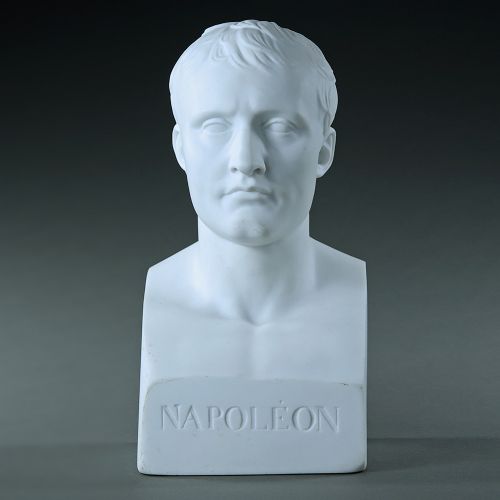
Subjects repeat to a striking degree. Apollo, Diana, Napoleon and Venus each appear across a dozen or more titles, joined by Ajax, Menelaus, Homer, Dante, Shakespeare, Byron and Queen Victoria. The word 'after' recurs, marking a copy of an earlier original such as the Apollo Belvedere or the Venus de Milo.
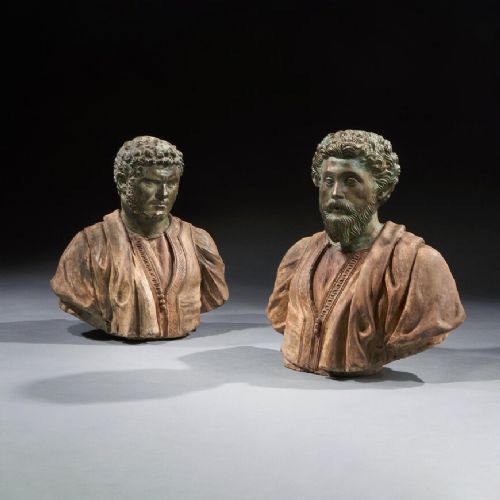
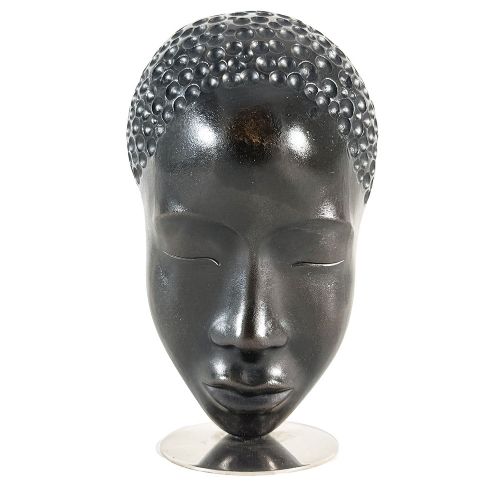
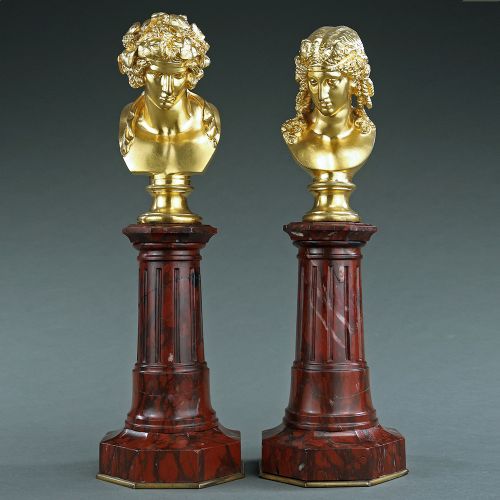
Four strands sit inside that. Grand Tour souvenirs are a group of their own, often as matched pairs like Antinous and Ariadne or Apollo and Diana. Plaster library busts carry Homer, Augustus, Walter Scott and Hippocrates. Art Nouveau and Art Deco female heads run through the later end. Odd single things surface too: a wax portrait, a glass-paste Roman emperor, a yew burr carving, a milliner's head.

The Range
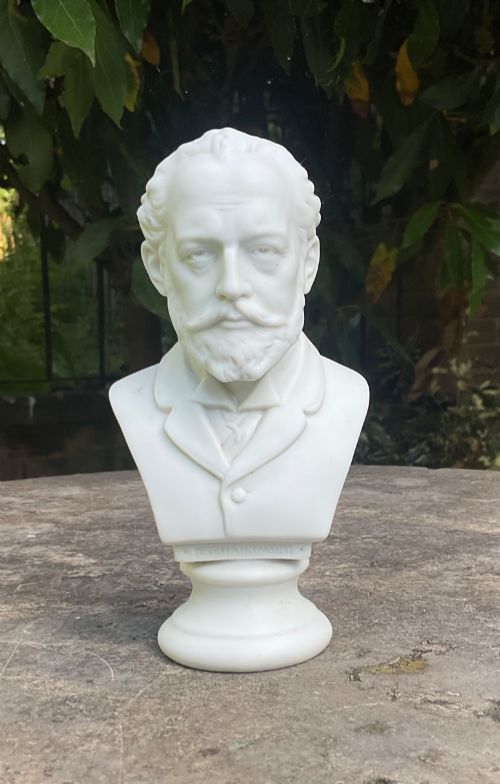
Material and method separate the ends of the range more than anything else. Carved marble occupies the top, alabaster and bronze the middle ground, and the two moulded materials, plaster and parian, sit at the bottom. Carving takes time and a good block; moulding repeats.
Scale follows close behind. 'Large' appears in a tenth of titles and 'life size' in a further handful, and the highest-placed pieces are the ones described as huge, monumental or full size, one measured at 169cm on its pedestal. A Grand Tour reduction of the same subject is a different object.
Then age, signature and company. Only fourteen listings carry an 18th-century date and a few sit earlier still, and those early pieces rank high, while 1920s and 1930s plaster and terracotta sit low. Signed work runs ahead of unsigned, and pairs run ahead of singles.
Antique Busts Retail Price Guide 2026
Typical UK retail prices for busts, calculated from the Sellingantiques database of over a million retail prices indexed since 2003. This retail price guide relies exclusively on Sellingantiques data; no external sources or auction records are used, so the figures do not describe the wider market.
Emmanuel Villanis is the name that turns up from the most dealers on Sellingantiques in this category.

Emmanuel Villanis·Guglielmo Pugi
The Antique Busts Glossary
- Bust
- A sculpture of the head, shoulders and upper chest, usually raised on a socle. The standard form across the category.
- Socle and plinth
- The base a bust stands on, frequently marble or wood, sometimes cast as one with the sculpture and sometimes separate.
- After the antique
- A copy or free version of a known ancient sculpture. 'After' turns up in thirty-three titles, the Apollo Belvedere and Venus de Milo among them.
- Carrara
- White Italian statuary marble, named in thirteen titles and the stone behind a good many of the carved entries.
- Grand Tour
- Souvenir sculpture, often a bronze or alabaster reduction of a famous antiquity, bought by travellers. Forty-two titles use the term.
- Parian
- Unglazed white porcelain, moulded rather than carved, used for busts across several different sources rather than one factory.
Antique Busts: Frequently Asked Questions
What material are most antique busts?
Bronze and marble lead and are almost level with each other, at 133 and 128 titles out of 532 on Sellingantiques.
Plaster and alabaster make up a substantial second tier. Terracotta, parian, wood and stone appear in smaller numbers, and serpentine, malachite, granite, sandstone, copper, cast iron, basalt and glass paste each turn up only once or twice.
Why are so many dated just 19th century?
Because that is how the category files itself. The dated field runs 1750 to 1950, 288 listings carry a clean year, and the single largest bucket is the unspecific '19th Century' at 161.
The same imprecision shows in titles, where '19th', 'c19th' and '19thc' are all in use. Decade buckets, where they exist, cluster from the 1860s to the 1930s.
What is a Grand Tour bust?
A souvenir brought home from Italy, commonly a bronze or alabaster reduction of a celebrated antique head. Forty-two titles use the term.
They often come as matched pairs, Antinous and Ariadne or Apollo and Diana, and the same pairings recur across several different dealers.
Which subjects appear most often?
Classical figures dominate. Apollo appears in sixteen titles, Diana in fourteen and Venus in eleven, alongside Ajax, Menelaus and Antinous.
Napoleon leads the named portraits at thirteen, with Shakespeare, Dante, Byron, Homer and Queen Victoria recurring. Library plaster brings in Augustus, Walter Scott and Hippocrates.
Are antique busts signed?
Some are. 'Signed' appears in twenty-nine titles, roughly one in twenty, and named sculptors show up far more often in the upper part of the range than the lower.
Where a sculptor is recorded, it is as a signature on the piece or as an attribution. Foundry marks and edition numbers are not something the listings record.
How many busts come up in a year?
Around sixty-six a year, spread across 156 dealers, so no one dealer sets the tone of the category.
That spread is why the same subjects recur from different sources, and why matched Grand Tour pairs show up under several names.