



Antique Japanese Sculptures
Japanese figural sculpture in bronze and carved wood, made for display in the home or, in the case of netsuke, to hang a pouch from a sash.
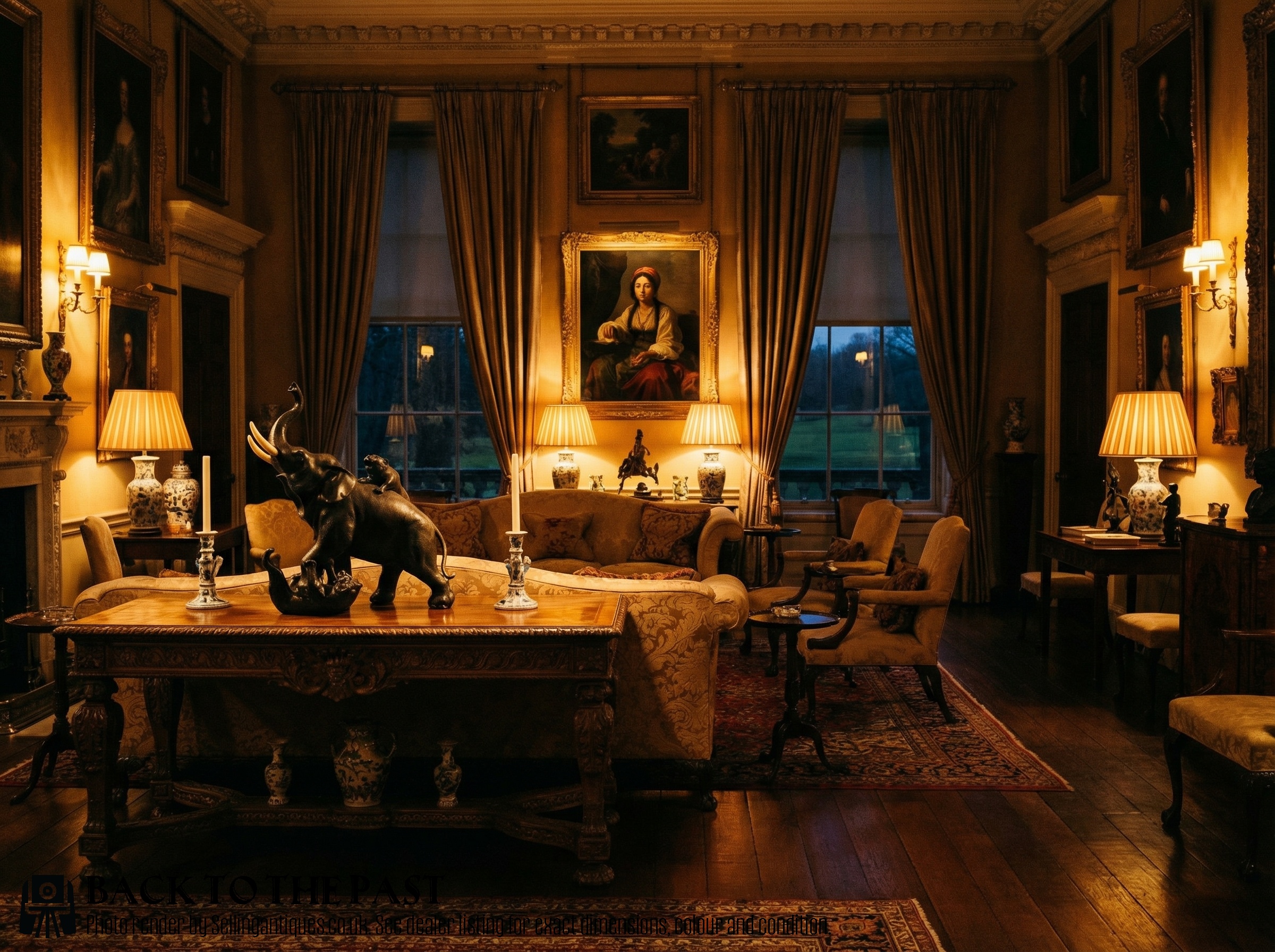
Antique Japanese Sculptures
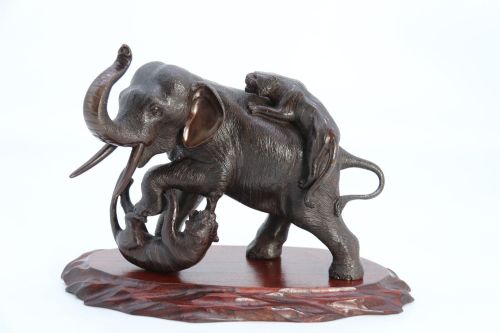
Bronze is close to the definition of the category. Of 402 titles on Sellingantiques, 264 name it, and no other material comes within a fifth of that. Carved wood follows, boxwood above all, at 49 titles. The piece you are most likely to meet is a Meiji-period bronze okimono of an animal.
Two labels dominate the listings. Okimono, a free-standing ornament made for a Japanese interior, appears in 120 titles. Netsuke, the toggle-sized carving that secured a hanging pouch or inro to the sash, appears in 62 and is usually boxwood, though stag antler, walrus tusk and bone turn up too.
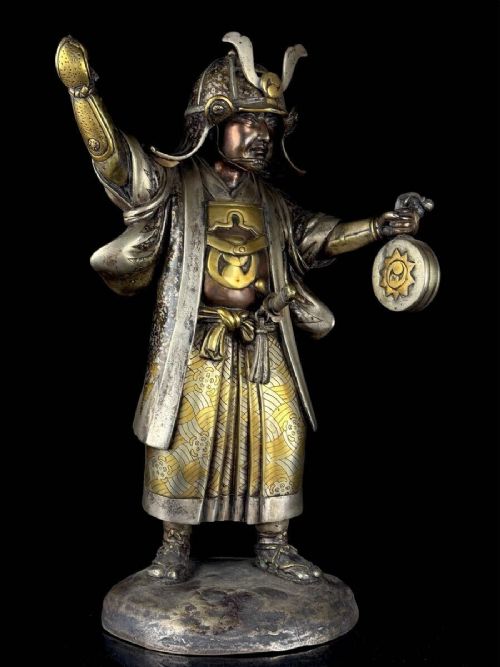
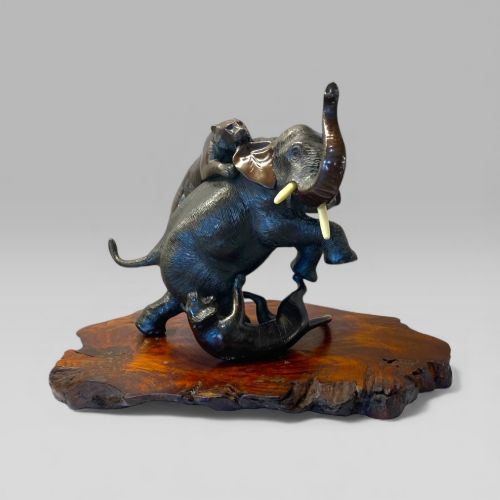
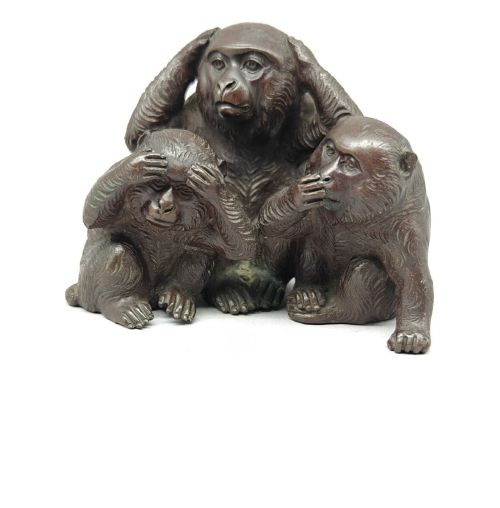
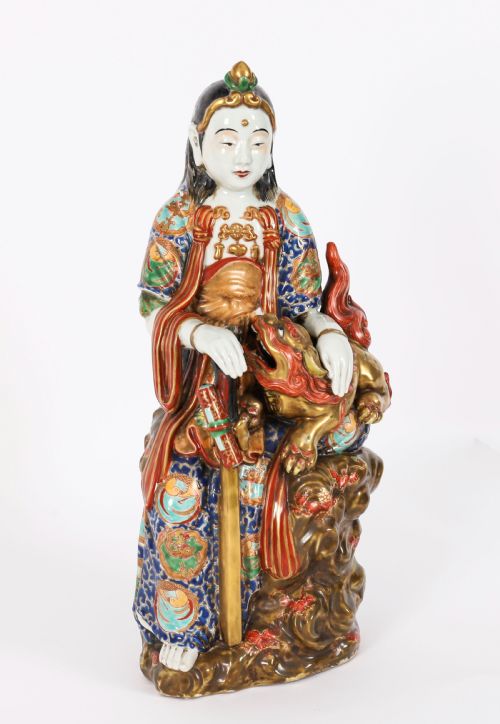
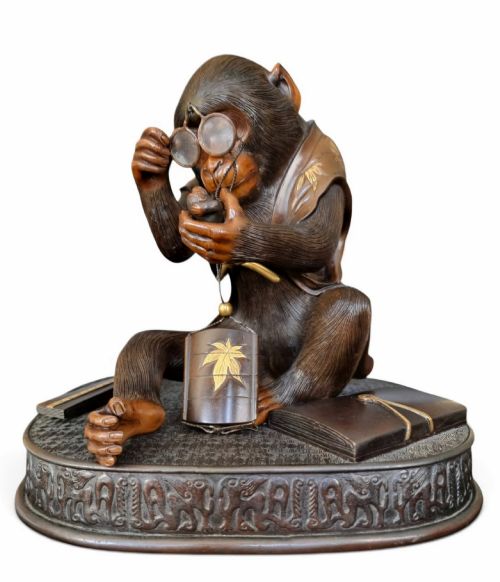
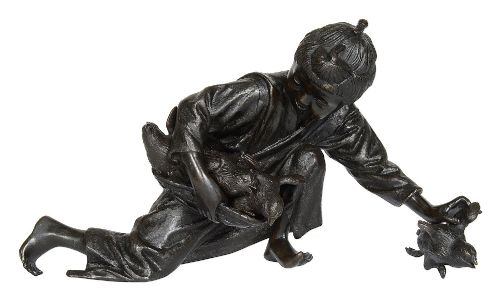
Subjects lean heavily on animals. The tiger leads at 30 titles, 22 of them bronze, then the elephant at 24, and elephant-and-tiger combat groups recur often enough to count as a type of their own. Horses, bears, monkeys, lions and hawks follow. Gods, sages and working figures run alongside: Kannon, Hotei, Jurojin, Ebisu, Daruma, samurai and geisha.
Dating is broad. Meiji appears in 176 titles, Edo in 39, Taisho in 19, and the archive's dated field runs from 1700 to 1930. But 166 listings are dated only to "19th Century", so nearly half the archive sits inside a hundred-year band rather than a decade. Eighteenth-century work is thin, six listings in all.
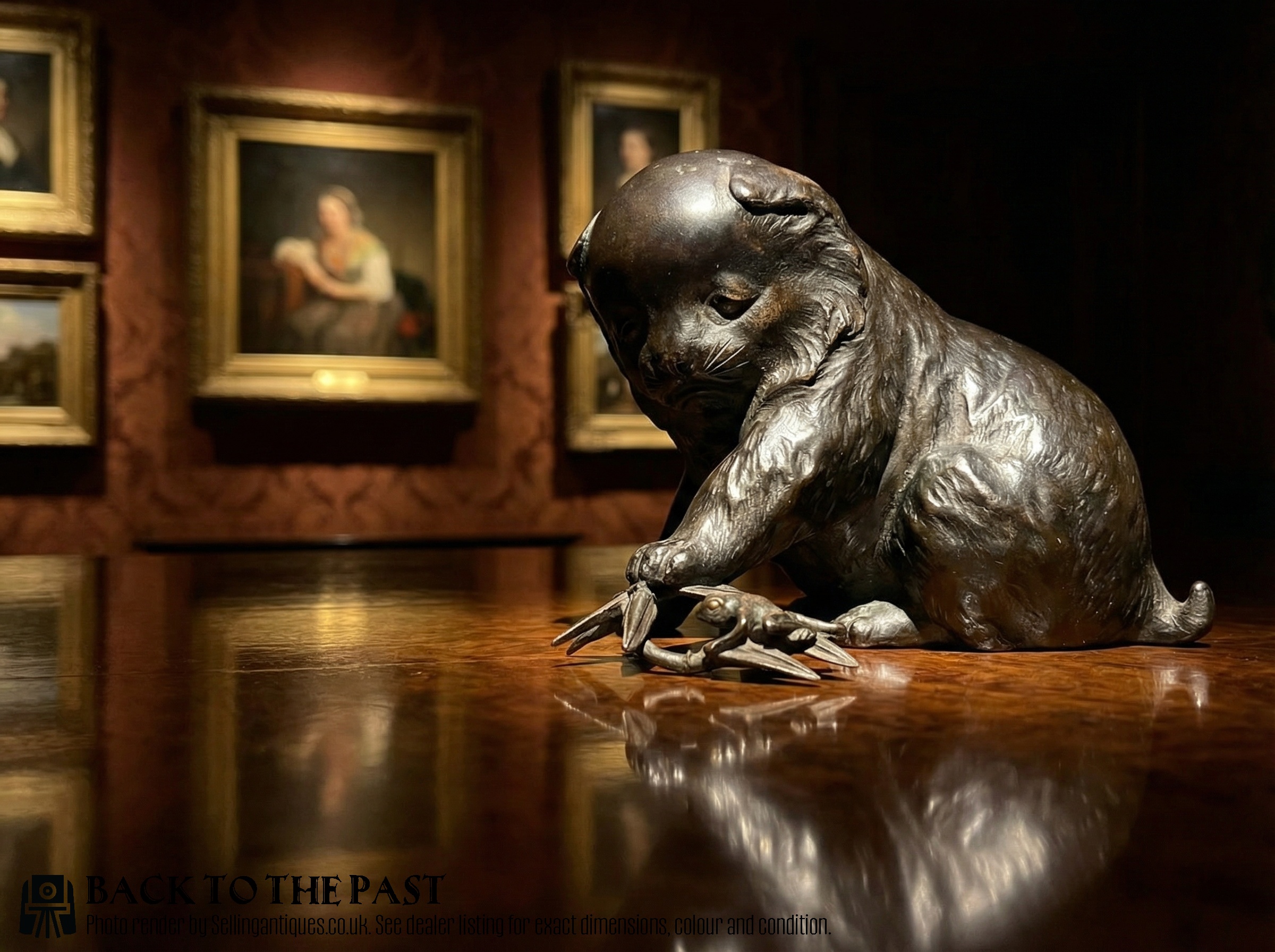
What Sets Them Apart
Scale does most of the work. Large appears in 57 titles, and the upper reaches of the archive describe themselves as huge, monumental, garden or life-size. Small sits at the other end, with thumb-sized boxwood netsuke of mushrooms and peaches. Plain bronze spans the whole range on its own.
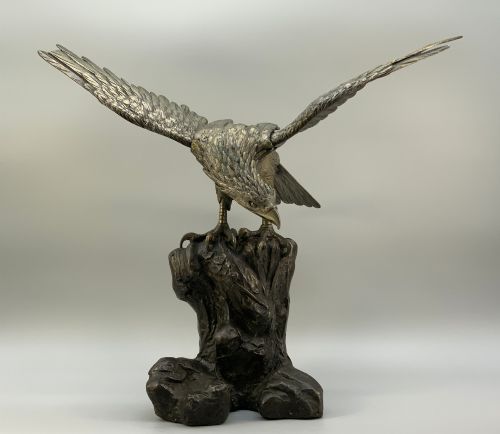
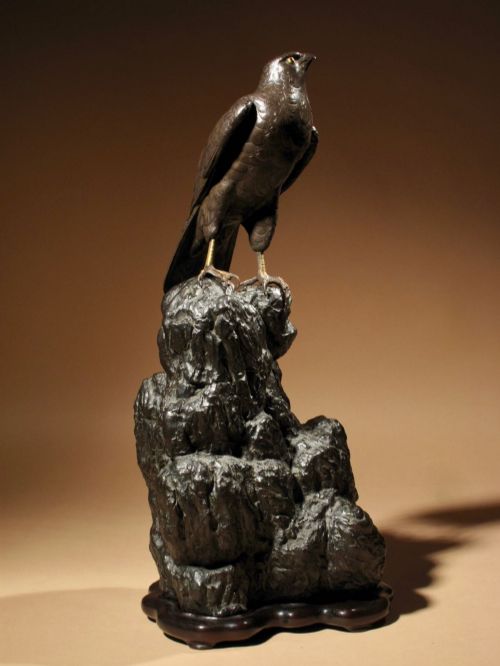
Surface and metal separate the top. Silvered bronze appears in 17 titles and mixed metal in nine, with pure silver, shakudo and inlaid bronze pieces clustering above plain casting. Birds of prey in silvered bronze on rootwood or naturalistic stands, hawks, goshawks, snowy owls, sea eagles, sit almost entirely at the top of the range.
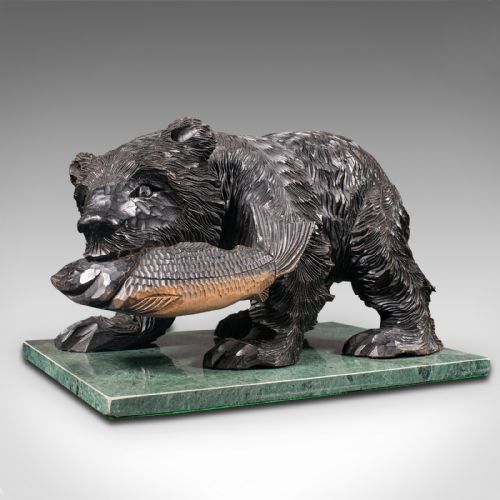
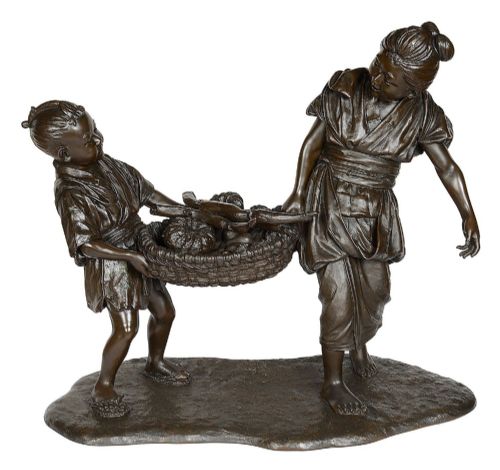
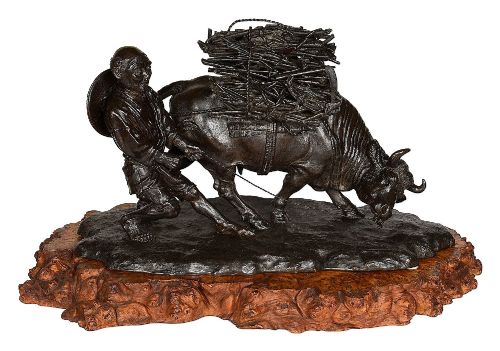
Then composition and mounting. Multi-figure groups, elephants with tigers, hunters on rootwood bases, boy-on-ox subjects, run larger and dearer than a single small animal. A fitted stand matters too: stand appears in ten titles, and rootwood, hardwood and marble bases are named repeatedly on the bigger bronzes. Signed appears in 35 titles, and named hands attach mainly to the dearer entries.
Antique Japanese Sculptures Retail Price Guide 2026
Typical UK retail prices for japanese sculptures, calculated from the Sellingantiques database of over a million retail prices indexed since 2003. This retail price guide relies exclusively on Sellingantiques data; no external sources or auction records are used, so the figures do not describe the wider market.
Japanese sculptures have been listed on Sellingantiques since 2012, with over 300 through the archive since then.

Miyao Eisuke
The Antique Japanese Sculptures Glossary
- Okimono
- A free-standing display ornament, made to sit in an interior rather than serve a use. The word appears in 120 titles, more than any other form term.
- Netsuke
- The small toggle carving worn on the sash cord to anchor a pouch or inro. Named in 62 titles, most often in boxwood.
- Silvered bronze
- Bronze finished with a silvered surface, in 17 titles and common on birds. It sits with mixed metal and shakudo at the upper end.
- Shishi
- The lion-dog guardian figure, named in nine titles, often shown with a ball or a peony. It appears in both bronze and carved wood.
- Kibori kuma
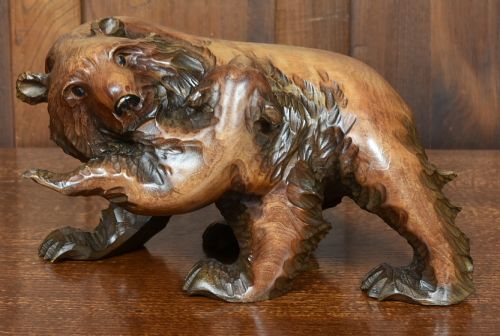
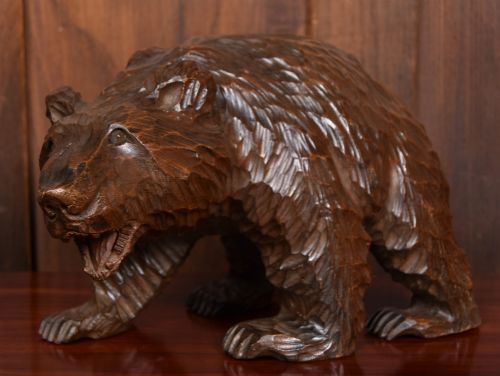
- A carved wooden bear, a repeated form in the wood branch, sometimes a bear with cub at considerable size.
- Jizai
- An articulated metal creature with moving parts. Crabs, lobsters and a scorpion surface only a handful of times across the whole archive.
Antique Japanese Sculptures: Frequently Asked Questions
What is the difference between okimono and netsuke?
An okimono is a free-standing ornament for display in an interior. A netsuke is the small toggle worn on the sash cord to secure a hanging pouch or inro.
Both traditions were long established by the 19th century. Okimono lead the listings at 120 titles, netsuke follow at 62.
Which material is most common?
Bronze, by a wide margin. It is named in 264 of 402 titles, and nothing else comes close.
Carved wood is second, with boxwood in 49 titles and most netsuke made from it. Stag antler, walrus tusk and bone appear in smaller numbers, ivory in only nine titles.
How often do these come up for sale?
Around 55 Japanese sculptures come to market on Sellingantiques in a year.
They are listed by 48 different dealers, so the category is spread widely rather than held by a few specialists.
Are most pieces signed or by a named maker?
Signed appears in 35 of 402 titles, so a signature is the exception rather than the rule.
Named studios do not dominate. Only one maker name is carried by three or more dealers across the whole archive; nearly every other name in the titles belongs to a single dealer's stock. Names appear stamped, cast into the piece, or offered as an attribution.
What subjects turn up most?
Animals. The tiger leads at 30 titles, the elephant follows at 24, and elephant-and-tiger combat groups recur often enough to be a recognised type.
Horses, bears, monkeys, lions and hawks fill out the animal side. Buddhist and human figures run alongside throughout, in both bronze and wood.
How reliable are the dates given in listings?
Treat the dated field as a guide. Of 402 listings, 213 carry a clean year, but 166 are dated only to "19th Century".
Decade-level entries cluster on the 1900s, 1890s and 1910s. A few evidently mis-keyed dates sit in the archive, including a boxwood netsuke tagged 16th Century.