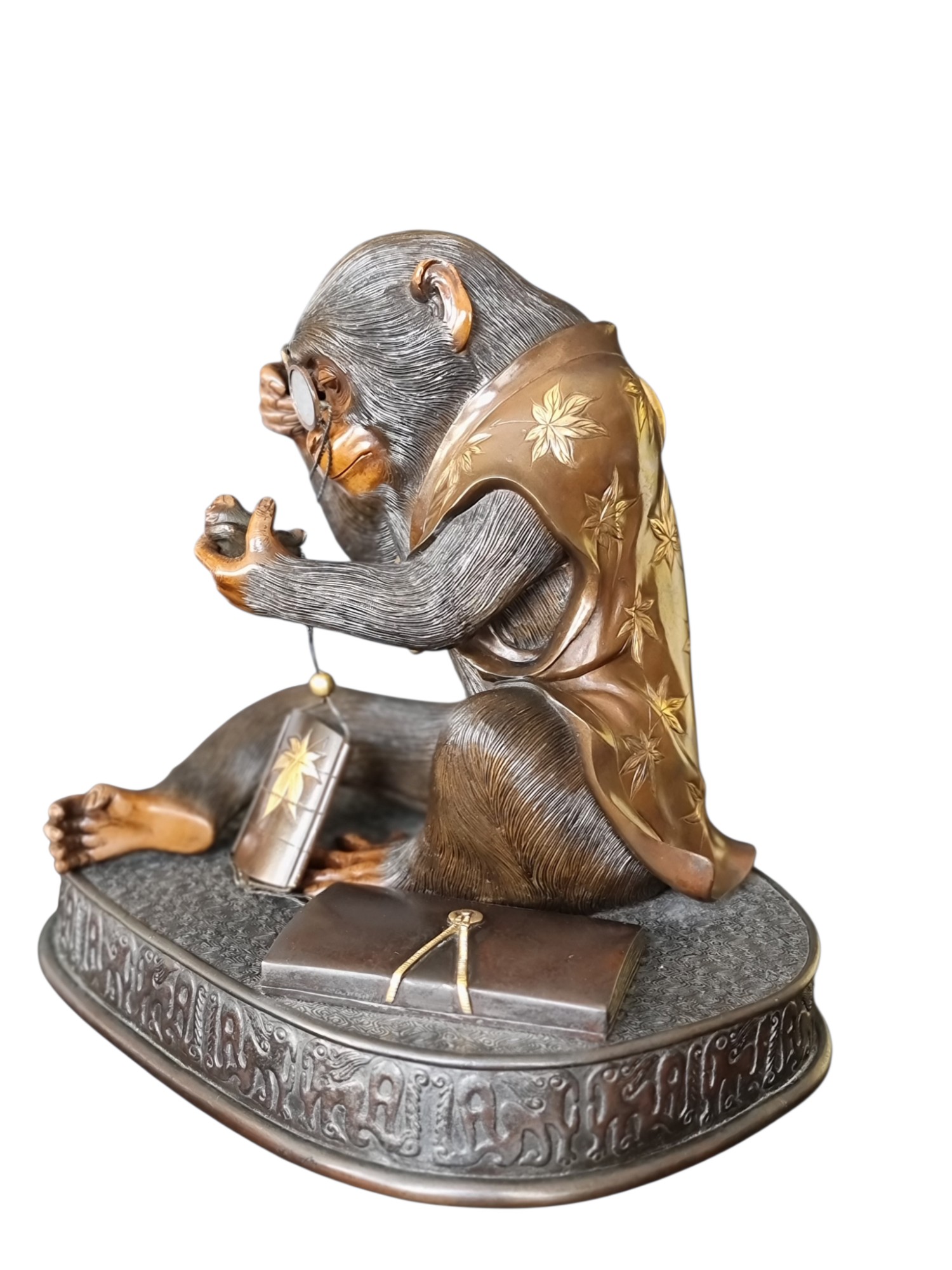
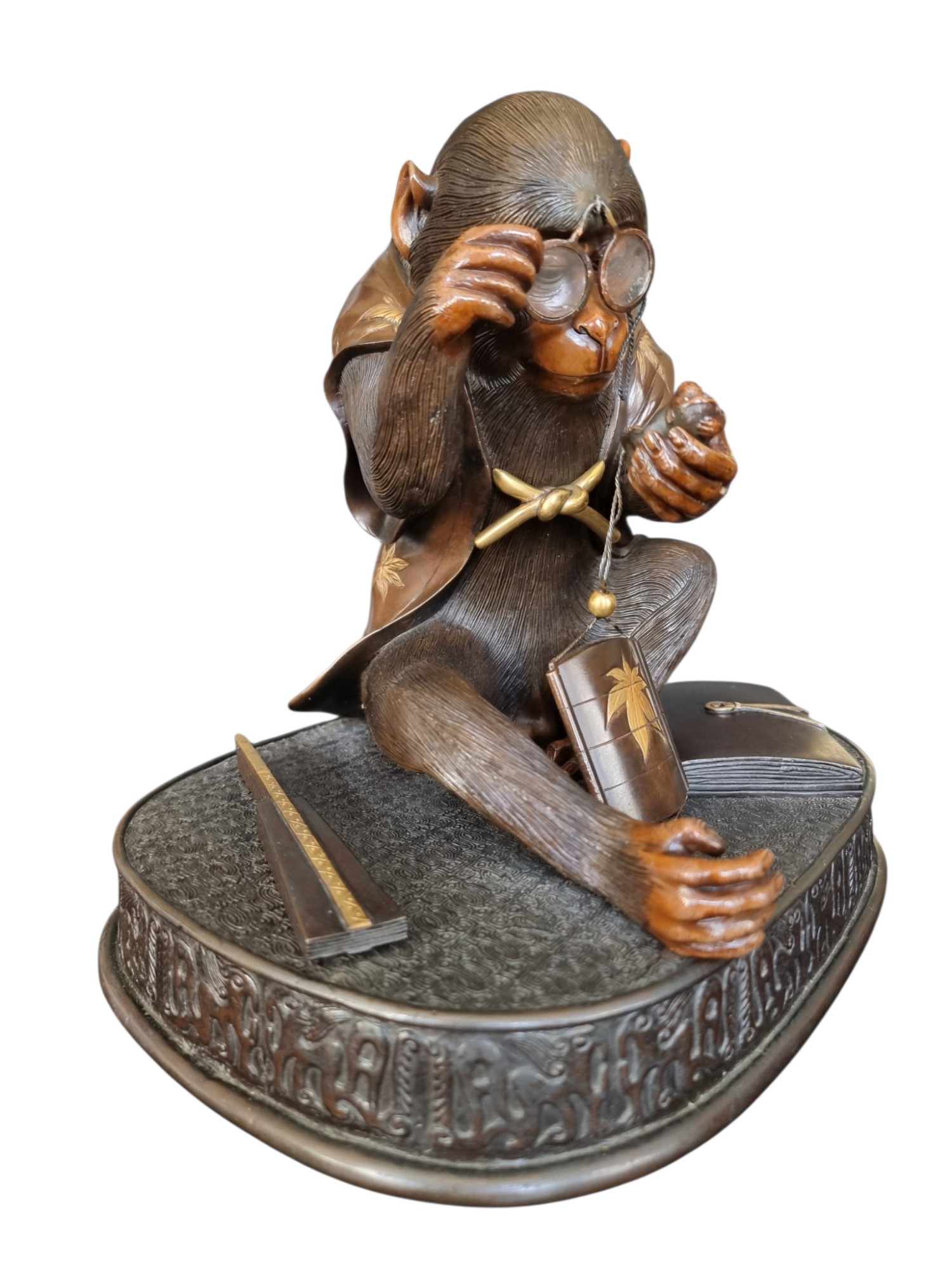
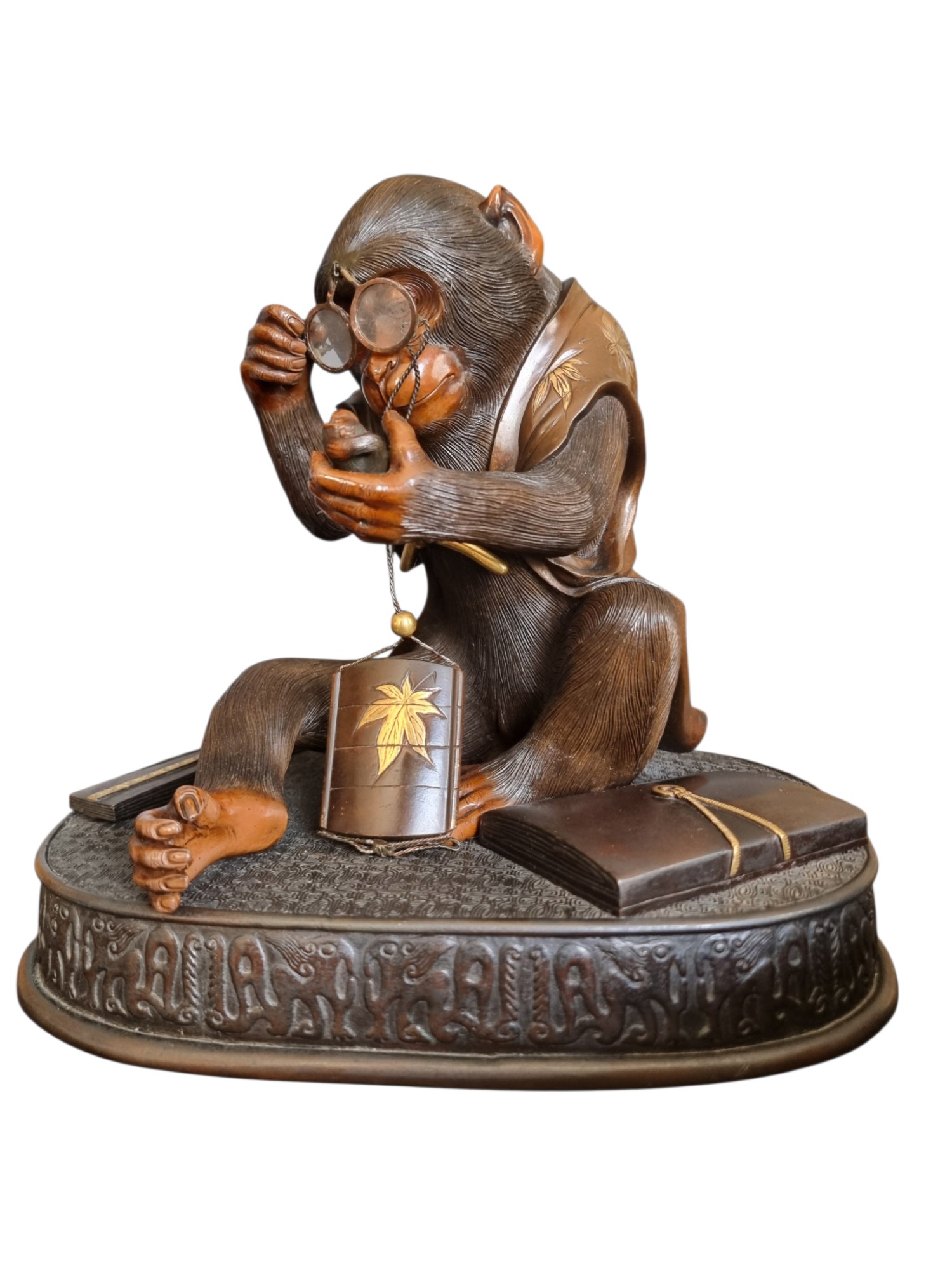
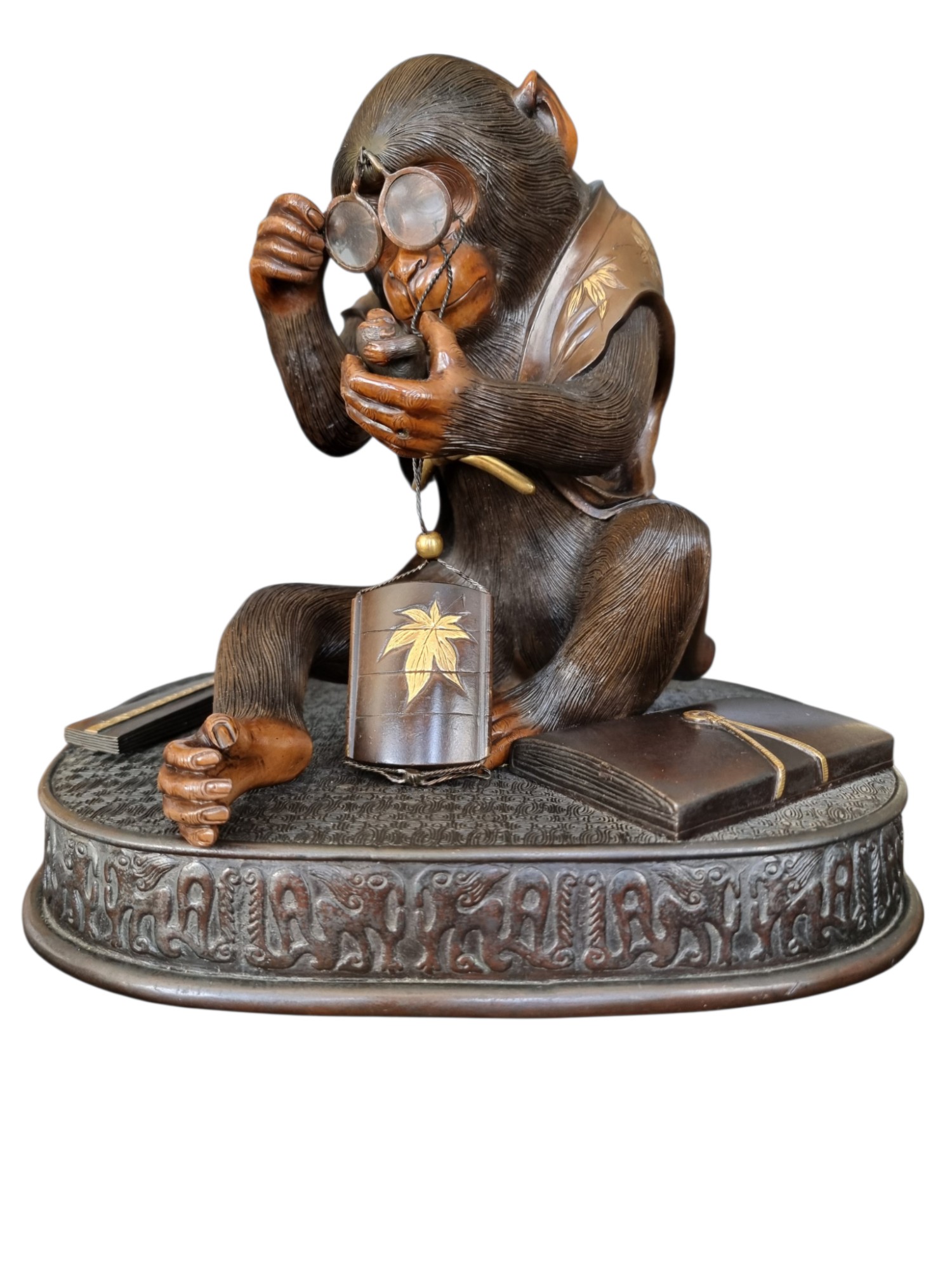
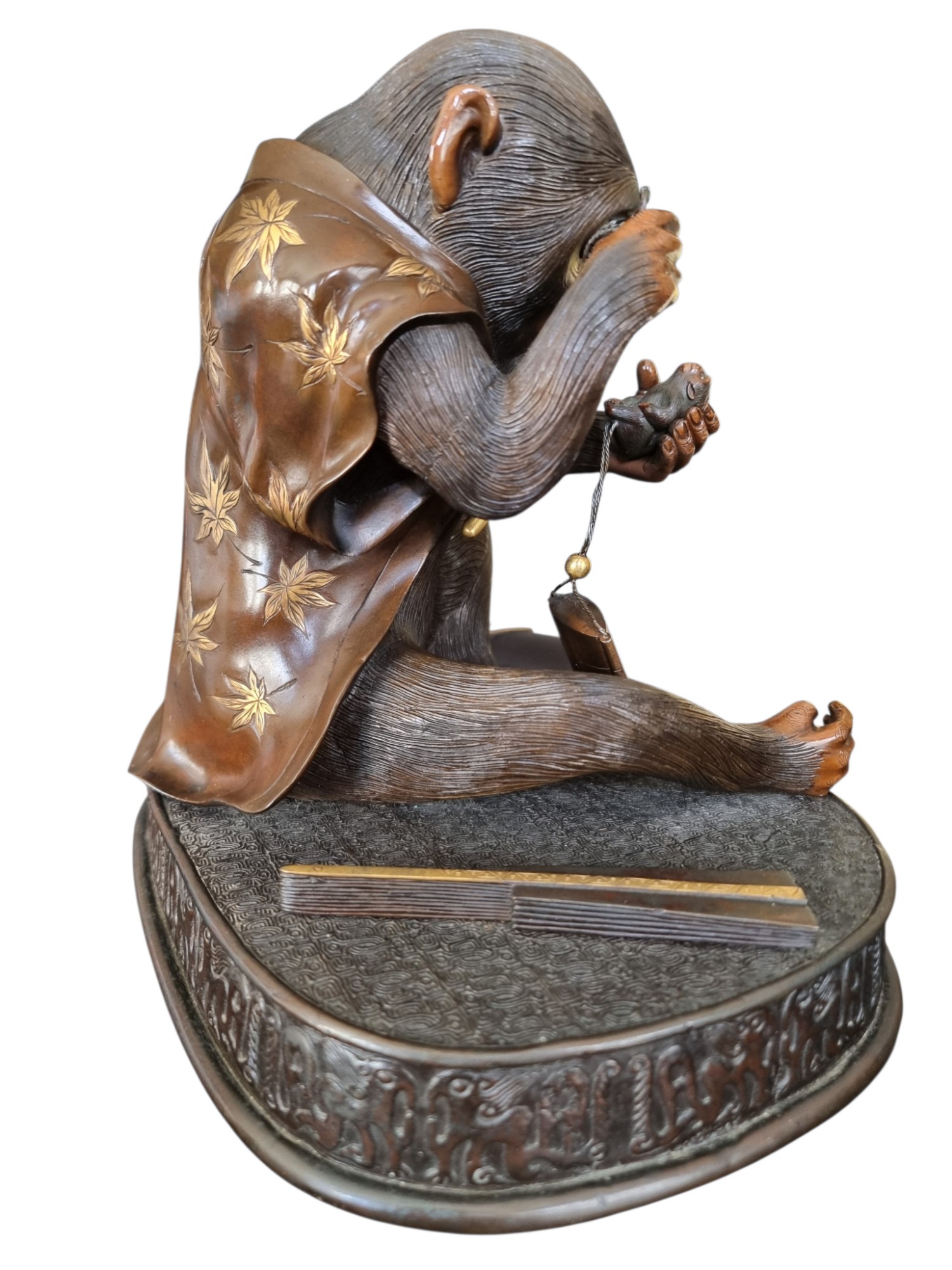
Sandbanks Antiques has dated this Meiji Bronze Monkey Okimono to the 19th Century.
Japan, Circa 1880–1900
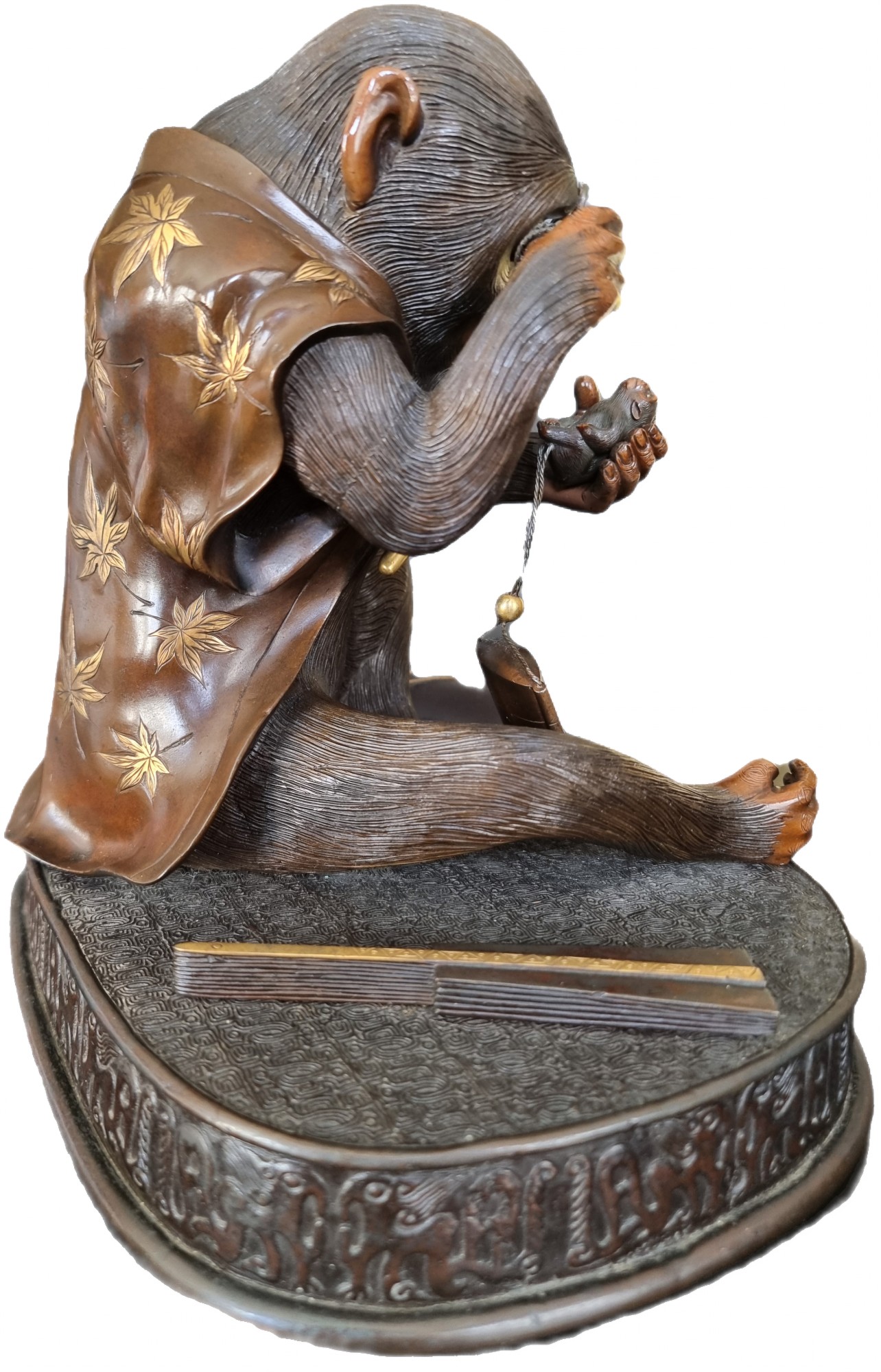
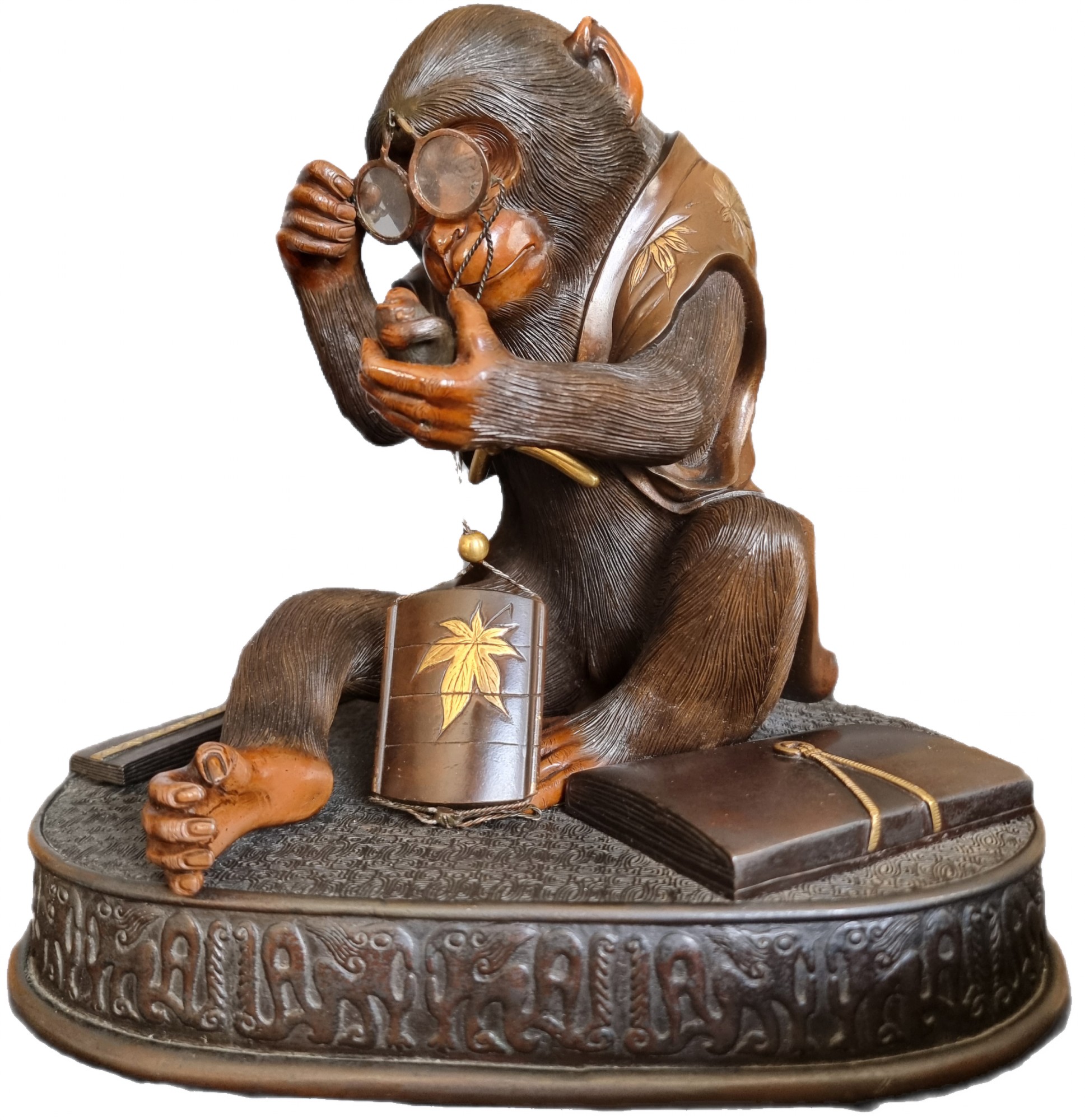
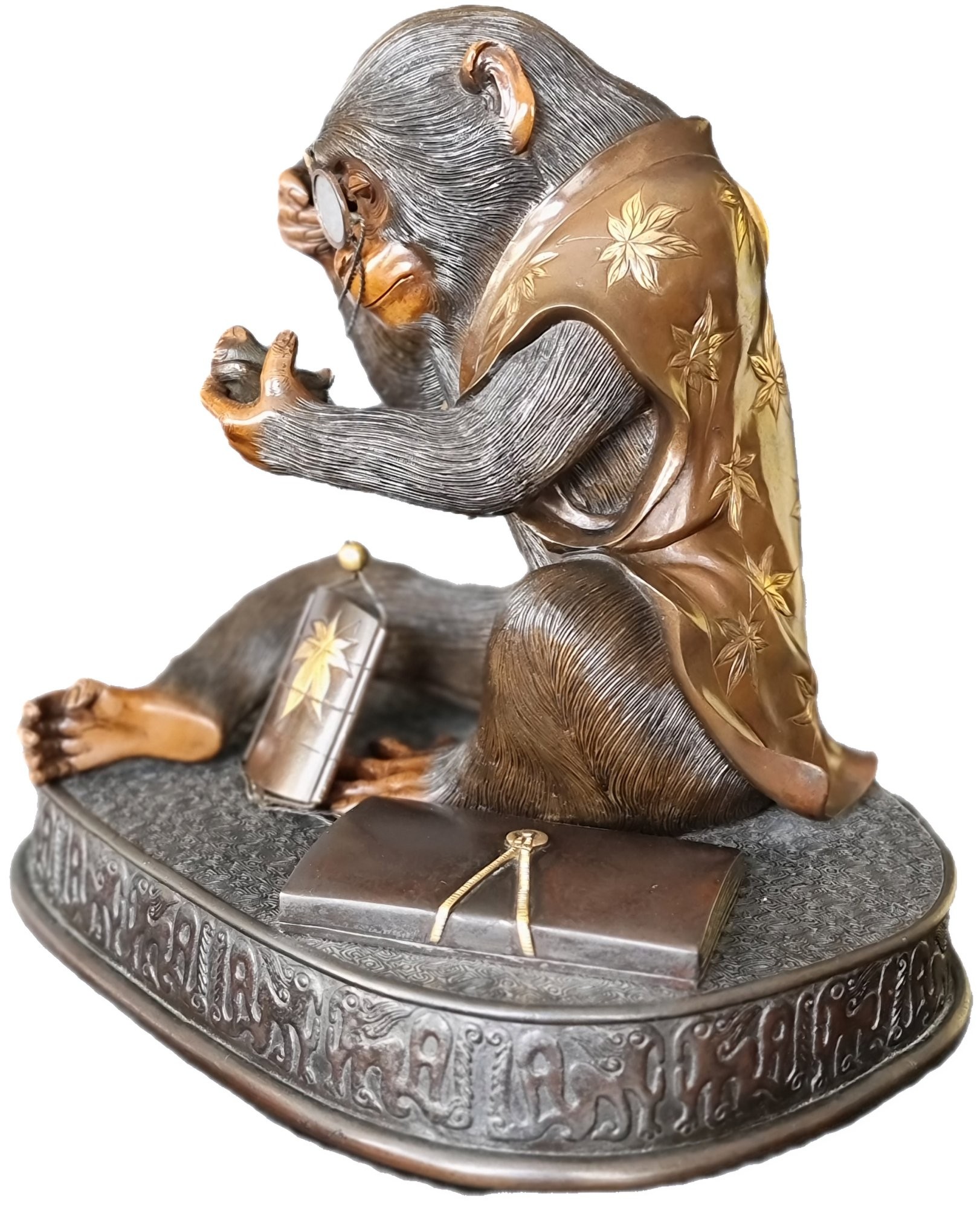
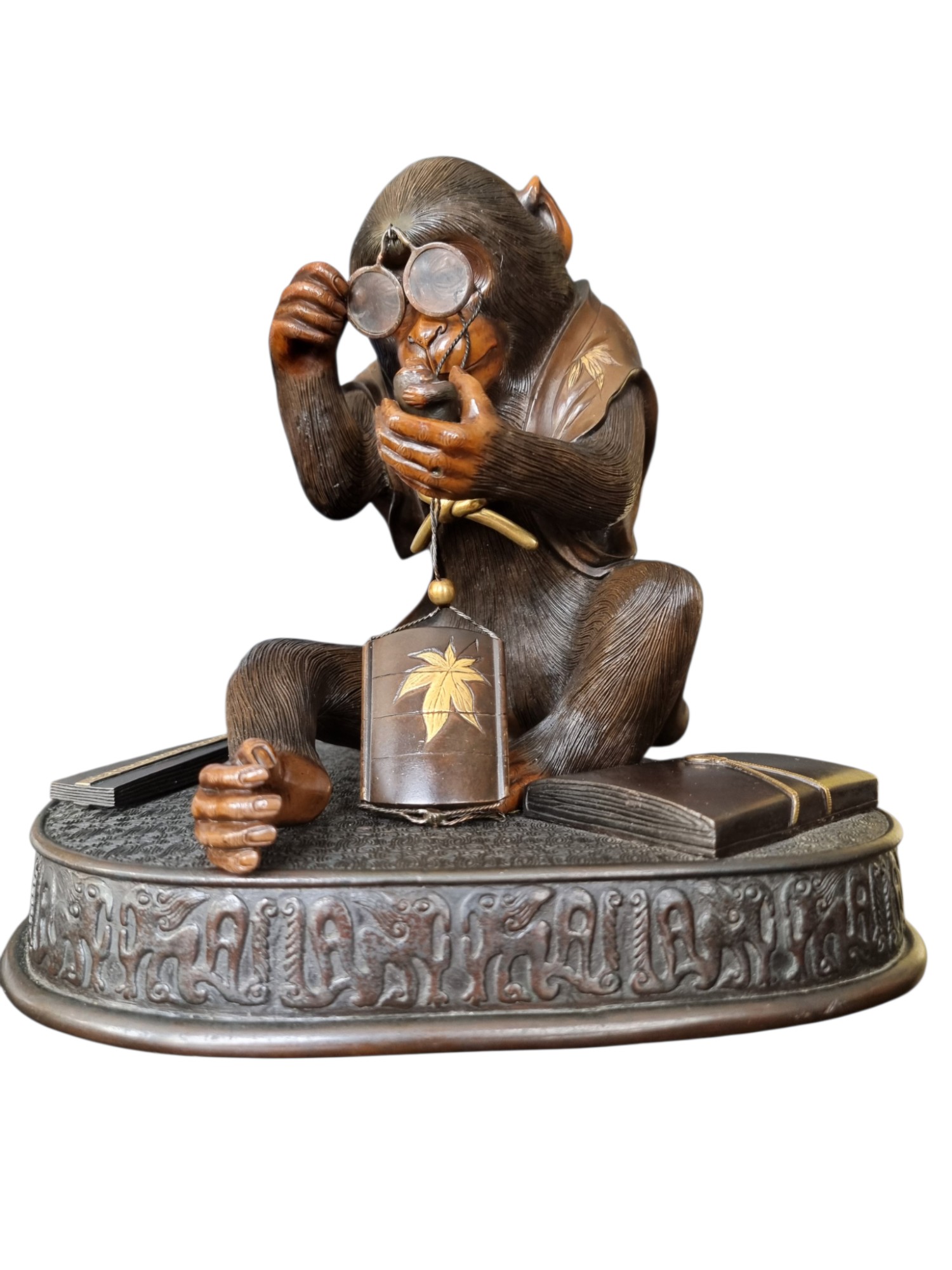
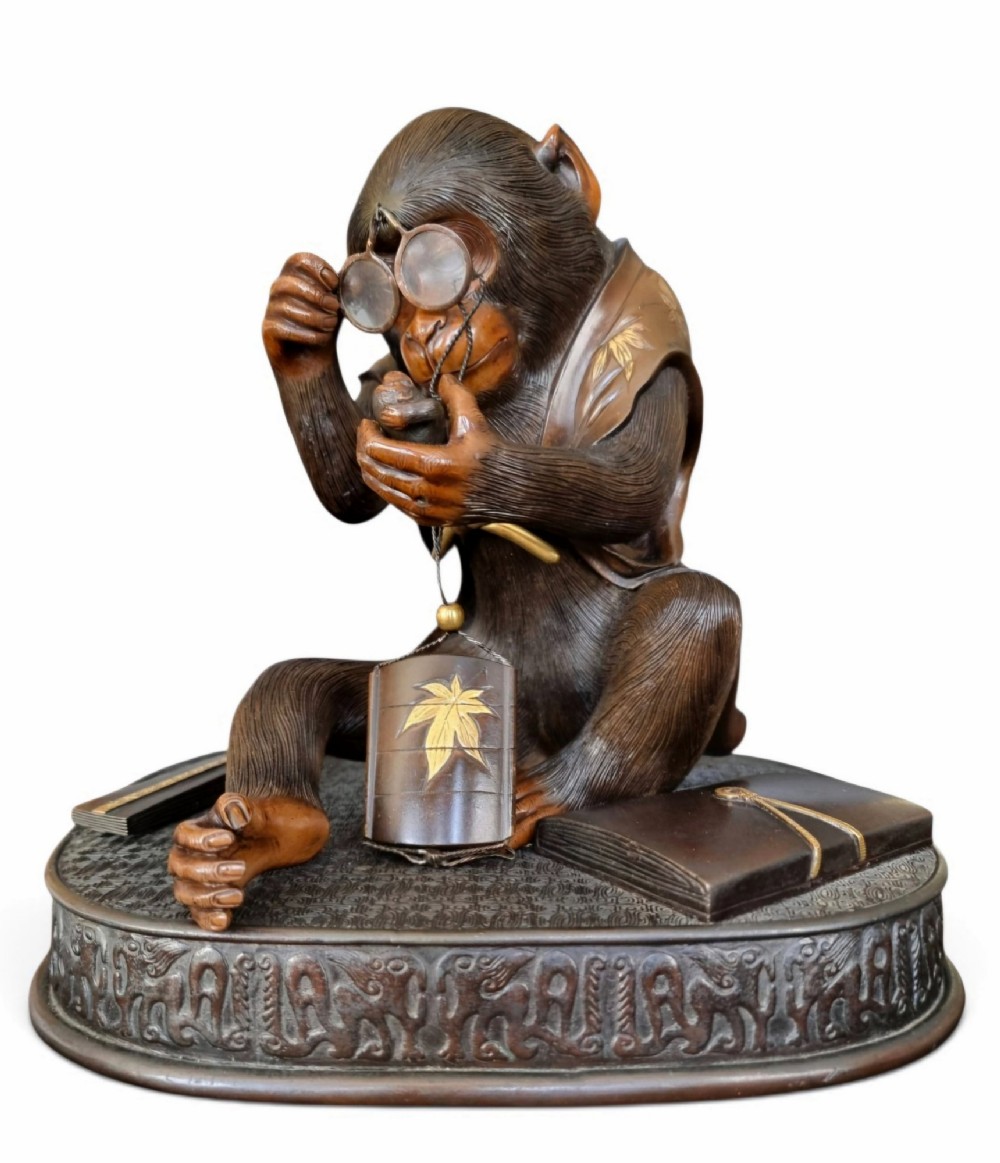
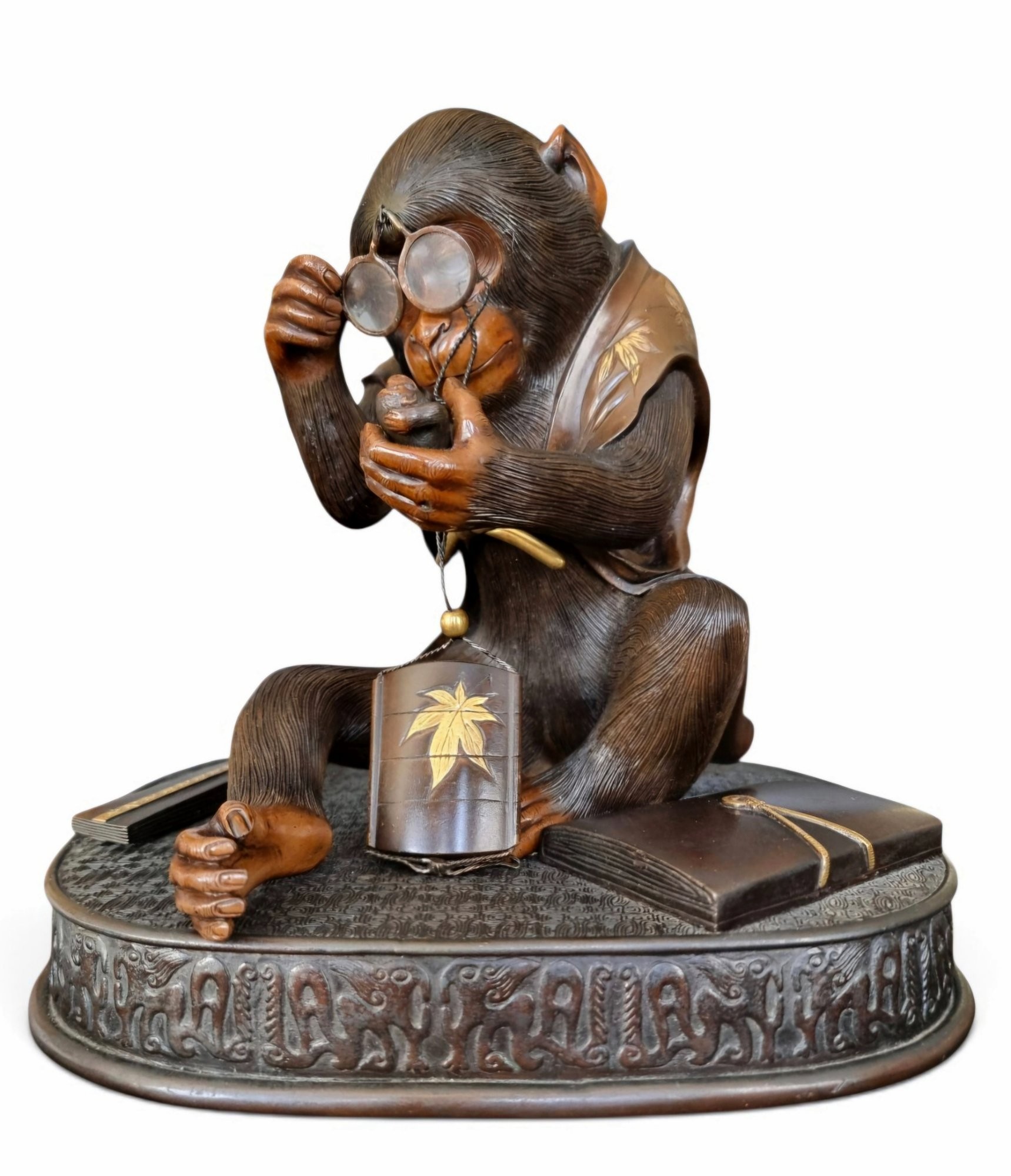
Executed at the height of the Meiji period, the piece depicts an anthropomorphic monkey rendered in the guise of an antiquary or scholar, seated in rapt, scholarly concentration upon an oval plinth.
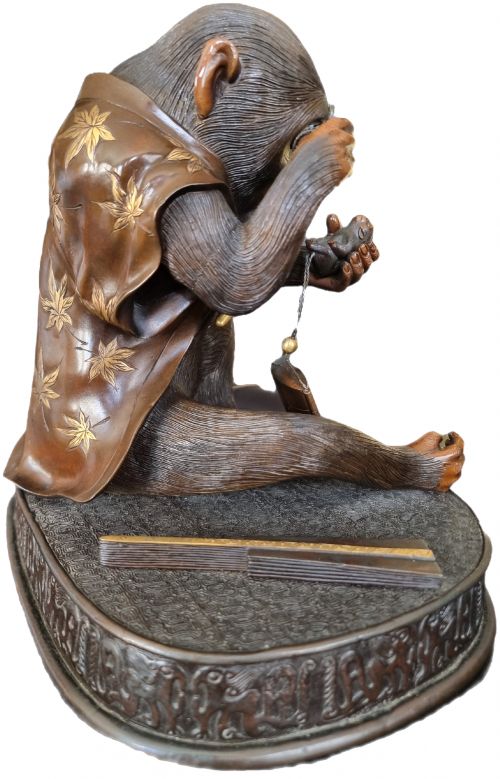
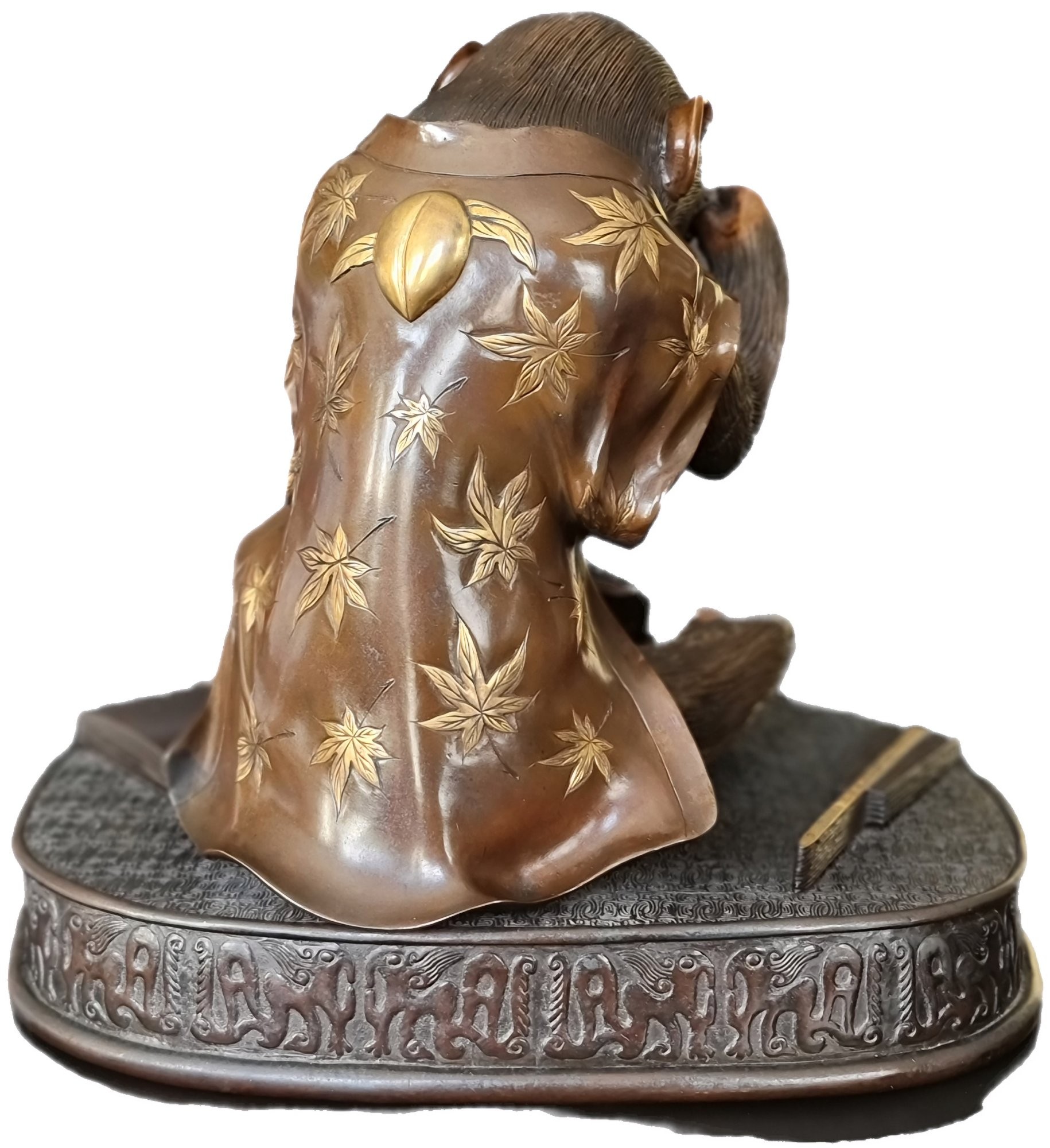
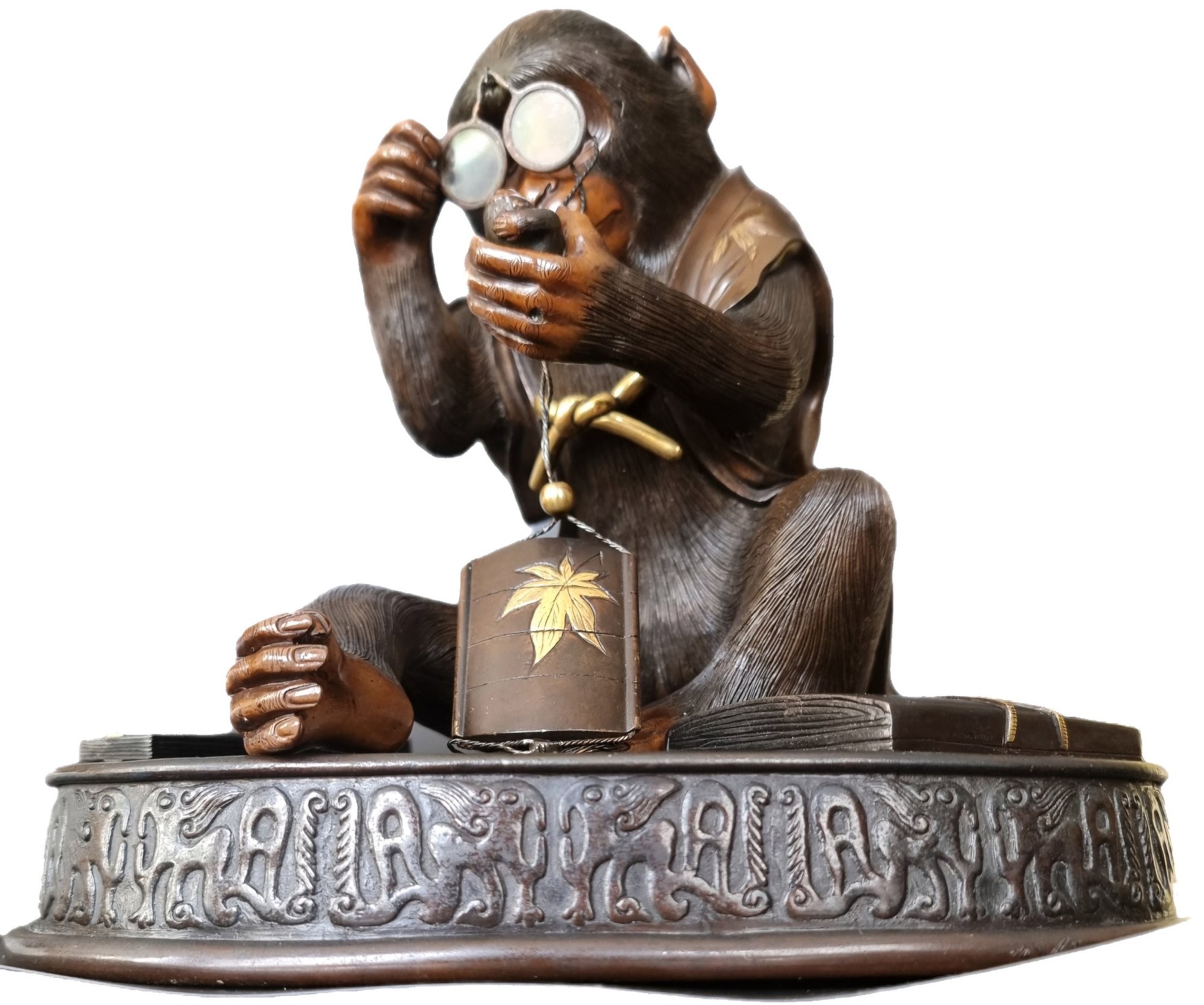
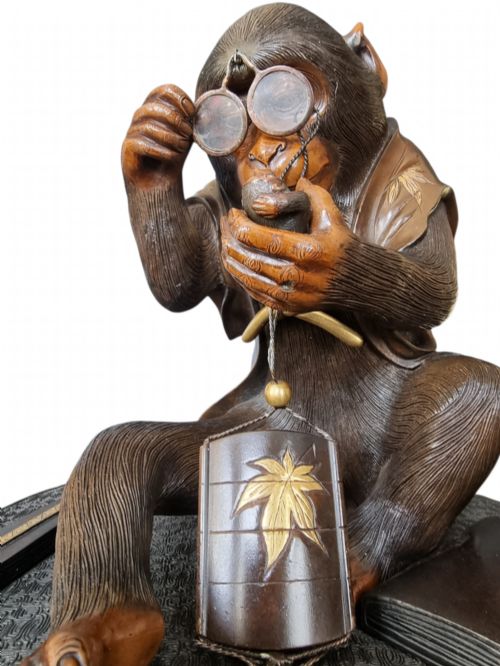
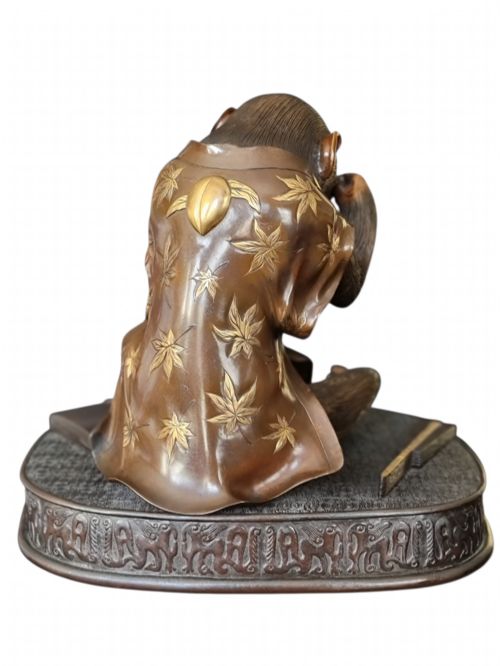
The casting exhibits a masterclass in differential chemical patination and meticulous hand-chasing. The body, limbs, and flowing garments are treated with a deep, rich dark-brown-to-black patination featuring fine, hair-by-hair hand-chased texturing. In striking contrast, the bare skin areas—the expressive muzzle, ears, and remarkably realistic, articulated hands and feet—are polished to a warm, reddish-ochre bronze tone that realistically simulates organic flesh, capturing every crease, knuckle, and fingernail with astonishing precision.
What the Monkey Holds and Why
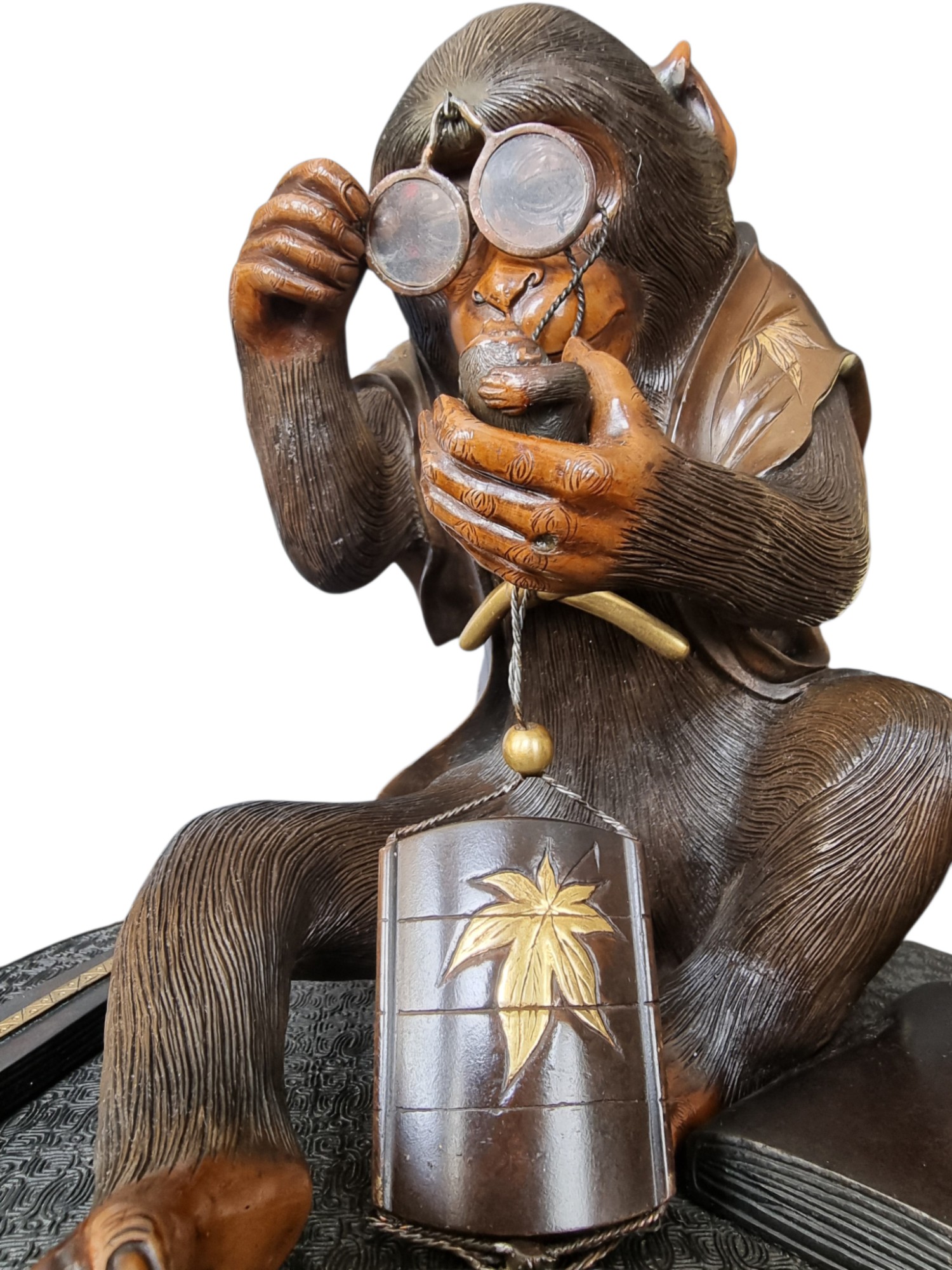
With its right hand, the scholar-ape delicately adjusts a pair of fine-wire spectacles fitted with transparent crystal lenses, peering intently at a miniature object held firmly within its cupped hands.
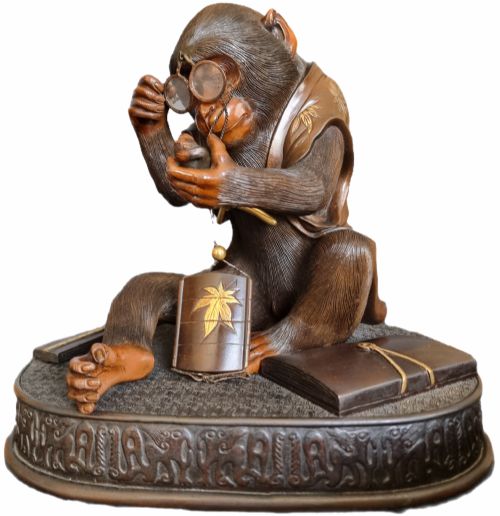
The Object: The monkey is examining a tiny, intricately carved netsuke-like figural study.
The Narrative Significance: In traditional Japanese culture, the monkey was frequently used in art to playfully mimic human behavior—in this case, parodying the elite world of Japanese and Western art collectors, connoisseurs, and antiquarians. Wearing spectacles to magnify his view and holding a miniature netsuke up for close inspection, the scholar-ape is deeply engaged in the serious pursuit of connoisseurship, evaluating the quality, carving, and authenticity of a work of art just as a human collector would.
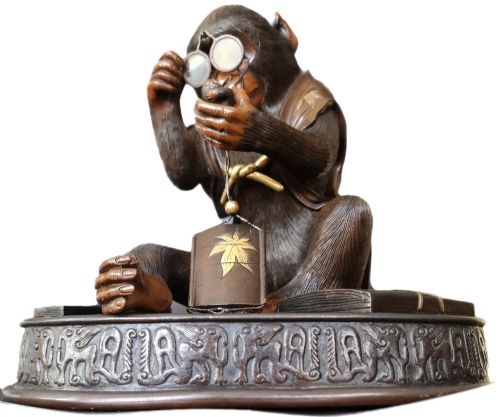
Attire and Inlay
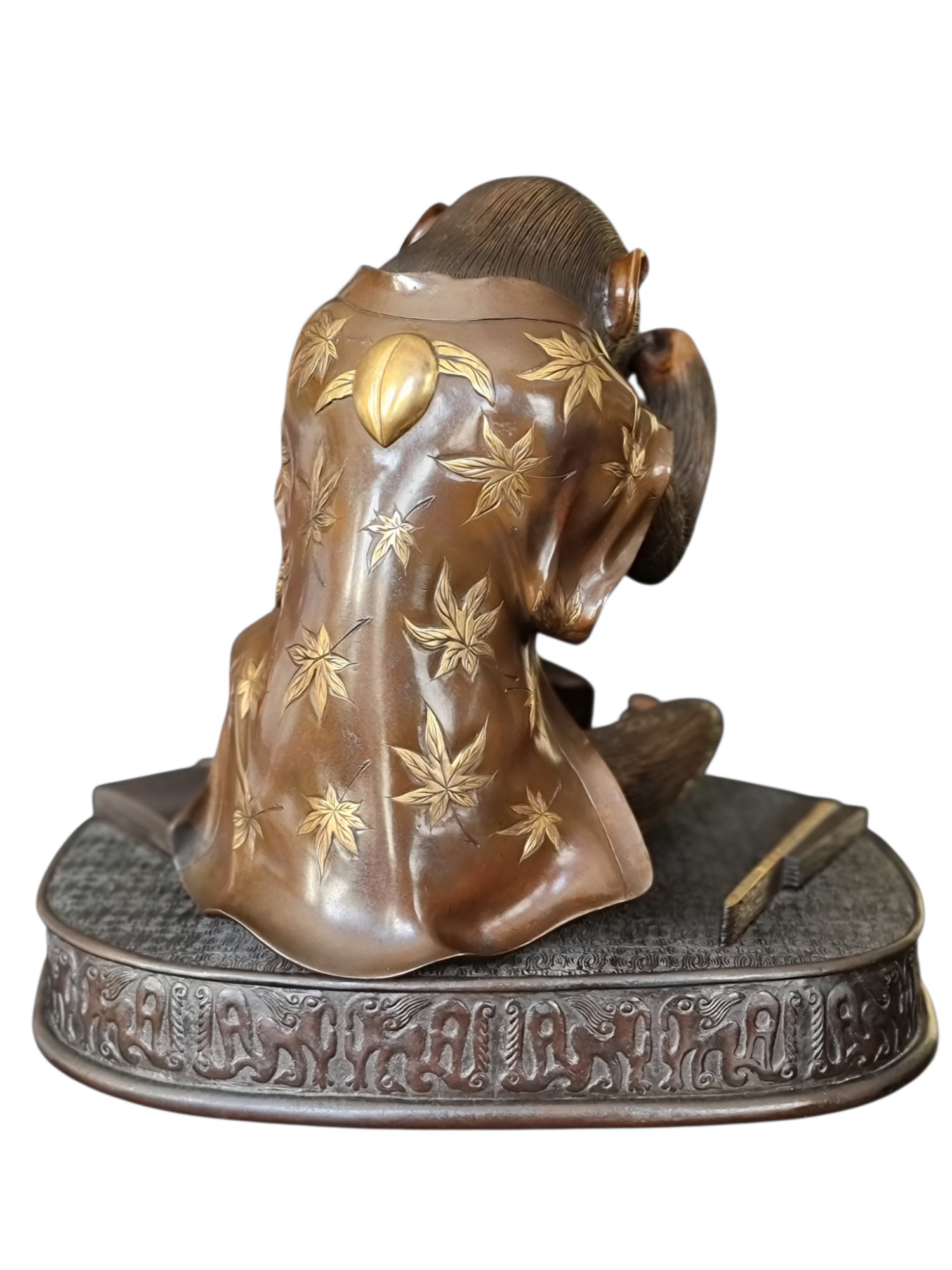
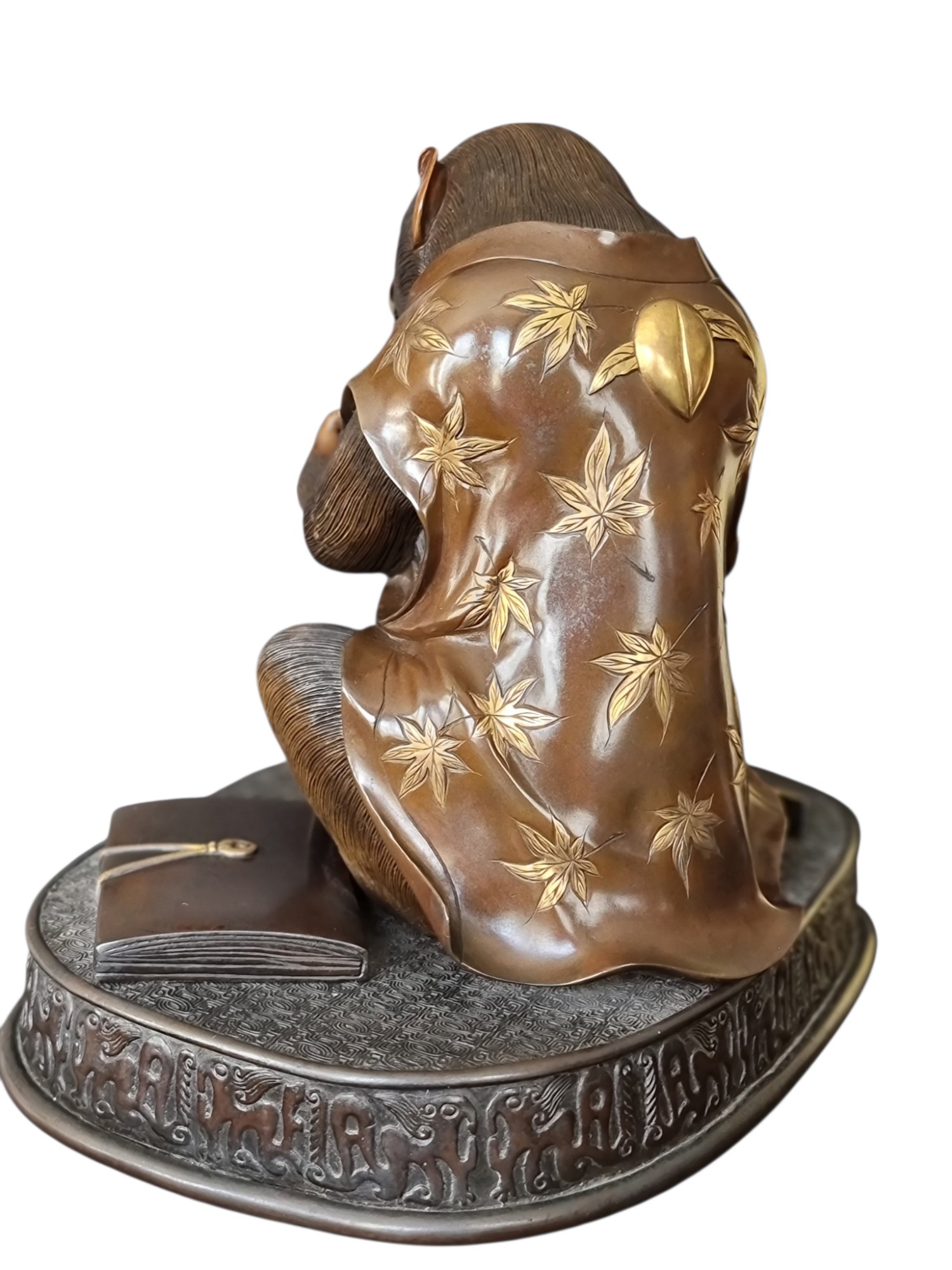
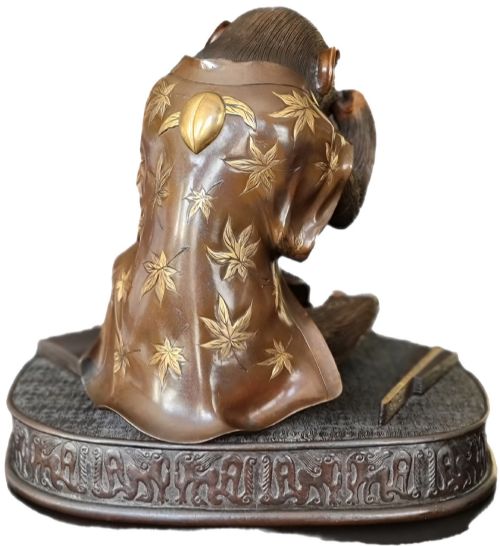
Draped across its shoulders is a short wrap-vest richly decorated via the meticulous nunome-zogan technique, where high-purity gold foil is hammered into cross-hatched channels to depict an expansive and naturalistic cascade of drifting autumn maple leaves (momiji) of varying orientations. The garment is secured at the back collar by a prominent, highly polished solid-gold-toned peach-form toggle—a classic East Asian symbol of longevity and immortality—and tied at the front with a cord sash. Suspended directly from the sash is a multi-tiered inro case accented with a crisp gold-inlaid maple leaf and secured by a sliding spherical metal ojime bead.
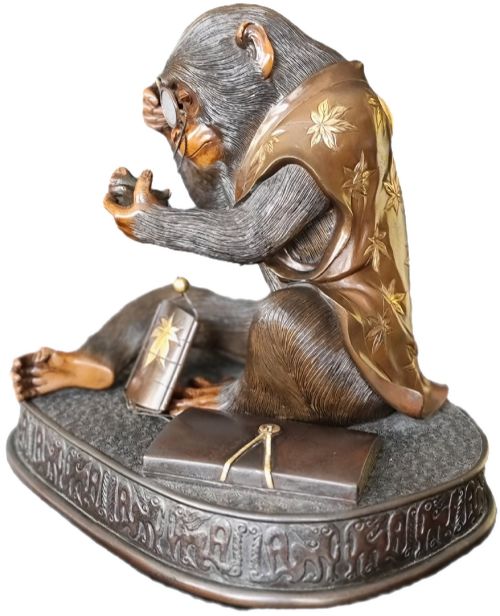
The Plinth and Accoutrements
The heavy, substantial oval base features a textured, stippled top surface simulating a woven rush mat or scholar’s stone table. It is flanked by quintessential literary implements: a thick, string-bound stitched manuscript book on the right and a folded ritual hand-rule or fan accented with gold on the left. The vertical border of the plinth is encircled by a continuous low-relief cast frieze depicting archaic-style scrolling dragons and mythical beasts, grounding the sculpture with imperial weight and presence.
Comparative Literature & Provenance
This highly sophisticated model belongs to an elite group of Meiji-period bronze okimono produced by top-tier Tokyo or Kyoto workshops. A related variant of this model has been handled and sold at Bonhams, London, while similar examples have featured in premier specialist inventories, underscoring the high institutional desirability and recognition of this sculptural subject among advanced international collectors.
Dimensions & Condition
Height: 26 cm approx.
Width: 25.5 cm approx.
Condition: Exceptional museum grade. All fragile, highly vulnerable original appendages—including the wire spectacles, hanging inro, and delicate surface inlays—remain entirely intact and stable.
Provenance:
The G S. May Esquire Private Collection, London - 2008
New York, Manhattan Private Collection, 1950 - 2008
Sandbanks Antiques has dated this Meiji Bronze Monkey Okimono to the 19th Century.
Specialising in antique silver, gold boxes, gold coins and objects de vertu. Rare fine-quality imperial chinese porcelain, jades, cloisonné
You can view the stock and full dealer information on the Sandbanks Antiques Profile Page
A Magnificent and Rare Meiji Period Mixed-metal Anthropomorphic Scholar Monkey Okimono Japan, Circa 1880–1900