


Gothic Revival Writing Desk
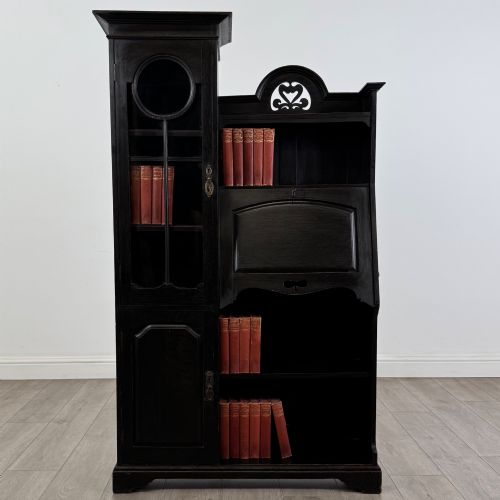
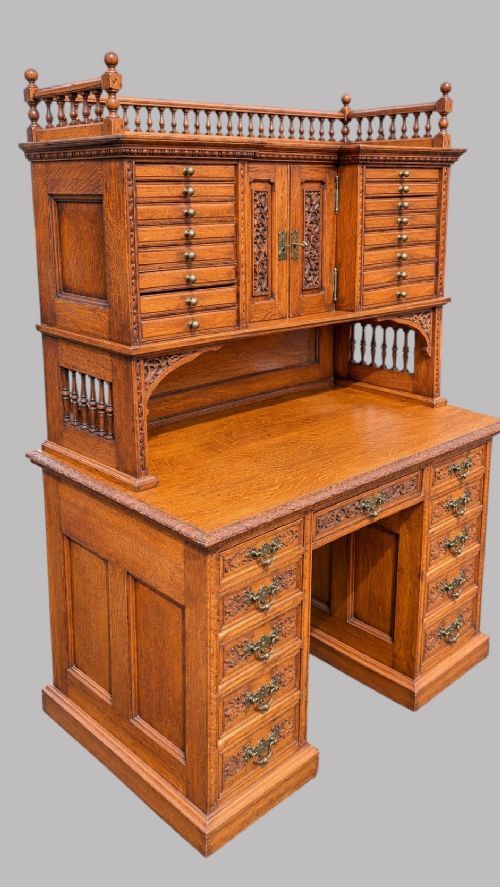
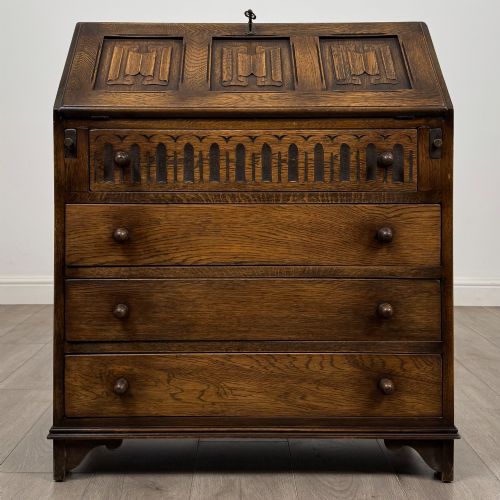
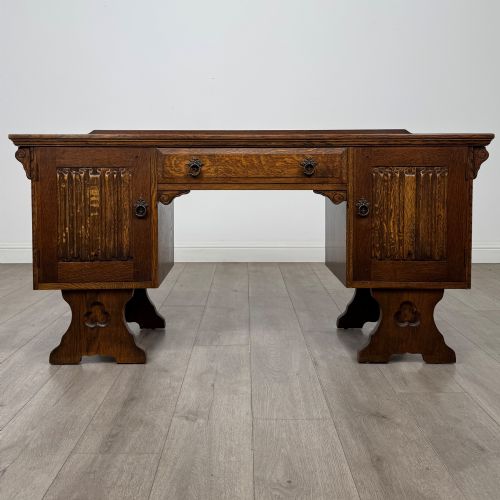
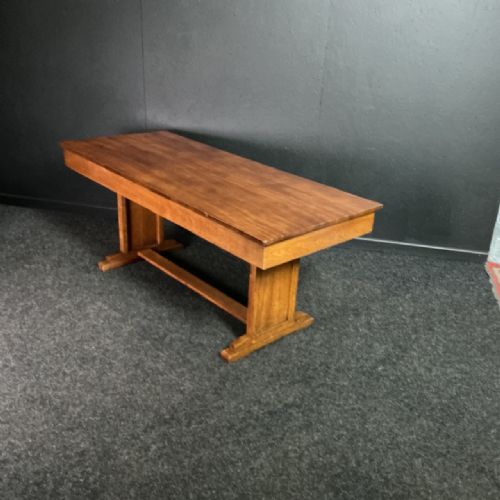
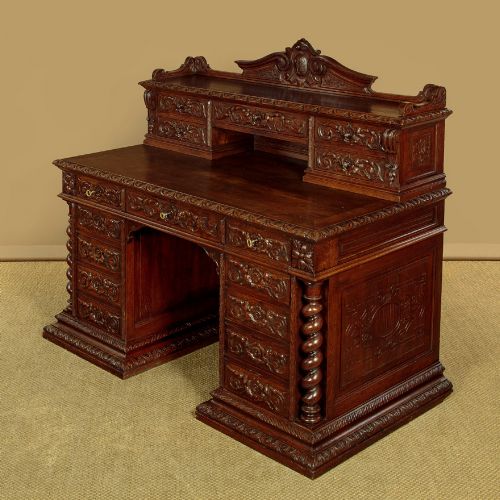
These gothic revival writing desk examples combine ecclesiastical woodwork and substantial forms, offering collectors solid oak construction alongside robust brass and leather details.
Gothic Revival Writing Desk
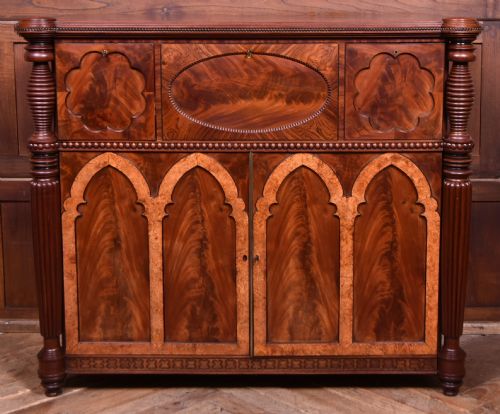
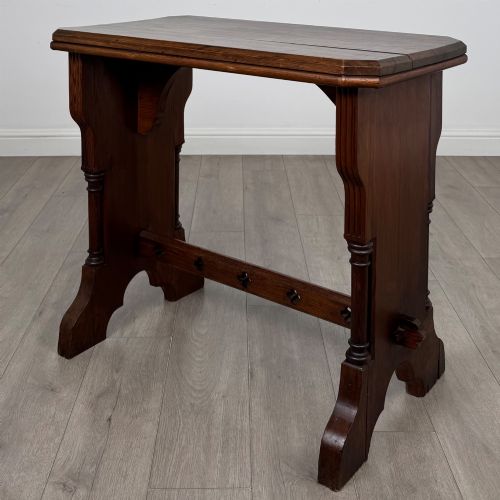
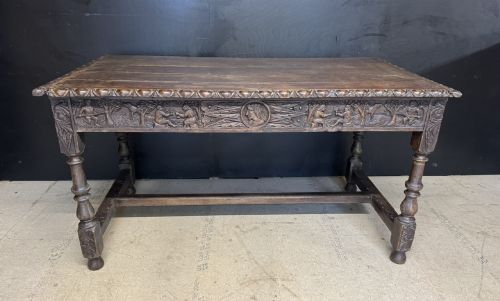
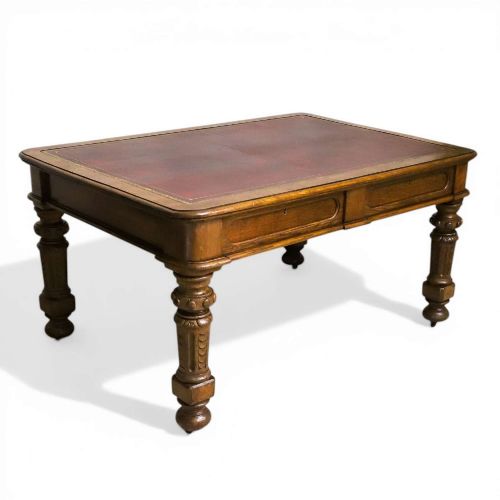
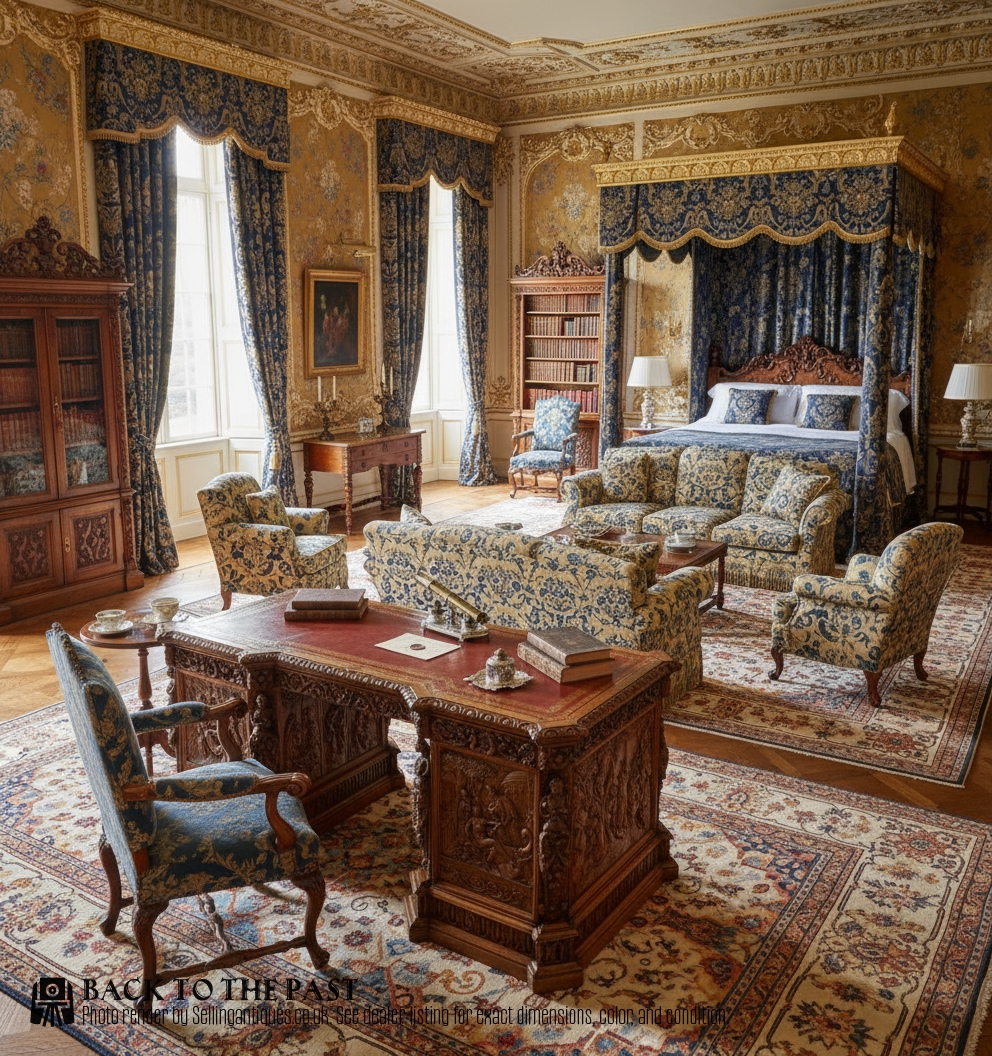
A gothic revival writing desk brings medieval architectural motifs into nineteenth and early twentieth century domestic interiors. Buyers searching this phrase most frequently encounter carved oak library tables, kneehole desks, and bureau forms dating from the Victorian and Edwardian periods.
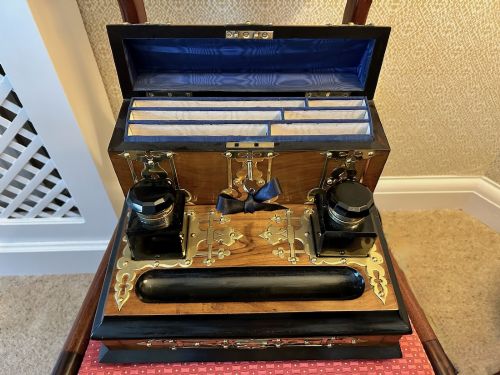
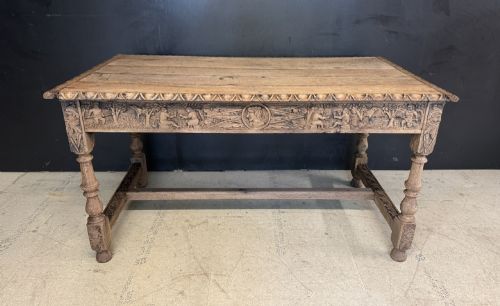
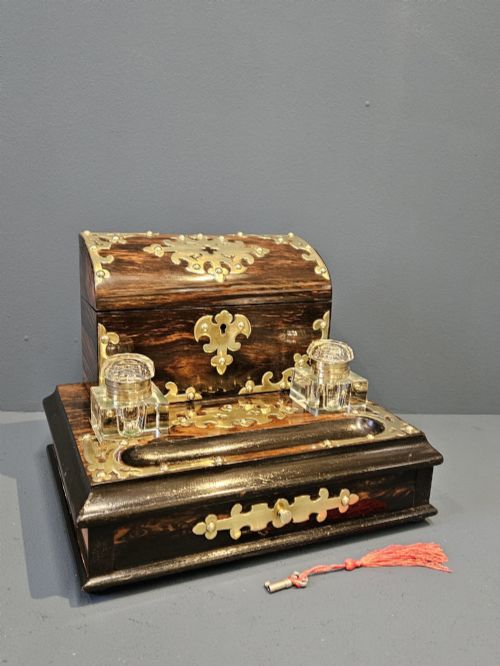
The selection ranges from ecclesiastical pitch pine writing tables to elaborate walnut and coromandel stationery boxes and Davenport desks. Makers drew heavily on Tudor and Gothic precedents, integrating pointed arches, linenfold panelling, and Green Man carvings into functional furniture.
Many surviving pieces originate from nineteenth century English workshops, reflecting the widespread revival of medieval design principles championed by architects and craftsmen of the era.
Materials and Technique
Carpenters relied principally on solid oak, supplemented by walnut, pitch pine, and coromandel for smaller accessories. Timber selection prioritised durability and rich grain patterns suitable for heavy carving.
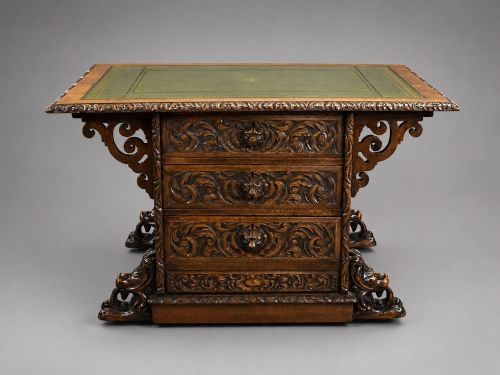
Surface decoration frequently involves deep relief carving executed by hand, displaying motifs such as linenfold panels, lions' heads, and intricate tracery. Metalwork mounts in brass provide structural contrast and functional reinforcement to corners, hinges, and handles.
Writing surfaces frequently incorporate tooled leather or Moroccan leather insets bordered by gilt tooling, secured directly to timber frames designed for sustained daily correspondence.
Gothic Revival Writing Desk Retail Price Guide 2026
Typical asking prices for gothic revival writing desk among the pieces listed under this phrase on Sellingantiques today, from the lower quarter to the upper quarter. They describe what is for sale here now, not the wider market.
Listings feature oak, pitch pine, and walnut as primary materials, spanning the Victorian and Edwardian eras.
Judging Quality
The distinction between standard commercial output and superior workshop production rests upon the depth and crispness of the timber carving. Master carvers achieved clean, undercut foliage and sharp architectural lines that lesser workshops rendered in softer, shallower relief.
Material selection dictates longevity and visual depth, distinguishing dense pollard oak or figured burr walnut from plain secondary timbers. The integration of high-grade cabinet hardware, such as substantial brass locks and decorative cabochon mounts, elevates a piece above basic utility.
Structural integrity depends on the original joinery, where dovetail drawers and sound framing maintain stability without relying on modern fasteners.
Gillows·Briggs·Heals of London
The Gothic Revival Writing Desk Glossary
- Linenfold
- A style of wood carving representing folded linen, commonly seen on panels of gothic revival furniture. It creates a textured, fabric-like appearance across flat wooden surfaces.
- Kneehole desk
- A freestanding desk featuring a central recess for the user's legs, flanked by pedestals of drawers. This configuration became prominent during the Victorian period.
- Stationery box
- A desk accessory designed to hold writing paper and envelopes upright, often fitted with sloping doors and brass mounts. These boxes frequently match the timber and decorative style of larger library tables.
- Reformed Gothic
- A nineteenth-century design movement promoting simpler, structural forms inspired by medieval architecture rather than excessive surface ornamentation. It rejected earlier Victorian clutter in favour of honest construction.
- Davenport
- A small compact desk featuring a sloping writing surface hinged above a set of side drawers. The form gained popularity in the nineteenth century for domestic correspondence.
Gothic Revival Writing Desk: Frequently Asked Questions
What defines a gothic revival writing desk?
These pieces combine nineteenth-century desk forms with medieval architectural details like pointed arches and heavy timber carving.
Craftsmen adapted ecclesiastical motifs for domestic workspaces, using durable woods like oak and walnut.
How do I care for the leather top?
Maintain tooled leather writing surfaces by dusting gently with a dry cloth and avoiding harsh chemical cleaners.
Occasional treatment with specialised leather balms prevents drying and preserves the original gilt tooling.
Were these desks used in homes?
Victorian and Edwardian households utilised these heavy wooden desks in libraries, studies, and formal public school rooms.
Their substantial construction was intended for serious correspondence and administrative work.
How can I tell the period?
Dating relies on examining timber selection, secondary woods, and hardware construction methods alongside stylistic clues.
Earlier nineteenth-century examples often feature deeper hand-carving and heavy brass mounts compared to later Edwardian pieces.