


Jacobean Carved Side Table
A jacobean carved side table brings grounded timber and deep relief work into a hallway or living space.
Jacobean Carved Side Table
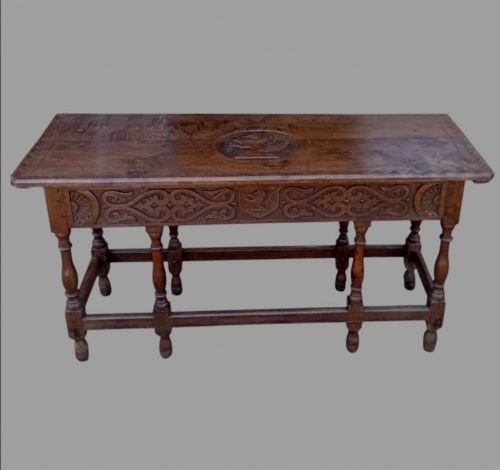
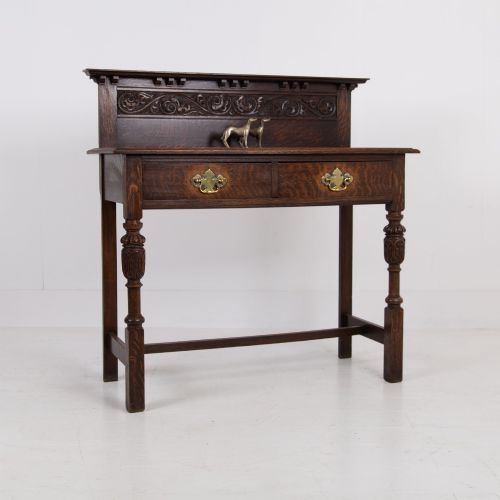
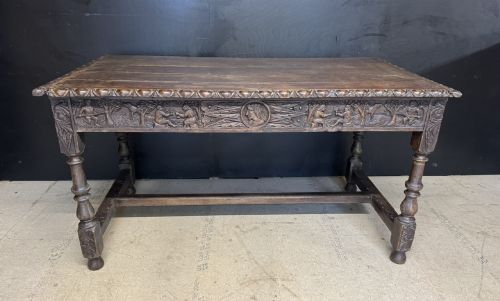
A jacobean carved side table centres on sturdy timber construction with surface enrichment, spanning authentic seventeenth-century survivals and later revival interpretations. These pieces function primarily as compact ledges or serving surfaces, offering drawers or open frames depending on the specific model.
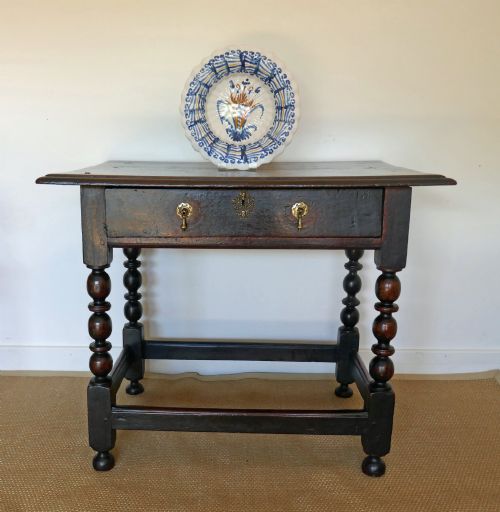
The versions most commonly met on this page date from the late nineteenth and early twentieth centuries, executed in the Jacobean Revival style. Alongside these revival pieces, genuine seventeenth-century examples appear, showing the characteristic block-and-turn timber supports and hand-carved friezes.
How they were made
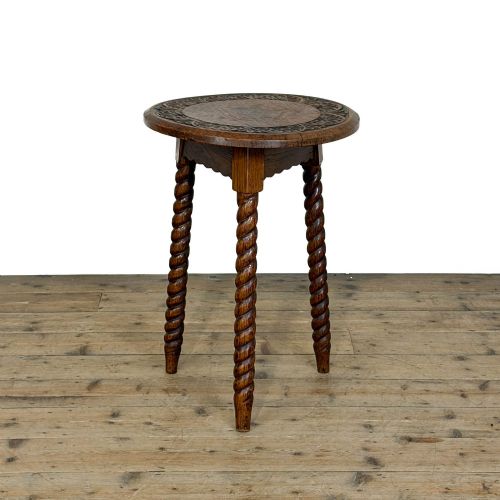
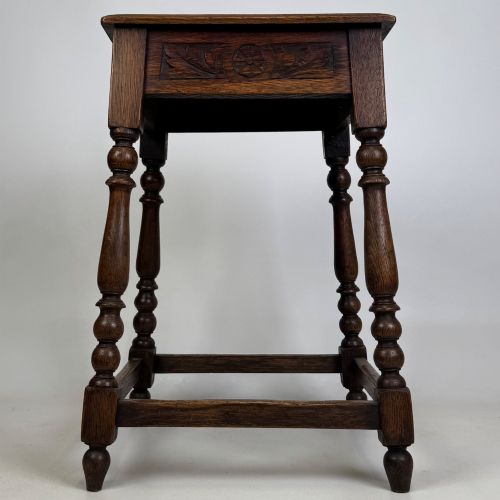
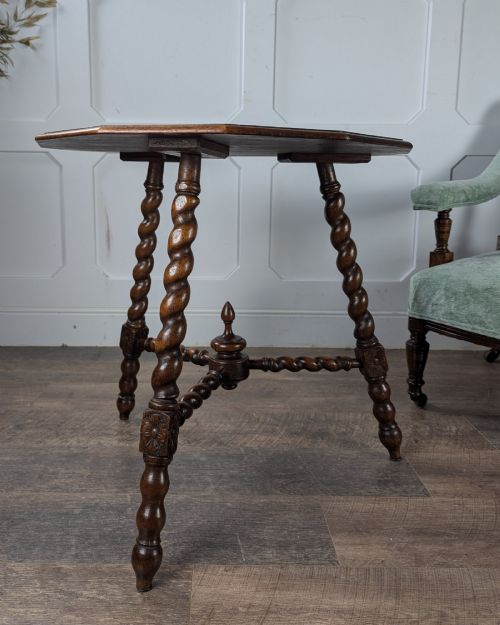
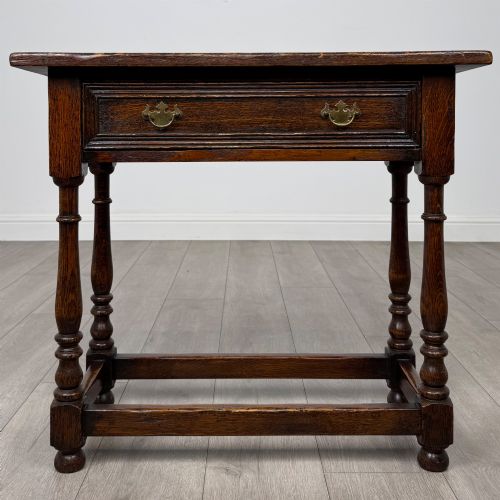
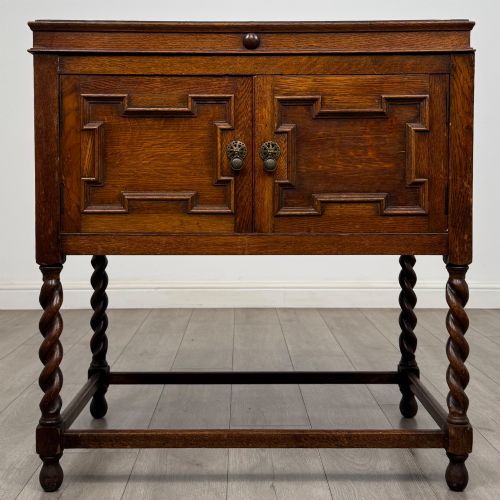
Construction relies heavily on solid oak, shaped with traditional joinery methods such as mortise and tenon joints to secure the frames. Turned elements like bobbin turnings, barley twists and chamfered legs provide the structural support for the tops.
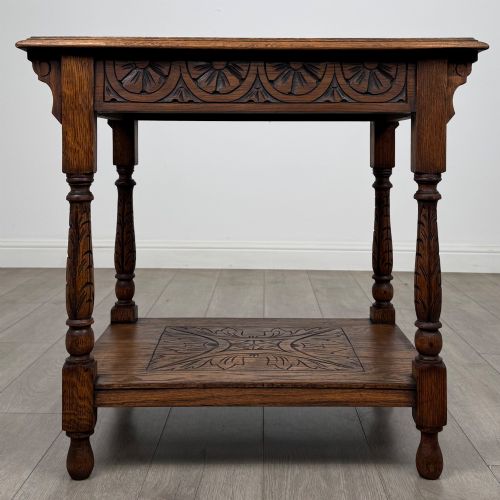
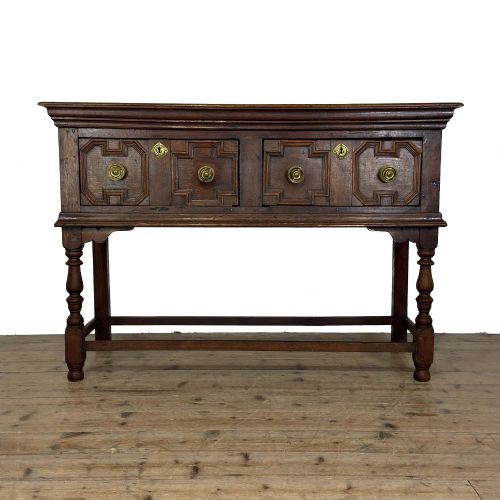
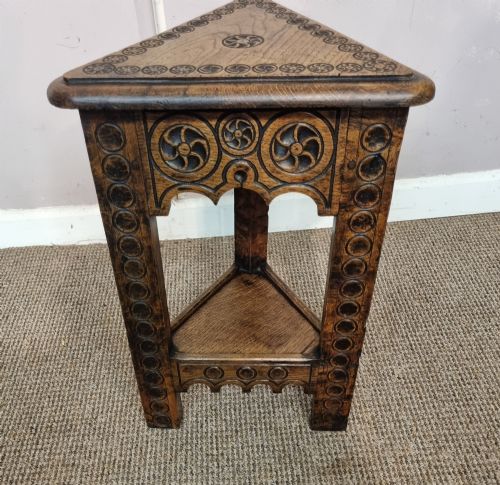
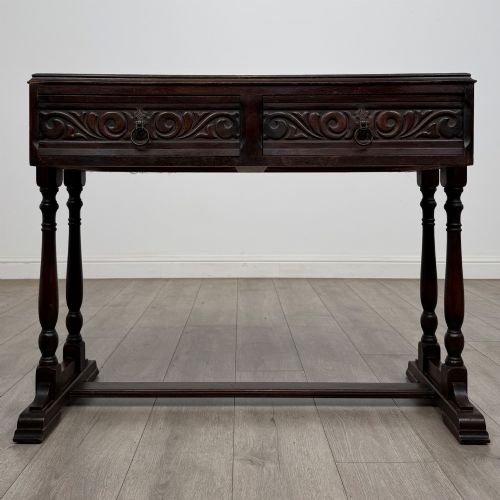
Surface decoration involves hand-carving directly into the timber, frequently utilising geometric strapwork, scrolling foliage and chip carving along the rails and drawers. Metal hardware in brass or iron appears on pieces fitted with drawers or drop handles.
Materials documented across the inventory include solid oak, brass, iron, and wood inlay, applied to side tables, joint stools, and dresser bases.
What varies in quality
Quality rests upon the crispness of the hand-carved detail and the depth of the timber's patina developed through age and handling. Pieces exhibiting sharp, well-defined relief work on the friezes demonstrate a higher standard of craftsmanship than softer, mechanically replicated ornamentation.
The integrity of the timber joints and the retention of original structural components determine the endurance of each table. Solid oak construction with harmonious proportions and minimal later alterations commands greater attention from collectors.
The Jacobean Carved Side Table Glossary
- Jacobean Revival
- A nineteenth and twentieth-century design movement that emulates the architecture and furniture forms of the early seventeenth century. It makes extensive use of dark oak, turned legs and heavy relief carving.
- Barley Twist
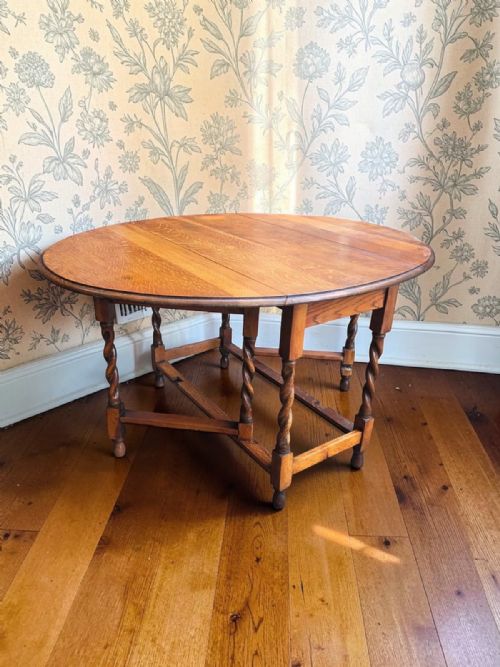
- A cylindrical furniture leg or stretcher carved in a helical spiral resembling a twist of barley. This technique appears widely on seventeenth-century and revival tables.
- Frieze
- The horizontal member beneath the top surface of a table, often decorated with carved strapwork or fitted with drawers. In antique tables, this area receives the primary ornamental carving.
- Joint Stool
- A low wooden stool constructed with pegged mortise and tenon joints rather than turned legs. These items share construction traits with early side tables.
- Lowboy
- A small oak or walnut table featuring one or more rows of drawers beneath the top surface. They date from the late seventeenth century onwards and serve similar placement roles to side tables.
Jacobean Carved Side Table: Frequently Asked Questions
How do I date a carved oak table?
Dating relies upon examining the tool marks, timber shrinkage, construction joints and the style of the carving. Seventeenth-century pieces display hand-sawn board marks and pegged joinery, whereas revival examples from the nineteenth or twentieth century show uniform machine-cut elements.
Secondary indicators include the presence of secondary woods, the type of hardware used on drawers, and the overall wear patterns on the feet and stretcher bases.
Where should I place a side table?
These tables fit well in narrow hallways, living room perimeters, or behind sofas where surface space is needed without blocking movement. Their compact proportions allow them to sit against walls or act as occasional stands for lamps.
Consider the clearance around doors and pathways when selecting a model with projecting drawers or gateleg actions.
How do I care for antique oak?
Maintain antique oak by dusting with a dry, soft cloth and keeping the timber away from direct heat sources and strong sunlight. Sudden temperature shifts cause the wood to dry out and split.
Apply a traditional beeswax polish sparingly to nourish the grain and preserve the surface sheen without building up a heavy, sticky residue.
What is the difference between original and revival pieces?
Original pieces date from the specific historical period they represent, showing period-correct construction methods and natural age-related wear. Revival pieces are later homages made during the Victorian or Edwardian eras using historical design vocabulary.
Both categories use solid oak and traditional woodworking techniques, but original seventeenth-century items carry greater historical rarity.