

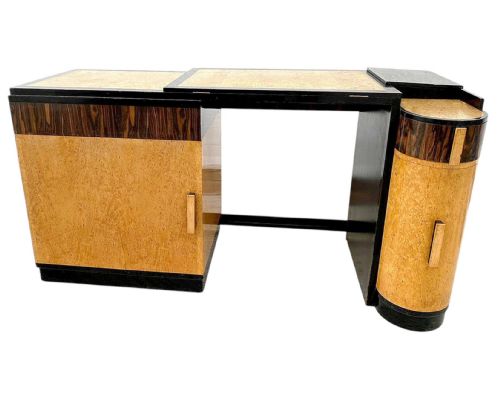
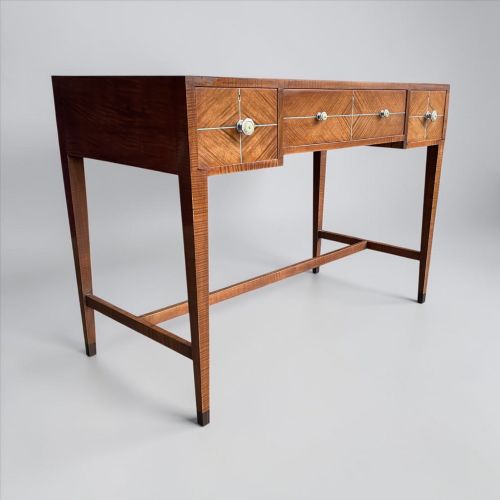
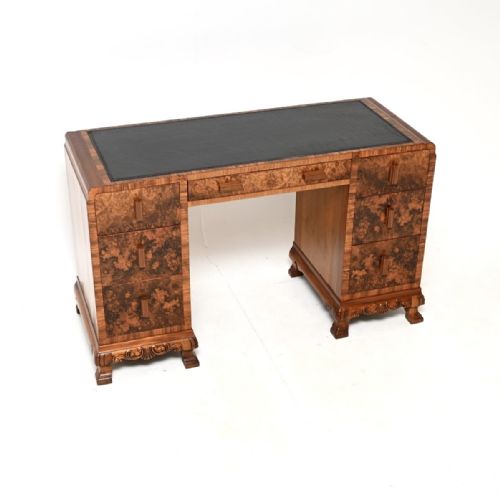
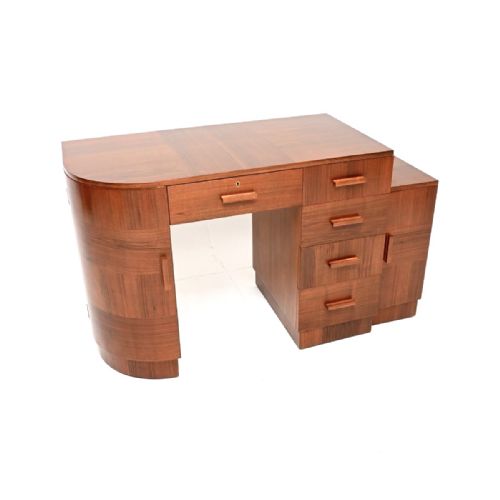



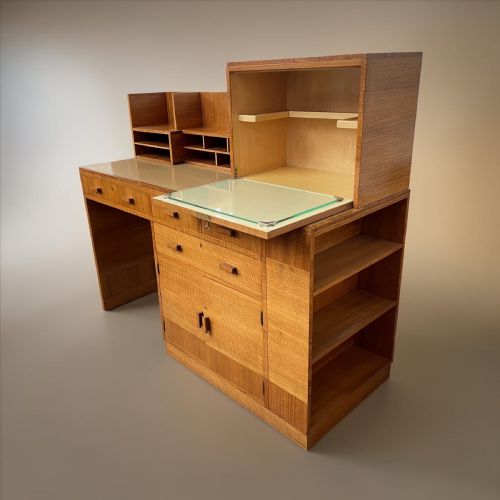
Art Deco Study Table
An art deco study table brings linear elegance and rich wood grain to a workspace, offering functional style through walnut, oak, and chrome.
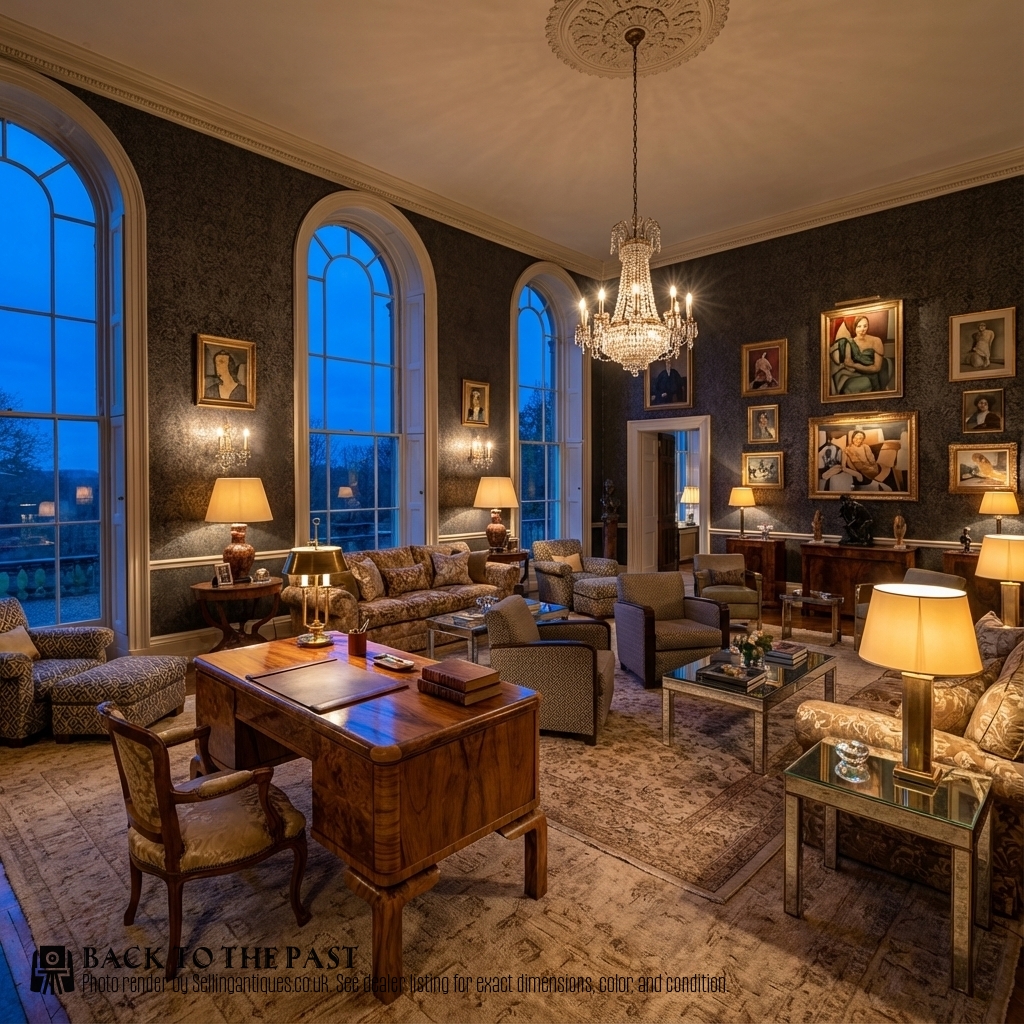
Art Deco Study Table
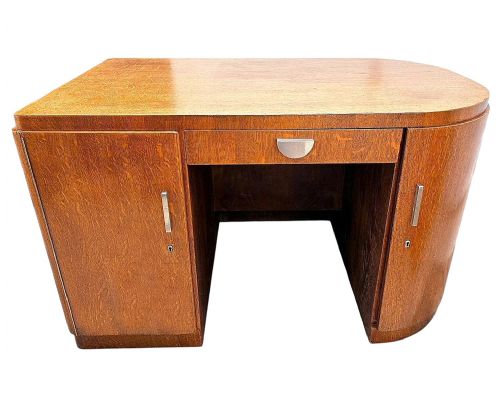
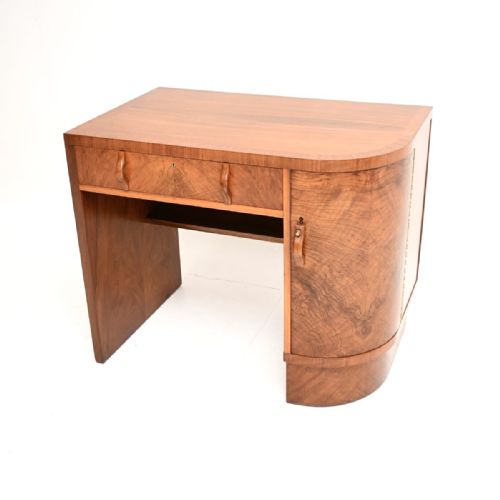
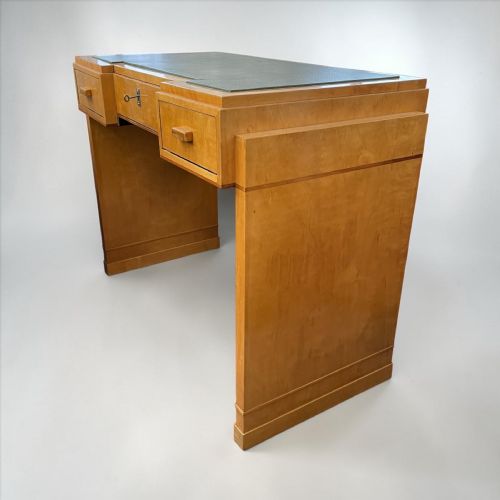
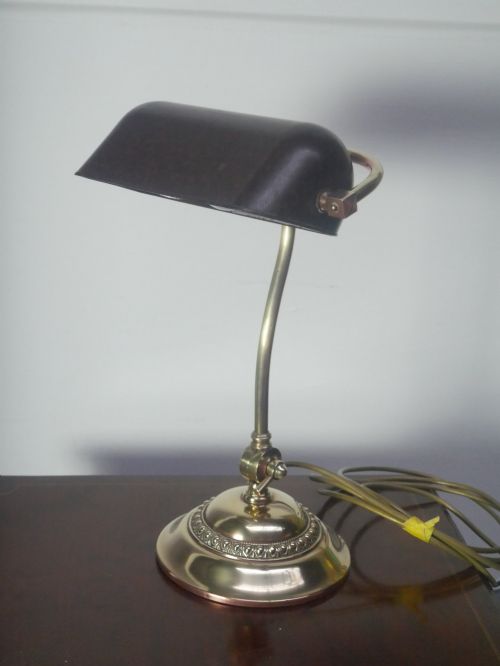
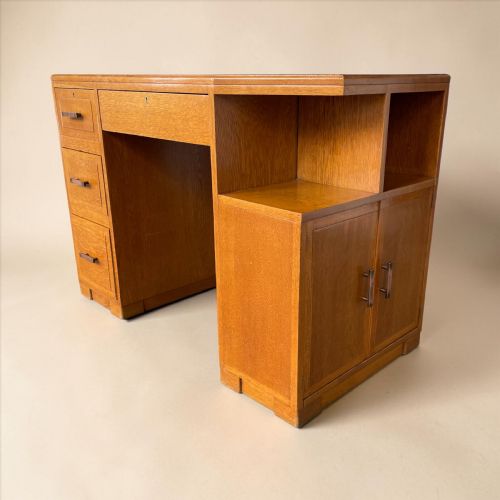
When you search for an art deco study table, you look at items designed for writing, office work, and study originating principally from the 1920s, 1930s, and 1940s. These pieces include pedestal desks, writing tables, and office desks, sometimes paired with matching desk lamps.
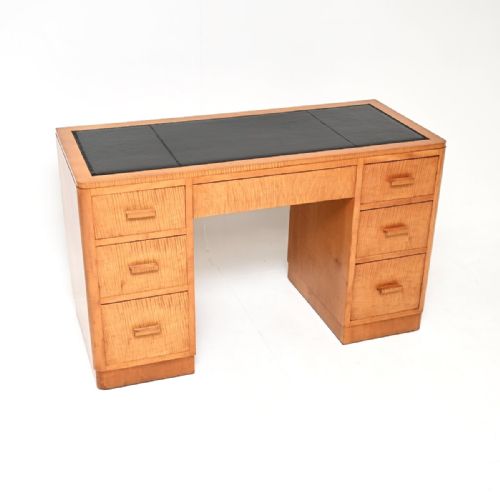
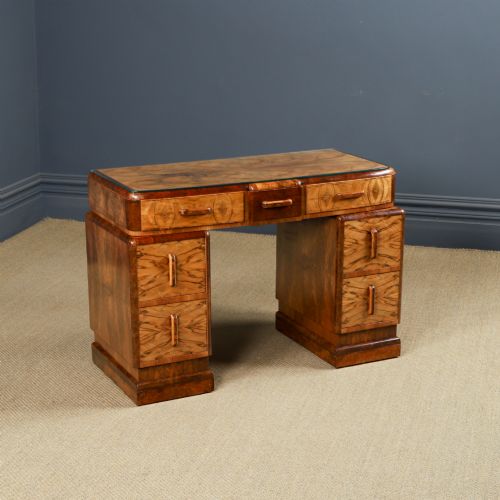
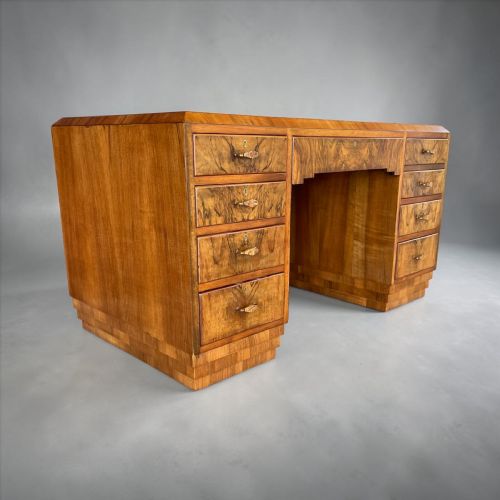
The most common versions met on this page are pedestal desks and writing tables constructed from walnut, burr walnut, and oak, frequently featuring integrated leather tops or glass skyscraper details.
How they were made
Cabinet makers utilised choice timbers such as walnut, burr walnut, satin birch, sycamore, and oak, often highlighting figured wood grains across flat surfaces and curved pedestals. Metal elements in brass, chrome, and bronze provided structural accents and functional articulation.
Desks frequently incorporated inset leather writing surfaces, while associated lighting utilised Bakelite, glass, and metal shades with adjustable brass or chrome frames.
Art Deco Study Table Retail Price Guide 2026
Typical asking prices for art deco study table among the pieces listed under this phrase on Sellingantiques today, from the lower quarter to the upper quarter. They describe what is for sale here now, not the wider market.
Listings feature study furniture primarily from the 1920s and 1930s, alongside Edwardian and 1940s transitional pieces.
What varies in quality
Quality depends upon the choice and matching of wood veneers, particularly the grain pattern of burr walnut or figured walnut across the top and pedestals. Superior examples display thoughtful integration of materials, such as combining wood with glass skyscraper tiers or specialised metalwork.
Attribution to known designers or makers elevates a piece, as does originality in components like leather inserts, handles, and integrated lighting fixtures.
Heal's·Betty Joel·Étienne Kohlmann·Maurice Adams·Eileen Grey·Maurice Dufrêne·E. Cole·Josef Lorenzl·Hawkins
The Art Deco Study Table Glossary
- Pedestal desk
- A writing desk supported by two pedestals or sets of drawers on either side. This form provides substantial storage beneath the main writing surface.
- Burr walnut
- Wood grain marked by small knots and swirls, highly prized for decorative veneer work. It creates complex, patterned surfaces characteristic of high-end period furniture.
- Machine Age
- A design style from the interwar period celebrating industrial progress, machinery, and new materials like chrome and Bakelite. It influences the metal lamps and streamlined forms found in study spaces.
- Skyscraper pedestal
- A stepped architectural form reminiscent of early twentieth-century skyscrapers, often seen in glass or wood on desk structures. This motif defines vertical movement in advanced designs.
- Bakelite
- An early synthetic plastic utilised for lamp bases, switches, and decorative accents. Its dark, durable moulded finish is a hallmark of interwar electrical items.
Art Deco Study Table: Frequently Asked Questions
What materials make up an art deco study table?
These tables incorporate woods like walnut, burr walnut, oak, satin birch, and sycamore. Many examples feature inset leather writing surfaces and glass elements.
Metal components in brass, chrome, and bronze appear both in the structural frames and in matching desk lamps.
How do I identify a 1930s desk?
Look for characteristic geometric forms, streamlined silhouettes, and prominent wood veneers like burr walnut. Details such as skyscraper pedestals and glass tiers point directly to this era.
Maker labels or attributions to prominent designers of the period further confirm the date.
How do I style a study with these pieces?
Pair a figured walnut or oak desk with an adjustable brass, chrome, or Bakelite desk lamp from the same period. Keeping surrounding furniture complementary in era highlights the linear design of the table.
Allow the natural wood grain and metal accents to serve as the visual focal points of the room.