


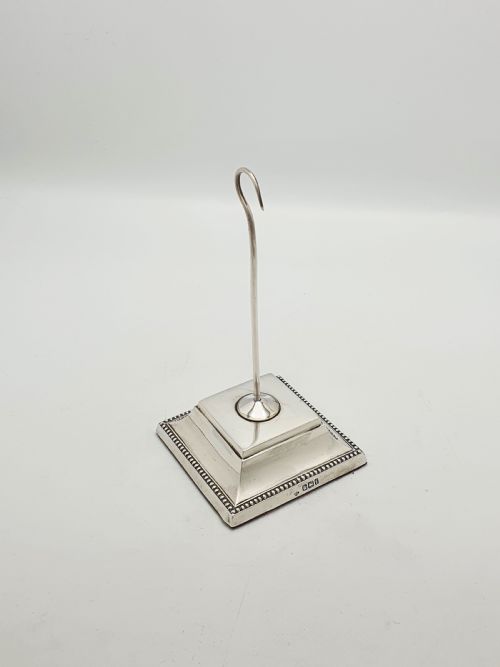

Stepped Base Desk
Stepped base desk designs combine architectural form and workspace function, offering sturdy utility and distinct period character.
Stepped Base Desk
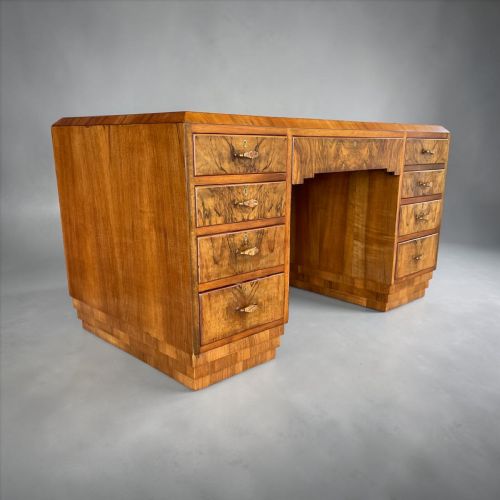
A stepped base desk brings together the geometric lines of the Art Deco period and the robust construction seen across the early twentieth century. Buyers seeking a stepped base desk will encounter streamlined surfaces alongside modernist forms utilising contrasting materials like Macassar and tôleware. These items anchor a workspace with strong horizontal planes and tiered foundations.
The selections available range from 1930s modernist examples to substantial nineteenth-century forms that share related architectural massing. Many pieces reflect Neoclassical Revival or Bauhaus influences, bridging the gap between utilitarian office furniture and decorative art objects. Examining the proportions reveals how makers translated architectural tiered steps into functional furniture bases.
Materials and construction methods
Construction relies on durable combinations of metals, hardwoods, and specialised surface finishes. Artisans built structural frames using cast brass or chrome, pairing them with timber elements such as Macassar ebony. These materials provided the necessary weight and rigidity required for heavy daily office use.
Surface details often include applied patination, painted tôleware components, and mirrored glass accents. Joinery techniques from the period ensured that stepped tiers remained stable while supporting expansive writing surfaces and integrated storage drawers.
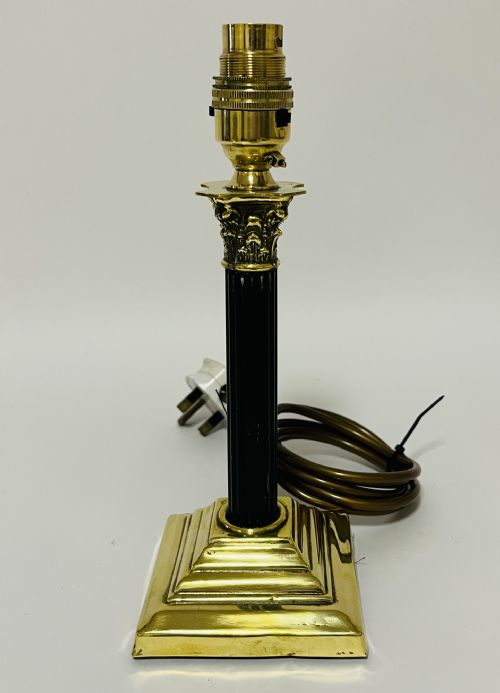
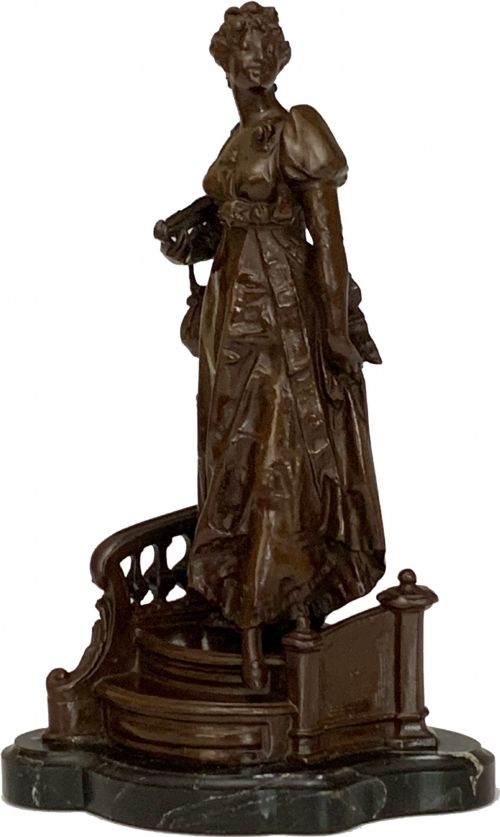
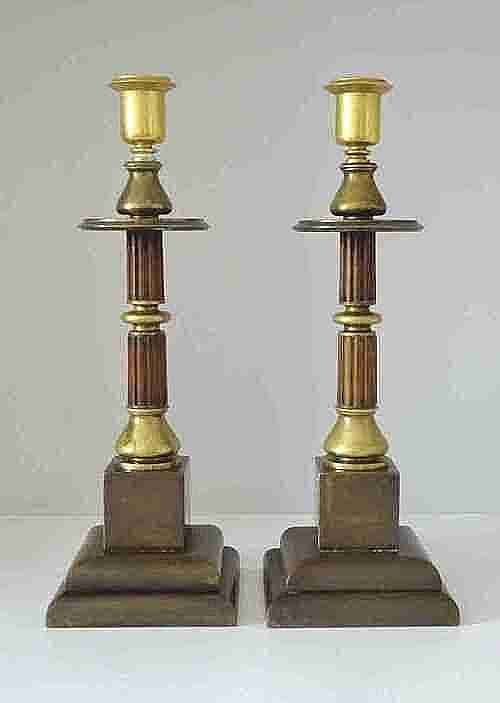
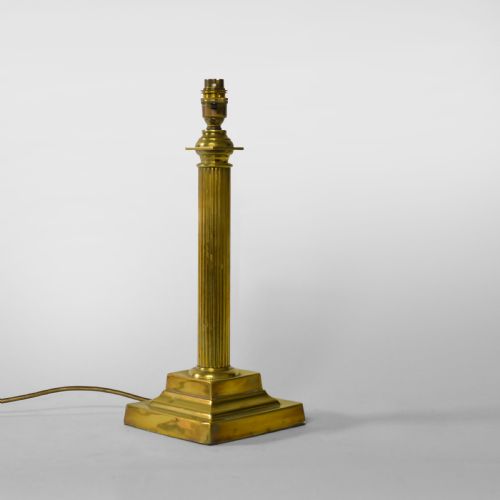
Listings span from the 19th century through the 1930s, featuring brass, bronze, chrome, and marble.
Assessing quality in construction and finish
Quality rests in the precision of the stepped tiers and the integrity of the underlying materials. Superior examples feature crisp geometric transitions, substantial gauge metals, and meticulously finished veneers that remain flush across every joint. Lesser pieces display softer casting edges or uneven surface treatments that diminish the architectural intent.
The integration of secondary elements, such as mounted clocks, brass fittings, or specialised hardware, further separates standard production from exceptional studio work. Master craftsmen ensured that every operational component functioned smoothly while maintaining the unified profile of the tiered base.
Georges Van Der Straeten·P.M. Favre·Walter Latham & Son·Wilhelm Wagenfeld
The Stepped Base Desk Glossary
- Art Deco
- A design style characterised by sleek geometric shapes, streamlined forms, and modern industrial materials. It dominated international design during the nineteen-twenties and nineteen-thirties.
- Bauhaus
- A German art school operational in the early twentieth century that influenced modernist functionalism. Its adherents emphasised clean lines and the union of art and industrial production.
- Macassar
- An exotic hardwood known for its deep brown colour and striking dark figuring. It frequently appeared in luxury cabinetwork of the art deco era.
- Tôleware
- Painted or enamelled sheet metal items used for decorative and functional objects. Artisans shaped this material into shades and fixtures during the nineteenth and twentieth centuries.
- Neoclassical Revival
- A style drawing inspiration from classical antiquity, featuring formal symmetry and architectural motifs. It reinterprets Greek and Roman design principles in later furnishings.
Stepped Base Desk: Frequently Asked Questions
How do I date a stepped base desk?
Dating relies on identifying period-specific materials, construction techniques, and stylistic influences like Bauhaus or Victorian revivalism. Chrome and Macassar point firmly to the 1930s.
Examining internal joinery and secondary wood types helps distinguish early twentieth-century production from later adaptations.
Which materials were used most frequently?
Makers utilised a combination of structural metals like brass and chrome alongside dense hardwoods. Glass and mirrored surfaces also appeared in modernist iterations.
These materials provided the durability needed for heavy office furniture while offering contrasting textures for decorative appeal.
How do these desks fit into modern interiors?
Their strong geometric forms allow them to function as focal points in contemporary workspaces or studies. The clean lines complement minimalist rooms without overwhelming the surrounding space.
Pairing the desk with period-appropriate lighting or seating enhances the cohesive historical aesthetic.