



French Art Deco Desk
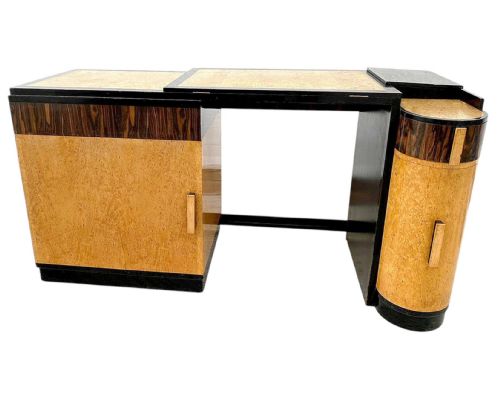
French art deco desk pieces bring substantial 1920s and 1930s character to a room through geometric form and rich woods.
French Art Deco Desk
A french art deco desk provides a commanding workspace defined by the architectural lines of the 1920 and 1930 periods. These pieces combine practical writing surfaces with the distinctive decorative vocabulary of the interwar years.
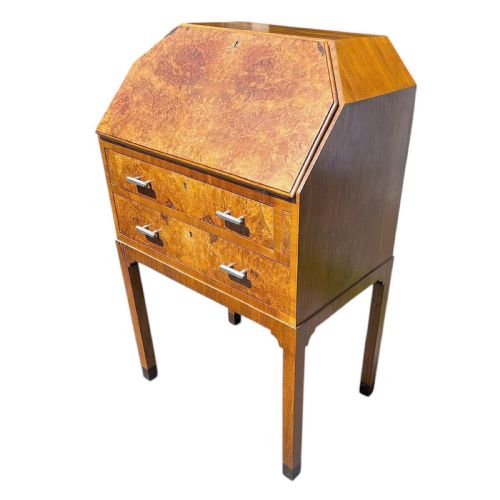
The items found here range from partners desks to compact writing tables and fitted desk stands. Walnut, rosewood, and leather often form the primary structure of these workspaces.
Design attribution connects certain examples to makers such as Étienne Kohlmann and Maurice Dufrêne. Alongside wooden desks, the selection encompasses associated accessories including bronze desk lamps and marble inkwells.
Materials and construction methods
Cabinet makers utilised dense hardwoods like walnut, rosewood, and Macassar ebony to construct the carcass of each desk. These veneers and solid timbers provide deep natural grain patterns that define the surface appearance.
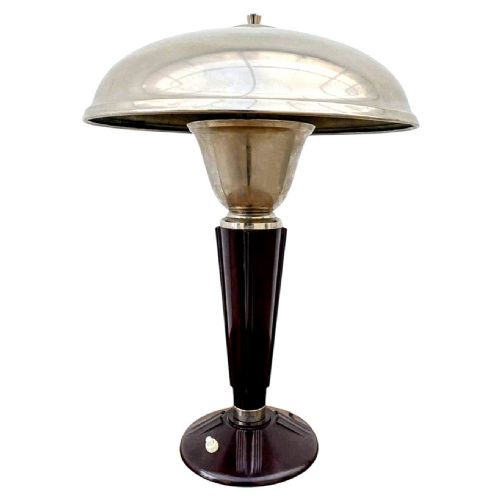
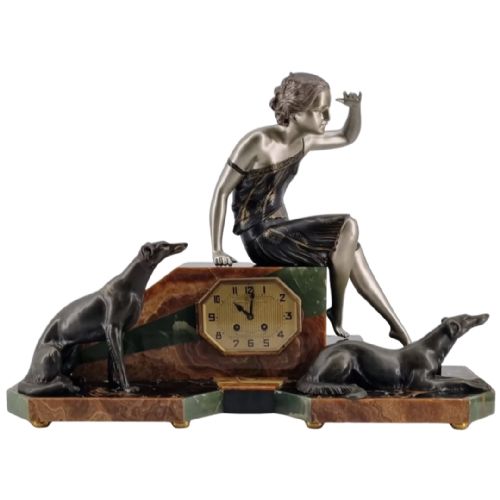
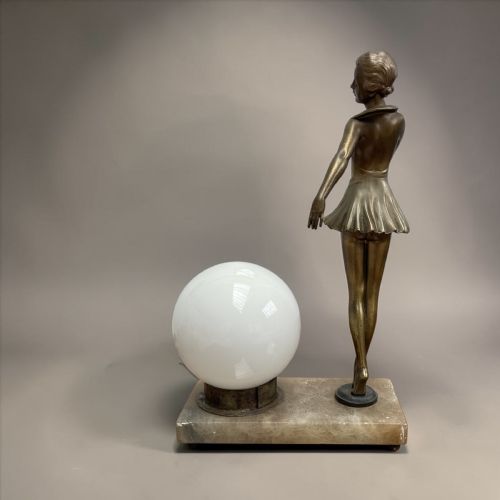
Metal components in chrome, brass, and bronze appear alongside glass elements and bakelite fittings. Spelter frequently forms the sculptural details on accompanying desk stands and lamps.
Leather inserts commonly line the writing surfaces, paired with metal hardware for drawers and adjustable lighting arms.
French Art Deco Desk Retail Price Guide 2026
Typical asking prices for french art deco desk among the pieces listed under this phrase on Sellingantiques today, from the lower quarter to the upper quarter. They describe what is for sale here now, not the wider market.
Several desk sets include novelty dog and parrot figures keeping watch over the inkwells.
Distinctions in craftsmanship
The refinement of the timber veneers and the precision of the joinery set finer examples apart from standard utility items. Selection of rich grains such as rosewood indicates higher workshop standards.
Integrated design coherence between the desk and matching seating or accessories elevates a piece. The quality of cast bronze mounts and patinated metalwork also distinguishes superior production.
Eileen Grey·Maurice Dufrêne·Étienne Kohlmann·Charles Schneider·Rene Lalique
The French Art Deco Desk Glossary
- Bakelite
- An early form of synthetic plastic utilised for desk lamps, clocks, and accessories during the 1930 period. Its hard, moulded surface accepts rich colour tones.
- Spelter
- A zinc alloy commonly cast into sculptural figures for desk lamps and inkwells during the 1920 and 1930 eras. It often receives a bronze-coloured patina.
- Partners desk
- A large workspace designed with drawers and cupboards on both sides to accommodate two people sitting opposite each other. These substantial pieces frequently utilise walnut or rosewood.
- Opaline glass
- A milky, translucent glass often blown into shades for desk lamps and lighting fixtures. It diffuses light evenly across the workspace.
French Art Deco Desk: Frequently Asked Questions
What woods define these desks?
Walnut, rosewood, and Macassar ebony form the principal timbers seen across these items. Craftsmen selected these woods for their strong grain patterns.
Lighter secondary woods often support the internal drawer construction while the decorative surfaces showcase the main exotic veneer.
How do 1920 desks differ from 1930 ones?
Pieces from the 1920 period often display florid curves and heavy bronze mounts linked to earlier decorative traditions.
By 1930, the design language shifted toward streamlined geometries, simplified silhouettes, and smooth bakelite or chrome additions.
Are matching chairs common?
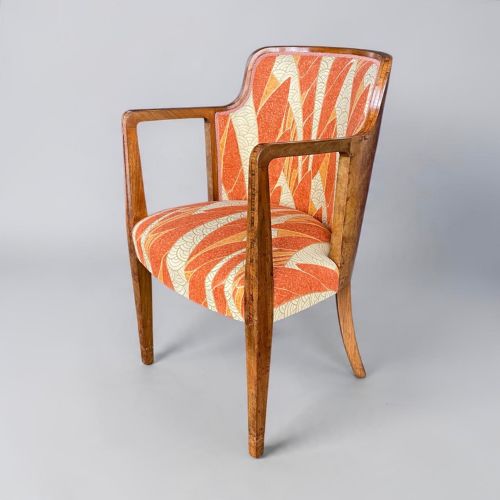
Desks occasionally appear paired with dedicated leather club chairs or armchairs from the same workshop. These seating options share the wood tones and period styling of the main writing table.
Finding a complete set remains less common than encountering the desk alone.
What desk accessories match these pieces?
Period desk stands incorporate marble bases, bronze or spelter figures, and glass inkwells. Adjustable chrome and brass desk lamps complete the workspace ensemble.
Bakelite clocks and blotters also accompany these French items.