

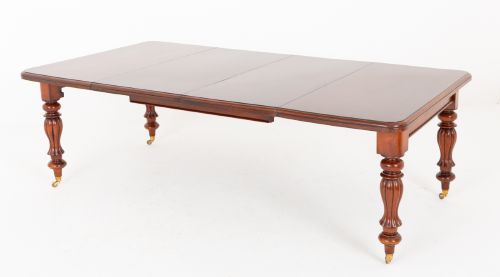
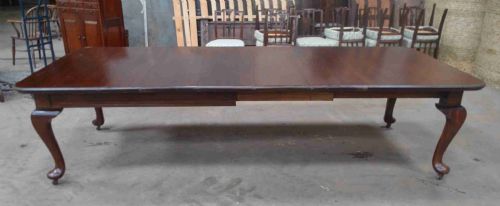
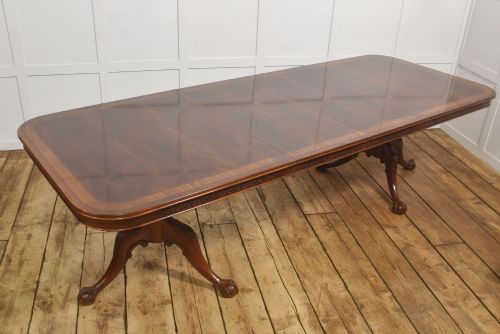
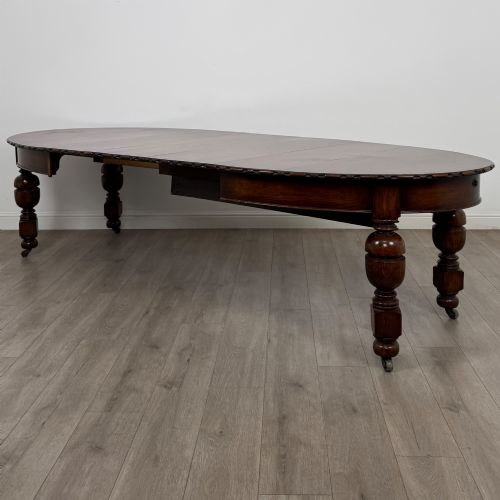
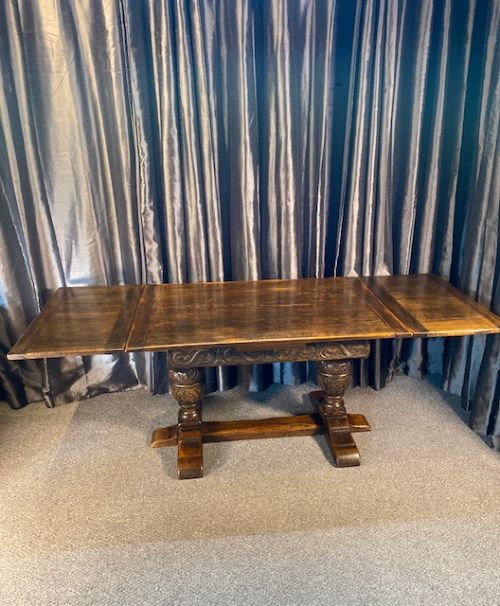
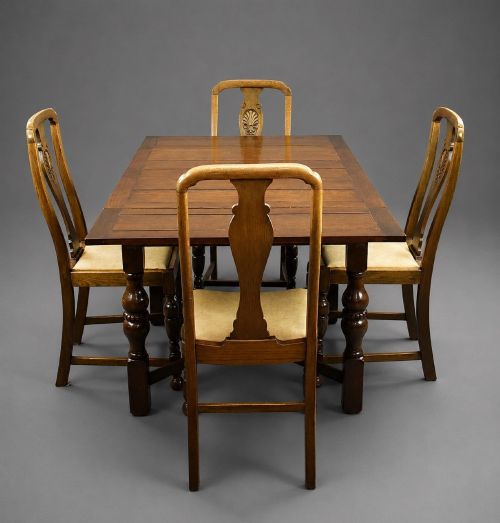
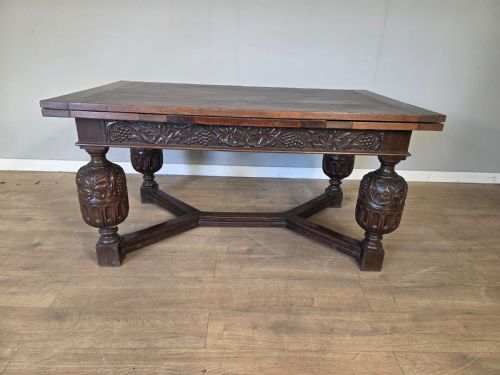
Vintage Extending Dining Table
A vintage extending dining table gives a dining room flexible hospitality through mechanical leaves or draw-out sections.
Vintage Extending Dining Table
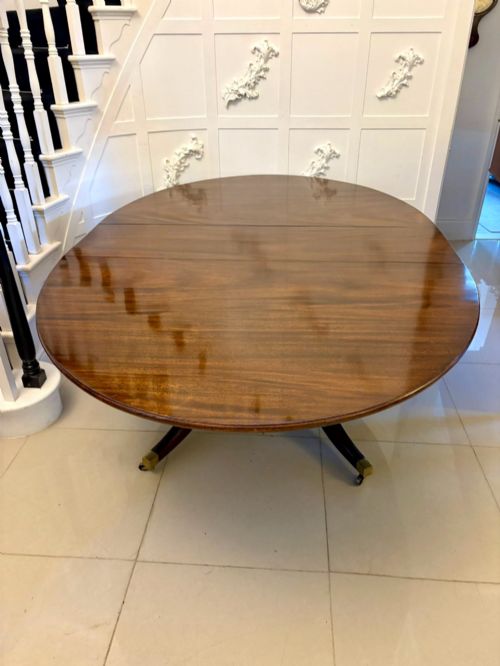
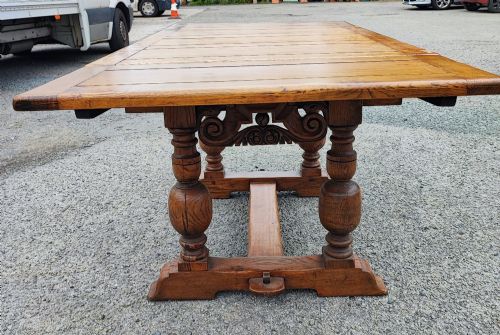
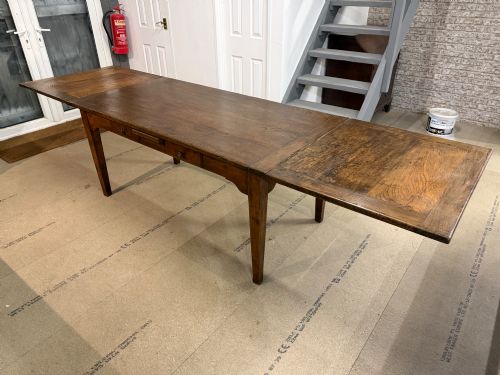
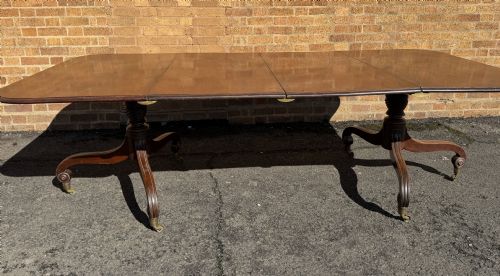
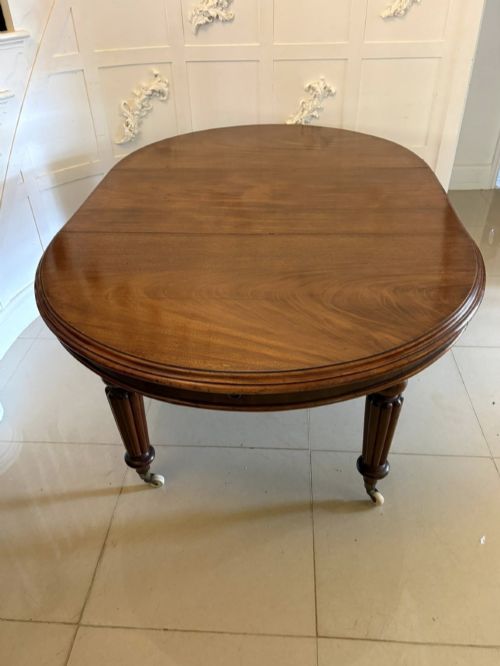
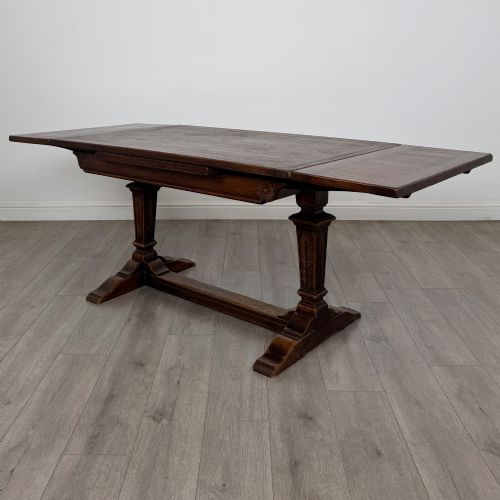
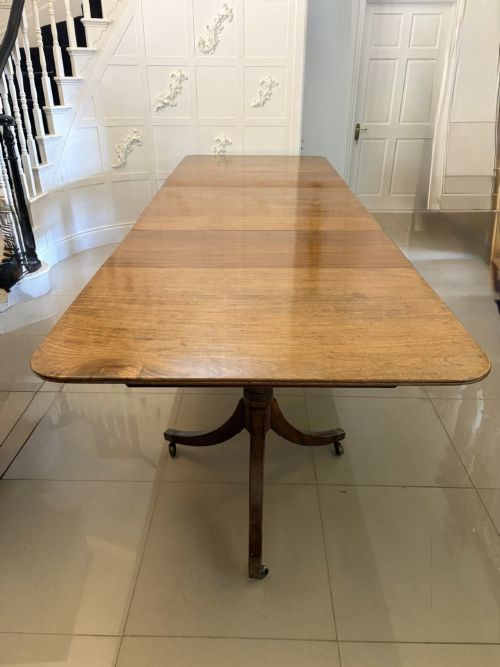
A vintage extending dining table provides adaptable seating capacity through mechanisms like central leaves, wind-out actions, or draw-leaf panels. These pieces span periods from the nineteenth century through the early twentieth century, taking forms such as pedestal tables, refectories, and D-ends.
The materials utilised range from figured mahogany and walnut to solid oak and pitch pine. Styles lean heavily on historical revivals, incorporating Regency, Edwardian, Victorian, and Jacobean design elements.
Buyers seeking a vintage extending dining table will find examples designed for everyday family dining as well as grander multi-pillar versions suited to large gatherings. The selection balances practical scale with period character.
Materials and construction
Makers built these tables primarily using hardwoods such as mahogany, oak, and walnut, often applying veneers like burr walnut or satinwood to surfaces. Structural stability relied on dense timber frames, while brass castors and ormolu mounts added mobility and ornamentation.
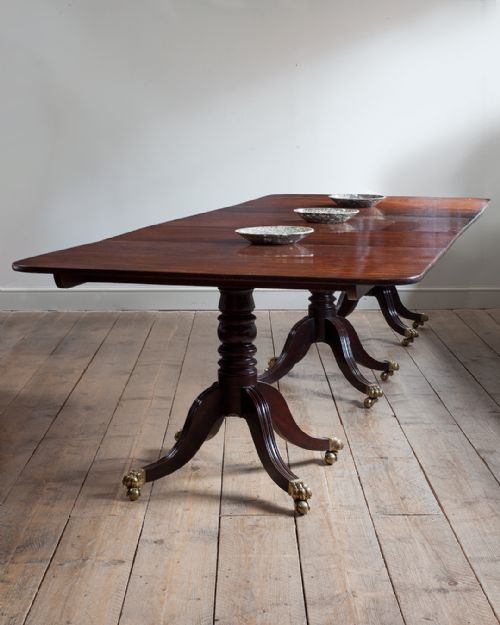
Extension systems required precise joinery, utilising draw-leaf pullouts, drop leaves, or removable centre leaves supported by winding mechanisms. Pedestal bases frequently featured reeded legs and brass hardware to manage the weight of multiple timber sections.
Dining tables featuring winding handles offer guests an unexpected mechanical magic trick between courses.
What separates the best from the rest
Quality rests in the precision of the extension mechanism and how smoothly the leaves integrate with the main top. Superior examples maintain exact alignment across multiple pillars and leaves without sagging.
The choice of timber grain and veneer selection dictates the visual hierarchy. Highly figured mahogany, burr walnut, and matched parquetry elevate a piece above standard utility furniture.
Maple and Co
The Vintage Extending Dining Table Glossary
- Draw-leaf
- A table with self-stored leaves beneath the main top that pull out from each end to extend the surface. This mechanism allows for quick adjustment without needing to store separate leaves elsewhere.
- Wind-out
- An extending dining table operated by a mechanical handle that turns a screw mechanism to part the top and insert leaves. This system appears frequently on nineteenth-century mahogany pedestal tables.
- Pedestal table
- A table supported by one or more central columns rather than four corner legs. These columns often stand on brass castors and branch into multiple reeded legs.
- Refectory table
- A long, narrow dining table traditionally used in monasteries and large halls, adapted in later periods with extending leaves. They are predominantly constructed from solid oak.
- D-end
- A table configuration where the ends form semi-circles, resembling the letter D, which separate to receive middle leaves. This design originates in the Georgian period and continues through later revivals.
Vintage Extending Dining Table: Frequently Asked Questions
How do wind-out tables work?
A detachable handle inserts into a socket beneath the table rim to turn an internal metal screw. This action draws the table halves apart so extra leaves fit securely into the centre.
Keeping the screw mechanism clean and lightly lubricated ensures the leaves glide together without binding or creating uneven gaps.
Where are draw-leaf leaves stored?
Draw-leaf tables conceal extra panels directly beneath the main tabletop. Pulling the surface outward allows these hidden leaves to slide up and drop into place.
This design removes the need to find storage space in cupboards for loose timber boards when the table is shortened.
Can I seat twelve people?
Larger three-pillar and multi-leaf versions accommodate twelve or more guests comfortably. Tables featuring multiple pedestal bases provide necessary leg clearance along the length.
Checking the maximum extended length and the placement of the pedestals ensures chairs fit without obstruction from the legs.
How do I care for mahogany?
Polishing timber surfaces with traditional beeswax maintains the grain depth and protects against daily wear. Direct sunlight can alter the tone of mahogany over time.
Using heat-resistant mats prevents moisture rings and surface marking from hot serving dishes placed directly on the polished wood.