

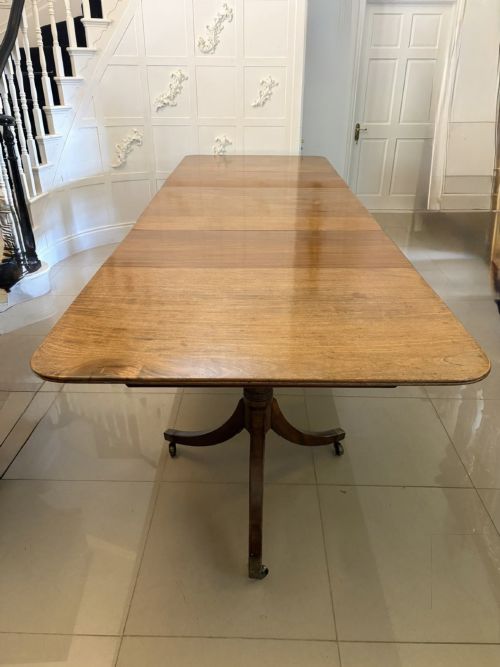
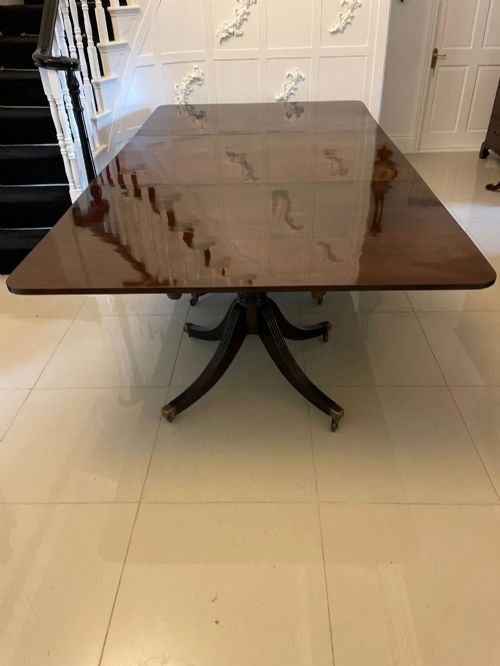
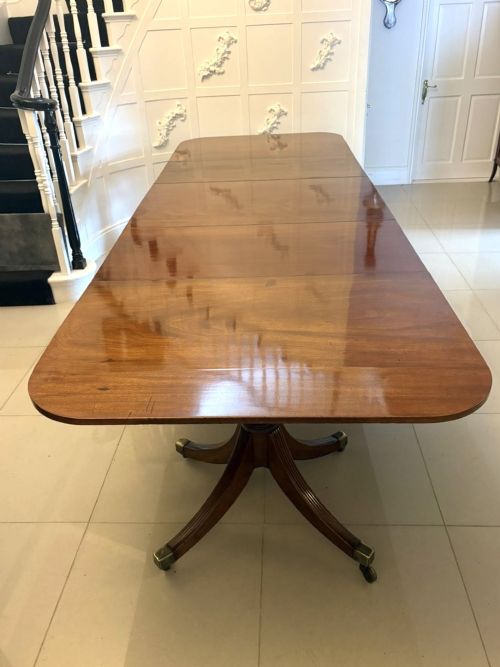
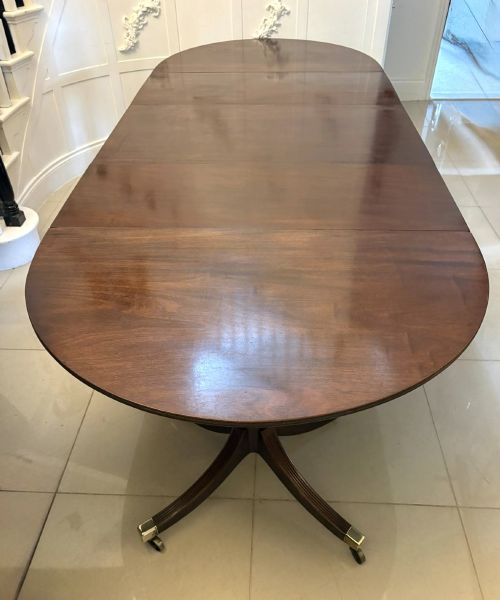

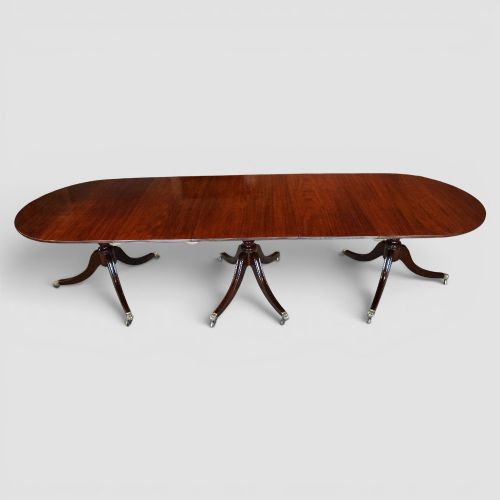
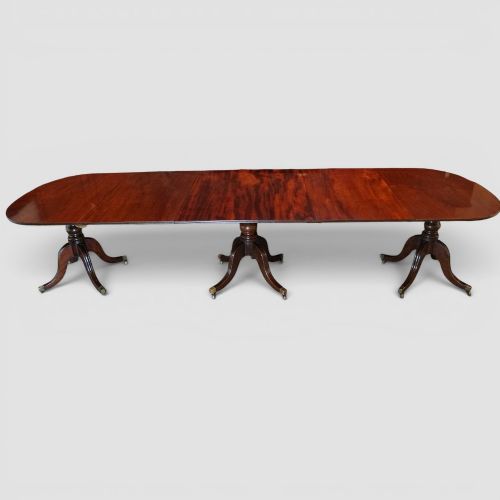
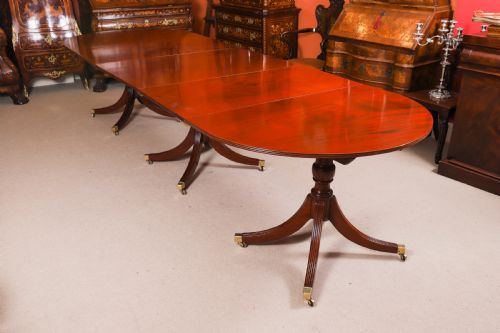


Triple Pillar Dining Table
A triple pillar dining table offers grand proportions and remarkable versatility, seating large numbers with ease.
Triple Pillar Dining Table
A triple pillar dining table provides expansive seating for dinner parties and large gatherings through its distinctive three-pedestal base design. These extended dining tables frequently span lengths between eight and sixteen feet, accommodating twelve to eighteen guests comfortably.
The versions most commonly met on this page date from the Georgian, Regency, and nineteenth century periods, alongside later twentieth-century revivals. Figured mahogany remains the dominant timber across these grand dining tables, often paired with removable extension leaves.
How they were made
Cabinet makers built these dining tables primarily from solid and figured mahogany, selecting timber with rich grain patterns for the table tops. Brass fittings, particularly castors on the pedestal bases, allowed these heavy tables to move smoothly across the floor.
The construction relies on three separate wooden pillars or pedestals supporting the long top, supplemented by drop-in leaves that permit the table to contract or extend. Joinery focused on sturdy central bracing to bear the substantial weight of the extended top.
Triple Pillar Dining Table Retail Price Guide 2026
Typical asking prices for triple pillar dining table among the pieces listed under this phrase on Sellingantiques today, from the lower quarter to the upper quarter. They describe what is for sale here now, not the wider market.
Brass castors allow these grand dining tables to glide across dining rooms with surprising agility.
What varies in quality
The depth of figure in the mahogany timber distinguishes exceptional examples from standard ones, as does the crispness of carving on the pedestals and legs. Tables retaining their original matching leaves and stable extension mechanisms hold greater integrity.
Proportion and balance across the three pillars determine the visual harmony of the piece when fully extended. Finer craftsmanship shows in the subtlety of the brass castors and the seamless alignment of the grain across the separate sections.
Whytock & Reid
The Triple Pillar Dining Table Glossary
- Triple pillar
- A table design supported by three distinct central pedestals rather than four corner legs. This arrangement prevents chair legs from striking the supports.
- Extending dining table
- A table equipped with removable leaves that insert into the centre to increase surface length. These leaves allow the furniture to adapt to different room sizes.
- Figured mahogany
- Timber exhibiting distinctive natural grain patterns such as flame or fiddleback. Cabinet makers prized this wood for its decorative visual depth.
- Pedestal base
- The central support structure beneath the table top, typically comprising a central column resting on splayed legs. It distributes weight down to brass castors.
Triple Pillar Dining Table: Frequently Asked Questions
How many people can sit at a triple pillar dining table?
These large dining tables typically accommodate anywhere from twelve to eighteen guests depending on their overall length and the inclusion of extension leaves.
The three-pedestal arrangement ensures diners do not bump their legs against corner table legs, making maximum use of the seating space along the sides.
How do I know if the table leaves match?
Original leaves share the same timber grain direction, colour maturation, and thickness as the main sections of the table top.
Over decades, replacement leaves can sometimes exhibit slight variations in the mahogany figure or finish when inspected closely under natural light.
Can I adjust the length of the table?
Many examples feature removable drop-in leaves that let you shorten the table for smaller daily gatherings and lengthen it for hosting.
The three pillars remain fixed beneath the main sections while the leaves slot securely into the central framework.
What is the difference between Regency and Regency revival?
Original Regency pieces date from the early nineteenth century during the British regency period and display period construction methods.
Regency revival pieces are later reproductions, often dating from the Edwardian era or the early twentieth century, built in the historical style.