

Curved Pedestal Desk
These curved pedestal desk pieces offer elegant workspace solutions, combining refined craftsmanship with practical utility for any traditional or period interior.
What a curved pedestal desk is
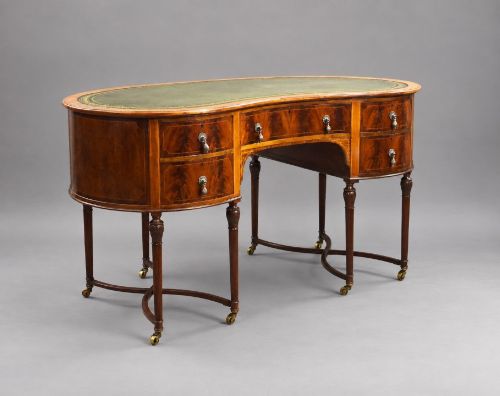
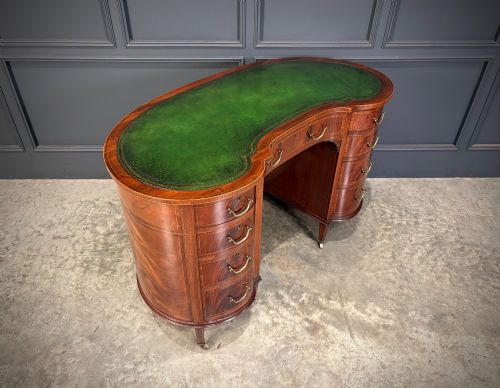
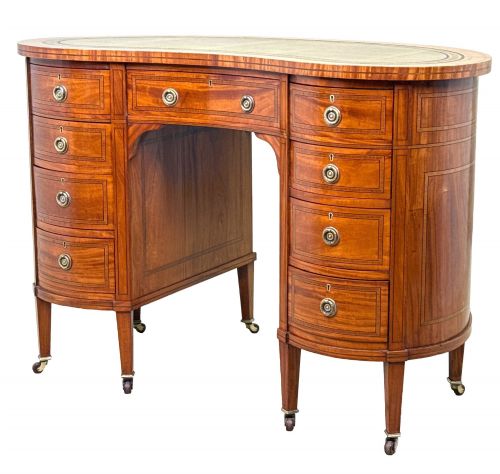
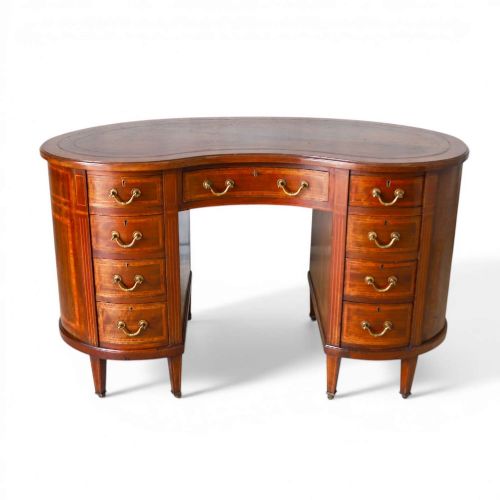
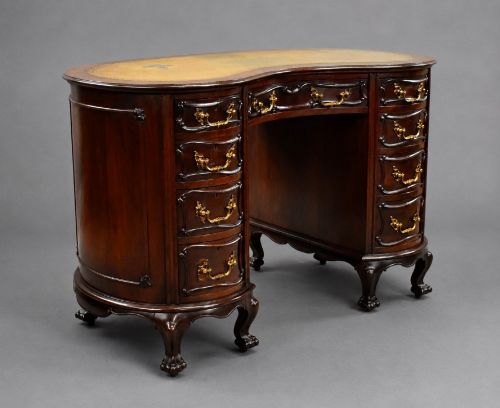
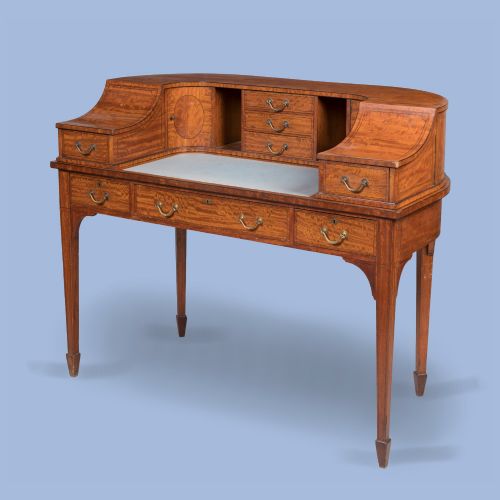
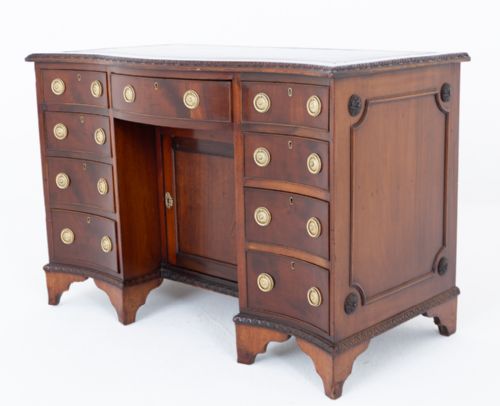
A curved pedestal desk provides a substantial workspace featuring a central kneehole flanked by banks of drawers, designed with sweeping, rounded front profiles. When you explore this selection of curved pedestal desk options, you encounter forms ranging from compact writing tables to twin pedestal layouts.
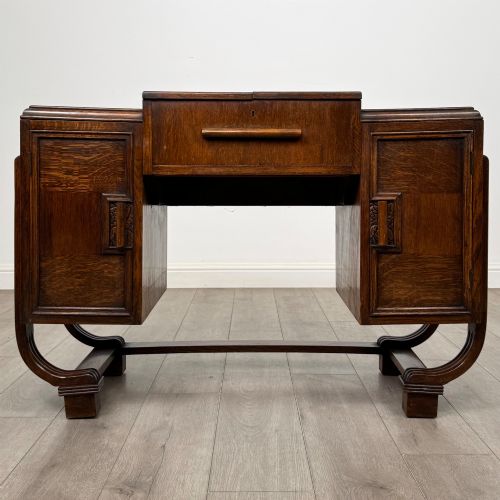
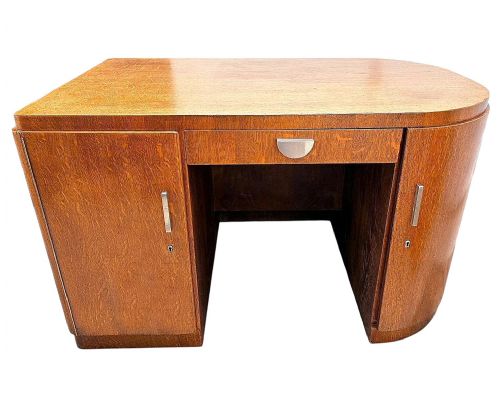
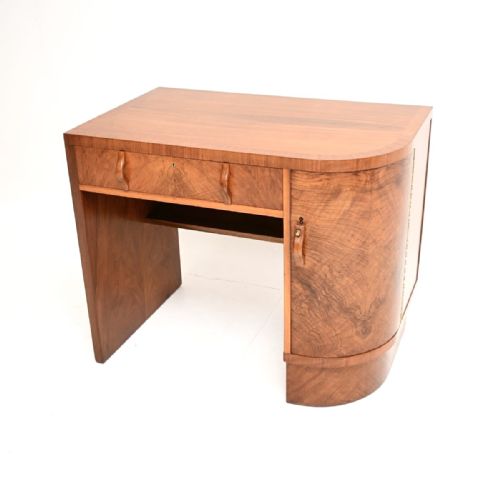
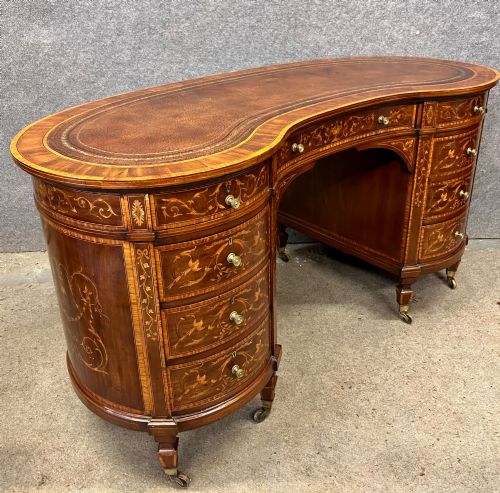
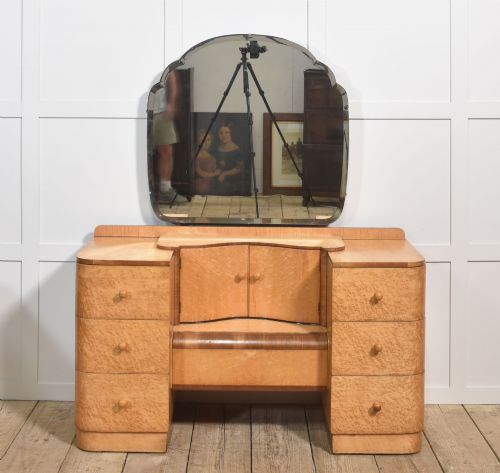
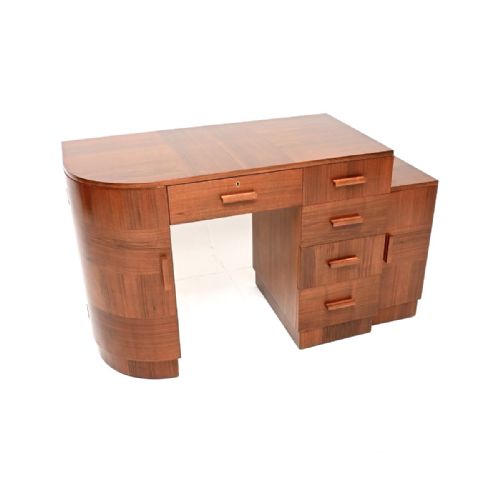
The pieces on this page span several distinct eras, notably the Victorian and Edwardian periods, alongside Sheraton Revival interpretations and Art Deco examples. These desks frequently adopt kidney shapes or gently bowfront configurations, offering generous surface areas lined with fitted leather panels.
Materials and construction
Cabinetmakers utilised rich timber veneers including mahogany, satinwood, burr walnut, and rosewood over sturdy carcases, often incorporating intricate marquetry and contrasting stringing. Solid brass handles and mounts provide functional and decorative accents across the drawer fronts.
Writing surfaces are typically inset with worked leather, bordered by blind or gilt tooling. Internal drawer construction employs traditional dovetailed joints and secondary woods, reflecting meticulous joinery techniques of the nineteenth and early twentieth centuries.
Retail Price Guide 2026
Typical UK retail prices for curved pedestal desk, calculated from the Sellingantiques database of over a million retail prices indexed since 2003. This retail price guide relies exclusively on Sellingantiques data; no external sources or auction records are used, so the figures do not describe the wider market.
Determining quality
Quality rests upon the selection of timber figures, the precision of marquetry inlay, and the crispness of brass hardware. Desks bearing documented attribution to notable makers or workshops command particular attention for their superior execution.
The integrity of the structural curves, the smoothness of drawer operation, and the preservation of original leather tops distinguish finer examples from standard commercial production.
Wolfe and Hollander·Edwards and Roberts·Gillows·Maurice Adams
The Curved Pedestal Desk Glossary
- Pedestal desk
- A freestanding office table comprising two independent banks of drawers supporting a single desktop. This configuration provides substantial storage while maintaining a finished appearance on all sides.
- Kidney desk
- A writing table featuring a distinctive curved, indented front resembling a kidney bean. This shape allows the user to sit closer to the centre while keeping materials within easy reach.
- Marquetry
- The art of applying decorative pieces of veneer to a structure to form intricate picture designs or geometric patterns. Makers used contrasting timber colours to create depth and visual interest.
- Twin pedestal
- A desk design supported by two separate columns of drawers rather than four legs. This provides maximum stability and ample interior knee space.
Frequently Asked Questions
What is a curved pedestal desk?
A curved pedestal desk is a traditional workspace featuring a rounded or kidney-shaped front profile, supported by two banks of drawers.
These pieces combine decorative elegance with functional storage, making them suitable for studies and home offices.
How do I care for the leather top?
Leather writing surfaces require gentle cleaning with a soft, dry cloth and occasional treatment with appropriate leather dressings to prevent drying.
Avoid placing hot cups or liquids directly onto the surface to protect the original hide and gilt tooling.
Are these desks suitable for daily use?
These pieces were built for practical administrative work using durable solid woods and sturdy joinery methods.
Their robust construction allows them to serve reliably as functional office furniture in modern settings.
How can I identify the period?
Dating relies on examining timber choices, construction techniques, hardware styles, and decorative motifs such as marquetry or stringing.
Victorian and Edwardian examples often display distinct stylistic revivals that point directly to their era of manufacture.