

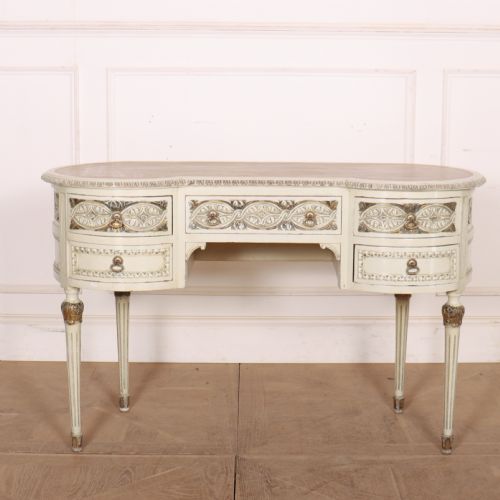

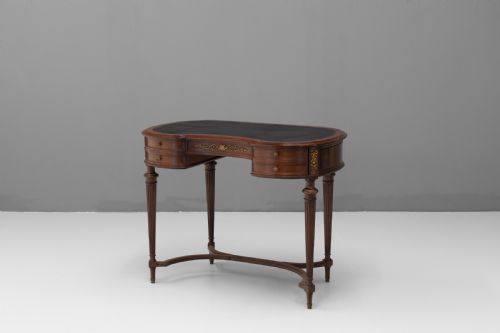


Vintage Kidney Table
The vintage kidney table brings a graceful, concave curve to a room, offering practical surface space without dominating the floor plan.
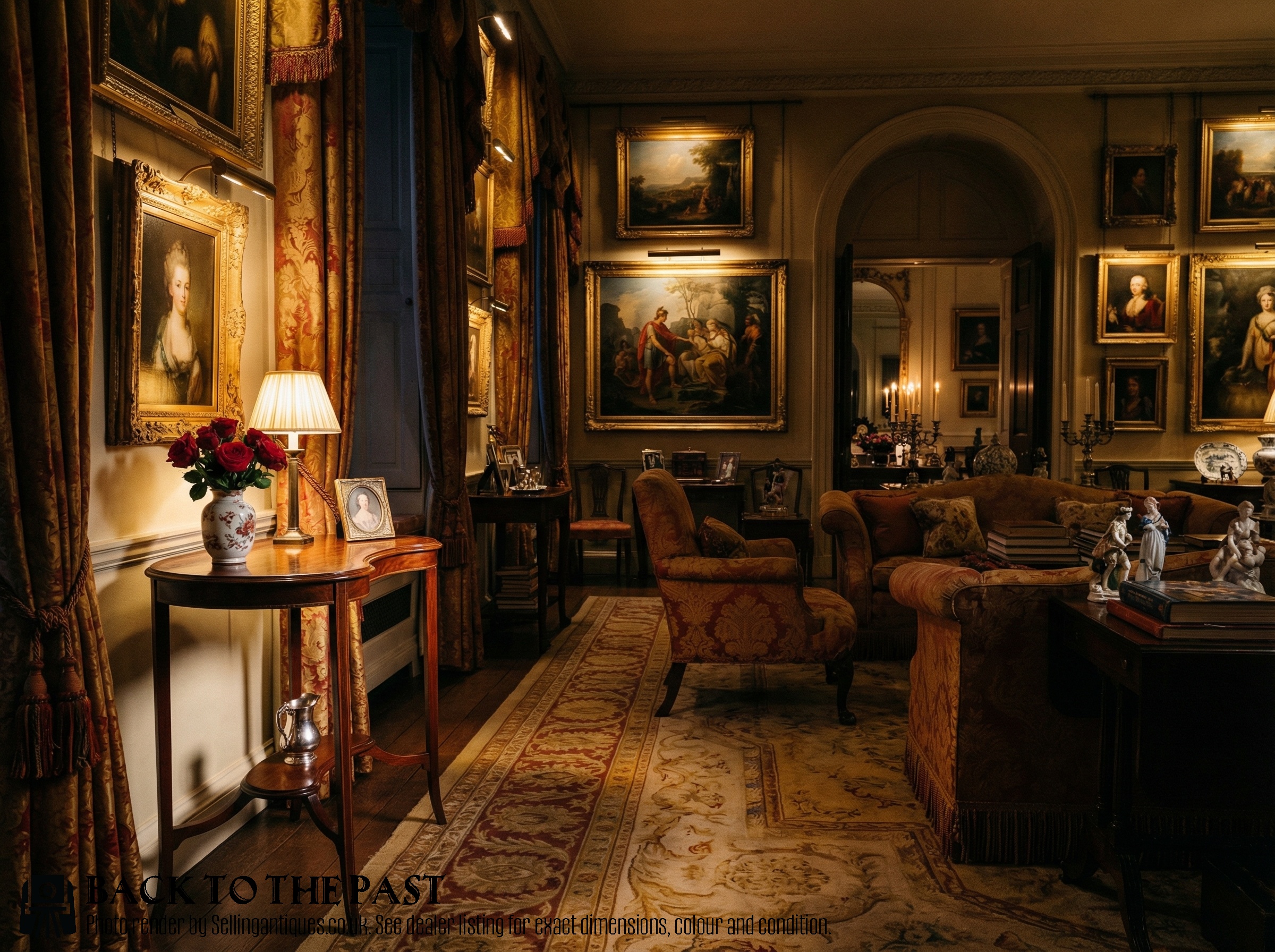
Vintage Kidney Table
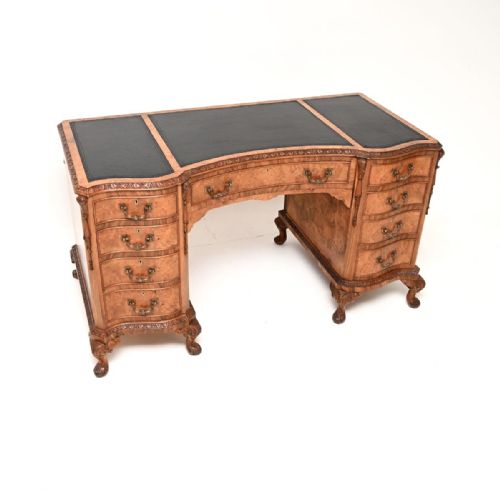
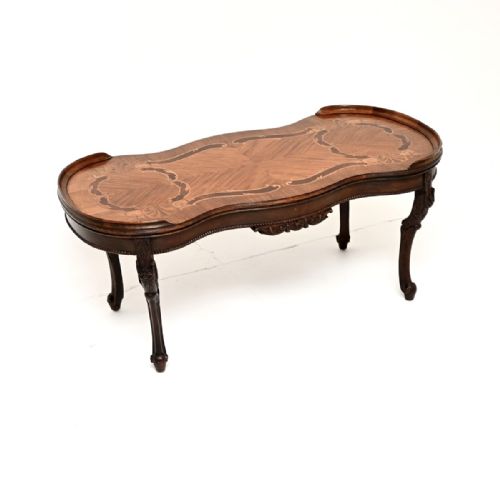
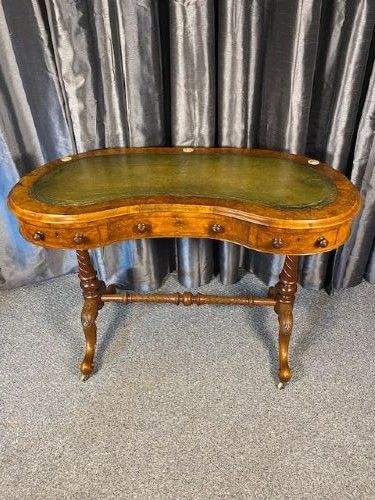
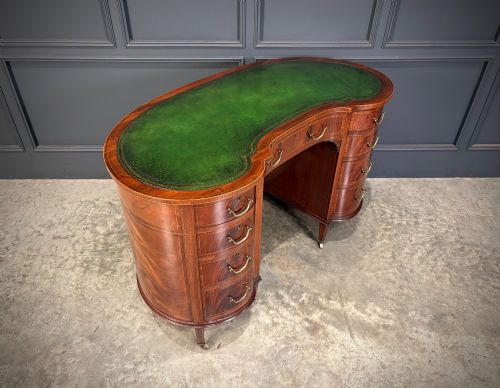
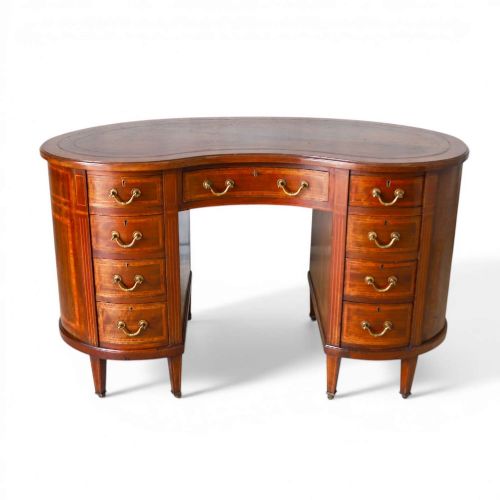
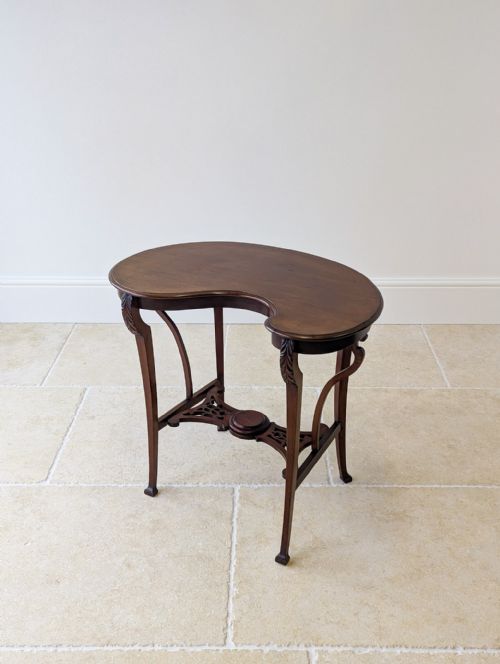
A vintage kidney table takes its defining asymmetrical, curved shape from the human form, designed to fit comfortably against the body when seated. When searching for a vintage kidney table, buyers encounter a variety of forms ranging from compact occasional and bedside pieces to substantial writing desks.
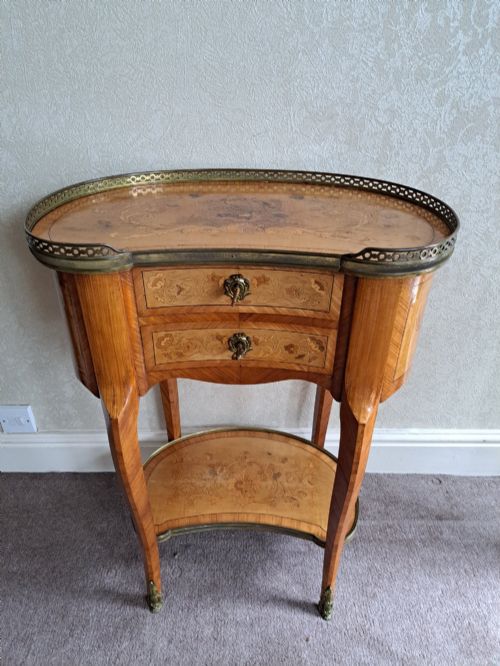
The pieces on this page span several distinct periods including the Victorian and Edwardian eras, alongside later twentieth-century examples. Makers frequently utilised revival styles such as Sheraton Revival and French Louis XV, pairing the distinctive curved outline with useful drawers or tiered shelving.
Materials and construction
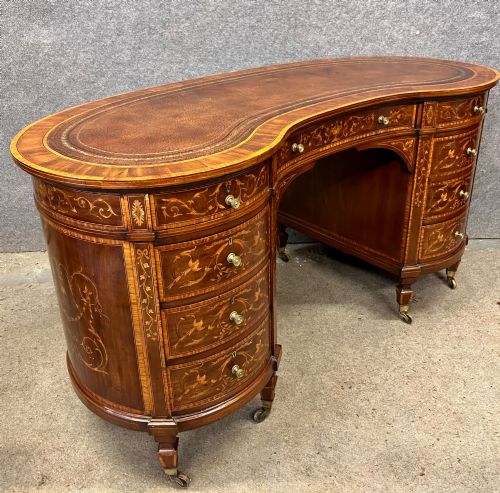
Craftsmen relied on fine timbers such as mahogany, walnut, burr walnut, and satinwood to construct these curved surfaces. Veneers were often carefully laid to accentuate the grain along the sweeping outline of the top.
Detailing frequently involved intricate marquetry inlay, boxwood stringing, and applied brass or ormolu mounts. Many writing and desk variants incorporated inset leather writing surfaces bordered by subtle gold tooling.
Vintage Kidney Table Retail Price Guide 2026
Typical asking prices for vintage kidney table among the pieces listed under this phrase on Sellingantiques today, from the lower quarter to the upper quarter. They describe what is for sale here now, not the wider market.
Assessing quality and craftsmanship
The distinction between standard and superior examples lies in the handling of the curved veneer and the crispness of any marquetry inlay. Superior pieces maintain tight joints and smooth drawer actions despite the structural challenges posed by the concave shape.
Hardware choice and secondary timber selection also indicate standard. High-quality items use solid mahogany or walnut for drawer linings and retain original cast brass handles or galleries rather than later replacements.
Wolfe & Hollander·Gillows·Maurice Adams
The Vintage Kidney Table Glossary
- Marquetry
- Decorative veneer patterns arranged to form pictures or geometric designs on furniture surfaces. Craftsmen cut contrasting woods together to achieve a precise fit.
- Ormolu
- Gilded bronze mounts applied to furniture for decorative effect. This technique was particularly popular on pieces influenced by French eighteenth-century designs.
- Satinwood
- A durable, lustrous timber with a yellowish colour and a satiny sheen. It was frequently utilised in revival pieces for banding and inlay.
- Gallery
- A raised miniature railing around the edge of a table top or shelf. It often consists of pierced brass or turned wood.
- Stringing
- Thin lines of contrasting wood inlaid into the surface of furniture to create borders and panels. This technique highlights the curved contours of the piece.
Vintage Kidney Table: Frequently Asked Questions
Where do I place a kidney table?
These tables work effectively as freestanding writing desks in the centre of a room or as bedside surfaces where the curve allows easier movement in tight spaces.
Their finished backs mean they do not need to be pushed against a wall to look correct.
How do I care for a leather top?
Keep leather writing surfaces away from direct sunlight and treat them periodically with appropriate leather balm to prevent cracking.
Avoid using harsh chemical cleaners on the gold tooling surrounding the edge.
Are these tables suitable for daily use?
Solid construction and durable hardwoods make many examples robust enough for contemporary work or display.
Care should be taken with veneered surfaces to avoid moisture rings and excessive heat.
How do I distinguish Edwardian from Victorian pieces?
Edwardian examples often display lighter satinwood inlays and a generally brighter finish, reflecting the shift in interior tastes around nineteen hundred.
Victorian pieces tend to use heavier timbers such as dark mahogany and walnut with more restrained decorative accents.