
Edwardian Marquetry Desk
These Edwardian marquetry desks combine elegant writing surfaces with intricate wood inlay, offering both functional workspace and refined period character for the home.
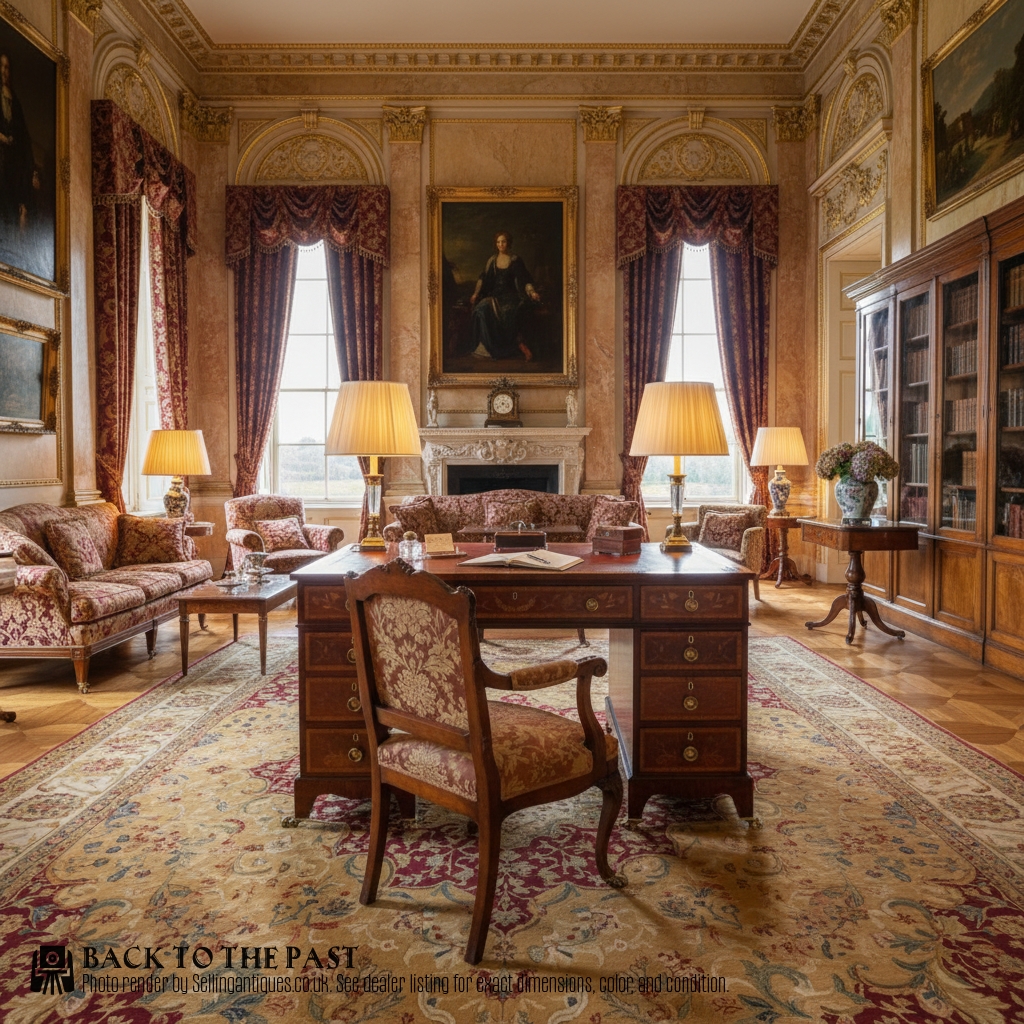
Edwardian Marquetry Desk
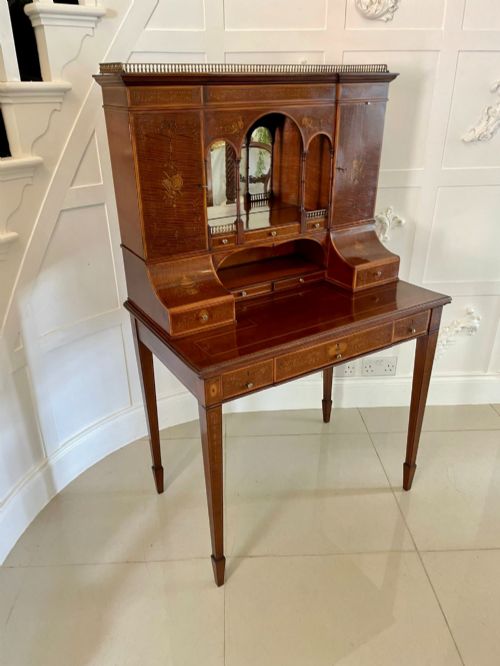
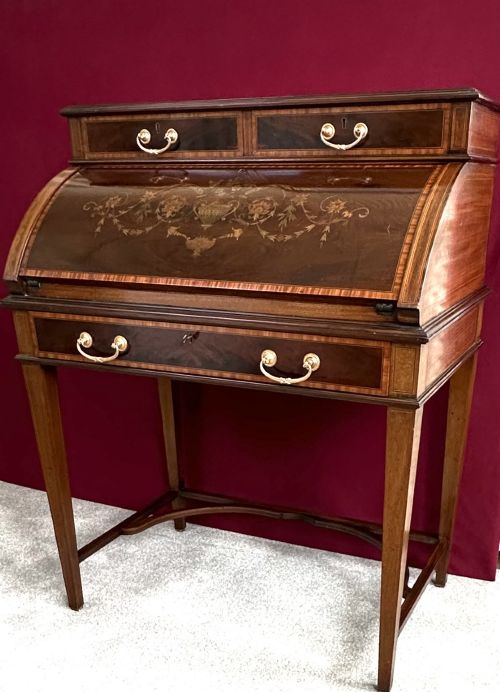
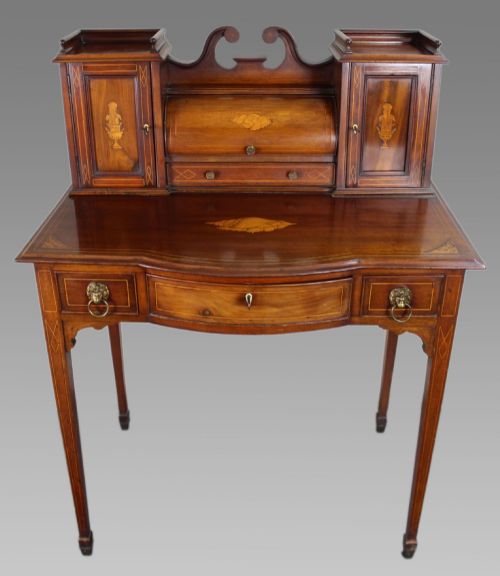
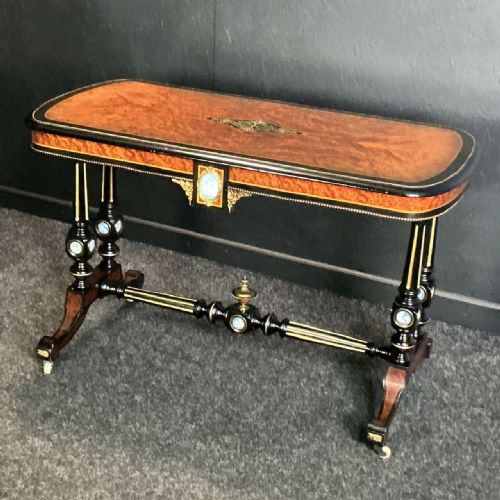
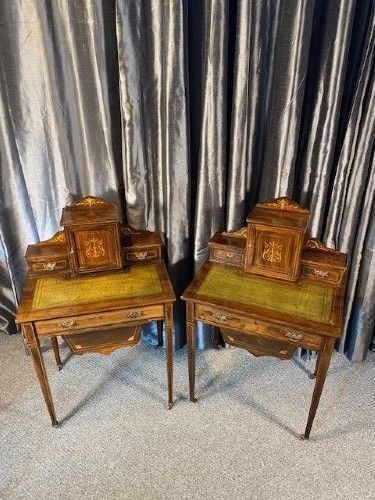
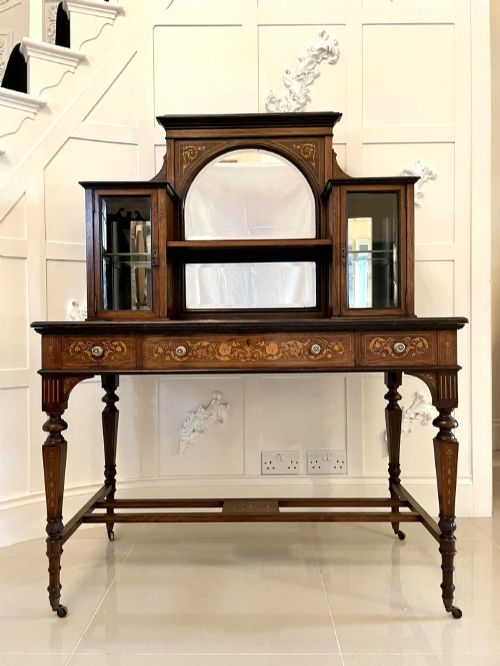
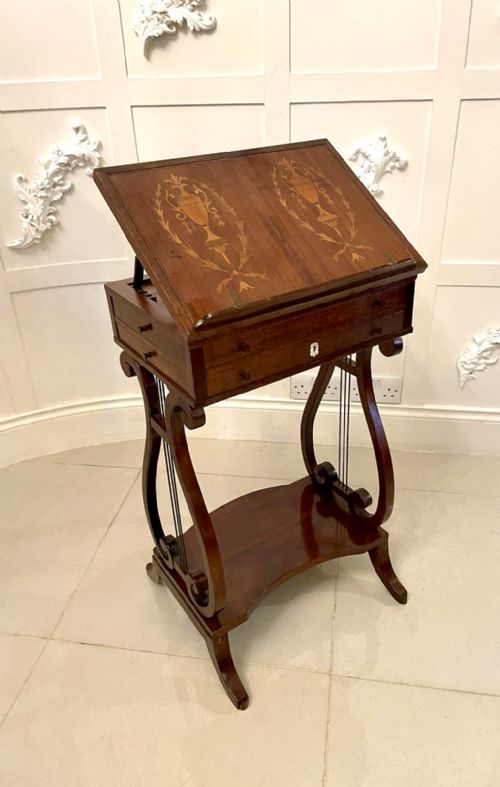
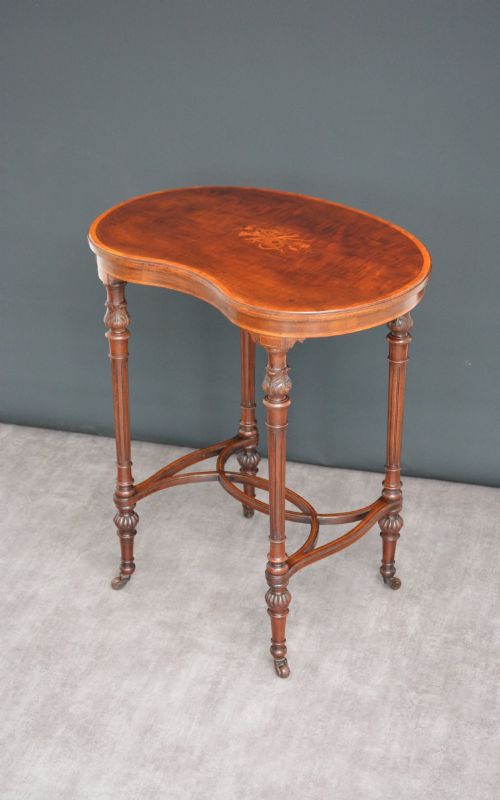
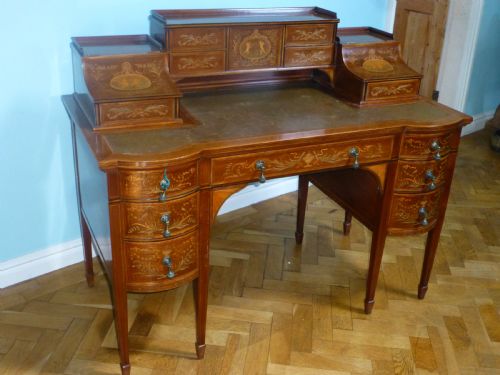
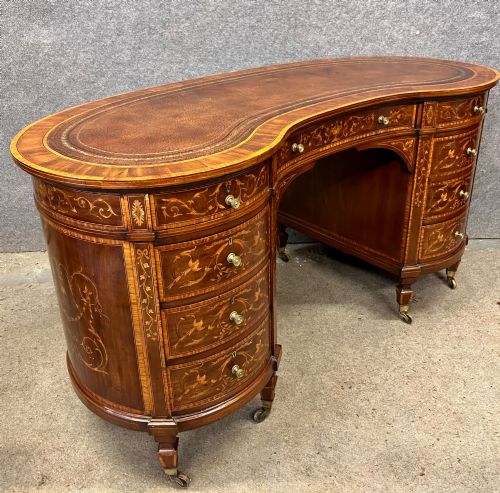
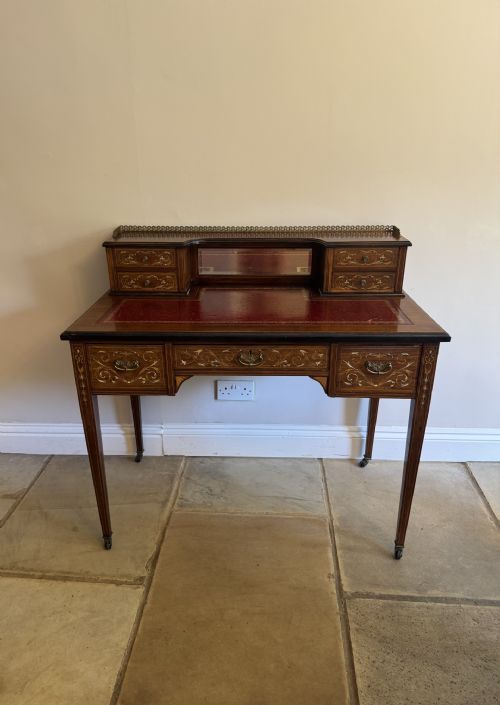
The search phrase edwardian marquetry desk brings up a variety of writing furniture produced around the turn of the twentieth century, largely dating from 1890 to 1900. These pieces range from compact ladies writing desks and kidney-shaped writing tables to elaborate Carlton House desks and cylinder bureaus.
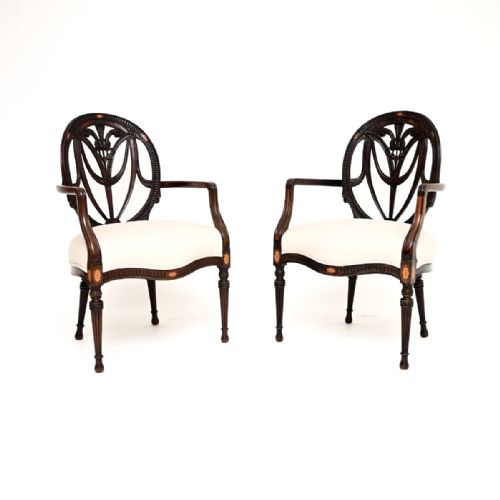
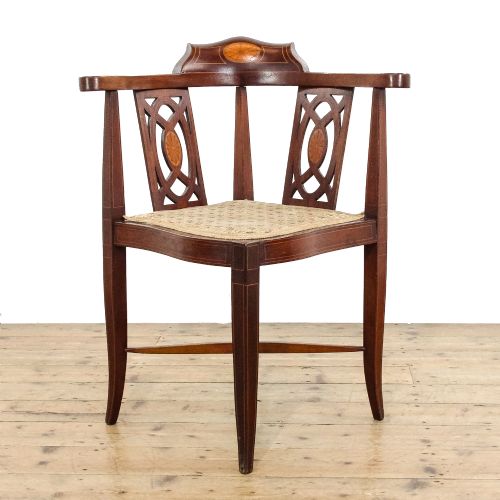
Mahogany and rosewood form the primary body timbers for these pieces, often enriched with contrasting satinwood and boxwood inlay. The revival styles of the period heavily influence the decoration, drawing on Sheraton, Neoclassical and French design motifs.
Buyers frequently encounter pedestal desks, writing cabinets, and kneehole configurations within this category. Each form serves a specific writing function, from simple letter-writing stations to complex multi-drawer workstation cabinets.
Construction and Materials
Cabinetmakers built these desks using solid timbers and fine veneers of mahogany, rosewood, and satinwood over supportive foundational woods. Brass handles, galleries, and hinges provide structural and decorative hardware accents.
Marquetry decoration relies on hand-cut veneers of contrasting woods such as boxwood, satinwood, and darker exotic species assembled into pictorial or symmetrical patterns. Leather inserts frequently form the writing surfaces, bordered by subtle gold tooling.
Retail Price Guide 2026
Typical UK retail prices for edwardian marquetry desk, calculated from the Sellingantiques database of over a million retail prices indexed since 2003. This retail price guide relies exclusively on Sellingantiques data; no external sources or auction records are used, so the figures do not describe the wider market.
Object forms span from simple ladies writing desks to elaborate cylinder bureaus and Carlton House desks.
Assessing Quality and Execution
Quality in these desks rests upon the precision of the marquetry cutting and the choice of timbers used for the contrasting veneers. Finer examples display tight, seamless joins in the inlay work and balanced grain patterns across the primary surfaces.
The sophistication of the internal fittings, such as secret drawers, pigeonholes, and fitted stationery compartments, separates standard production from superior pieces. Heavier framing and substantial brass hardware also indicate a higher grade of manufacture.
Edwards and Roberts·Maples
The Edwardian Marquetry Desk Glossary
- Marquetry
- Decorative veneer work arranged in pictorial or geometric patterns across a wooden surface. This technique uses thin slices of various timbers to create contrasting pictures.
- Carlton House desk
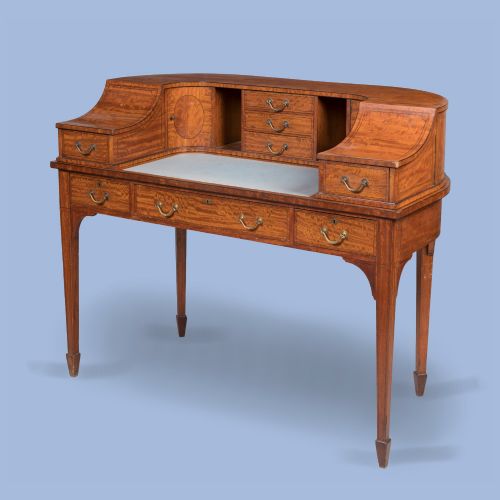
- A form of writing desk featuring a curved superstructure of small drawers and pigeonholes surrounding the main writing surface. It typically includes leather inserts and delicate brass galleries.
- Bonheur du jour
- A light ladies writing desk featuring a small cabinet or set of drawers on top of the writing surface. These pieces gained popularity during revival periods for boudoir use.
- Satinwood
- A lustrous, yellowish timber utilised extensively for contrasting inlay and veneering in fine furniture. Its grain catches the light to create a shimmering effect.
- Cylinder desk
- A writing desk featuring a quarter-cylinder rolling shutter that conceals the writing surface and interior drawers when closed. When rolled back, it reveals the fitted interior.
Frequently Asked Questions
What is an Edwardian marquetry desk?
These pieces are sophisticated writing tables and cabinets produced around 1900, featuring detailed wood inlay work on timbers like mahogany and rosewood. They combine the functional utility of a workspace with intricate decorative arts.
Craftsmen drew inspiration from earlier Sheraton and French designs, applying elaborate floral and geometric marquetry across writing flaps, tabletops, and frieze drawers.
How do I use one today?
An edwardian marquetry desk functions well as a laptop workstation or a dedicated writing space in a study or living room. Their compact proportions make them adaptable to various room layouts.
Protect the antique leather writing surface with a blotter, and maintain the polished wood exterior with appropriate furniture wax to preserve the delicate marquetry.
How do I identify the period?
Pieces from this era typically date between 1890 and 1910, reflecting Edwardian tastes and various revival styles. Construction details like machine-sawn secondary timbers and specific brass fittings help confirm the date.
The presence of satinwood inlay on dark rosewood or mahogany bases, combined with Neoclassical or Sheraton revival motifs, points directly to this turn-of-the-century window.