




Victorian Kidney Table
These curvaceous victorian kidney table designs served as elegant writing desks and occasional surfaces for the nineteenth-century home.
Understanding Victorian Kidney Tables
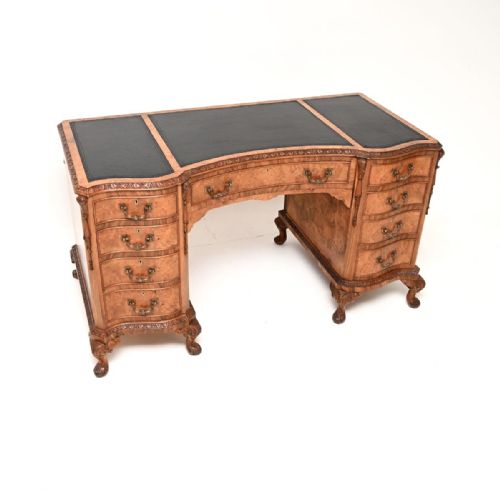
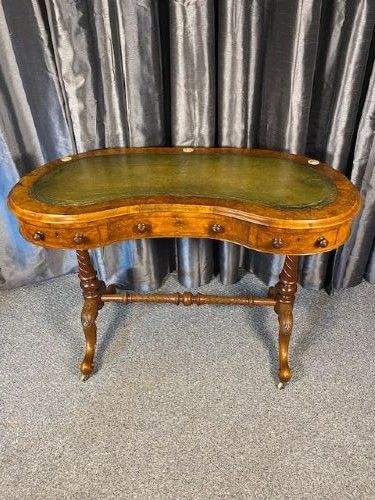
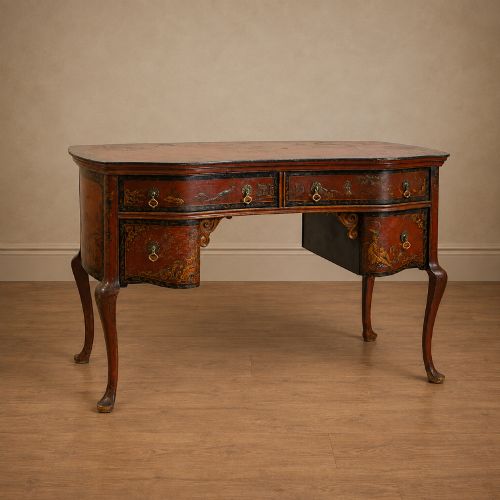
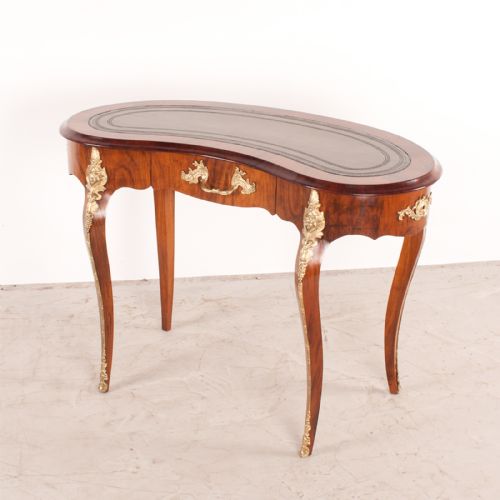
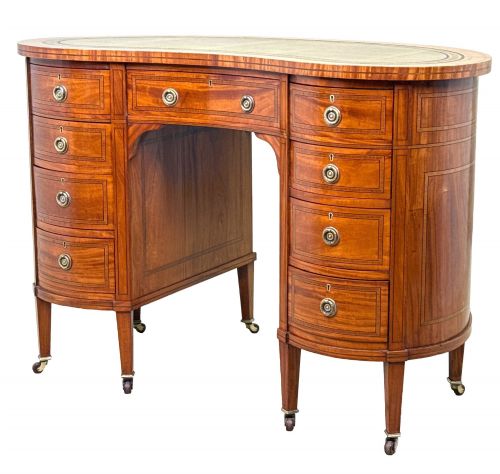
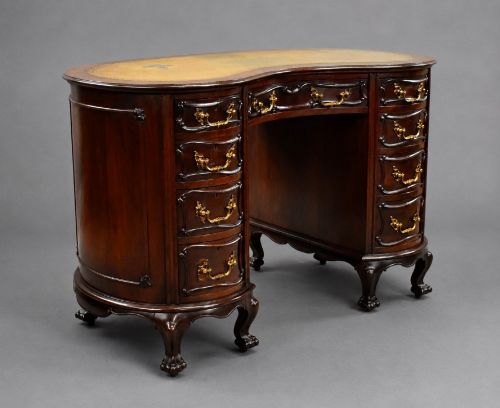
A victorian kidney table is a distinctive form of nineteenth-century furniture defined by its concave front curve and convex back, designed to fit comfortably against a person or into a room corner. The selection on this page encompasses various functional types, predominantly writing desks and side tables alongside occasional tables.
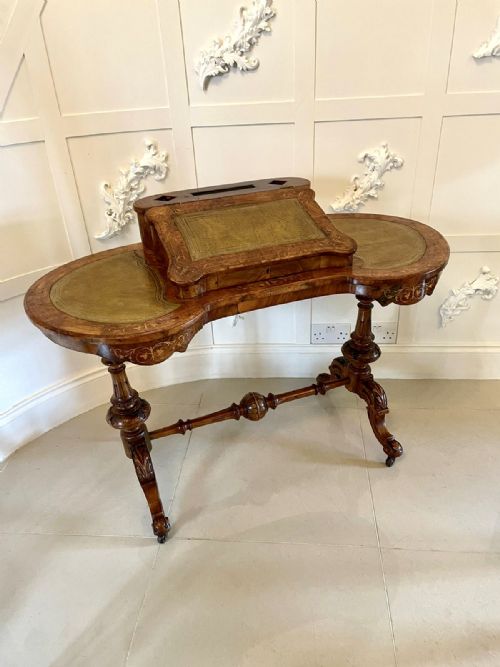
The historical record shows these pieces spanning the Victorian era, utilising dates from 1850 through 1880 alongside broader nineteenth-century designations. Makers produced them in formats ranging from simple side tables to elaborate freestanding writing tables with leather inserts and stretcher supports.
Materials and Construction
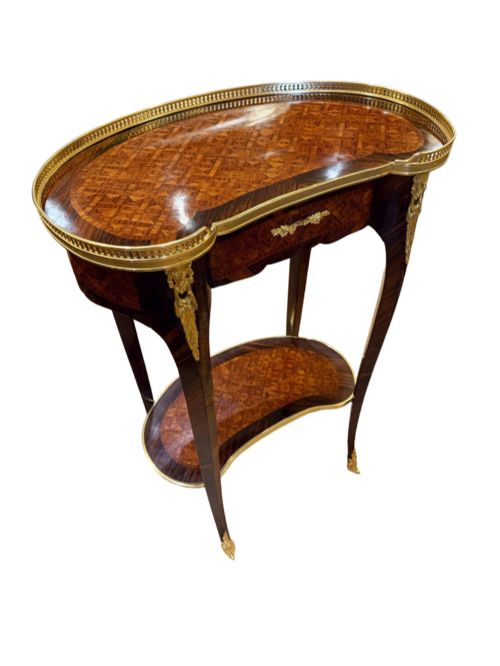
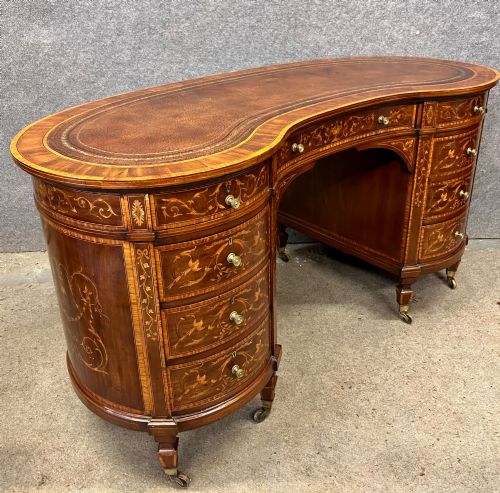
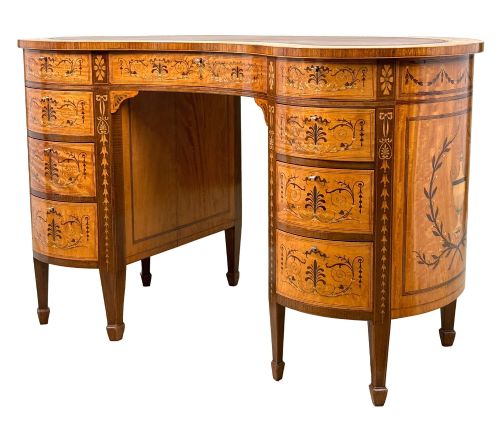
Cabinet makers relied heavily on burr walnut, plain walnut, and mahogany for the primary carcases, frequently embellishing surfaces with kingwood crossbanding, satinwood, rosewood, coromandel, and intricate parquetry or marquetry inlays. Ebonised wood and rosewood also appear in the material record.
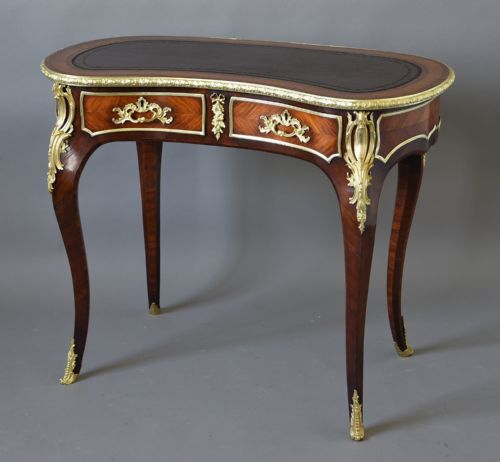
Many examples incorporate leather writing surfaces, brass mounts, ormolu details, and velvet tasseled trims, particularly on pieces designated as writing desks or bureau-plat variants. Structural support often included stretcher bases or slender cabriole and turned legs.
Retail Price Guide 2026
Typical UK retail prices for victorian kidney table, calculated from the Sellingantiques database of over a million retail prices indexed since 2003. This retail price guide relies exclusively on Sellingantiques data; no external sources or auction records are used, so the figures do not describe the wider market.
Listings incorporate diverse styles including Aesthetic Movement ebonised pieces and Louis XV revival forms alongside standard Victorian designs.
Distinctions in Quality
The standard of timber selection separates simpler occasional items from superior writing tables, with highly figured burr walnut and multi-wood marquetry representing the upper tiers of craftsmanship. Finer pieces display meticulous crossbanding and sophisticated parquetry inlay across the curved top.
Metalwork and secondary materials further define the hierarchy, distinguishing plain wooden edges from those featuring cast ormolu mounts, brass details, and tooled leather inserts. Freestanding capability, where the back is finished with the same care as the front, indicates a superior commission.
Edwards And Roberts
The Victorian Kidney Table Glossary
- Kidney Table
- A low table or desk featuring a curved, kidney-shaped top designed during the Victorian period for writing or display.
- Burr Walnut
- A highly prized wood veneer showing intricate swirling grain patterns derived from walnut tree growths.
- Crossbanding
- A border band of veneer applied around the edges of a table top, often running perpendicular to the central grain.
- Ormolu
- Gilded bronze ornamentation applied to furniture mounts, adding decorative metallic detail to nineteenth-century pieces.
Frequently Asked Questions
What is a kidney table used for?
These pieces primarily functioned as writing desks, ladies' writing tables, and occasional side surfaces in nineteenth-century drawing rooms and libraries.
The concave curve allowed the user to sit close to the centre while writing or attending to correspondence.
How do I identify a Victorian kidney table?
Look for the characteristic bean-shaped top combined with nineteenth-century timber choices such as burr walnut, mahogany, or rosewood.
Details like crossbanding, inlay work, and stretcher bases typically point to this specific Victorian era of manufacture.
Where should I place a kidney table at home?
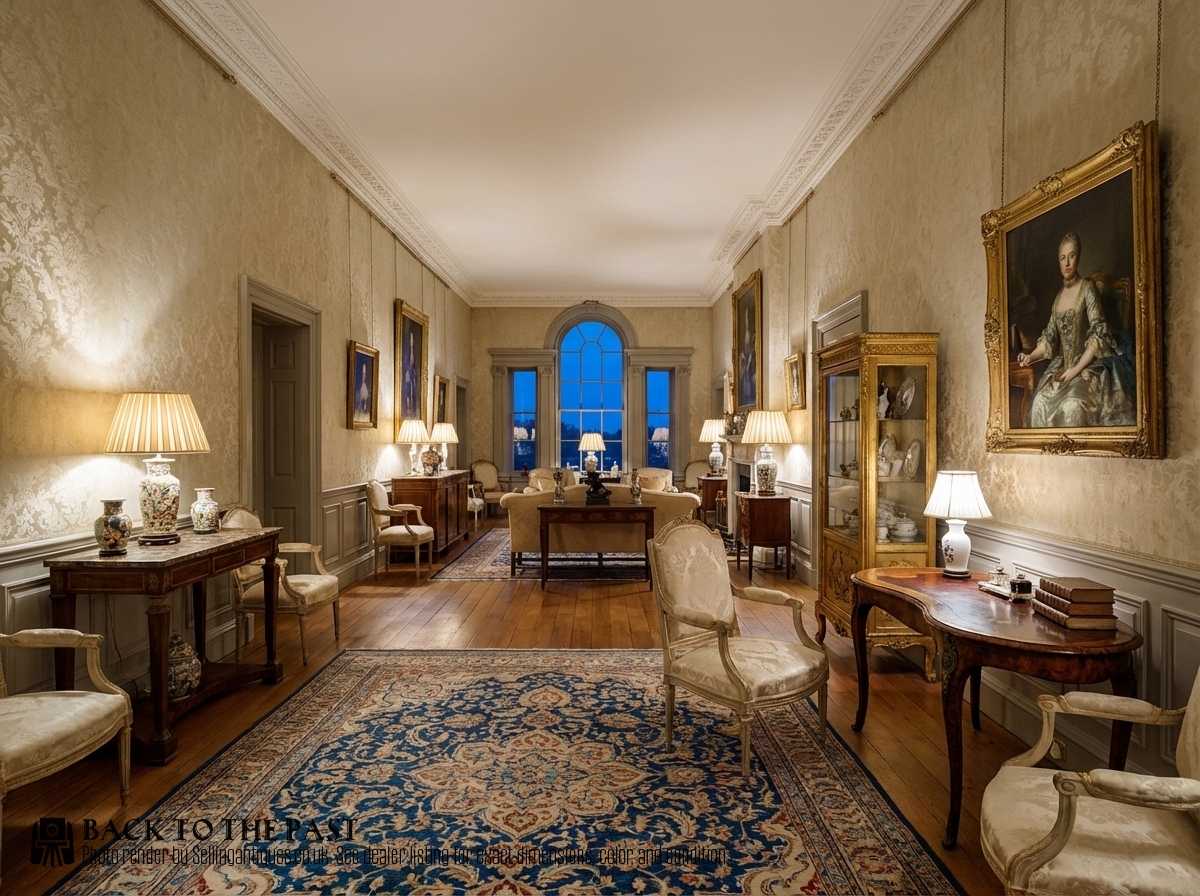
Freestanding writing tables look best positioned away from walls where the finished back and detailed inlay remain visible.
Smaller side and occasional variants fit neatly into corners or beside seating areas due to their curved footprint.
What styles influence these tables?
While predominantly Victorian, certain examples incorporate French revival aesthetics such as Louis XV design influences and Aesthetic Movement characteristics.
Ebonised finishes and velvet details often accompany these specific stylistic interpretations.