
Burr Walnut Console
When you search for a burr walnut console, you enter a world of figured timbers and elegant proportions designed to anchor a room.
Burr Walnut Console
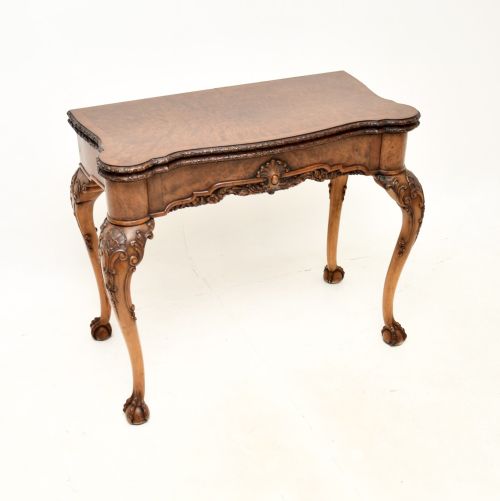
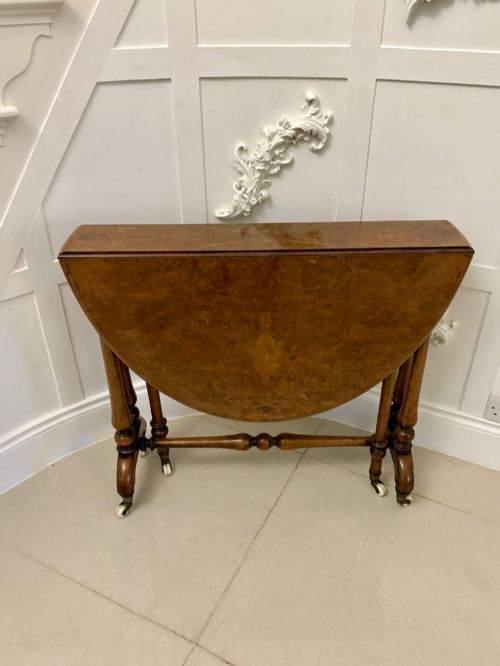
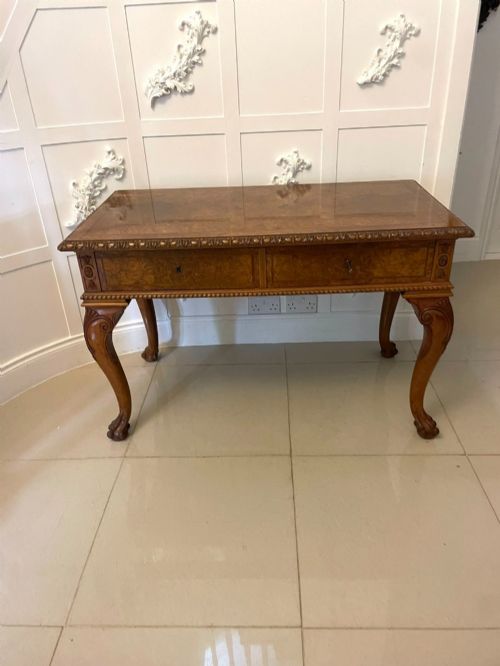
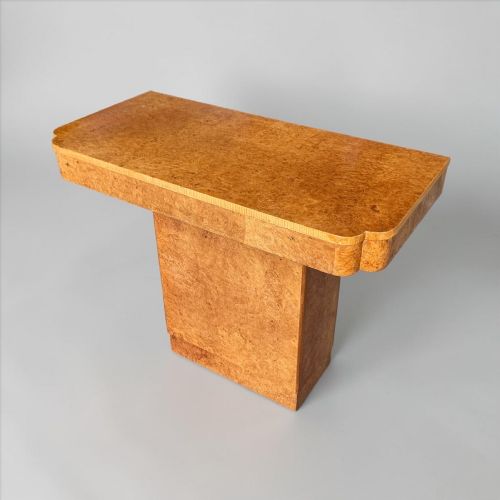
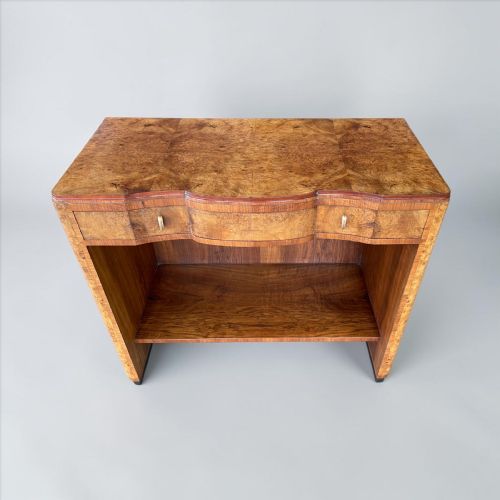
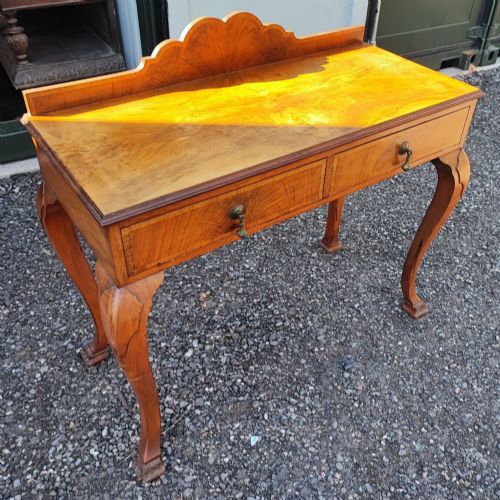
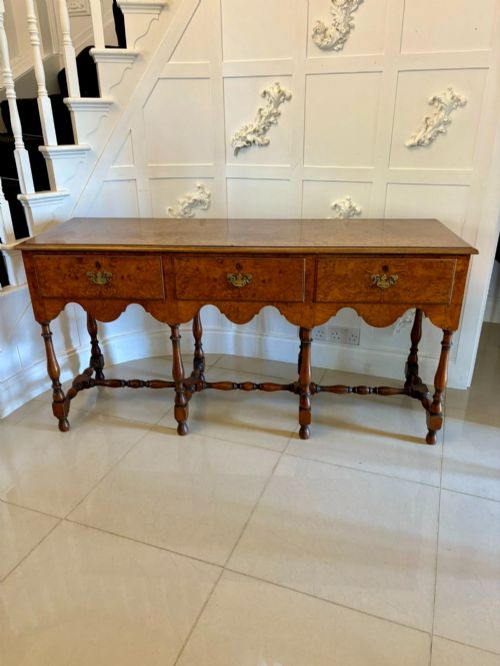
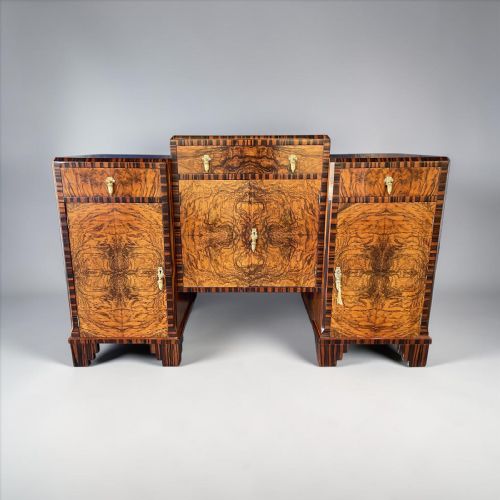
A burr walnut console brings distinctive grain patterns and warm tones to an interior, functioning primarily as a hallway or reception room surface. The selection spans the Victorian era through the Edwardian period and Art Deco years, capturing shifting tastes in domestic furniture.
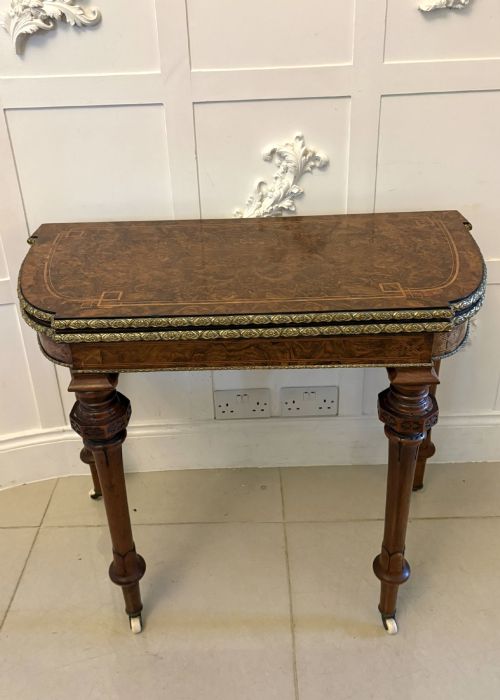
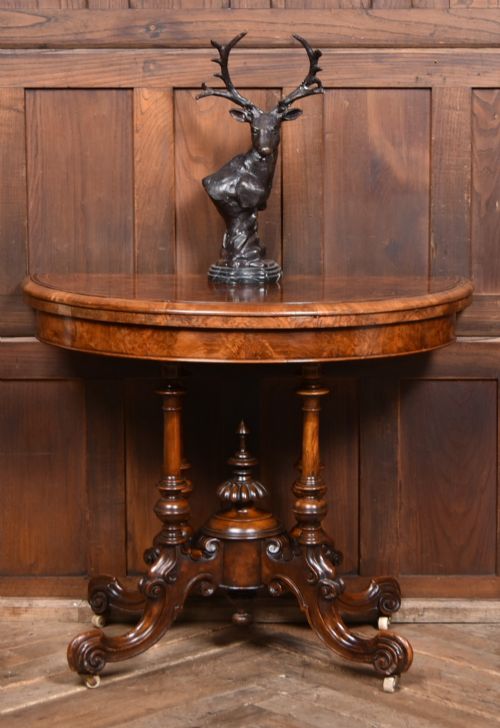
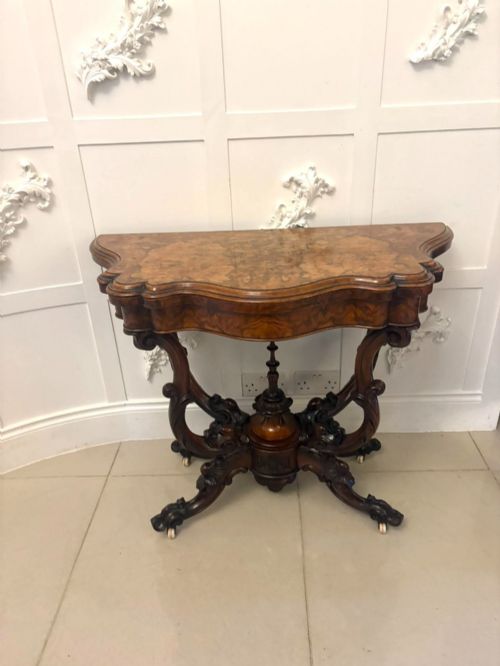
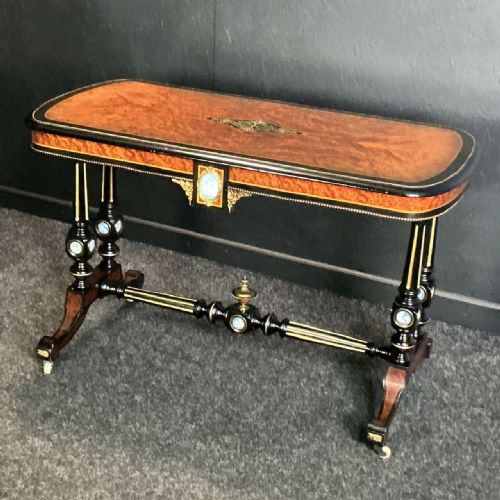
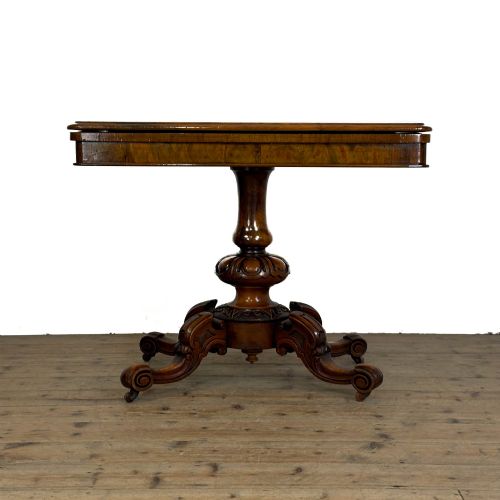
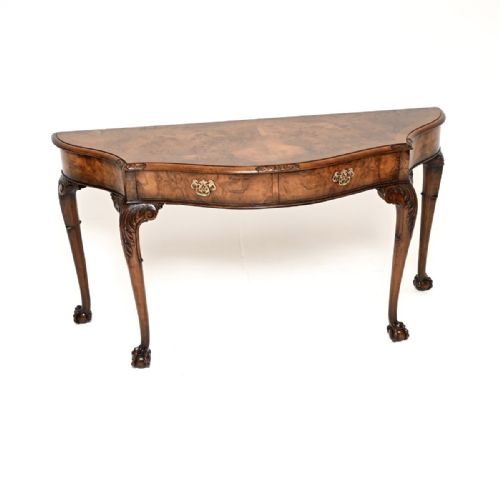
You will frequently encounter fold-over card tables that double as console tables, alongside dedicated side tables and serving pieces. The forms range from ornate Victorian examples with carved supports to clean-lined Art Deco interpretations and graceful Queen Anne revival pieces.
How they were made
Cabinet makers utilised walnut veneer, particularly burr sections with swirling knot formations, applied over solid secondary woods to create dramatic surface patterns. This timber is combined with brass hardware, ormolu mounts, and occasionally ebonised wood details to frame the figured grain.
Structural elements rely on traditional joinery methods, supporting serpentine or bow-fronted tops, carved basket bases, and marquetry inlay work. The construction accommodates complex folding mechanisms for games tables and solid standing frames for hall consoles.
Several tables cleverly double as card and games surfaces, proving that past generations took their parlour entertainment very seriously.
What varies in quality
The distinction between standard examples and the finest work lies in the choice and matching of the burr walnut veneer across the top surface. Superior pieces display symmetrical grain patterns that flow seamlessly across folding leaves and drawer fronts.
Execution of carved details, such as basket bases and floral marquetry, separates utilitarian production from exceptional cabinet work. The integration of decorative metal mounts, including ormolu and brass, further indicates the standard of the maker's workshop.
Maurice Adams·Edward’s And Robert’s·Hille·Epstein and Co·Maple and Co.
The Burr Walnut Console Glossary
- Burr walnut
- A figured wood grain obtained from the wart-like growths on walnut trees, prized for its complex swirling patterns. It is sliced into thin veneers for decorative furniture surfaces.
- Console table
- A table designed to stand against a wall, frequently secured with brackets or supported by front legs. These pieces serve decorative and functional roles in entrance halls and living spaces.
- Ormolu
- Gilded bronze used for decorative mounts and accents on furniture. This technique adds metallic contrast to wood surfaces, particularly on Victorian and French pieces.
- Marquetry
- The art of applying pieces of veneer to a structure to form decorative patterns and pictures. Craftsmen use contrasting woods to create floral and geometric designs.
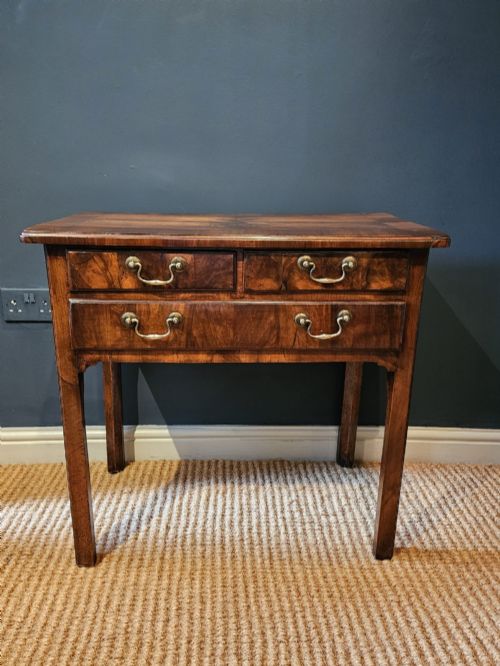
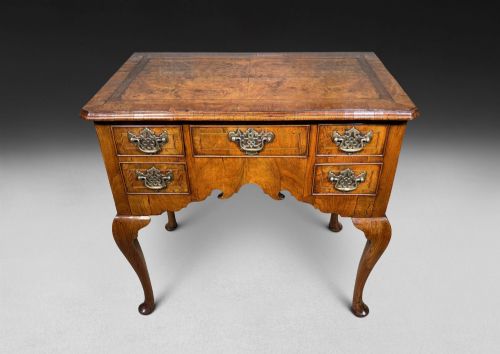
- Lowboy
- A small oak, walnut or mahogany table with drawers, resembling the lower section of a tallboy. These eighteenth-century forms appear alongside later revival tables.
Burr Walnut Console: Frequently Asked Questions
What is a burr walnut console?
A burr walnut console is a decorative wall table surfaced with heavily figured timber showing intricate knot patterns. These pieces function as statement surfaces in halls and reception rooms.
They appear in various historic styles, from Victorian revival designs to sleek Art Deco interpretations, often incorporating folding mechanisms for dual use.
How do I date a console table?
Dating relies on observing the stylistic characteristics, construction methods, and materials used in the piece. Victorian examples often feature ornate carving and ormolu mounts, while later twentieth-century pieces display cleaner lines.
Comparing the secondary timbers and veneer application techniques provides further clues to the manufacturing period.
Where should I place a console?
Console tables fit naturally against entrance hall walls, living room perimeters, or beneath large mirrors and artwork. Their shallow depth allows them to occupy narrow spaces without obstructing movement.
Fold-over variants can also stand away from walls when opened for card games or serving.
How do I care for walnut veneer?
Protect burr walnut surfaces by keeping them away from direct sunlight and maintaining stable room humidity. Gentle dusting with a soft cloth preserves the polished finish without damaging the thin veneer.
Avoid placing damp items directly onto the antique wood to prevent staining the historic polish.