

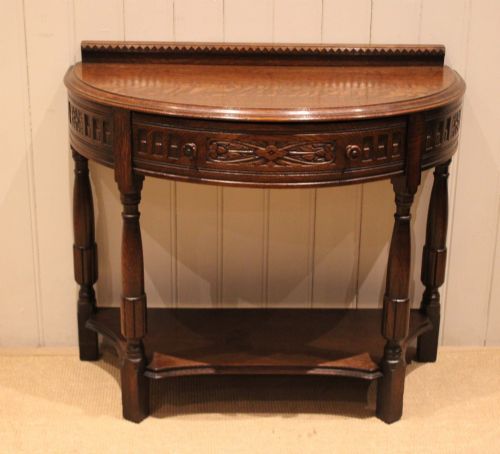


Antique Crescent Table
An antique crescent table brings elegance to a hallway, taking the form of a half-moon console crafted to sit flat against a wall.
Antique Crescent Table
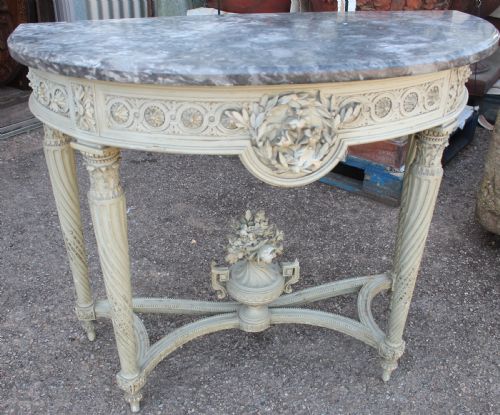
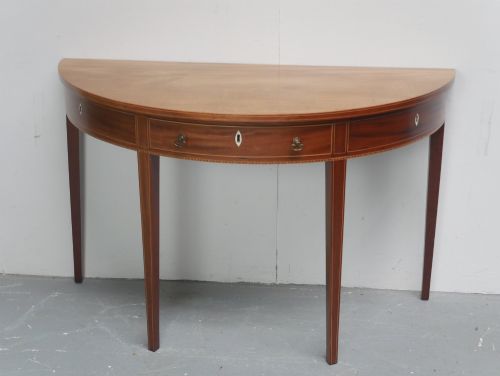
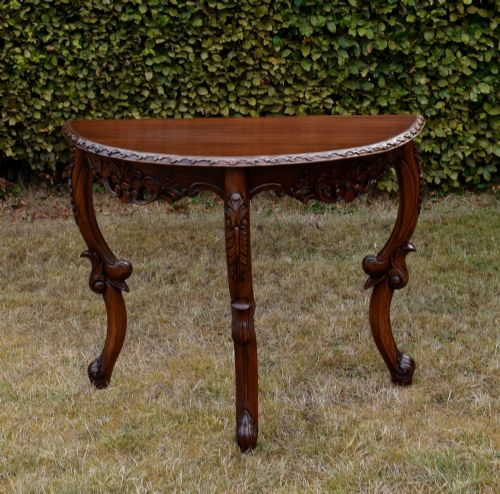
When searching for an antique crescent table, buyers encounter half-moon shapes most frequently described as demi-lune console tables, alongside related writing desks and side cabinets. These pieces emerge from periods including the Georgian era, the Regency period, and Edwardian times, often designed to stand flush against a wall in a hallway or drawing room.
Makers and craftsmen utilised forms such as the console table, writing table, and side cabinet to fit narrow spaces without obstructing traffic flow. Examples range from English painted finishes and French carved solid oak to Swedish painted pairs and mahogany Sheraton period designs.
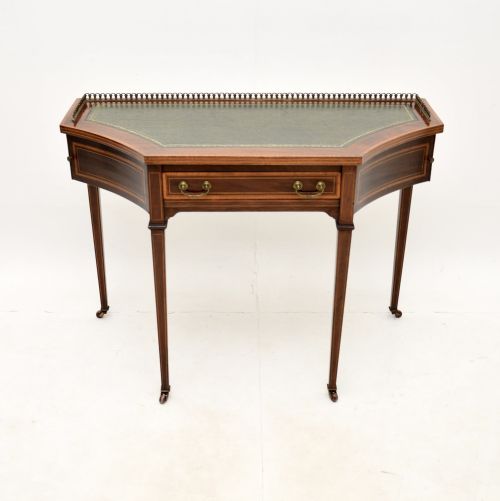
The selection includes specific variations like inlaid mahogany writing tables, red lacquer Chinese demi lune tables, and satinwood console tables. Each object reflects the stylistic preferences of its period, shifting from Georgian symmetry to Edwardian marquetry and French country charm.
Materials and construction
Cabinetmakers constructed these tables using primary timbers such as mahogany, satinwood, oak, and pine, frequently applying intricate marquetry and inlay work. Brass handles, mounts, and gallery rails appear alongside painted finishes and red lacquer.
Joinery techniques involved careful shaping of the curved top and matching aprons, supported by tapering or turned legs that suited the half-moon footprint. Craftsmen incorporated glass elements and mirror matches where console tables paired with wall mirrors.
Antique Crescent Table Retail Price Guide 2026
Typical asking prices for crescent table among the pieces listed under this phrase on Sellingantiques today, from the lower quarter to the upper quarter. They describe what is for sale here now, not the wider market.
One piece served originally as a butler's stilton stand for cheese truckles rather than hallway display.
Assessing quality and execution
Quality reveals itself in the crispness of the carving, the precision of the wood inlay, and the stability of the curved frame. Superior pieces display finely figured timber grains and meticulous attention to structural joints.
The sophistication of the painted finish or the depth of the mahogany polish distinguishes finer workshop output from simpler provincial carpentry. Authenticity of period brassware and the condition of original timber surfaces further separate standard items from exceptional examples.
Edward and Roberts
The Antique Crescent Table Glossary
- Demi-lune
- A half-moon shape used to describe console tables and sideboards designed to fit flat against a wall. This profile became particularly popular during the Georgian and Regency periods for space-saving elegance.
- Console table
- A table supported by wall brackets or legs, designed to stand against a vertical surface. They often feature decorative carving or inlay on the front apron.
- Marquetry
- Decorative woodwork where pieces of veneer are fitted into a ground material to form geometric or floral patterns. Edwardian and Sheraton revival makers utilised this technique extensively.
- Satinwood
- A light-coloured, hard timber imported from tropical regions and prized for its lustrous sheen. It frequently appears as a veneer on high-status tables.
- Sheraton
- A neoclassical furniture style dating from the late eighteenth century characterised by straight lines, tapered legs, and delicate inlay. Pieces from this aesthetic emphasise lightness and classical proportion.
Antique Crescent Table: Frequently Asked Questions
Where should I place a crescent table?
These tables suit narrow spaces like hallways and landings because their flat backs allow them to sit flush against a wall without protruding into walkways.
They also function effectively in living rooms or dining rooms beneath a mirror or painting, providing a surface for lamps or decorative items.
How do I distinguish a Georgian table from a later copy?
Examine the timber construction methods, tool marks on secondary woods, and the ageing of the finish to determine authenticity.
Georgian pieces exhibit period-specific joinery and hand-cut elements, whereas later Sheraton revival or Edwardian interpretations often display twentieth-century manufacturing signatures.
What is the difference between a console table and a side table?
Console tables traditionally rely on the wall for stability or feature specific decorative front aprons designed for display against a vertical surface.
Side tables generally stand independently on four legs with finished sides all around, intended for more versatile placement within a room.
How do I care for antique mahogany and satinwood?
Maintain the timber by keeping the table away from direct sunlight and rapid temperature fluctuations that cause wood to dry and split.
Apply traditional beeswax periodically to nourish the surface, buffing gently with a soft cloth to preserve the natural lustre.