




Vintage Kidney Desk
A vintage kidney desk offers a curved writing surface that hugs the body, combining practical workspace with elegant proportions.
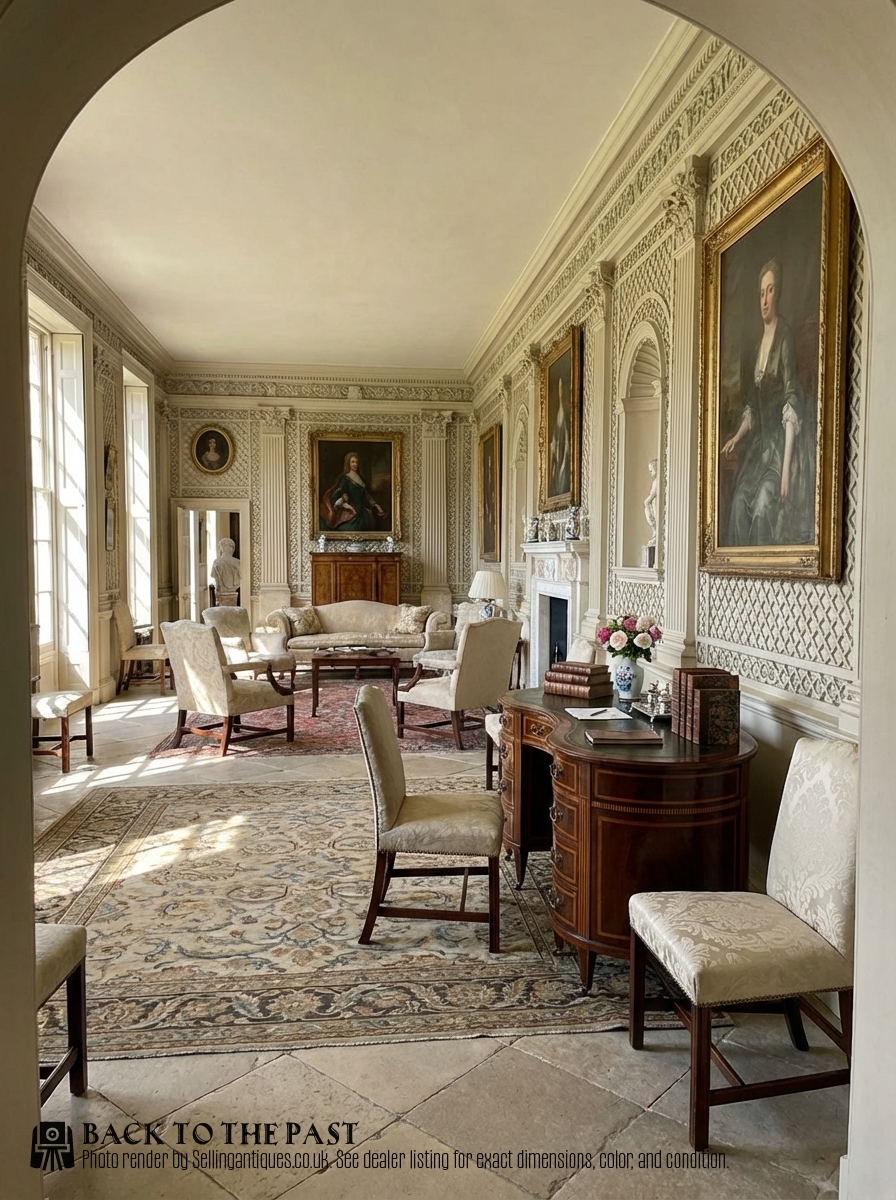
Vintage Kidney Desk
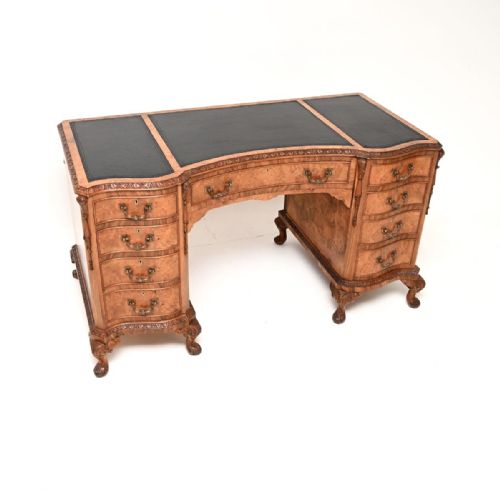
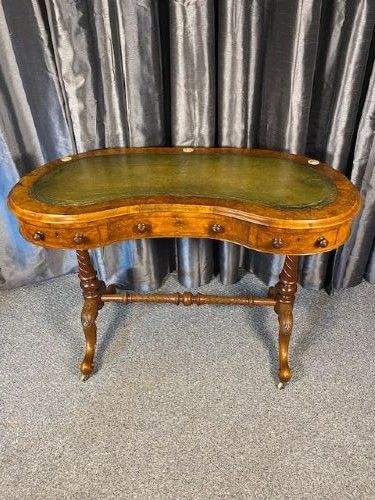
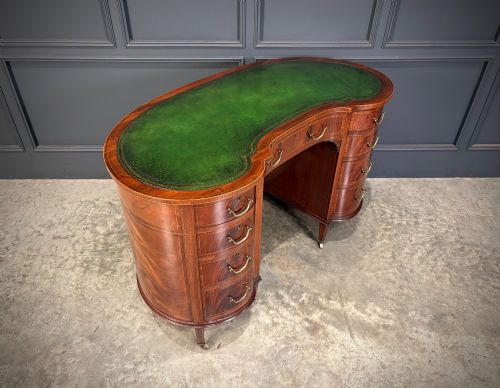
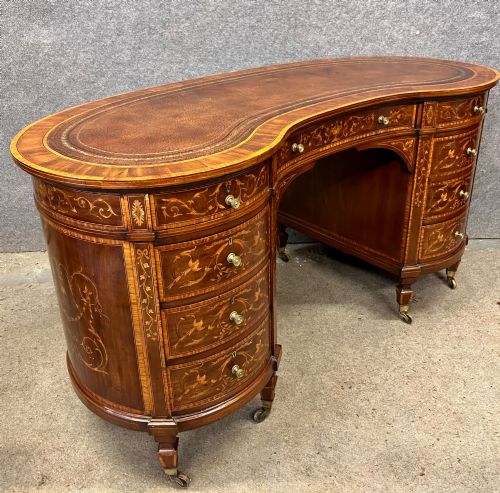
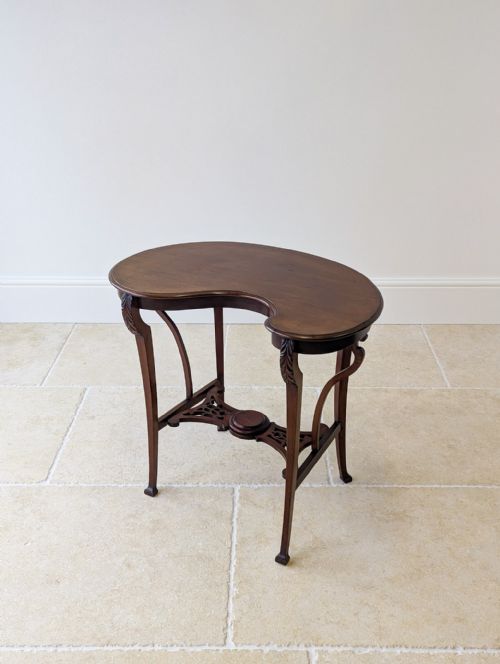
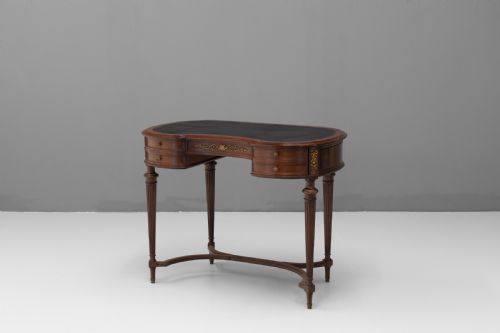
A vintage kidney desk provides a curved writing surface designed for a comfortable seating position, shaped like the bean from which it takes its name. These writing tables appear frequently from Edwardian and Victorian periods, often constructed as smaller ladies writing desks or occasional writing tables.
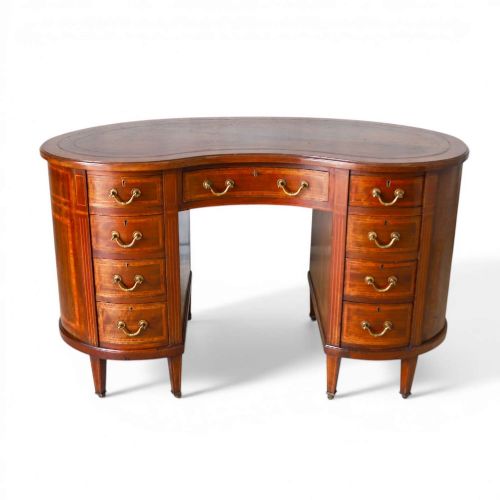
Makers shaped these surfaces in mahogany, burr walnut, and satinwood, frequently supporting the top with pedestals or slender legs. Revival styles dominate the selections, drawing heavily on Sheraton, Louis XV, and Louis XVI motifs through marquetry inlay and decorative banding.
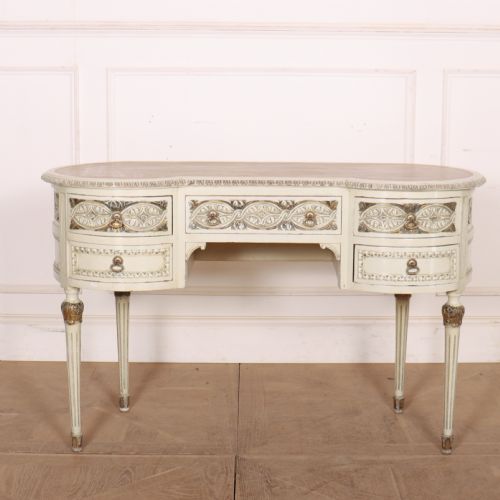
The layout typically includes a central drawer flanked by smaller side drawers following the sweeping curve of the apron. Occasional tables and side tables without pedestals also emerge under this heading, offering the same distinctive silhouette for lighter writing tasks.
Materials and construction methods
Cabinet makers built these frames using solid hardwoods like mahogany and walnut, applying burr walnut and satinwood veneers to curved drawer fronts and table tops. They shaped the complex concave curves of the kidney profile by steaming and laminating timber or carefully cutting solid stock.
Surfaces frequently feature inset leather writing panels, sometimes bordered with gold tooling, while brass handles, key escutcheons, and ormolu mounts accent the drawers. Marquetry and delicate string inlay define the Sheraton and Edwardian revival pieces, showcasing intricate floral or geometric patterns set into the wood.
Joinery techniques included dovetailed drawer boxes and mortise and tenon joints for the underframes, ensuring stability despite the unusual curved geometry. Painted wood surfaces also appear, finished with decorative motifs rather than exposed grain.
Victorian writers prized kidney desks because the curved front kept inkwells within safe reach without requiring an awkward stretch.
Distinctions in quality
The choice of timber underpins the distinction between standard and superior pieces, with figured burr walnut and finely grained satinwood commanding higher regard than plain painted wood. The depth and intricacy of marquetry inlay, rather than simple printed decoration, signal superior cabinet work.
Hardware and mounts separate basic utilitarian pieces from high-end examples, with chased ormolu mounts and heavy cast brass handles indicating greater workshop investment. The precision of the curved drawer joints and the smoothness of the sweeping slide reveal the underlying skill of the maker.
Wolfe & Hollander·Gillows·Maurice Adams·Laszlo Hoenig
The Vintage Kidney Desk Glossary
- Kidney desk
- A writing table featuring a concave curve on the working side to accommodate the user. This distinct shape originated in France during the eighteenth century before revival popularity in the Victorian and Edwardian eras.
- Marquetry
- Decorative patterns created by fitting small pieces of veneer into a backing panel to form pictorial designs. Cabinet makers utilised contrasting timbers like satinwood and mahogany to achieve tonal depth.
- Ormolu
- Gilded bronze mounts applied to furniture for decorative enrichment. These cast metal details frequently accent the corners and legs of finer revival tables.
- Pedestal desk
- A heavy writing table supported by two vertical columns of drawers with a central opening for the chair. These contrast with lighter four-legged writing tables.
- Sheraton Revival
- A late nineteenth and early twentieth century design movement replicating the lighter geometric furniture styles of the late eighteenth century. These pieces often incorporate delicate stringing and tapered legs.
Vintage Kidney Desk: Frequently Asked Questions
What is a kidney desk?
A kidney desk is a compact writing table characterised by its concave curved front edge. This shape allows the user to sit closer to the centre while keeping materials within arm reach.
Most examples date from the Victorian and Edwardian periods, frequently built as ladies writing desks or decorative side tables.
How do I date a vintage desk?
Dating relies on timber selection, construction methods, and decorative styles like Edwardian marquetry or Victorian mahogany framing. Secondary woods inside the drawers also offer clues to the period of manufacture.
Revival pieces often mimic eighteenth century designs, so examining the interior joinery helps distinguish original eras from later interpretations.
Where should I place a kidney desk?
Because the back of a kidney desk is often finished with veneer or inlay, these pieces work well freestanding in the middle of a room rather than pushed against a wall. Their compact proportions make them suitable as dressing tables or occasional tables in bedrooms and studies.
Ensure adequate clearance around the curved front to allow comfortable seating.
How do I care for a leather top?
Leather writing surfaces benefit from occasional cleaning with a damp cloth followed by a neutral leather cream to prevent drying and cracking. Avoid using harsh chemical cleaners or excessive water near the gold tooling.
Keeping the desk away from direct sunlight protects both the leather hide and the polished wood veneers.