


Edwardian Study Furniture
Edwardian study furniture brings together desks, bookcases and writing tables designed to turn a room into a structured working space.
Edwardian Study Furniture
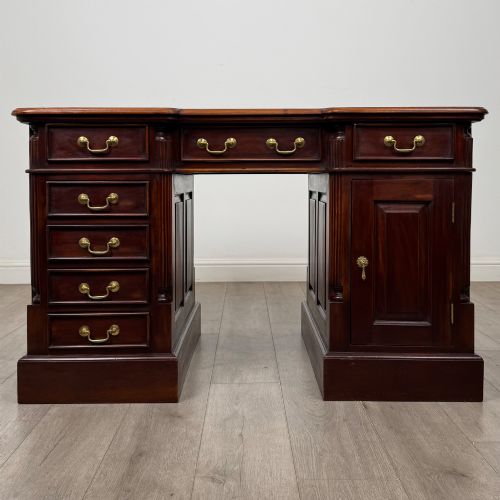
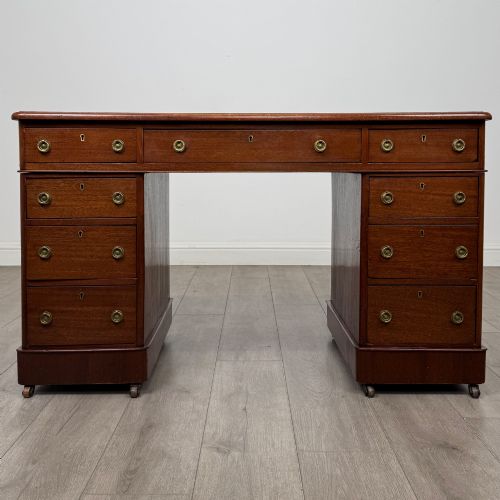
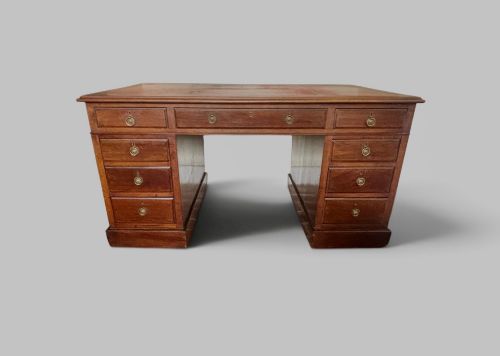
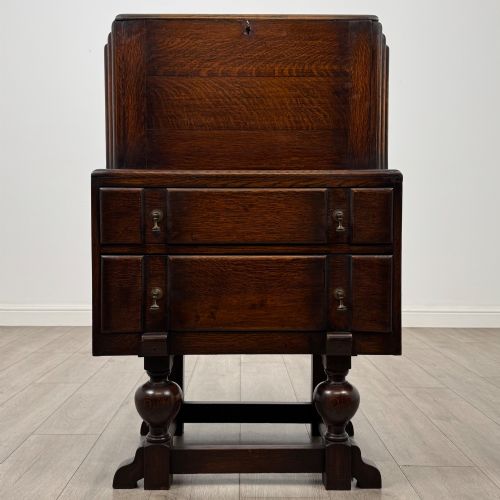
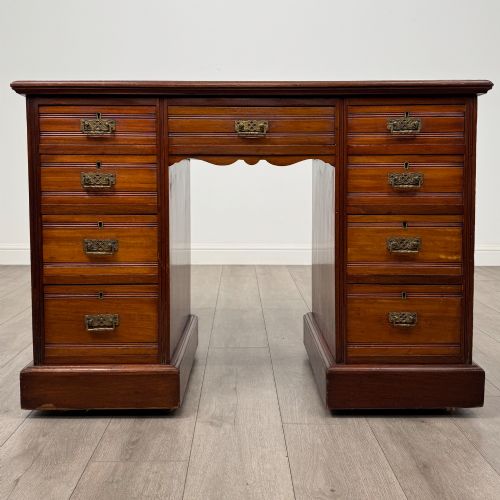
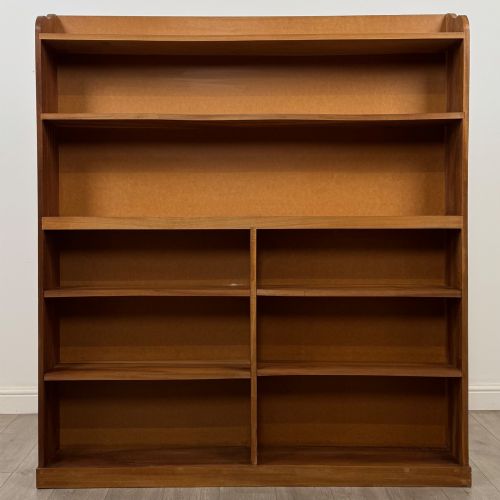
When you search for edwardian study furniture, you encounter the desks, bookcases and armchairs that equipped offices and libraries from the late nineteenth century through to the early decades of the twentieth. Pedestal desks, writing tables and bureaus form the core of what survives from this period, alongside open bookcases and revolving book storage.
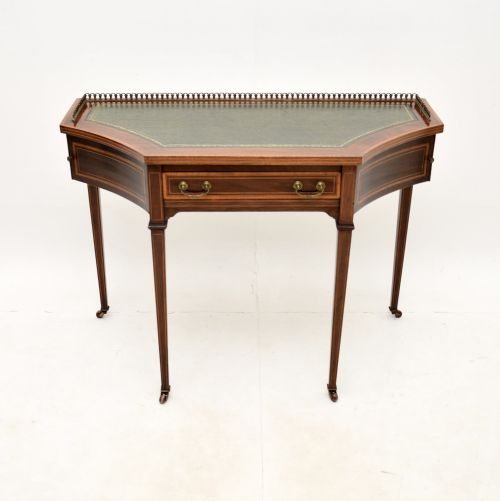
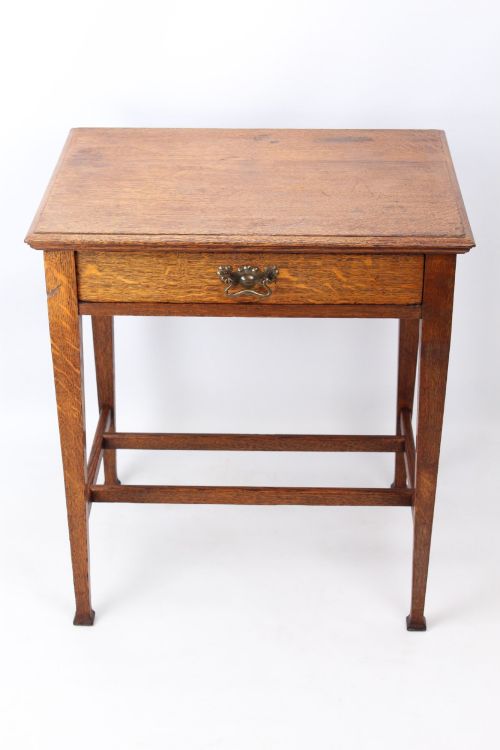
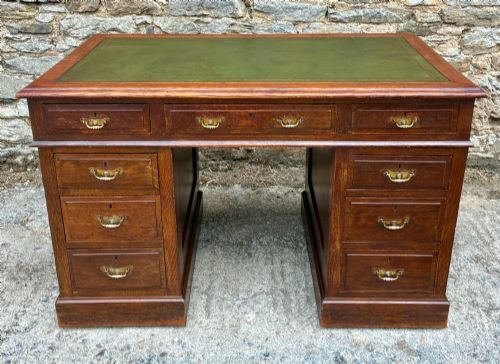
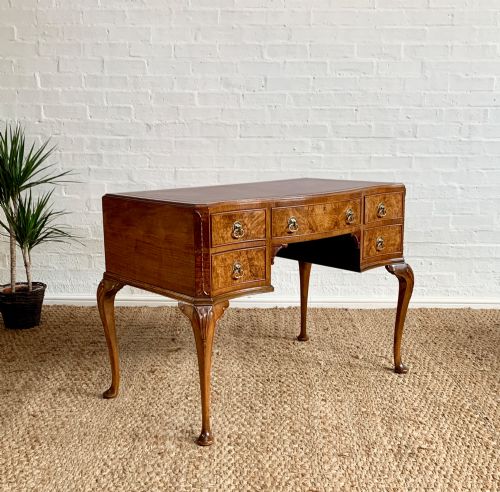
Mahogany and oak dominate the forms seen on this page, appearing alongside walnut, satinwood and pitch pine. Pieces range from large pedestal desks with multiple drawers to smaller writing tables and kidney-shaped desks intended for domestic studies.
While Edwardian examples predominate, the selection stretches back into Victorian eras and forward into twentieth-century traditional revivals. Makers such as Trollope & Sons, Wylie & Lochhead Glasgow, Whytock & Reid of Edinburgh and Maples of London represent the cabinet-making standards of the time.
Materials and construction
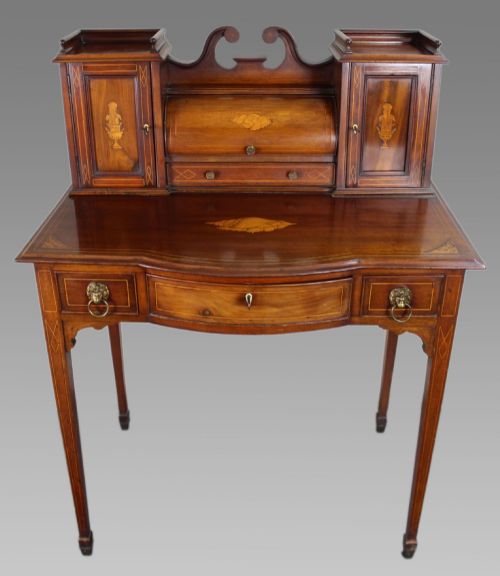
Cabinet-makers relied heavily on solid and veneered mahogany, oak and walnut for the carcasses and writing surfaces of desks and bookcases. Satinwood inlay added decorative contrast to mahogany tables, while leather inserts provided durable writing surfaces on pedestal desks and Carlton House desks.
Construction techniques balanced utilitarian strength with refined detailing, such as hand-painted panels on satinwood writing desks and serpentine fronts on mahogany tables. Drawer linings, brass handles and dovetailed joints indicate the standard joinery methods employed in workshops across Britain.
Edwardian Study Furniture Retail Price Guide 2026
Typical asking prices for edwardian study furniture among the pieces listed under this phrase on Sellingantiques today, from the lower quarter to the upper quarter. They describe what is for sale here now, not the wider market.
A revolving bookcase lets you consult an entire reference library without once leaving your armchair.
Distinctions in quality
The degree of hand-finishing and the selection of timber dictate the distinction between standard office pieces and finer drawing-room furniture. Highly figured veneers like burr walnut or flame mahogany elevate certain desks above standard utilitarian oak.
The complexity of the form also separates pieces, such as the curved galleries and multiple compartments of a Carlton House desk compared to a straightforward pedestal desk. Maker attribution adds notable distinction to surviving pieces.
Trollope & Sons·Wylie & Lochhead Glasgow·Whytock & Reid of Edinburgh·Maples of London
The Edwardian Study Furniture Glossary
- Pedestal desk
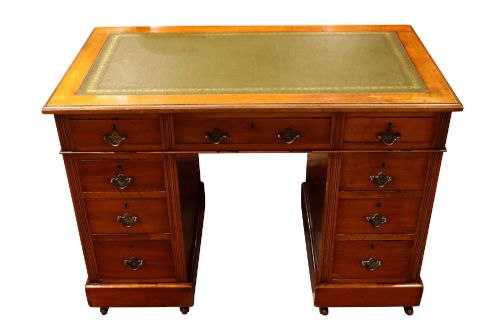
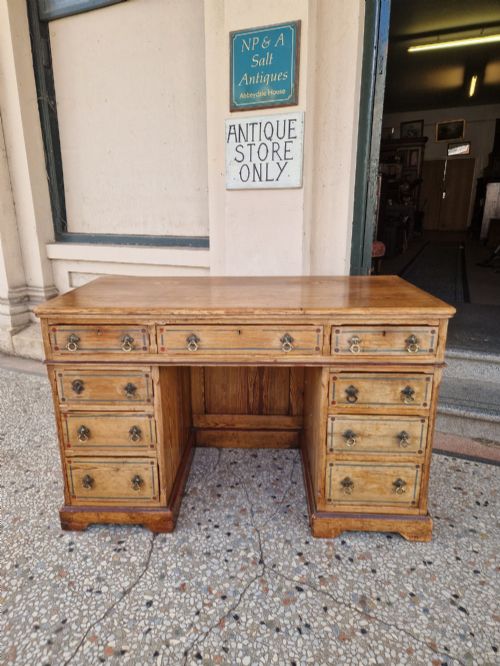
- A heavy desk comprising two banks of drawers supporting a single desktop. It typically includes a central drawer above the kneehole.
- Carlton House desk
- A distinctive writing desk with a curved superstructure of small drawers and pigeonholes wrapping around the back and sides of the writing surface.
- Revolving bookcase
- A compact freestanding bookcase designed to rotate on a base for easy access to volumes from an armchair.
- Satinwood inlay
- Contrasting light wood inserted into darker timber surfaces to create geometric or floral patterns.
- Wellington chest
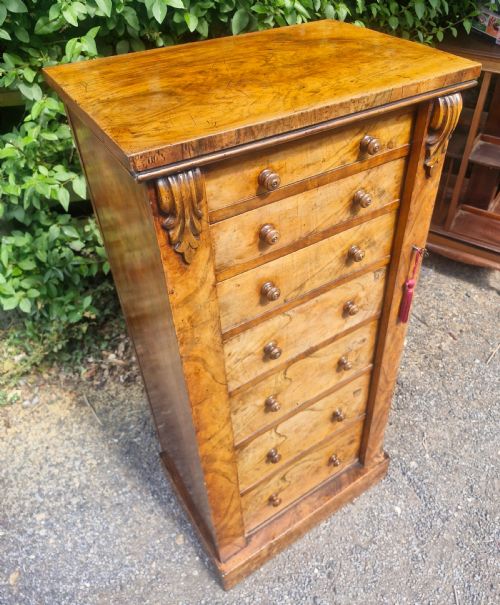
- A tall, narrow chest of drawers secured by a hinged locking side-bar that fastens with a key.
Edwardian Study Furniture: Frequently Asked Questions
What is a pedestal desk?
A pedestal desk is a heavy freestanding writing table supported by two separate columns of drawers. The user sits in the kneehole space positioned centrally between the two pedestals.
These desks became staples of domestic studies and professional offices during the Victorian and Edwardian eras. They often feature inset leather writing surfaces and multiple graduated drawers for document storage.
How do I identify an Edwardian desk?
Edwardian desks often combine lighter timbers like satinwood with mahogany, frequently incorporating delicate inlay work or hand-painted details. Their proportions tend to feel lighter and more refined than the heavier walnut and oak furniture typical of the mid-Victorian period.
Common forms include kneehole pedestal desks, kidney-shaped writing tables and compact bureaus. Construction methods usually involve precise dovetailing and brass hardware characteristic of early twentieth-century workshop production.
Where were these pieces used?
This furniture was designed for domestic libraries, private studies, professional offices and drawing rooms. Desks provided a dedicated surface for correspondence and bookkeeping, while bookcases and revolving book stands housed expanding private libraries.
Armchairs and writing tables were arranged to create functional workspaces within the home. Sturdy oak and mahogany pieces suited administrative tasks, whereas satinwood and inlaid tables belonged in formal reception rooms.
What is a Carlton House desk?
A Carlton House desk is a sophisticated writing table featuring a curved, stepped superstructure of small drawers, compartments and pigeonholes built around the rear of the desktop. This enclosing bank of storage provides numerous partitioned spaces for stationery and letters.
Originating in the late eighteenth century, the form was revived by cabinet-makers during the Victorian and Edwardian periods. Surviving examples frequently showcase fine mahogany or satinwood construction with intricate inlay.