


Ebonised Library Table
An ebonised library table brings dark, striking presence to a room, offering a functional surface rooted in nineteenth-century design.
Ebonised Library Table
An ebonised library table is a heavy-duty writing or centre piece designed for study and display, emerging primarily in Victorian and nineteenth-century interiors. These items range from simple side desks to grand, double-sided partners tables built for shared use in large studies.
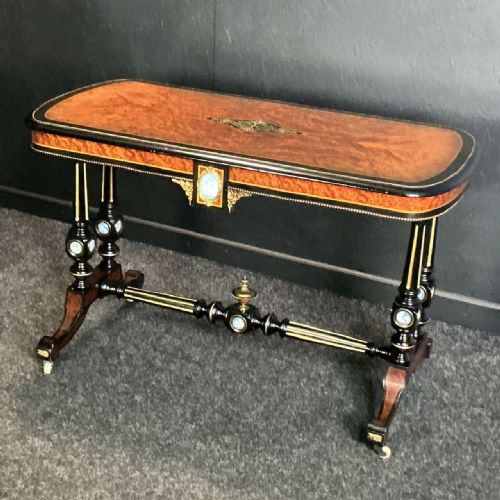
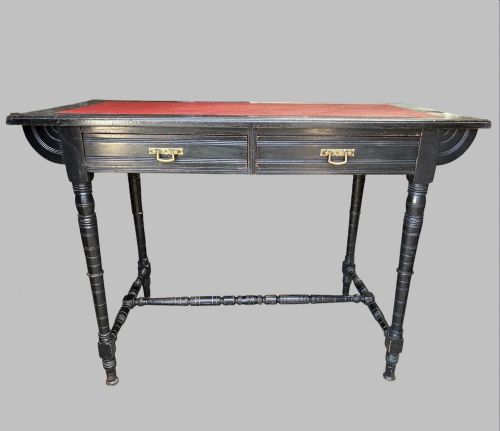
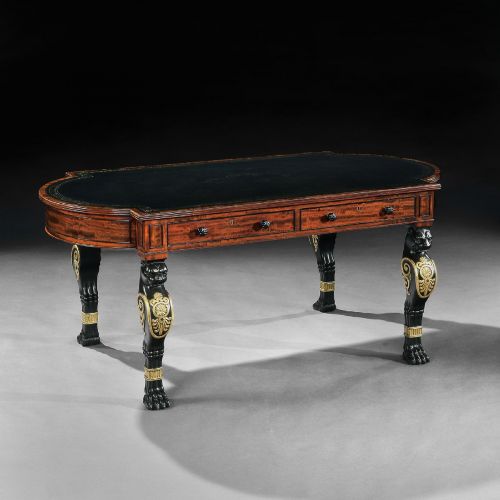
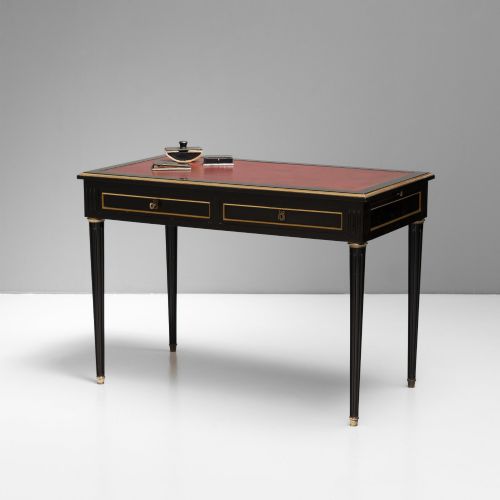
You will frequently encounter pieces showing the influence of the Aesthetic Movement, alongside French Bureau Plat designs and English centre tables. Materials often include ebonised wood contrasted with brass, ormolu, and leather inserts.
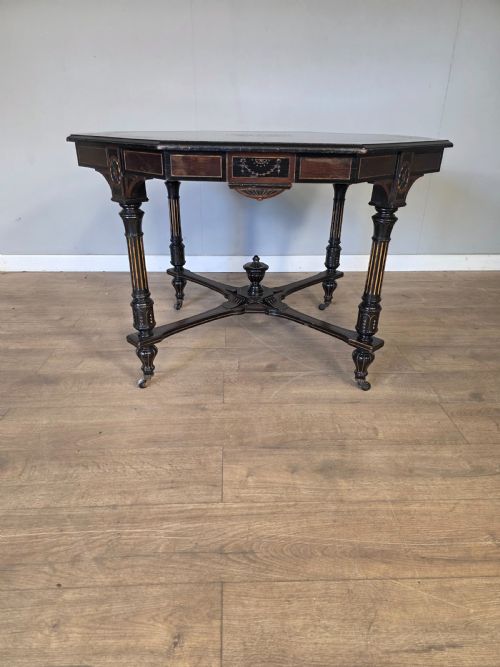
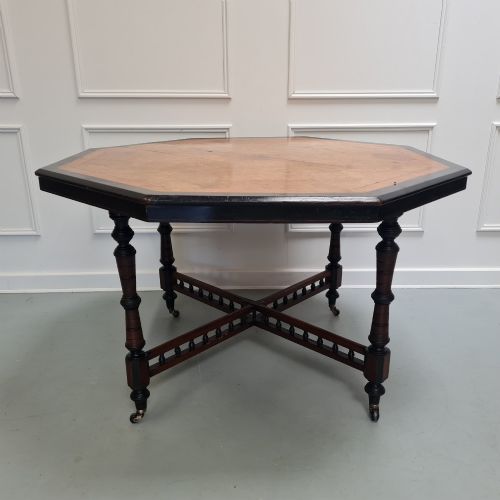
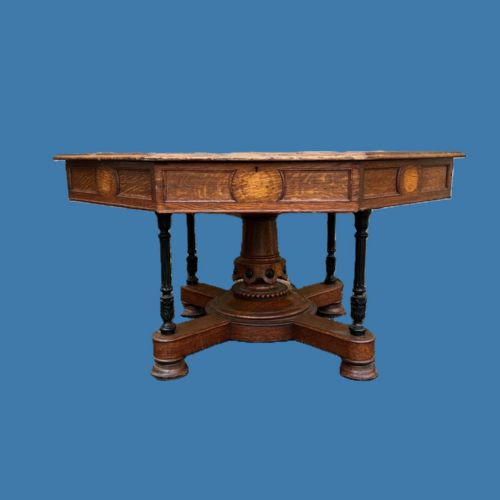
The form adapts to various domestic spaces, appearing as octagonal centre tables, writing desks, and library tables finished with dark, polished surfaces. Their proportions reflect the formal requirements of nineteenth-century studies and libraries.
How They Were Made
The dark finish is typically achieved by ebonising timber such as mahogany, birch, or oak, mimicking the look of expensive ebony through staining and polishing. Cabinetmakers combined this dense, dark surface with contrasting brass mounts, ormolu, and inlaid details.
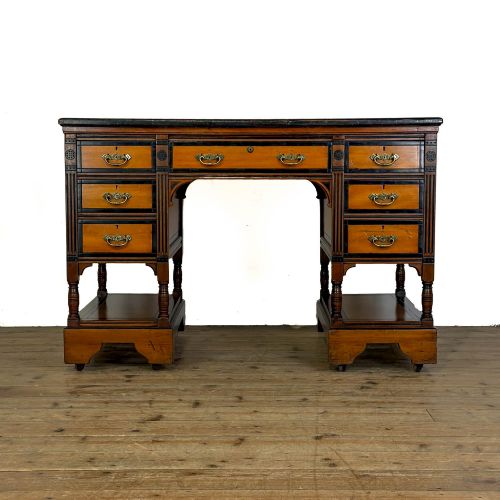
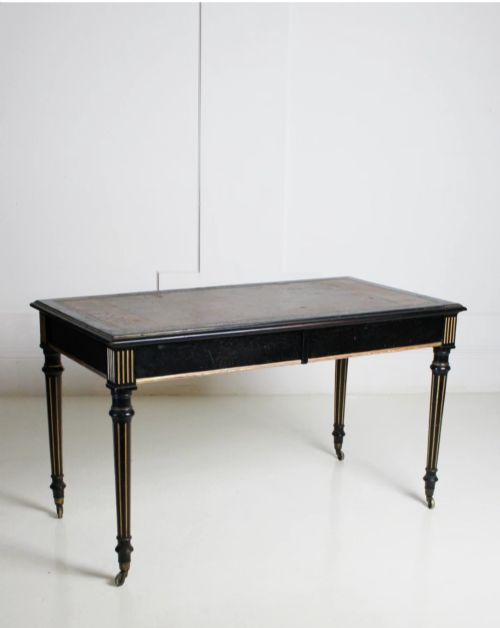
Working surfaces often incorporated inset panels of tooled leather, providing a durable writing plane that matched the sombre tones of the surrounding woodwork. Construction involved robust framing, sturdy legs, and occasionally cast brass sabots to protect the lower extremities.
Ebonised Library Table Retail Price Guide 2026
Typical asking prices for ebonised library table among the pieces listed under this phrase on Sellingantiques today, from the lower quarter to the upper quarter. They describe what is for sale here now, not the wider market.
Listings show ebonised library tables spanning the Victorian period, the Aesthetic Movement, and nineteenth-century French revival styles.
What Varies in Quality
The calibre of an ebonised library table rests on the depth of the finish and the crispness of any applied brasswork or marquetry. Superior examples exhibit refined joinery, well-cast mounts, and carefully chosen secondary woods beneath the black surface.
Makers known for high-tier production integrated thoughtful proportions and subtle decorative elements, such as inlaid brass lines or finely carved details, rather than relying solely on the dark paint or stain for visual impact.
Edwards And Roberts·Maison Millet·Diehl Paris·George Davis·Cottier And Co
The Ebonised Library Table Glossary
- Ebonised wood
- Timber treated with stain or paint to imitate the dark, heavy appearance of natural ebony. This technique gained popularity during the Victorian era for furniture mimicking exotic imports.
- Partners desk
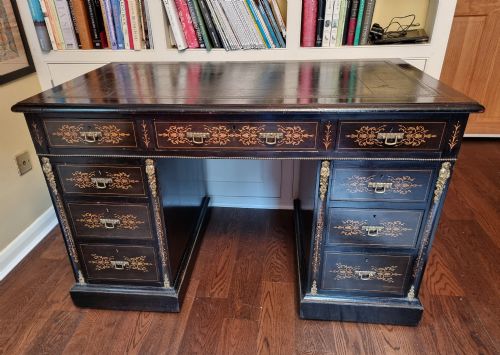
- A large double-sided writing table fitted with drawers and cupboards on both long sides to accommodate two people working opposite each other. These forms often feature leather-lined tops.
- Ormolu
- Gilt bronze mounts used as decorative accents on furniture frames and corners. The technique involves applying a gold amalgam to bronze before heating.
- Bureau plat
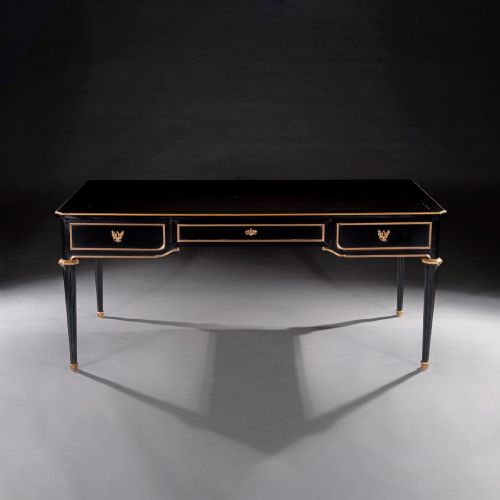
- A freestanding French writing table featuring a rectangular top and drawers set into the frieze. These tables are finished on all sides to allow placement anywhere in a room.
Ebonised Library Table: Frequently Asked Questions
What is an ebonised library table?
An ebonised library table is a nineteenth-century writing or centre table finished in a dark, polished stain that mimics ebony.
These pieces were built for studies and libraries, often featuring leather tops and brass mounts.
How do I date an ebonised table?
Dating relies on stylistic clues like Aesthetic Movement motifs, Victorian proportions, and French revival influences.
Construction methods and secondary woods also help place a piece within the nineteenth century.
Were these tables used for writing?
Many of these tables served as primary writing surfaces, often equipped with inset leather panels for comfort.
Double-sided versions allowed multiple people to work at the same time in large rooms.
What rooms suit an ebonised table?
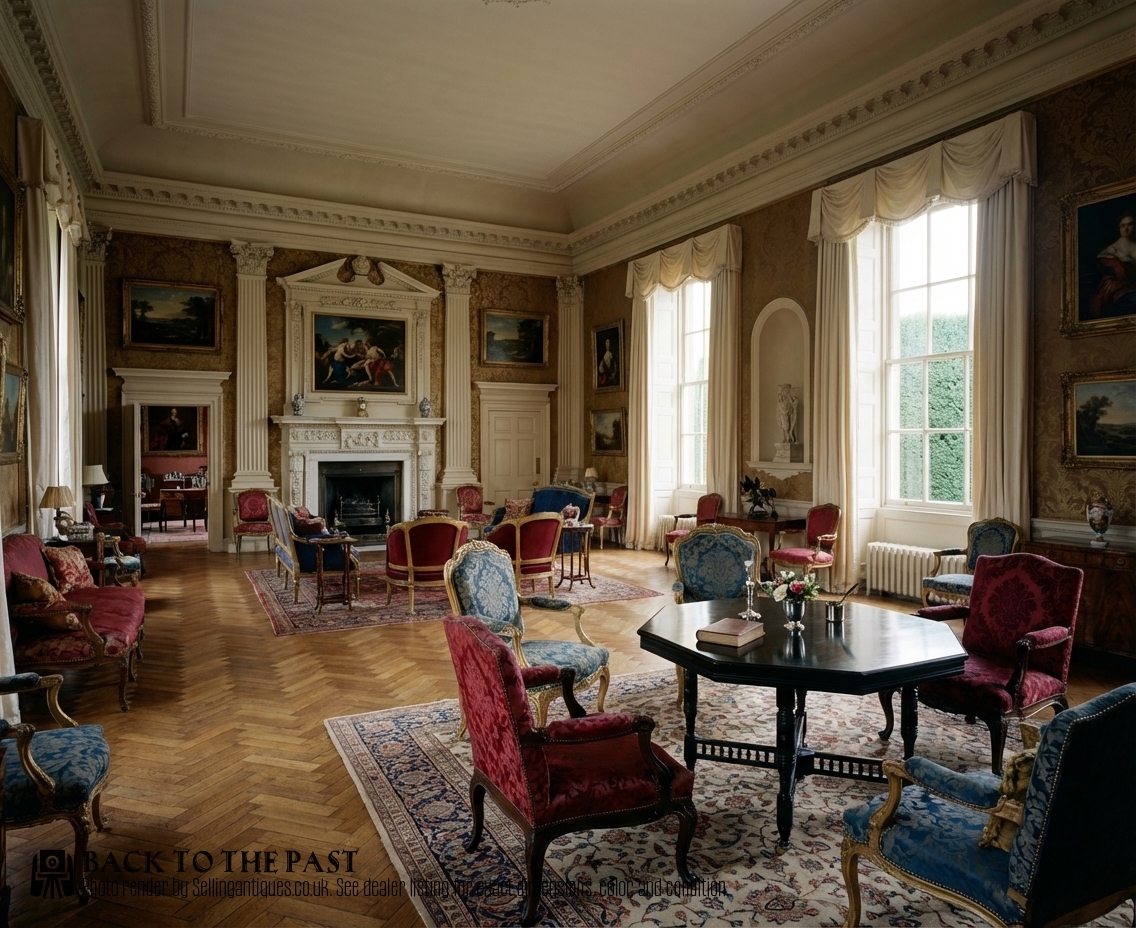
Their dark finish and strong architectural lines make them well-suited as centre pieces in studies or living spaces.
They pair effectively with both antique and modern interiors as functional statement surfaces.