
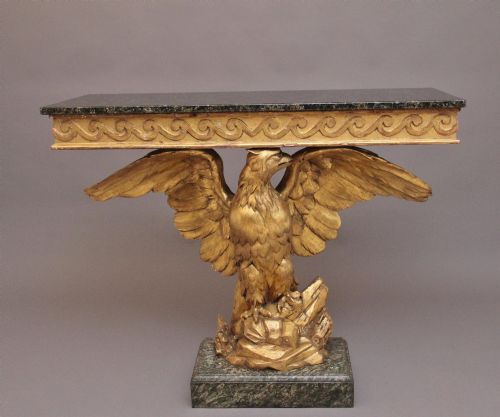
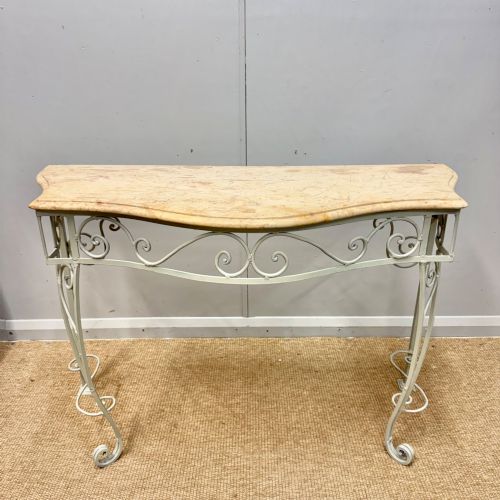
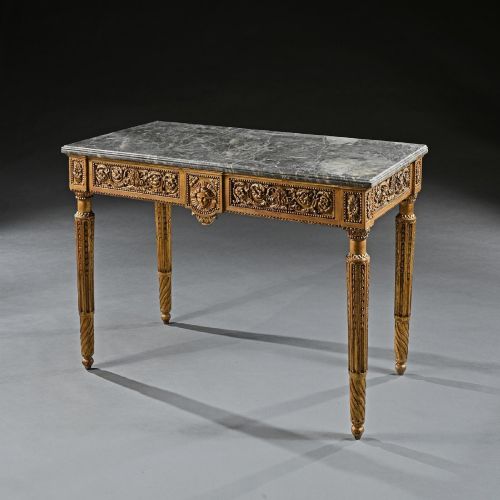
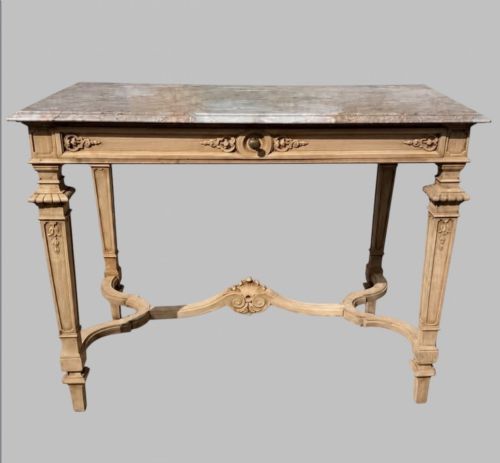
Antique Marble Hall Table
An antique marble hall table is a heavy statement piece of period furniture that anchors a grand entranceway.
Identifying an antique marble hall table
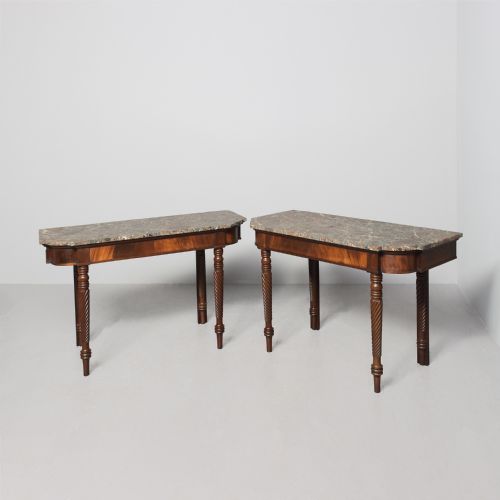
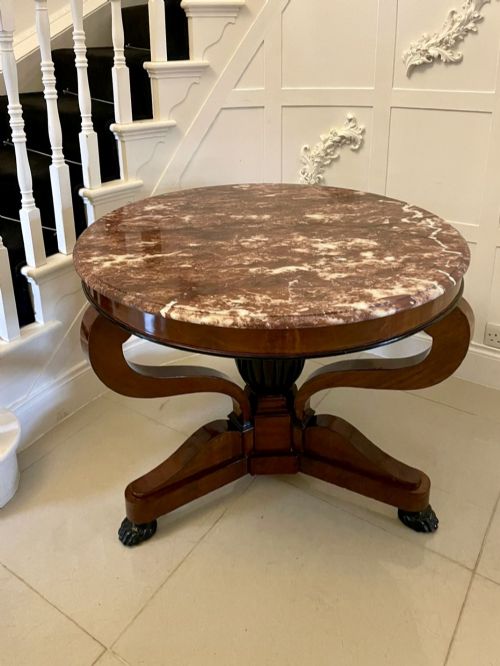
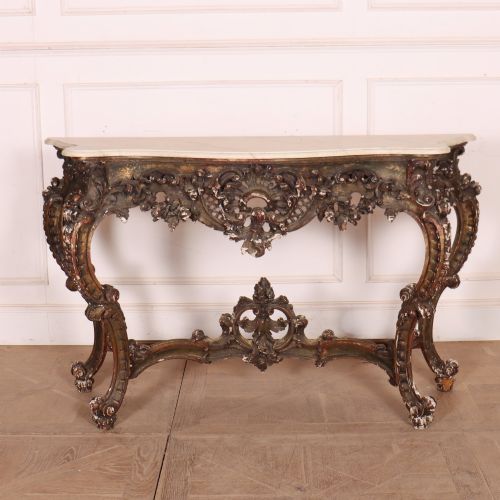
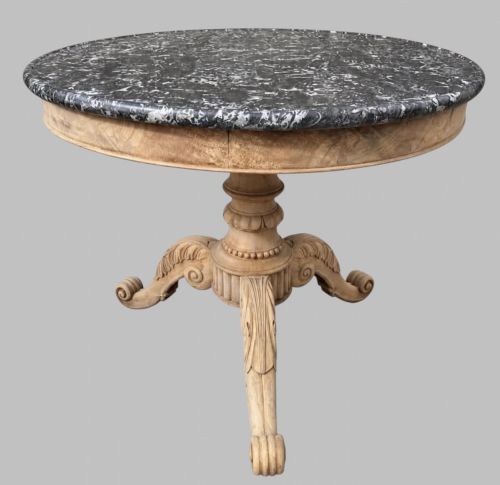
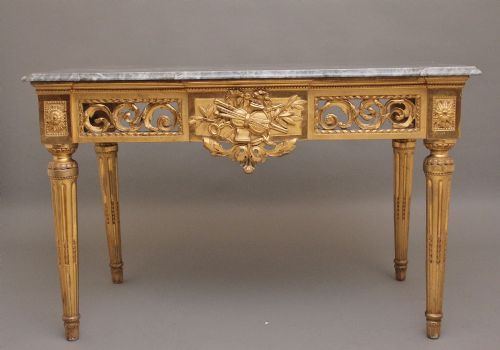
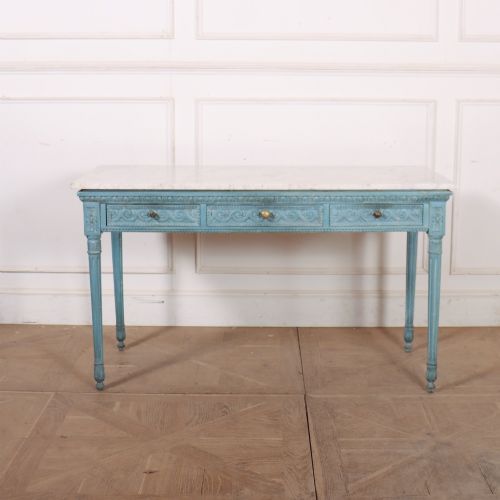
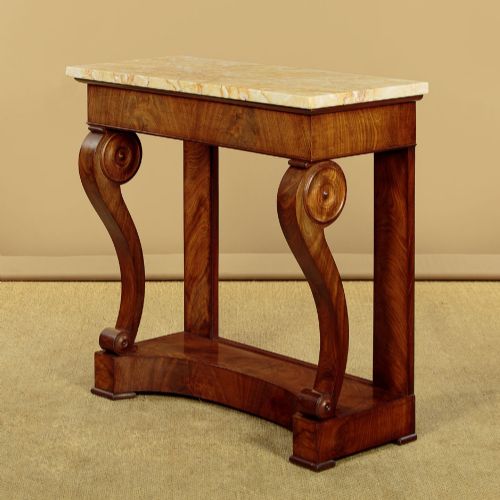
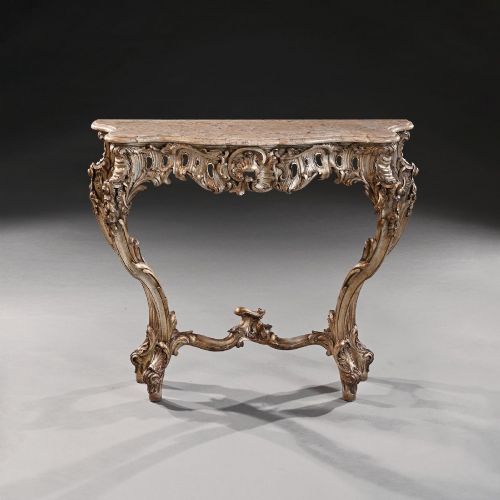
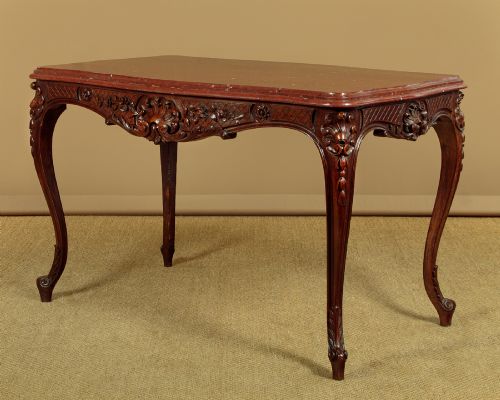
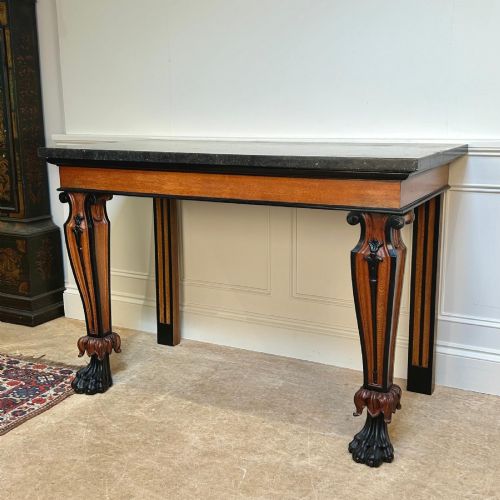
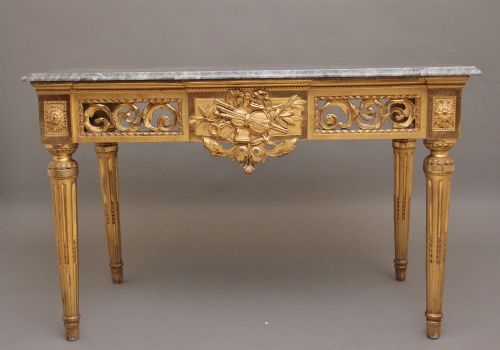
When you search for an antique marble hall table, you are looking at substantial nineteenth-century furniture designed for prominent entryways and reception rooms. These pieces combine robust timber frames with cool stone tops, taking the specific form of console tables or round centre tables.
The versions you are most likely to meet on this page hail from nineteenth-century France and Italy, spanning stylistic revivals such as Louis Philippe, French Restoration, Italian Neoclassical, French Empire, and Louis XVI Revival.
Makers shaped these surfaces from mahogany, rosewood, and gilded woods, pairing them with distinct white or coloured marble slabs. Console tables sit flush against walls, while gueridon centre tables stand free in the middle of a room.
Materials and construction
Cabinetmakers built these heavy frames using solid mahogany and rosewood, sometimes applying elaborate gilt or ormolu mounts for decorative contrast. Timber construction involved traditional joinery to support the immense weight of the stone above.
Slabs of marble form the defining tops of these pieces, selected for their colour and grain before being cut and polished to a smooth finish. Metal elements like brass and ormolu were cast and applied to feet, aprons, and corners.
Retail Price Guide 2026
Typical UK retail prices for marble hall table, calculated from the Sellingantiques database of over a million retail prices indexed since 2003. This retail price guide relies exclusively on Sellingantiques data; no external sources or auction records are used, so the figures do not describe the wider market.
Listings feature nineteenth-century pieces built from mahogany, rosewood, brass, and ormolu.
Judging the range
Quality rests in the precision of the timber carving and the richness of the wood grain, with dense mahogany and figured rosewood sitting at the upper end. Fine examples demonstrate crisp casting in their brass and ormolu mounts rather than soft, muddy detailing.
The stone itself dictates much of the stature, where thick, beautifully figured marble slabs fitted flush to the wooden frames command greater presence than thin, plain replacements.
The Antique Marble Hall Table Glossary
- Console table
- A table designed to stand against a wall, frequently secured to it with brackets for stability. These forms suit narrow hallways and entrance spaces.
- Gueridon
- A small French round table, typically supported by a central pillar or three legs. They function well as centre tables in larger rooms.
- Ormolu
- Gilt bronze ornamentation applied to furniture frames. The technique involves coating bronze with a gold amalgam.
- Louis Philippe
- A mid-nineteenth-century French style characterised by comfortable restraint and curved lines. It draws inspiration from earlier royal aesthetics without excess ornamentation.
Frequently Asked Questions
Where do I put a hall table?
These pieces suit entrance halls, grand corridors, and large landings where their decorative stone tops can catch the eye immediately upon entry.
Because console variants sit flat against vertical walls, they occupy minimal floor space while providing a useful surface for decorative objects.
How do I clean marble tops?
Wipe the stone surface regularly using a soft cloth dampened with warm water and a mild, neutral soap. Avoid acidic cleaners or vinegar, which etch and damage polished marble over time.
Dry the stone thoroughly after wiping to prevent water spots from forming on the polished finish.
Are these tables heavy?
These pieces possess considerable weight due to their dense timber frames and thick stone slabs. Moving them typically requires two people to lift rather than drag the structure across flooring.
The substantial mass keeps console and centre tables stable without needing permanent wall fixings in most domestic settings.
What is a gueridon table?
A gueridon is a traditional French round table designed to stand freestanding in the middle of a room rather than against a wall. Nineteenth-century examples often feature polished marble tops paired with mahogany frames.
They function well as display surfaces for lamps, vases, or decorative bronze figures.