



French Mahogany Gueridon
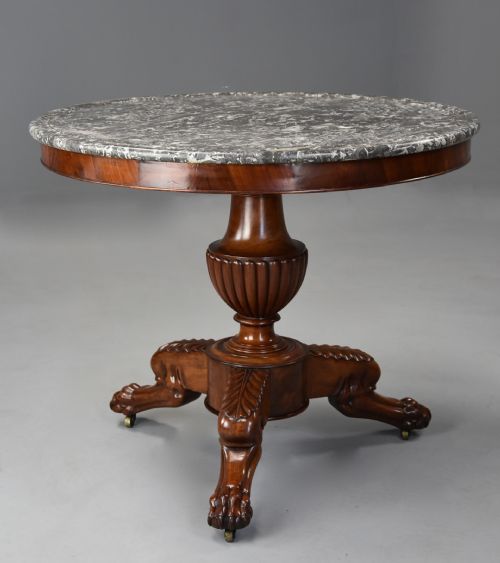
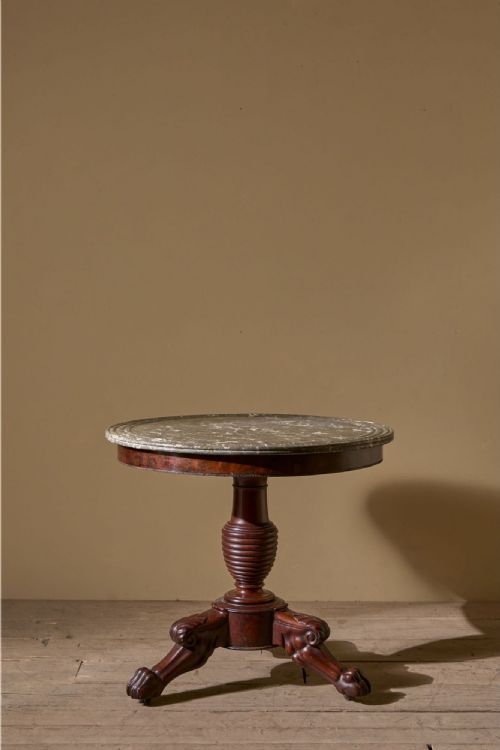
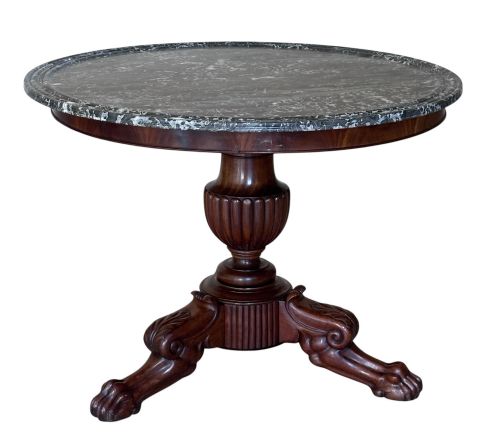
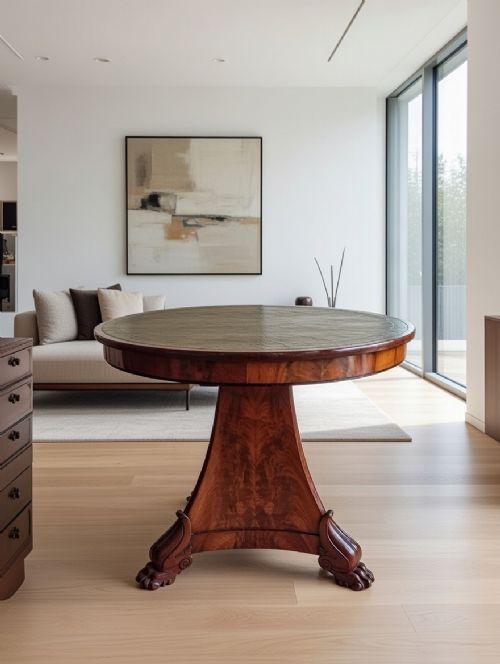
A french mahogany gueridon is a round pedestal table designed to anchor a room as a freestanding centrepiece.
French Mahogany Gueridon
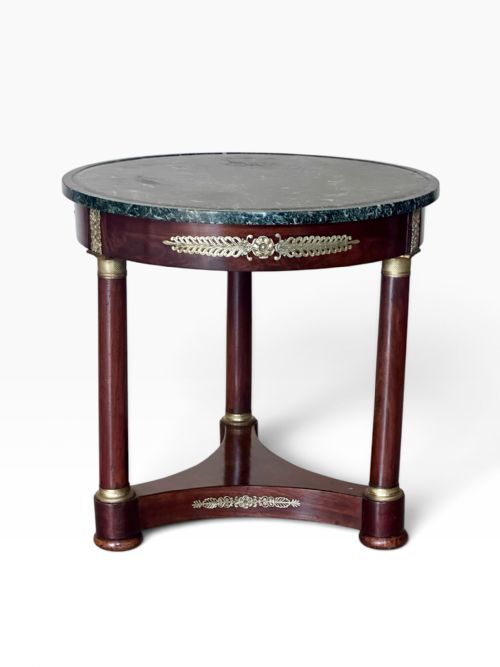
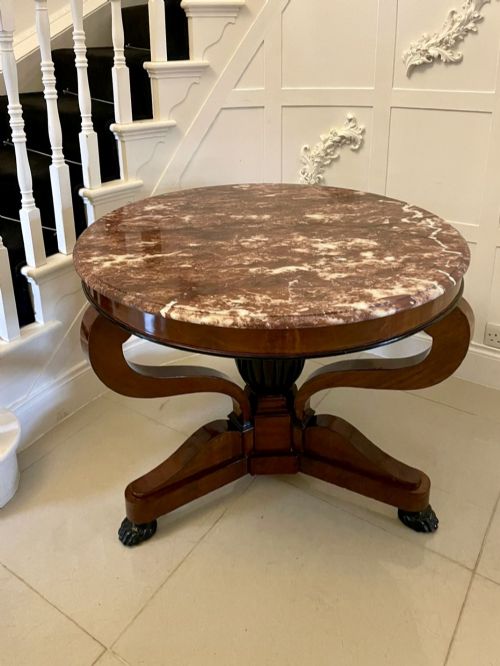
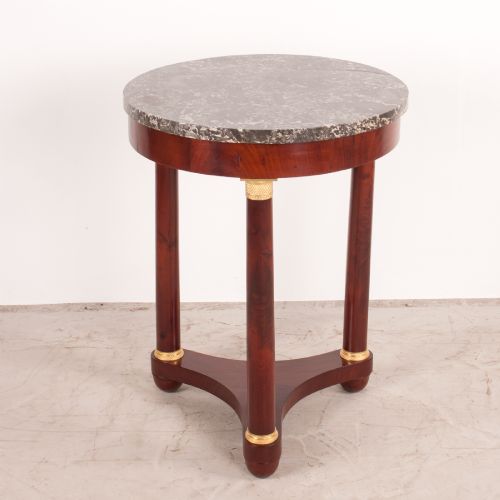
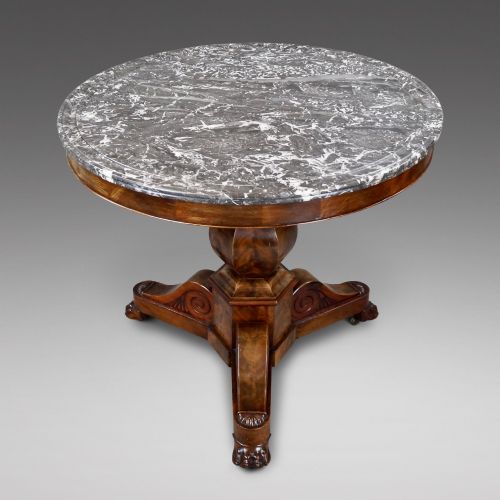
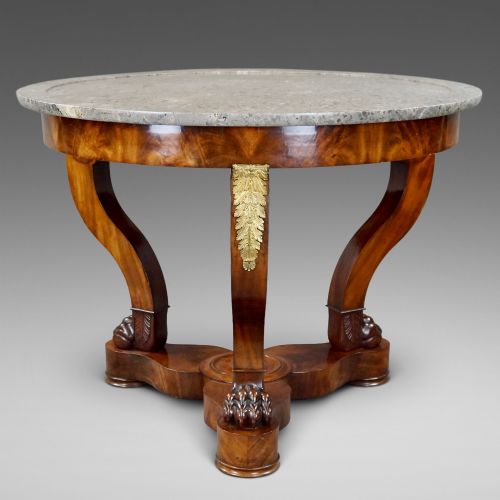
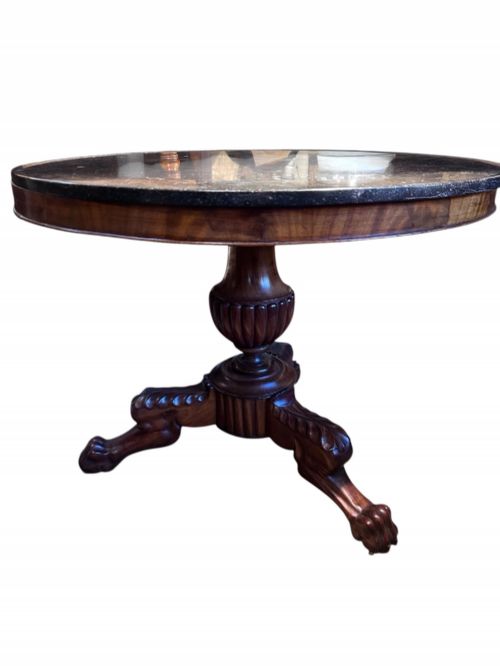
A french mahogany gueridon functions primarily as a centre table, occasional table or lamp table within a reception room. The form typically centres on a robust circular top supported by a central pillar or a triform base.
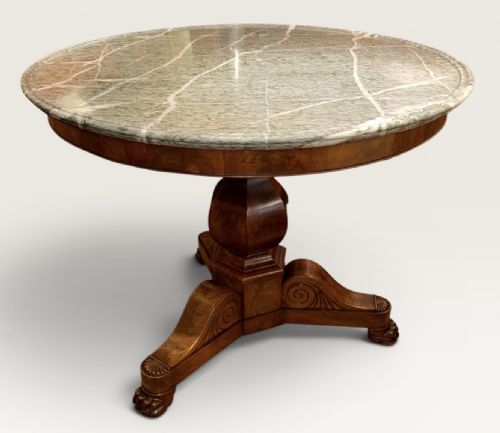
Buyers meet examples spanning the nineteenth century, with strong representation from the Empire, Louis Philippe and Victorian periods. Variations include marble tops in white, grey, red or rouge, alongside inset leather surfaces.
Originating as small candle stands, these pieces evolved into substantial centre tables found in French chateaux and salons. The scale ranges from compact wine tables to unusually large centrepieces.
How they were made
Cabinet makers utilised solid mahogany and flame mahogany veneers over secondary timbers to construct the round tops and pedestal bases. The distinctive grain patterns of flame mahogany provide a rich visual texture across the surface.
Marble tops, set flush into the wooden rims, demand precise stone-cutting and edge-bevelling. Heavy veined marble slabs require substantial internal framing to support the stone safely.
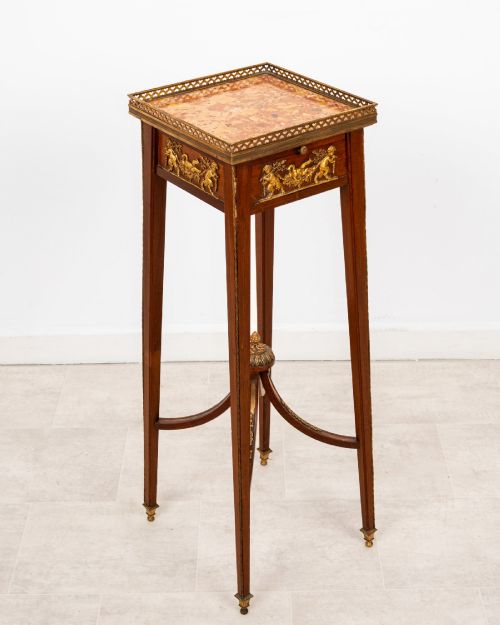
Metal ornamentation involves cast brass and ormolu mounts, often finished with gilt details applied to capitals, feet and friezes. Bronze elements frequently depict neoclassical motifs such as swans and rams heads.
Listings feature mahogany, flame mahogany, walnut, marble, brass, ormolu, gilt bronze and giltwood across nineteenth and early twentieth-century pieces.
What varies in quality
The choice of timber and veneer selection dictates the primary visual impact of the table. Flame mahogany with deep, matched figuring sits above plain timber grains.
The complexity and execution of the cast brass or ormolu mounts reveal the workshop's standard. Detailed chasing on swan motifs and rams heads separates standard production from superior work.
Structural integrity depends on the stability of the central pillar and the triform base. Heavier marble tops demand robust joinery beneath the apron to prevent sagging over time.
A Hugnet Paris
The French Mahogany Gueridon Glossary
- Gueridon
- A French round pedestal table designed to stand in the centre of a room rather than against a wall.
- Ormolu
- Gilt bronze ornamentation cast and chased to mount onto furniture timber.
- Triform
- A three-sided pedestal base often resting on paw or scroll feet.
- Flame mahogany
- Timber veneer cut from the branch junction where the grain creates a flickering flame pattern.
- Frieze
- The horizontal band beneath the tabletop, sometimes fitted with small drawers or brass mounts.
French Mahogany Gueridon: Frequently Asked Questions
Where should a gueridon be placed?
These tables are designed to stand free in the middle of a room, serving as a focal point beneath a central ceiling rose or chandelier. Their circular footprint allows foot traffic to circulate smoothly around the perimeter.
Smaller examples function effectively beside a sofa or in a hallway as lamp tables, while larger versions anchor drawing rooms.
How do I care for a marble top?
Marble surfaces require regular wiping with a damp cloth and neutral soap to prevent staining from liquids. Avoid acidic substances such as citrus juice or wine coming into direct contact with the stone.
Waxing the wooden base helps maintain the mahogany finish, while polished brass mounts need only gentle dusting with a soft dry brush.
What is the difference between Empire and Louis Philippe styles?
Empire pieces, rooted in the early nineteenth century, display strong neoclassical influences with bronze mounts, architectural columns and motifs like swans and rams. The lines tend to be formal and monumental.
Louis Philippe furniture shifts toward understated curves and rich flame mahogany veneers, prioritising wood grain and domestic comfort over overt military or imperial symbolism.
Can I use a gueridon for dining?
Standard gueridons are built as display or centre tables rather than dining surfaces, so their height and knee clearance vary. Smaller occasional versions sit lower than standard dining chairs.
Larger nineteenth-century centre tables can accommodate casual drinks or board games, provided the heavy marble top is treated with care.