






Birdcage Action Table
These birdcage action table pieces combine ingenious pivoting timber mechanisms with sturdy tripod bases, offering both clever utility and understated Georgian elegance.
Understanding the birdcage action table
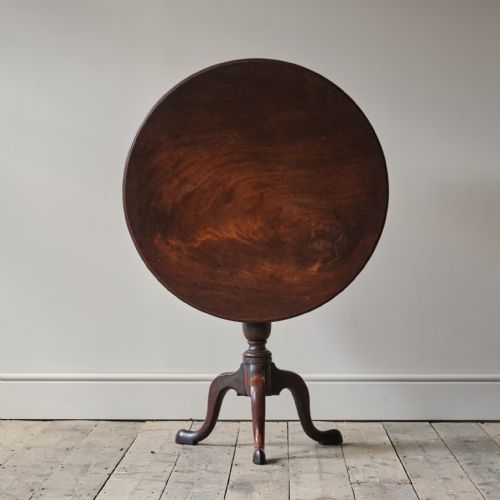
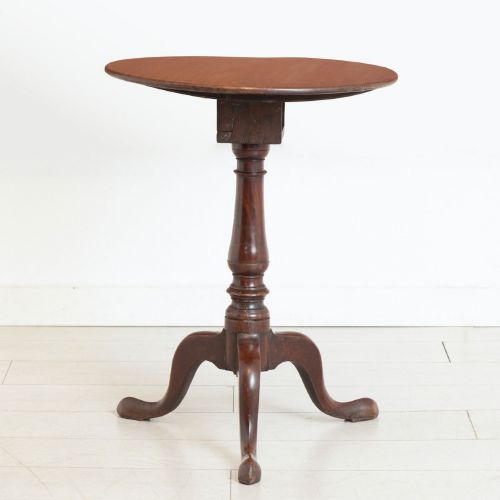
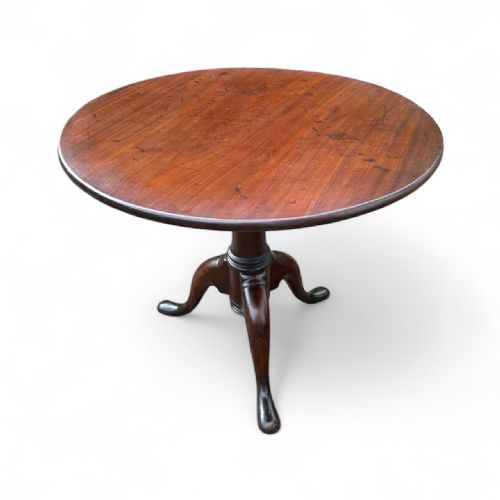
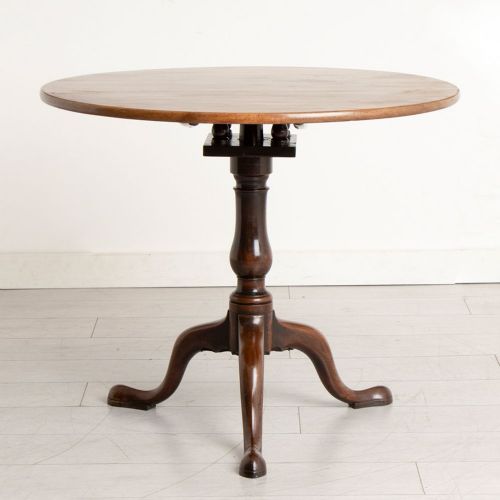
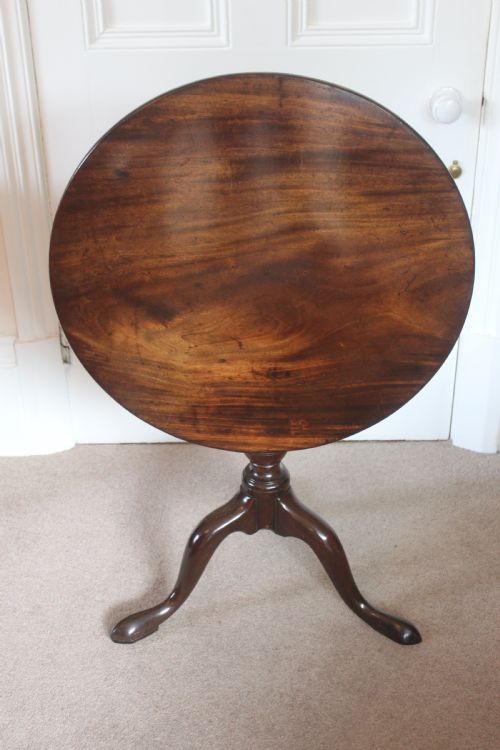
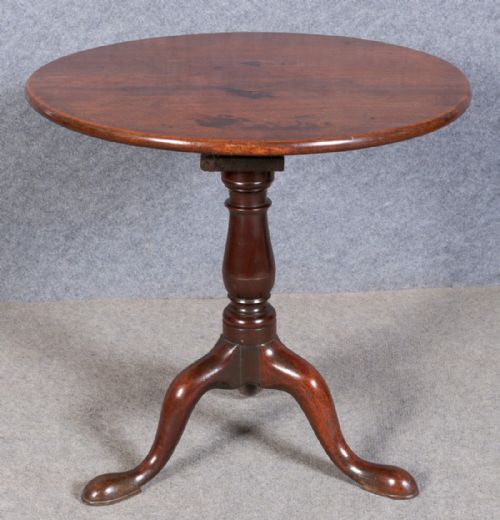
A birdcage action table is a distinct form of occasional table engineered with a wooden revolving box mechanism beneath the top, allowing the surface to both tilt and rotate. Buyers searching this phrase encounter circular occasional and tilt-top tables originating predominantly from the Georgian era and the eighteenth century, around seventeen fifty to seventeen eighty.
The specimens most frequently met on this page feature rich mahogany timber, supported on tripod bases terminating in pad feet. Certain examples showcase refined dished tops or solid one-piece circular timber surfaces, reflecting the domestic habits of mid to late eighteenth-century dining and tea consumption.
These pieces function simultaneously as compact occasional stands and practical tip-top tables designed to save floor space when not in service. Their dual mechanical action distinguishes them from standard tripod tables, providing a satisfying tactile interaction for the modern collector.
Distinctions in quality
Quality rests upon the selection of timber for the top, where a single, unjoined piece of mahogany commands greater regard than a top constructed from multiple boards. The crispness of the turning on the central pillar and the precise fit of the birdcage mechanism further separate standard examples from finer specimens.
Proportion and stability define the upper tier of these pieces, alongside the harmonious integration of the tripod legs. Examples bearing refined dish-top profiles or sophisticated George III proportions demonstrate the heightened skill of the eighteenth-century workshop.
Retail Price Guide 2026
Typical UK retail prices for birdcage action table, calculated from the Sellingantiques database of over a million retail prices indexed since 2003. This retail price guide relies exclusively on Sellingantiques data; no external sources or auction records are used, so the figures do not describe the wider market.
The recorded pieces span the Georgian era, specifically encompassing the eighteenth century around seventeen fifty to seventeen eighty.
The Birdcage Action Table Glossary
- Birdcage action
- A wooden revolving collar mechanism fitted beneath the table top. This ingenious assembly permits the surface to rotate horizontally and tilt vertically.
- Tilt top
- A tabletop hinged to tip into a vertical position when not in use. This allowed eighteenth-century households to store tables flat against walls.
- Tripod base
- A three-legged support structure rooted in a central column. This design ensured stability on uneven floorboards.
- Dish top
- A circular tabletop carved with a raised raised rim around the perimeter. This feature prevented tableware from sliding off during use.
- Pad foot
- A rounded, undissected foot terminating each leg of the tripod base. It provides a simple, solid contact point with the floor.
Frequently Asked Questions
What is a birdcage action table?
A birdcage action table is an eighteenth-century occasional table featuring a rotating wooden box mechanism beneath the top. This allows the surface to both pivot and tilt.
Most examples date from the Georgian period and utilise mahogany timber with a tripod support base.
How did people use them?
These tables served as versatile furniture for tea, dining, or general occasional use in Georgian parlours and drawing rooms. The tilt mechanism allowed them to be stored flat against walls when space was required.
They functioned as practical items that could be easily moved about the home.
Are all the tops made from one piece of wood?
No, while some superior examples feature a desirable one-piece timber top, others are constructed from joined boards. The presence of a single board is often noted in descriptions.
Cabinet makers selected timber based on availability and the intended quality of the finished piece.
What materials should I expect?
The primary material across these listings is mahogany, complemented by iron and brass components within the pivoting mechanism. Tripod bases and turned columns are fashioned from matching hardwoods.
Some examples also exhibit later painted finishes applied over the original timber.
How do I identify a Georgian birdcage table?
Key indicators include eighteenth-century construction methods, mahogany timber, and the characteristic revolving birdcage frame beneath a circular top. They frequently incorporate tripod bases with pad feet.
Dates generally centre around the mid to late eighteenth century, spanning the George II and George III periods.