



Vintage Snap Top Table
These vintage snap top table pieces offer clever versatility, tipping their tops to save space when not holding tea or books.
Vintage Snap Top Table
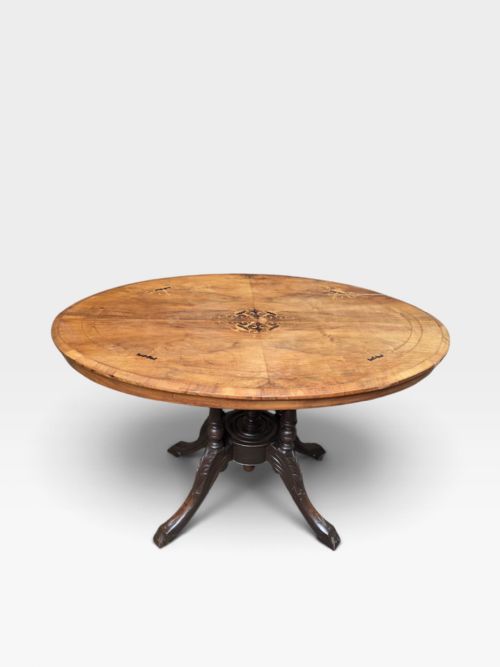
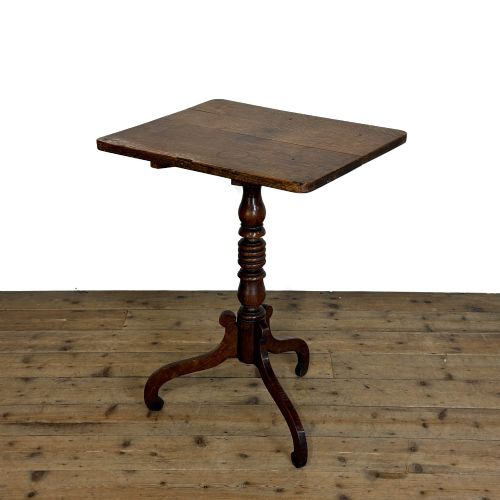
A vintage snap top table serves as a flexible surface, appearing across Georgian, Victorian, and nineteenth century periods. These pieces function primarily as occasional tables, side tables, dining tables, and tilt top tables.
Originating in periods spanning the eighteenth century to nineteen hundred, these tables suit modern rooms that require adaptable antique furniture. Their hinged mechanisms allow the top to fold flat against the pedestal when stored.
Materials and construction methods
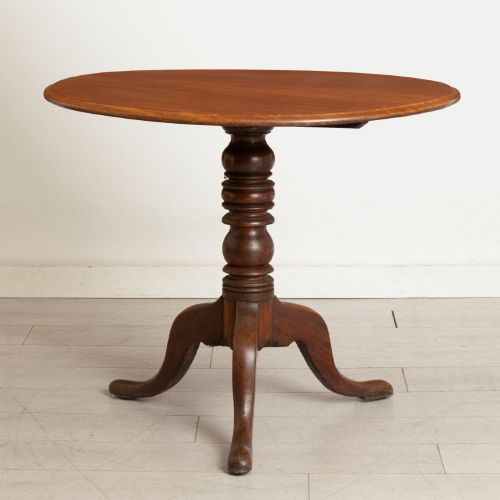
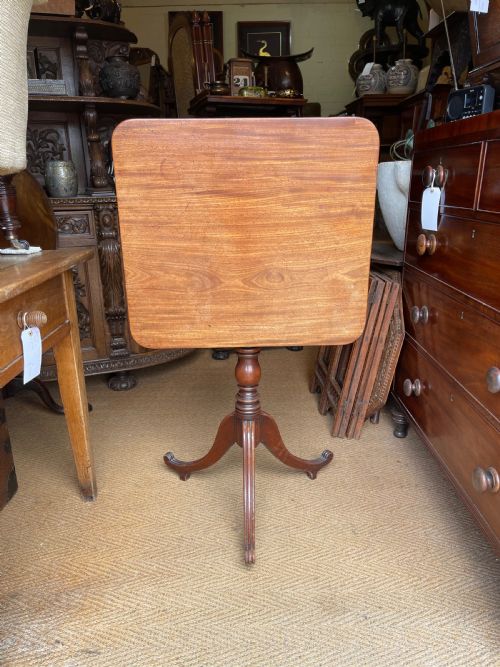
Wood selection focuses on solid mahogany, oak, and walnut, providing durable surfaces for daily use. Some examples incorporate brass fittings within the tilting mechanism to secure the top in place.
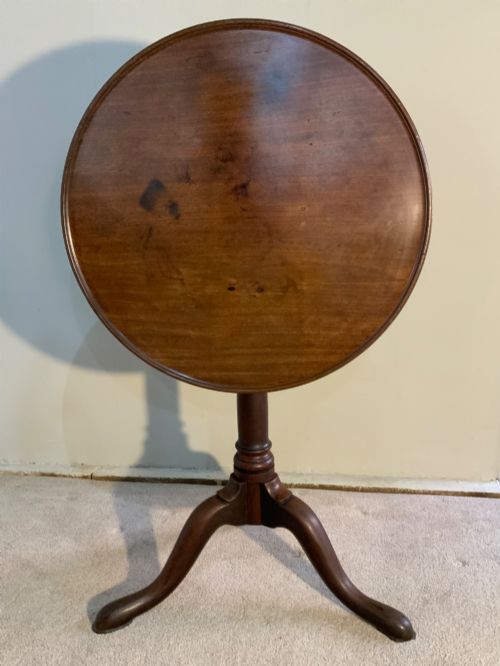
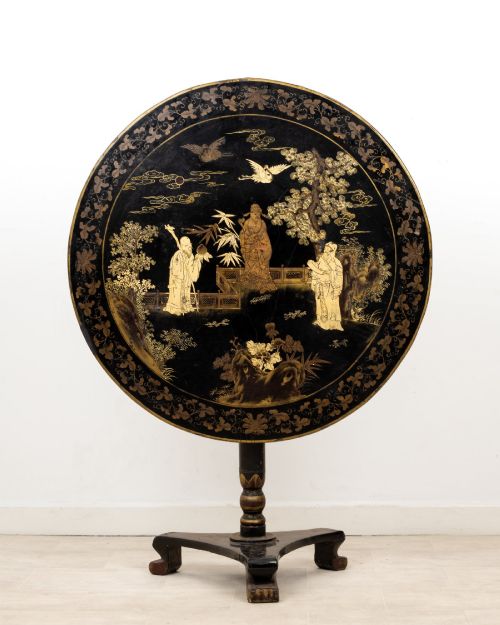
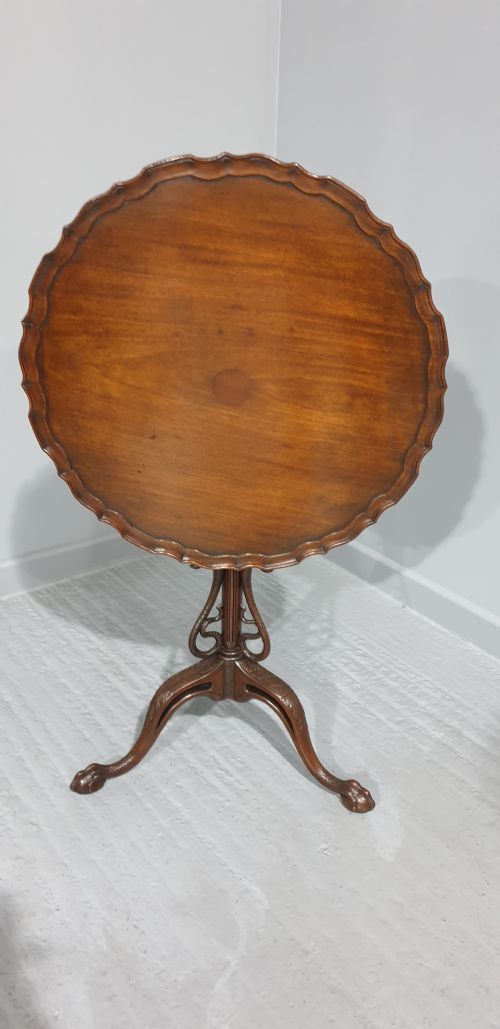
Decorative variations include gold leaf, paint, and lacquer, seen notably in Chinese lacquer and Victorian folk art pieces. Artisans shaped timber into pie crust edges, tray tops, and birdcage mechanisms to permit both tilting and rotation.
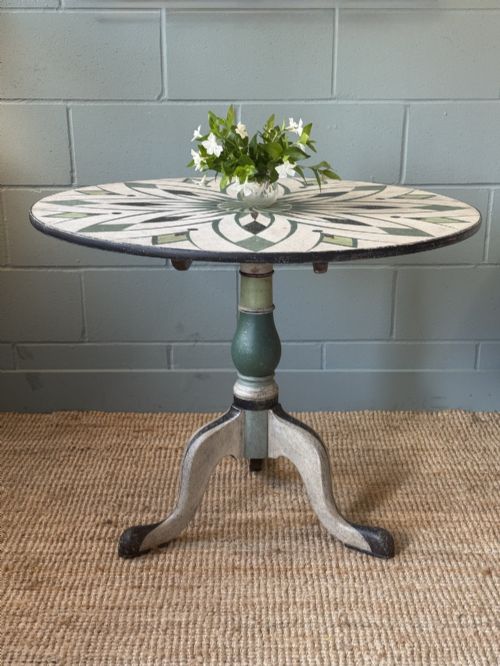
Some Victorian tables arrive with unexpected later painted floral designs, proving past owners enjoyed customising their folding furniture.
What defines quality in these tables
Quality rests in the precision of the birdcage or hinge mechanism, which should allow the top to snap securely without wobbling. Superior examples display refined timber selection, such as figured mahogany or rich walnut grain.
Carving detail on the tripod legs and pedestal base distinguishes finer pieces, particularly on Georgian and eighteenth century specimens. Original surface treatments, including aged lacquer and period paintwork, hold greater integrity than later additions.
The Vintage Snap Top Table Glossary
- Snap top table
- A table with a hinged top that locks into a horizontal position and folds flat for storage. This design maximises floor space in smaller rooms.
- Tilt top table
- An alternative term for a table whose top tips vertically on its pedestal. It shares the space saving function of the snap top.
- Birdcage
- A wooden framework beneath the table top that allows the surface to both rotate and tilt. This mechanism is typical of finer Georgian tripod tables.
- Pie crust edge
- A raised, scalloped carved rim along the perimeter of the table top. This decorative feature often appears on mahogany occasional tables.
- Tripod table
- A small table supported by three legs branching from a central pedestal. This configuration ensures stability on uneven floors.
Vintage Snap Top Table: Frequently Asked Questions
How do I fold the top down?
Release the catch or wooden peg beneath the surface to allow the top to pivot on its hinge. Ensure you support the weight of the timber as it moves into the vertical position.
Locking it back into place involves pressing the top down until the catch engages securely with the pedestal column.
Can I use this as a dining table?
Larger breakfast tables and pedestal versions work well for casual meals or smaller dining spaces. Their sturdy wooden construction accommodates daily tableware easily.
Smaller tripod variations function better as side tables or occasional surfaces for holding drinks and books.
How do I care for the wood?
Dust the mahogany, oak, or walnut surfaces regularly with a soft, dry cloth to prevent dirt accumulation. Avoid harsh chemical cleaners that might strip the historic finish or wax.
Keep the table away from direct heat sources and strong sunlight to protect the timber and any applied lacquer or paint.
How do I identify a Georgian piece?
Georgian tables often feature slender tripod legs, birdcage mechanisms, and dense mahogany timbers with patinated surfaces. The joinery employs traditional techniques characteristic of the eighteenth century.
Comparing the proportions and carving styles against verified period examples helps confirm the age and origin.