

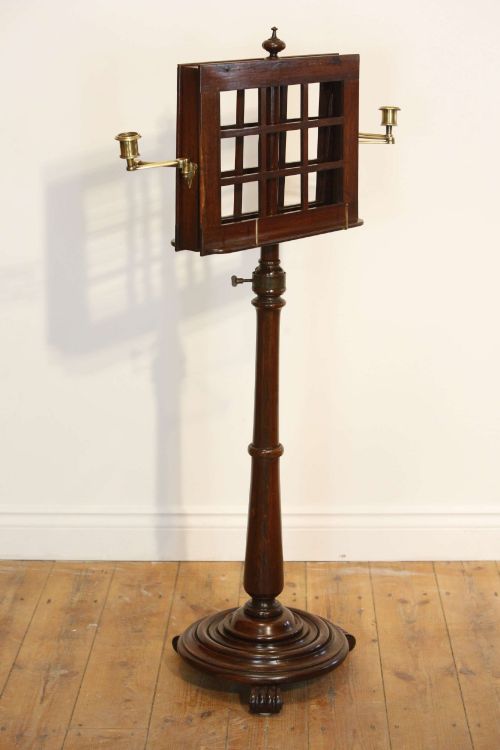
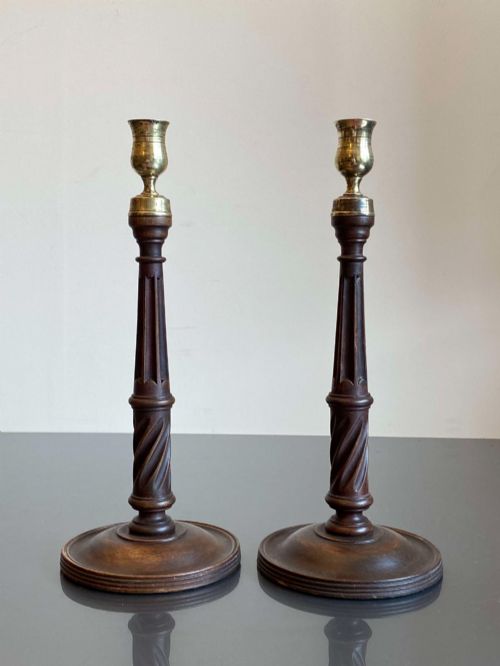
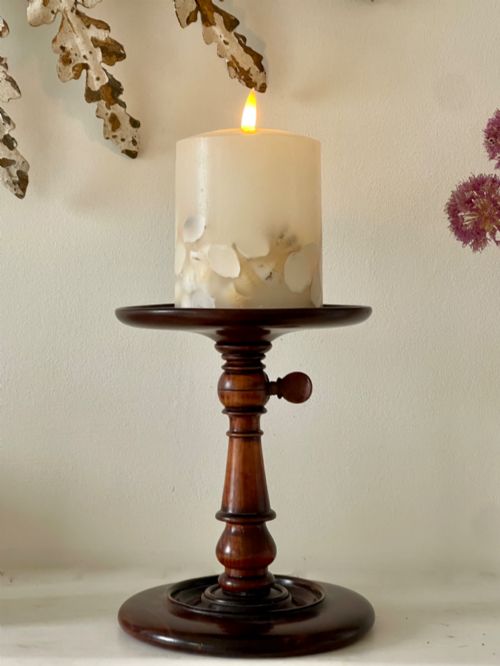
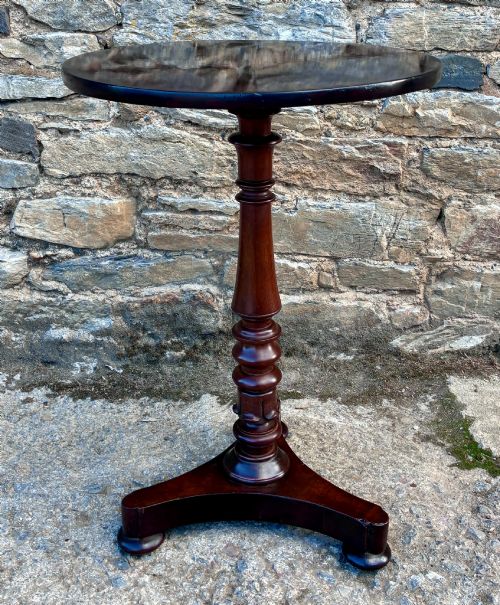


Dark Wood Candle Stand
A dark wood candle stand holds a single light, built from mahogany, rosewood or walnut across Georgian, Victorian and Edwardian periods.

Dark Wood Candle Stand
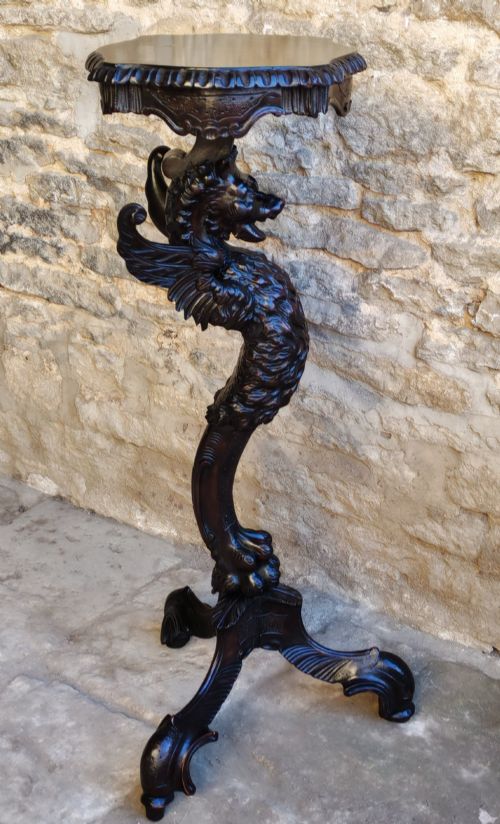
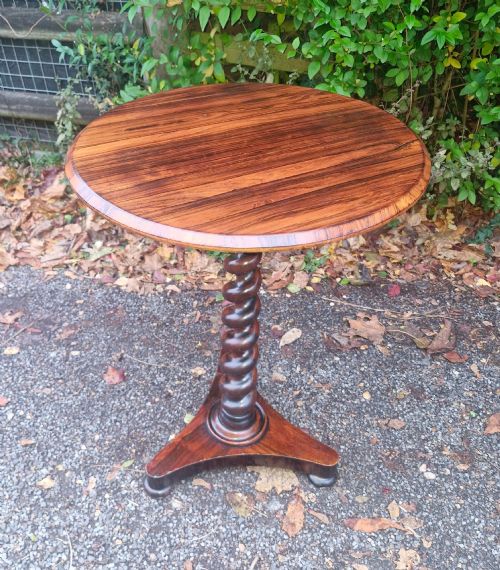
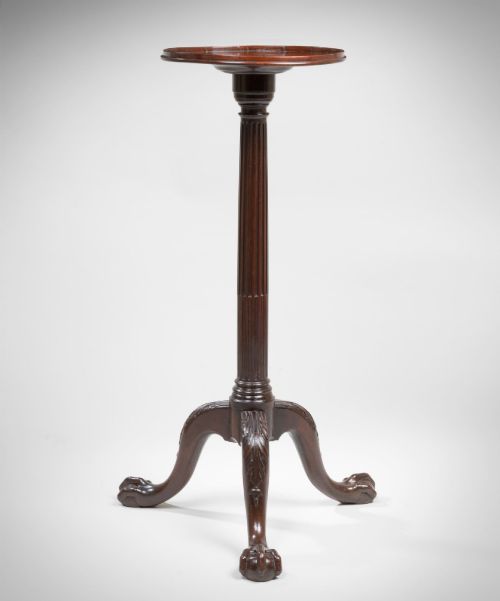
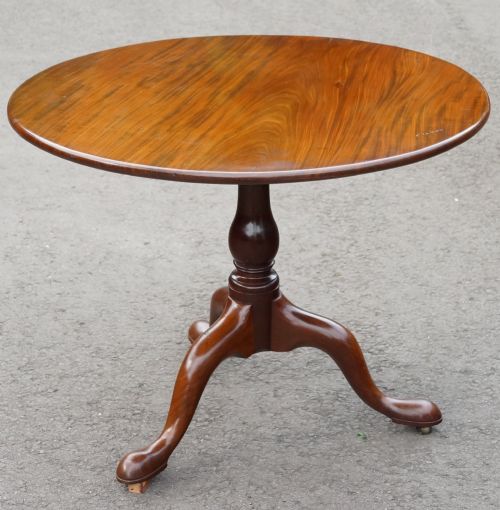
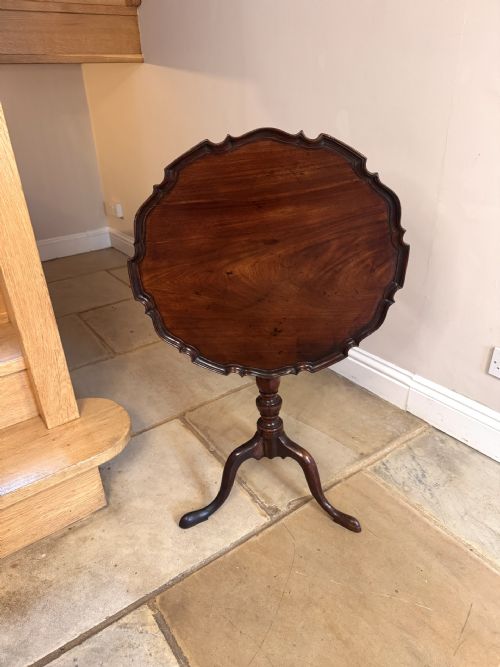
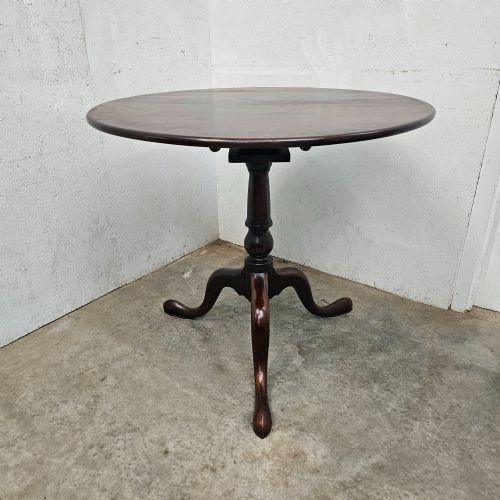
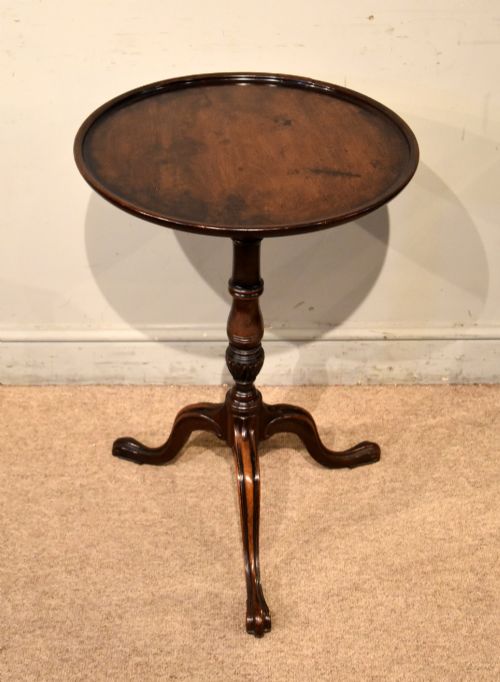
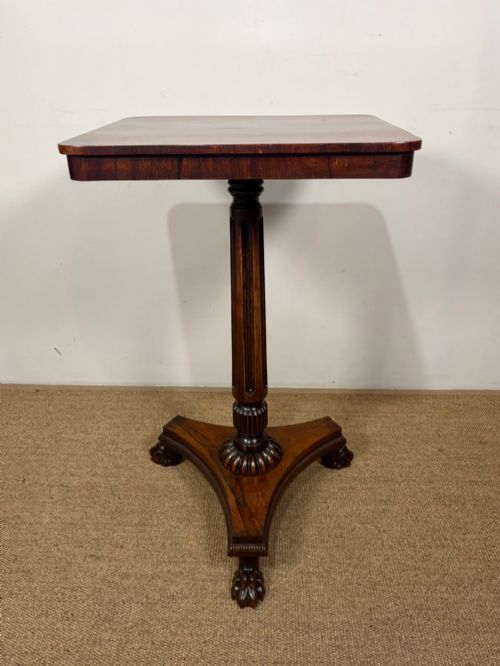
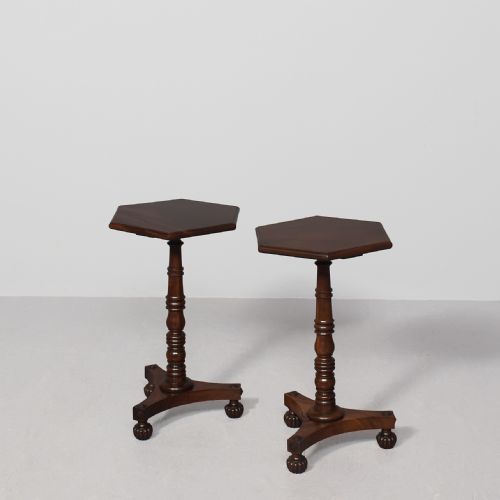
A dark wood candle stand functions as a compact support for illumination, showing up primarily as wine tables, torcheres, plant stands and occasional tables in the listings. These pieces span the 18th century through to the Edwardian era, with Georgian and Victorian examples forming the backbone of the selection.
Makers shaped these items for specific household tasks, such as holding a candle beside a chair or supporting a lamp in a corner. The form usually relies on a central pillar supported by three legs, making them stable yet portable additions to a room.
How they were made
Carpenters relied heavily on dense timbers like mahogany, rosewood, walnut and fruitwood, often turning the central stems on a lathe. Hardwood construction provided the necessary weight in the base to support tall stems and heavy tops without toppling.
Joinery techniques included pegged tenons and threaded wooden screws for tilt-top mechanisms, alongside brass brackets and fittings where movement was required. Carvers added detail to the knees and feet of tripod bases, utilising the grain of the timber to accentuate shaped edges and turned rings.
Dark Wood Candle Stand Retail Price Guide 2026
Typical asking prices for dark wood candle stand among the pieces listed under this phrase on Sellingantiques today, from the lower quarter to the upper quarter. They describe what is for sale here now, not the wider market.
Several stands include clever tilt-top catches designed to hide the table flat against the parlour wall when the candles went out.
What varies in quality
The choice of timber grain and the crispness of the carving dictate the standing of a piece, distinguishing workshop production from standard domestic items. Finer examples display carefully matched veneers, select cuts of mahogany with deep figure, and balanced proportions in the turning of the pillar.
Structural integrity also separates the grades, visible in the snug fit of the tilt-top catch and the stability of the tripod legs. Pieces with original brass hardware and untouched polish retain greater integrity than those with replaced components.
Gillow
The Dark Wood Candle Stand Glossary
- Tripod table
- A small table supported by three legs radiating from a central pillar. This design allowed the piece to stand steady on uneven floors.
- Torchere
- A tall, slender stand designed to hold a light or a figure. Originating in France, these pieces elevated candles to illuminate a room.
- Tilt-top
- A tabletop hinged to the pillar so it can be folded down vertically when not in use. This mechanism saved space in smaller rooms.
- Pie crust rim
- A raised, scalloped edge carved into the perimeter of a tabletop, often seen on Georgian tripod tables. The shaping mimics pastry work.
- Open twist
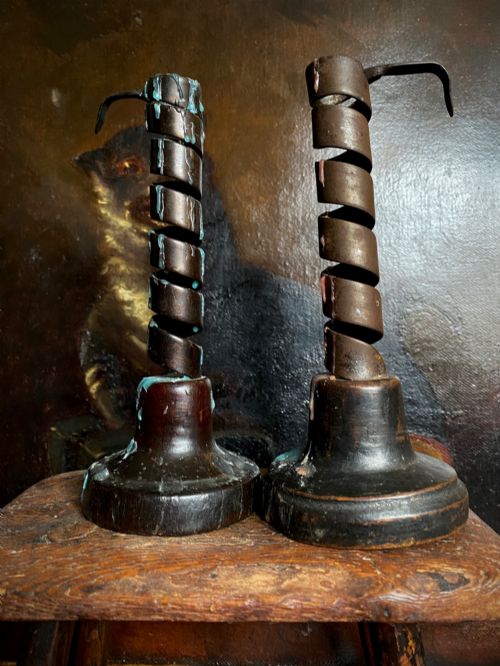
- A spiral carving cut completely through the wood of a stem or candlestick shaft. This technique requires considerable skill with chisels.
Dark Wood Candle Stand: Frequently Asked Questions
What is a dark wood candle stand used for?
These pieces served to elevate a single light source or candle near seating areas before electric lighting became common. Today they function effectively as small side tables for drinks or as stands for small lamps and plants.
Their compact footprint allows them to fit into narrow corners or beside armchairs where larger furniture will not go.
How do I tell a Georgian stand from a Victorian one?
Georgian stands typically feature restrained proportions, subtle carving on the knees of the tripod, and timber with a warm, dry patina. Victorian examples often display heavier turning, darker finishes, and sometimes revival details such as Chippendale style carving.
Examining the underside of the top and the nature of the pivot block also helps reveal the period of construction.
Are tilt-top mechanisms original?
Many tables from the 18th and 19th centuries retain their original birdcage or block tilt-top actions, allowing the surface to tip sideways. Inspecting the pivot pins and wooden catches shows whether the mechanism was built with the table or added later.
Original actions show consistent wear matching the age of the rest of the timber.
How do I care for mahogany and rosewood stands?
Keep these pieces away from direct heat sources and strong sunlight to prevent the timber from drying out or the polish from fading. Gentle dusting with a dry cloth is usually sufficient for routine maintenance.
Occasional application of traditional wax helps nourish the wood and preserves the depth of the finish.