



Edwardian Mahogany Jardiniere
An Edwardian mahogany jardiniere brings domestic greenery into the drawing room through classic early twentieth-century cabinetmaking.
Edwardian Mahogany Jardiniere
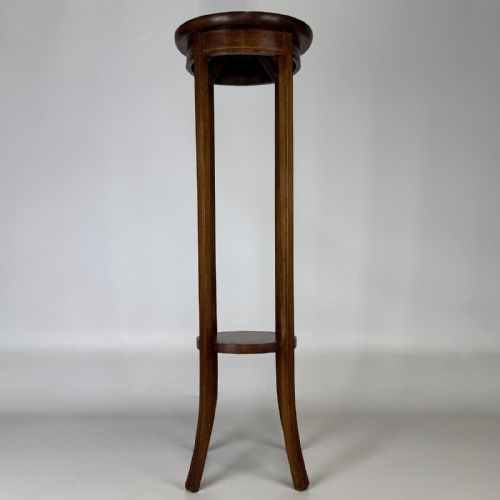
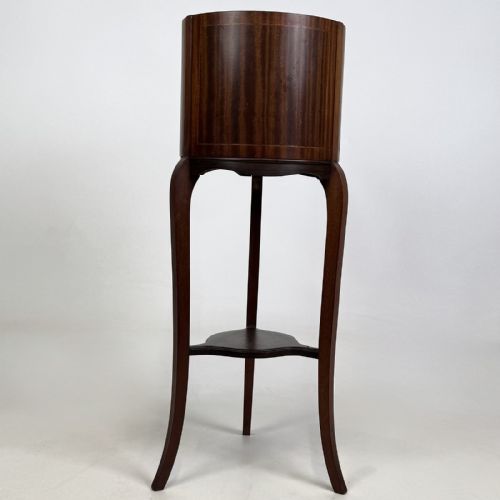
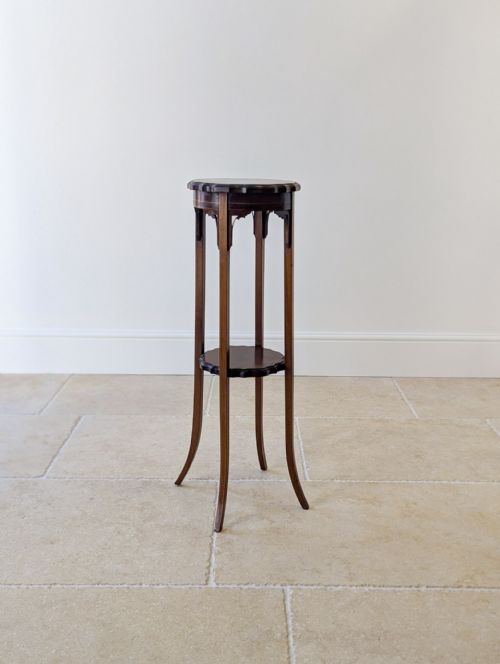
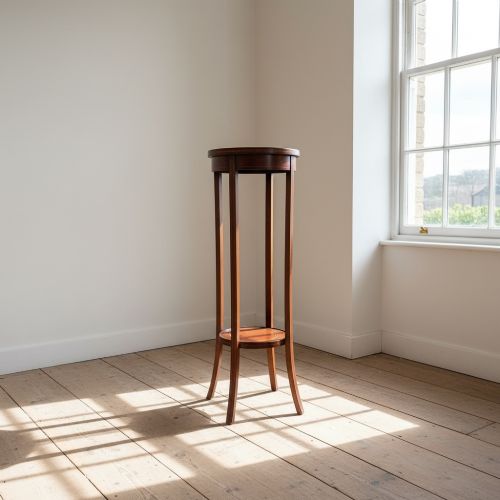
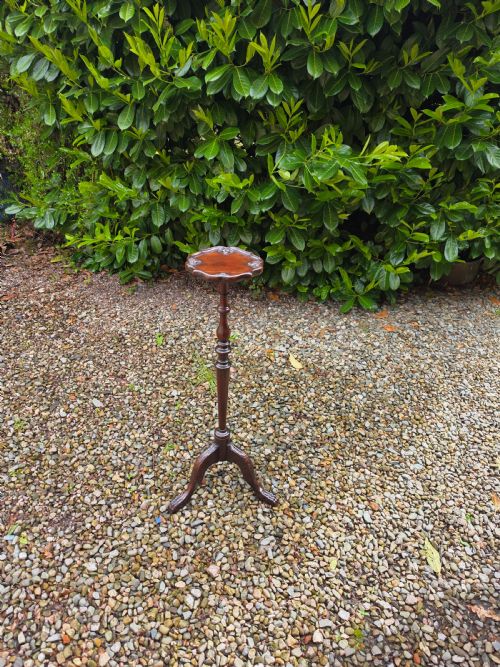
An edwardian mahogany jardiniere functions primarily as an elevated planter designed to display ferns and flowering potted plants within the Edwardian home. These pieces often overlap in form with plant stands, torchères, and plant tables, serving the period's enthusiasm for indoor horticulture.
The most common versions met here are freestanding tall stands and multi-tiered planters configured with dedicated receptacles. The design accommodates both floor-standing displays and table-height arrangements intended for corners and window spaces.
How They Were Made
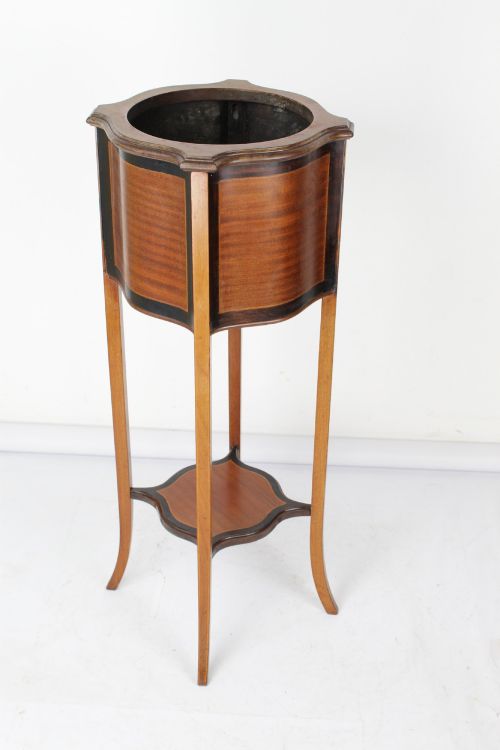
Cabinetmakers constructed these pieces using solid mahogany and flame mahogany veneers, frequently incorporating satinwood inlay and line inlay to decorate the surfaces. Some examples include ebonised elements to heighten the contrast of the woodwork.
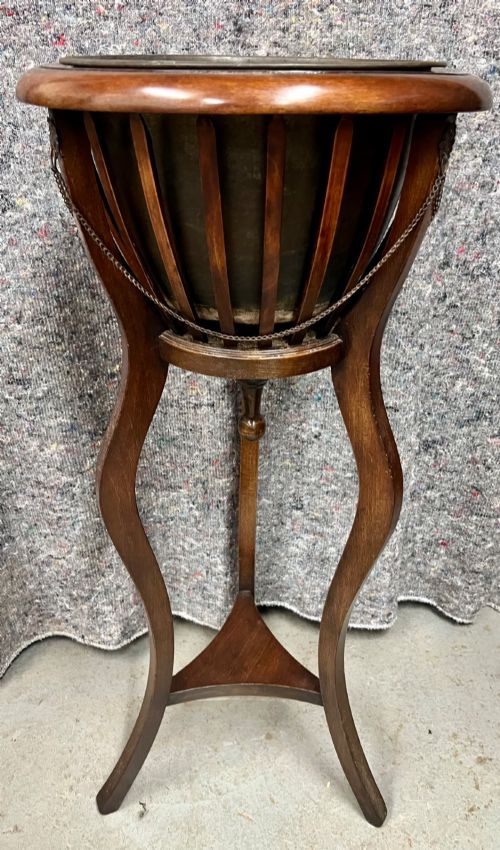
Functional metal liners, typically manufactured from brass, drop into the upper receptacle to contain soil and moisture. This internal hardware protects the surrounding timber construction from water damage during regular plant maintenance.
Edwardian Mahogany Jardiniere Retail Price Guide 2026
Typical asking prices for edwardian mahogany jardiniere among the pieces listed under this phrase on Sellingantiques today, from the lower quarter to the upper quarter. They describe what is for sale here now, not the wider market.
Listings demonstrate that Edwardian makers combined mahogany, satinwood inlay, and brass liners to produce functional plant stands.
What Varies in Quality
The sophistication of the timber selection dictates the visual impact, ranging from plain mahogany boards to richly figured flame mahogany veneers. Higher grade examples employ crisp, detailed satinwood inlay rather than simple linear stringing.
Structural complexity also separates standard plant stands from finer jardinieres. Pieces featuring tiered configurations, integrated brass liners, and tapering square supports demonstrate more ambitious workshop design.
The Edwardian Mahogany Jardiniere Glossary
- Jardiniere
- An ornamental pot or stand for holding plants or flowers. It serves as the central vessel for interior botanical displays.
- Torchere
- A tall ornamental stand originally designed to carry a torch or candle. In this period, it frequently doubles as a plant stand.
- Flame mahogany
- A veneer cut from the fork of the mahogany tree where the grain creates a flame-like pattern. It provides high decorative value on tabletops and stands.
- Line inlay
- A narrow strip of contrasting wood embedded flush into the surface of a primary timber. This technique defines edges and panels.
- Satinwood
- A durable, yellowish timber native to Ceylon and India used for contrasting inlay work. It brings brightness to darker mahogany carcases.
Edwardian Mahogany Jardiniere: Frequently Asked Questions
What is an Edwardian jardiniere?
An Edwardian jardiniere is a specialised plant stand or planter produced during the Edwardian period. These pieces hold potted plants to decorate domestic interiors.
They combine timber cabinetmaking with metal liners to safely support indoor greenery.
How were these stands used?
Households placed them in drawing rooms, hallways, and near windows to display ferns and flowering plants. They lifted foliage off the floor to catch better light.
The metal liners allowed owners to water plants directly without ruining the wood.
Are they the same as plant stands?
They share many characteristics with plant stands and torchères, and the terms often overlap in historical descriptions. A jardiniere specifically emphasises a container or planter top.
Many examples function equally well as display tables or plant pedestals.
What woods were used?
Makers relied heavily on mahogany as the primary structural and surface timber. Flame mahogany veneers and satinwood inlay appear frequently for decoration.
Some pieces also incorporate ebonised details to create contrasting visual borders.