



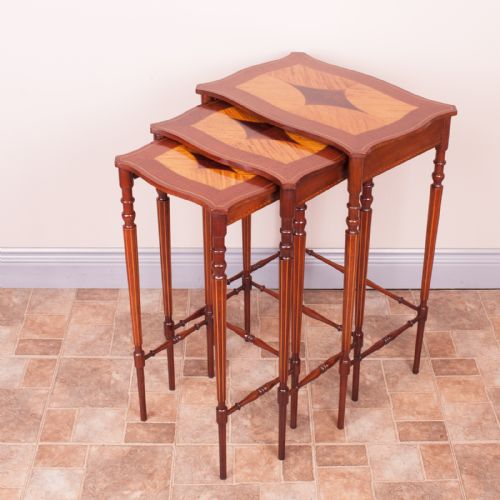


Satinwood Inlaid Nest Tables
Satinwood inlaid nest tables offer a clever space-saving design in striking timbers, making them a practical yet elegant addition to any room.
Satinwood Inlaid Nest Tables
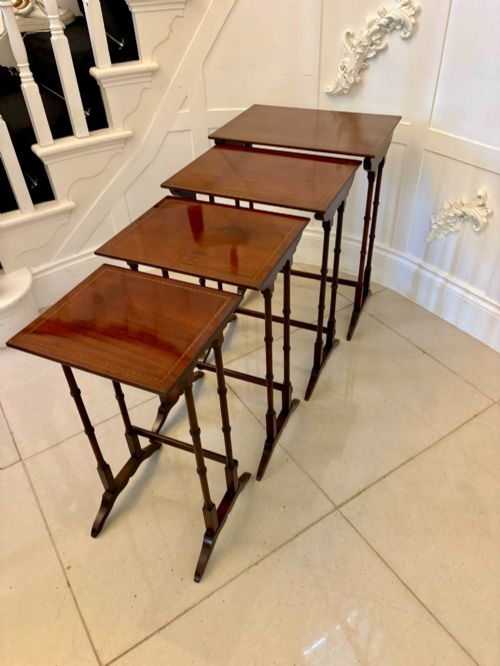
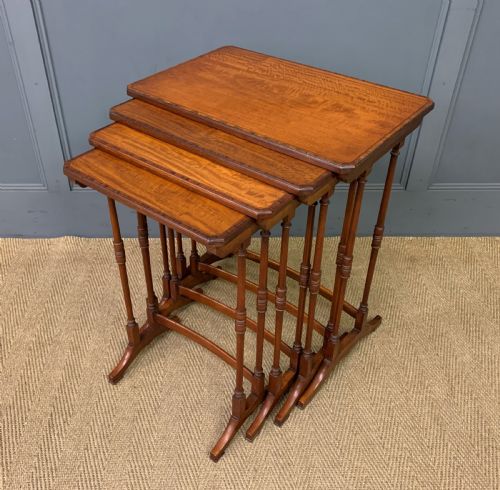
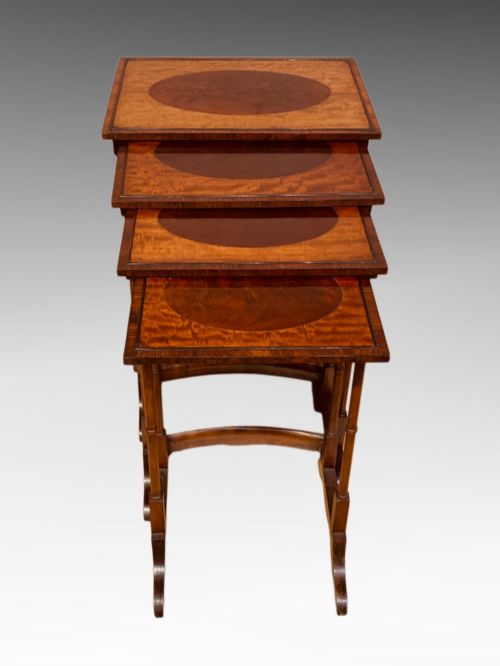
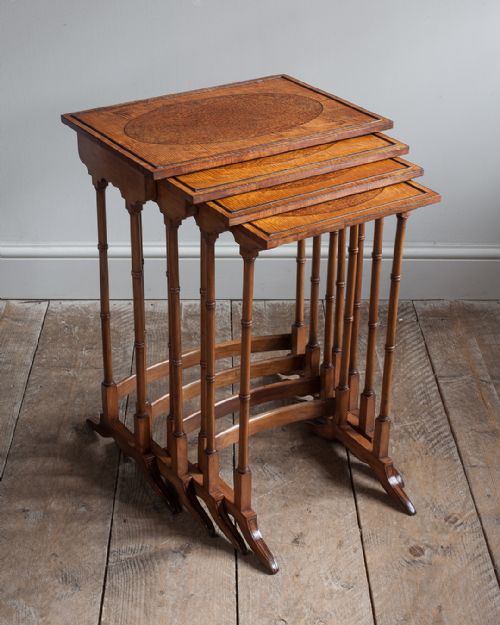
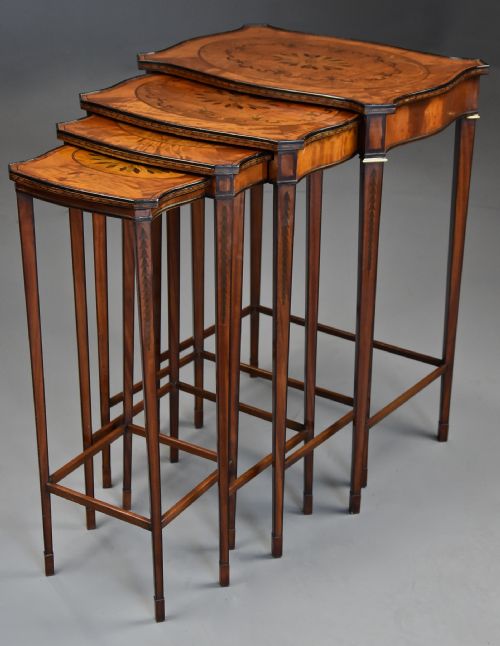
When you search for satinwood inlaid nest tables, you encounter sets of graduated tables designed to slide neatly beneath one another when not in use. These pieces appear primarily in Edwardian, late Victorian, and nineteenth-century forms, often identified historically as quartetto tables.
The selection on this page consists predominantly of nests comprising four tables, though versions with three tables also emerge. They serve flexible roles around the home as occasional, coffee, lamp, wine, side, or sofa tables.
Originating largely from the Edwardian era and the nineteenth century, these tables reflect classic forms such as the Sheraton style. They combine functional stacking capability with decorative timber surfaces suited to period and traditional interiors.
How they were made
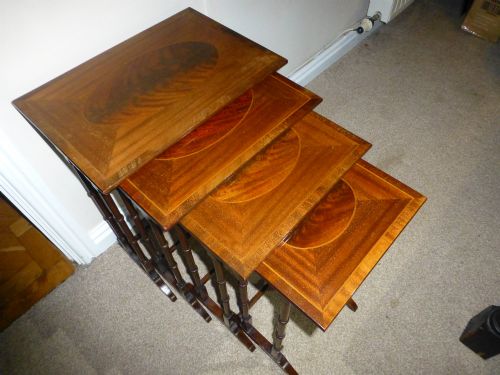
Cabinet makers utilised mahogany as a primary structural timber for the frames and legs, pairing it with bright satinwood for striking contrast. Tables often incorporate boxwood and rosewood inlay alongside satinwood crossbanding to define the edges and surfaces.
Construction techniques include square tapered legs and serpentine forms that showcase refined woodworking skills. Artisans applied intricate inlay work to the top panels, creating geometric or classical motifs characteristic of the Sheraton Revival influence.
Historical makers designed these multi-taskers to act as coffee, lamp, wine, and sofa companions all at once.
What varies in quality
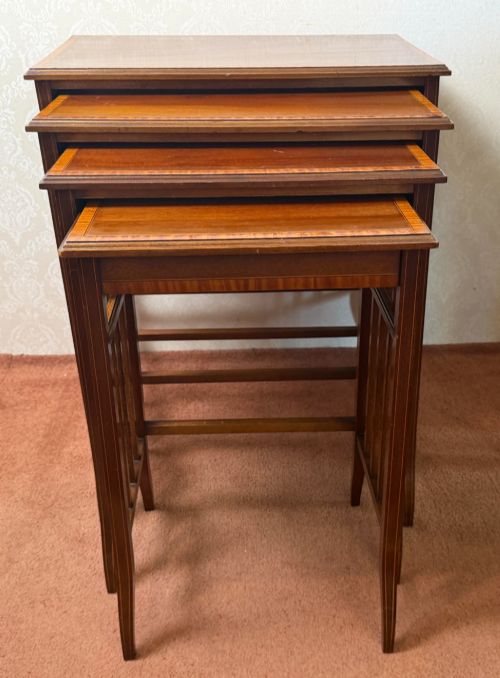
The distinction between ordinary and superior pieces rests upon the crispness of the inlay and the selection of the timber. Finer examples display meticulous boxwood and satinwood stringing with tight, precise joints where the components meet.
Proportion and wood figure dictate the standing of a set, with well-figured mahogany and carefully matched satinwood elevating the visual weight. Superior execution ensures that the tables slide together smoothly while maintaining rigid stability when separated.
The Satinwood Inlaid Nest Tables Glossary
- Quartetto
- A set of four small tables designed to nest together. This term appears frequently in period descriptions for nesting sets.
- Satinwood
- A durable, lustrous timber native to India and Ceylon with a golden sheen. It is frequently utilised for decorative veneers and stringing.
- Crossbanding
- A narrow strip of veneer applied to the border of a table top so that the grain runs at right angles to the centre. This technique frames the primary timber.
- Stringing
- A thin line of contrasting wood inlaid into a channel on a surface to form a border. Boxwood is commonly chosen for this purpose.
- Serpentine
- A curved shape featuring a convex centre flanked by concave ends. It adds fluidity to the outline of table tops.
Satinwood Inlaid Nest Tables: Frequently Asked Questions
How were nest tables used originally?
Period sets served multiple functions in drawing rooms, deployed individually for afternoon tea, writing, or holding small lamps and drinks. When entertaining finished, they stacked together compactly to preserve floor space.
This versatility made them immensely popular in Edwardian and late Victorian homes where rooms needed to adapt quickly to different social activities.
Are all these tables from the Edwardian period?
While the majority date from the Edwardian era and the early nineteen-hundreds, the evidence shows examples spanning back into the nineteenth century. Stylistic revivals mean that Regency and Sheraton designs were frequently reinterpreted by later makers.
Examining the construction methods and timber characteristics helps distinguish between original nineteenth-century pieces and Edwardian reproductions.
What woods should I expect to see?
Mahogany forms the primary carcass and leg structure for most sets, providing sturdy support and a rich dark tone. Satinwood provides the bright, golden contrasting panels and veneers, often enhanced by boxwood and rosewood inlay.
Some variations also incorporate amboyna alongside the main timbers to add further depth to the decorative surfaces.
Do the tables stack securely?
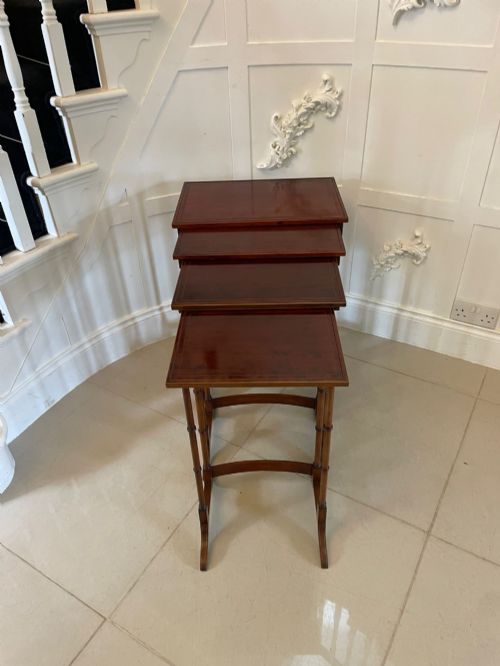
Each table in a quartetto set is proportioned slightly smaller than the last, allowing them to slide into position with minimal clearance. Well-made sets maintain a flush profile at the front when fully nested.
They are engineered to remain stable both when deployed separately around a room and when stored together as a single unit.