


Victorian Quartetto Tables
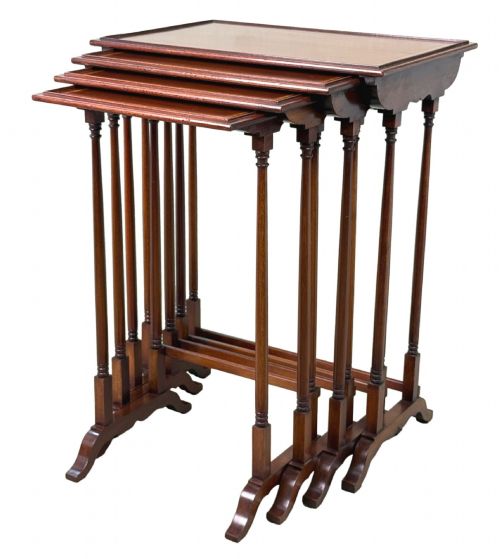
Victorian quartetto tables are clever nests of four sliding occasional tables that give you extra surface space without cluttering a room.
Victorian Quartetto Tables
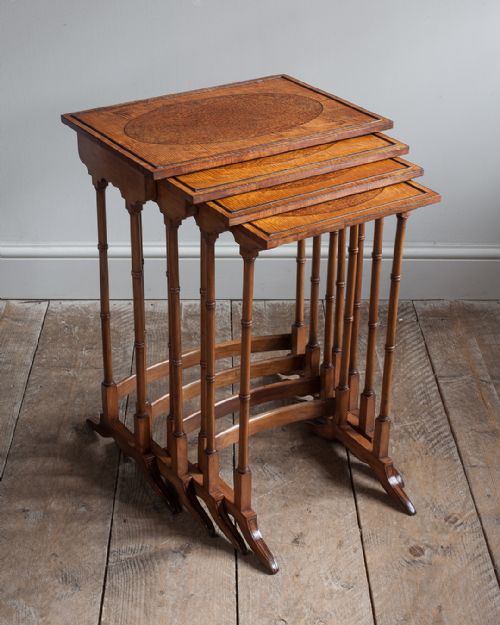
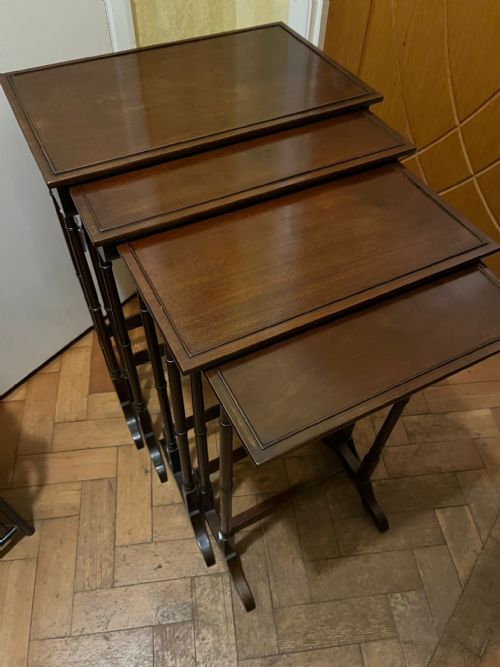
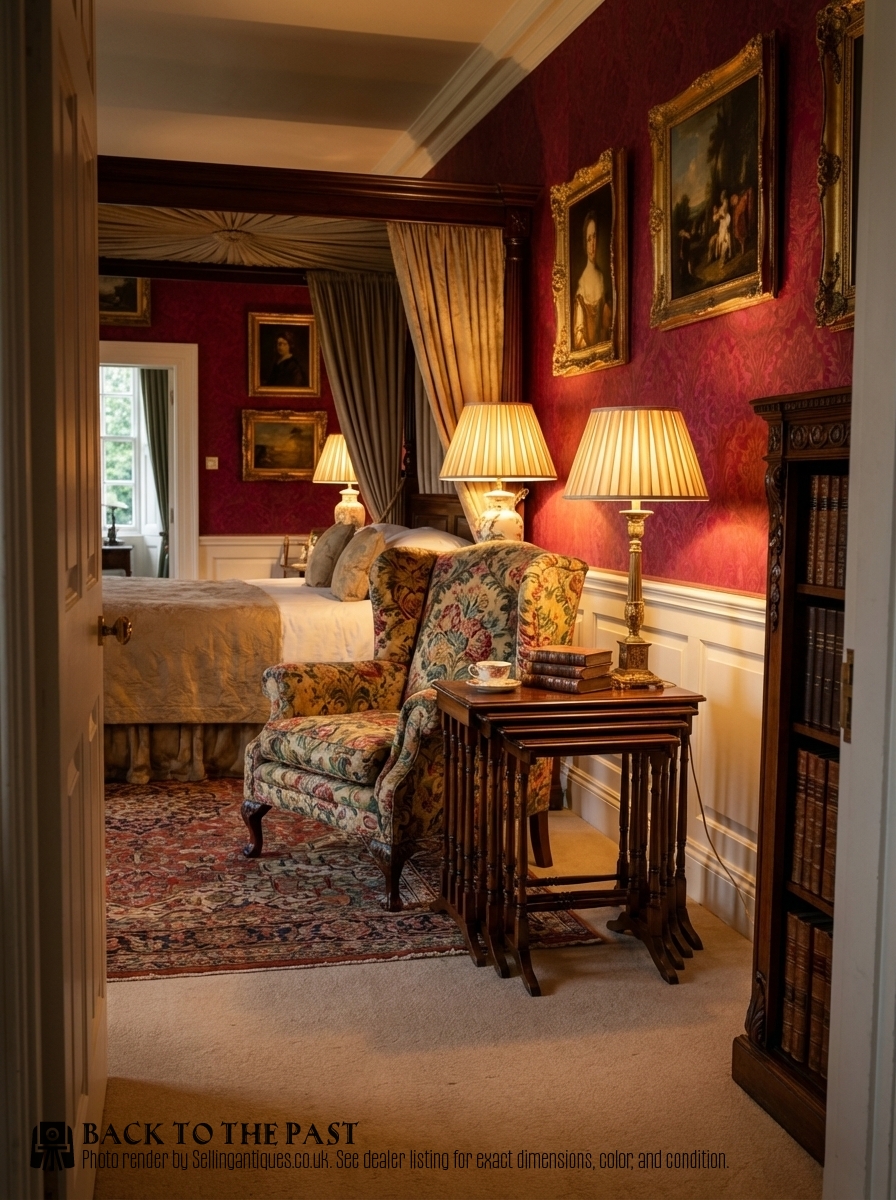
Victorian quartetto tables comprise sets of four graduating occasional tables designed to slide neatly beneath one another into the footprint of the largest single piece. When you search for Victorian quartetto tables, you encounter matching nests primarily formed from mahogany, rosewood, and satinwood, often featuring delicate inlay work.
The form appears frequently in nineteenth-century English interiors, functioning as a practical multi-tiered surface for tea, sewing, or writing. Most examples on this page consist of four descending tables, though occasional three-piece sets also surface from the same period.
Origins and periods span the Victorian era, including pieces dated to the eighteen-fifties, eighteen-sixties, and eighteen-eighties, alongside late Victorian iterations. Makers occasionally utilised exotic timbers or applied marquetry and hand-painted decoration to elevate the standard occasional table into a decorative centrepiece.
Materials and Construction
Cabinetmakers constructed these nests predominantly using solid and veneered timbers such as mahogany, rosewood, walnut, and satinwood. Figured grain patterns on top surfaces provided visual depth, while slender turned columns or lyre-shaped supports kept the framework light enough to pull out easily.
Inlay techniques defined the finer examples, incorporating boxwood and satinwood stringing, geometric banding, or floral marquetry into the table tops. Individual tables were graduated precisely in height and width so that each smaller frame slid smoothly into the tracks or clearances of the one above it.
Mahogany and satinwood inlay dominate the nineteenth-century listings on this page, alongside occasional rosewood, walnut, and oak examples.
Assessing Quality
The primary distinction between standard utility nests and superior examples lies in the selection of timber and the precision of the joinery. Figured mahogany or richly grained rosewood paired with crisp boxwood stringing indicates a higher grade of workshop production.
Structural integrity also separates the tiers; top-tier pieces maintain rigid frames across all four graduating sizes without excessive wobble or sagging in the smallest table. The finesse of the turning on the legs and the clarity of any inlaid marquetry further define the upper end of the range.
The Victorian Quartetto Tables Glossary
- Quartetto
- A set of four matching occasional tables designed to nest together. The term derives from musical terminology for a quartet.
- Nest of tables
- A group of graduating tables engineered to stack one inside or beneath another. This space-saving design became popular during the nineteenth century.
- Satinwood inlay
- A decorative technique using contrasting light-coloured satinwood veneers embedded into a darker primary timber. It creates crisp borders and geometric motifs.
- Boxwood stringing
- Thin lines of pale boxwood inlaid into channels cut into the table surface. This linear detail outlines the edges of tabletop panels.
- Marquetry
- The art of applying pieces of veneer to a structure to form decorative patterns and pictures. It differs from inlay by assembling the pattern before fixing it to the surface.
Victorian Quartetto Tables: Frequently Asked Questions
What are quartetto tables?
Quartetto tables are nests of four graduating occasional tables designed to slide together into a single compact unit.
Cabinetmakers built them during the nineteenth century to provide flexible surface space in formal sitting rooms.
How were they used?
Victorians pulled the individual tables out to hold teacups, books, or writing materials when visitors called.
When not in use, the smaller tables slid neatly beneath the largest top table to save floor space.
How do I date a set?
Dating relies on timber choices, leg turning styles, and construction methods characteristic of the nineteenth century.
Earlier nineteenth-century examples often favour plain figured mahogany, whereas late Victorian sets frequently feature satinwood inlay.
Are all sets made of four tables?
Most traditional quartetto sets comprise four graduating tables designed to nest completely.
Surviving examples occasionally consist of three tables rather than four, depending on the specific nineteenth-century workshop.
How do I care for the wood?
Keep nineteenth-century timber surfaces away from direct heat sources and strong sunlight to prevent veneer cracking.
Apply a traditional beeswax polish occasionally to nourish the mahogany, rosewood, or satinwood grain.