

Stacked Side Tables
Stacked side tables offer clever tiered convenience, fitting neatly into domestic spaces while delivering practical surface space.
Stacked Side Tables
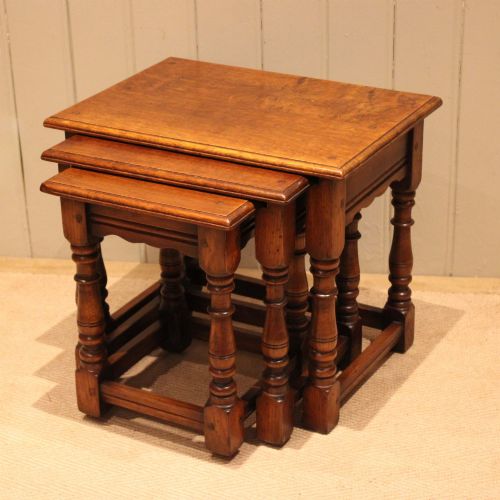
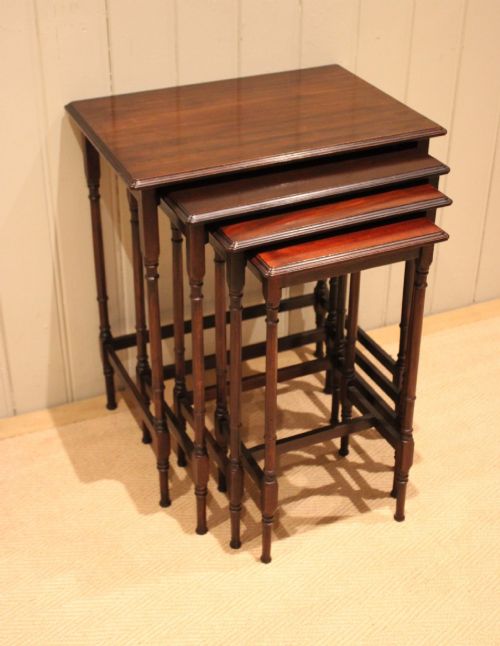
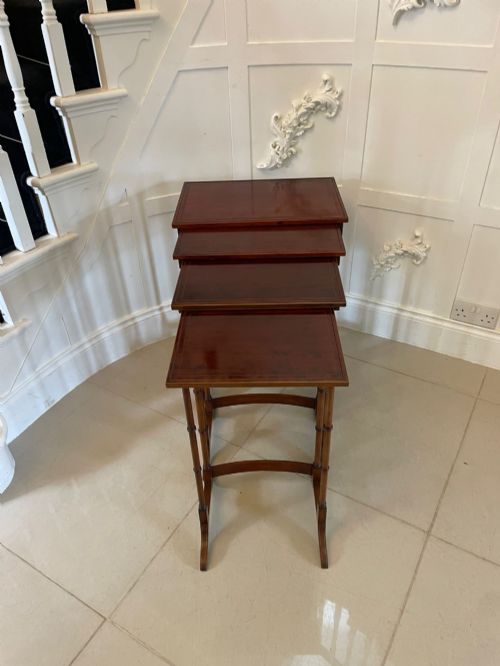
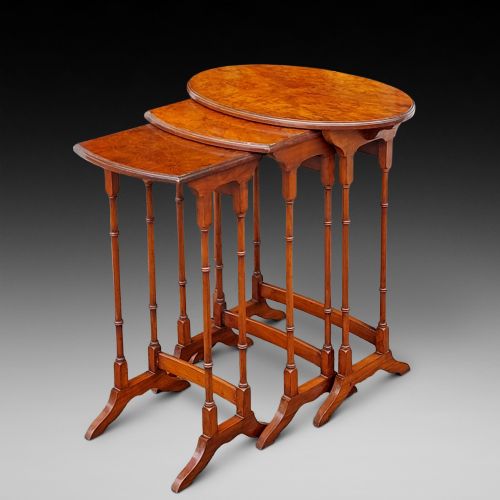
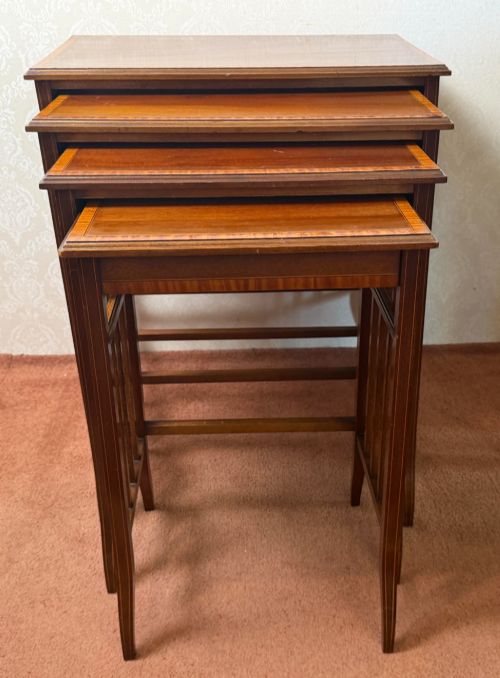
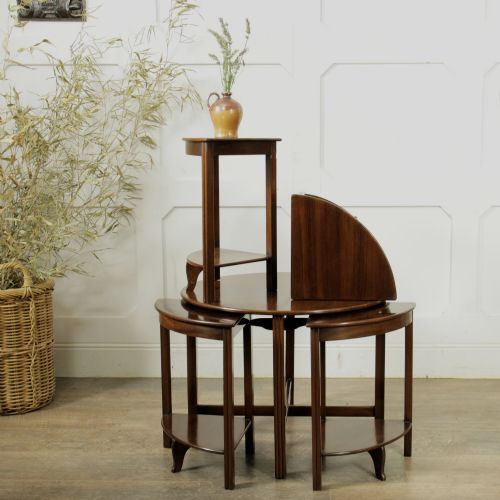
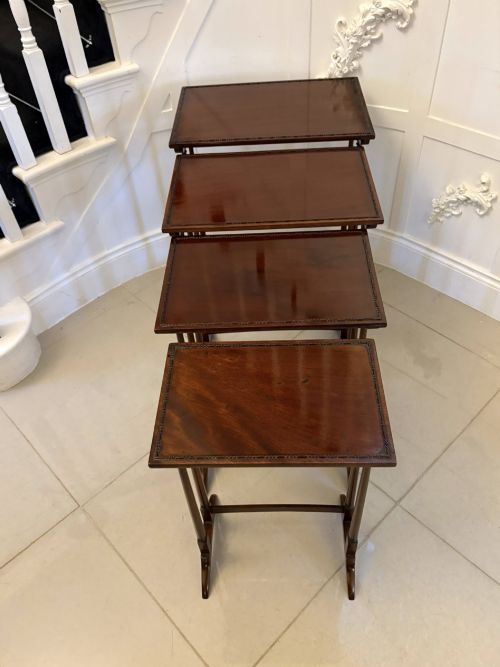
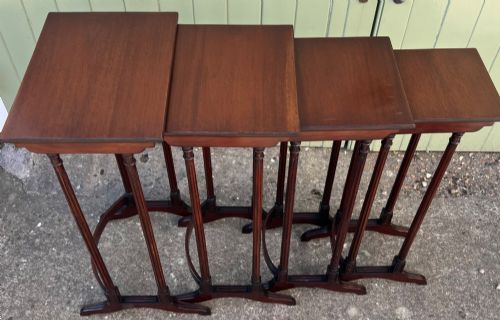
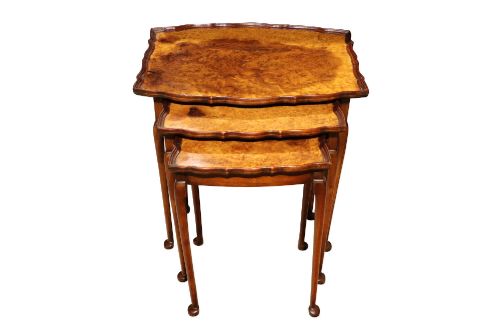
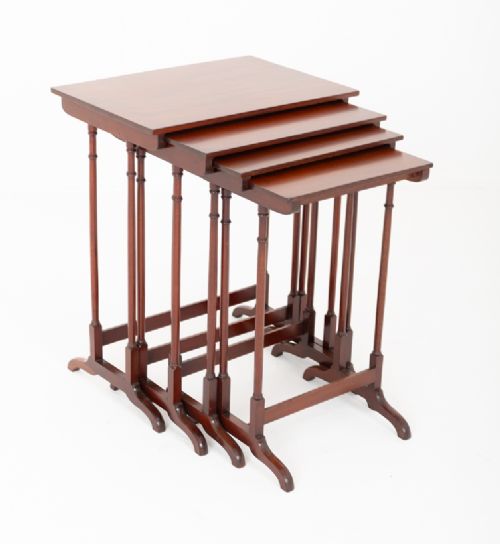
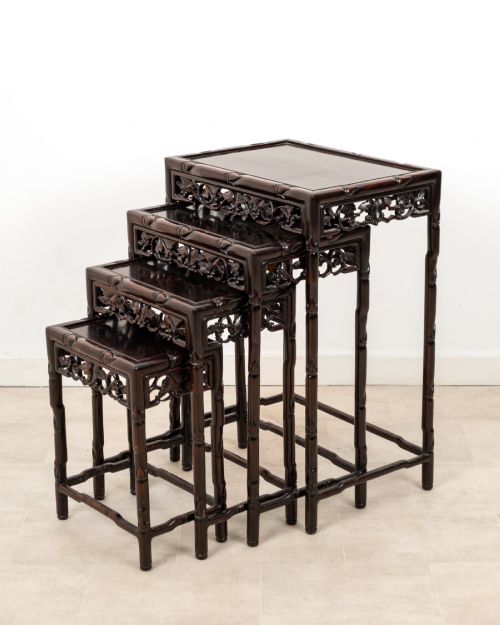
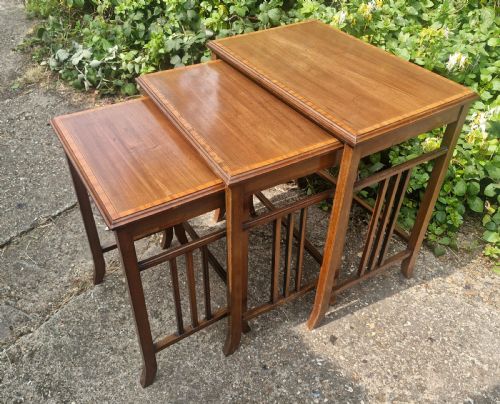
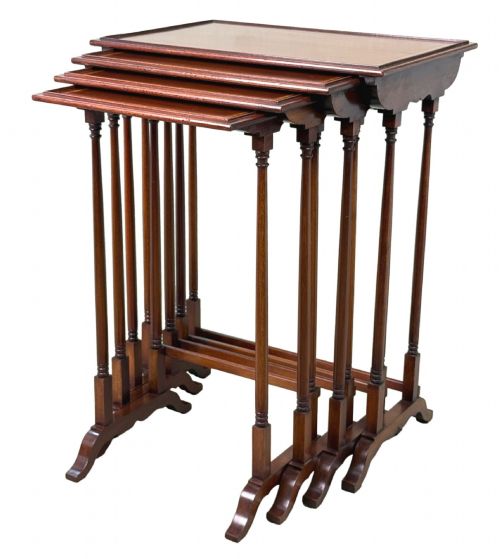
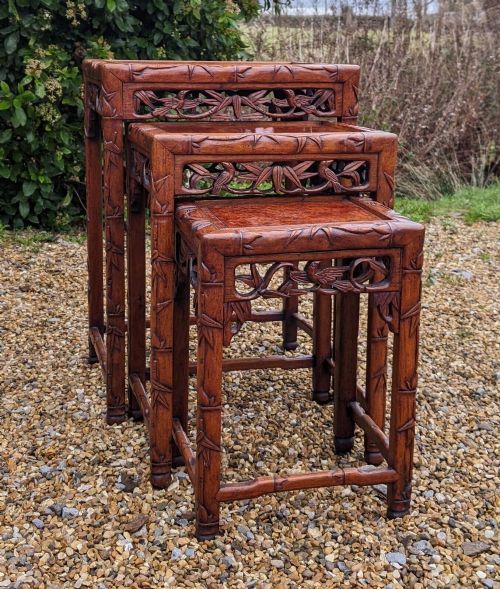
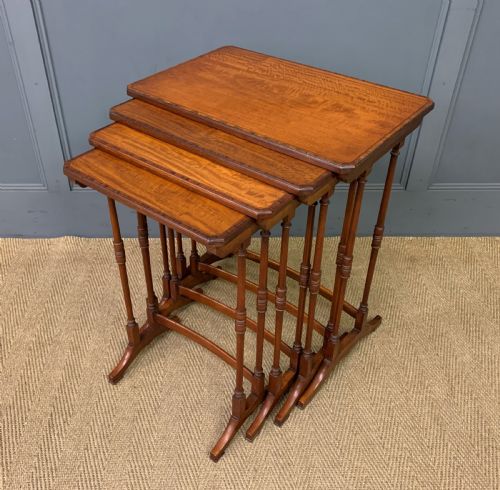
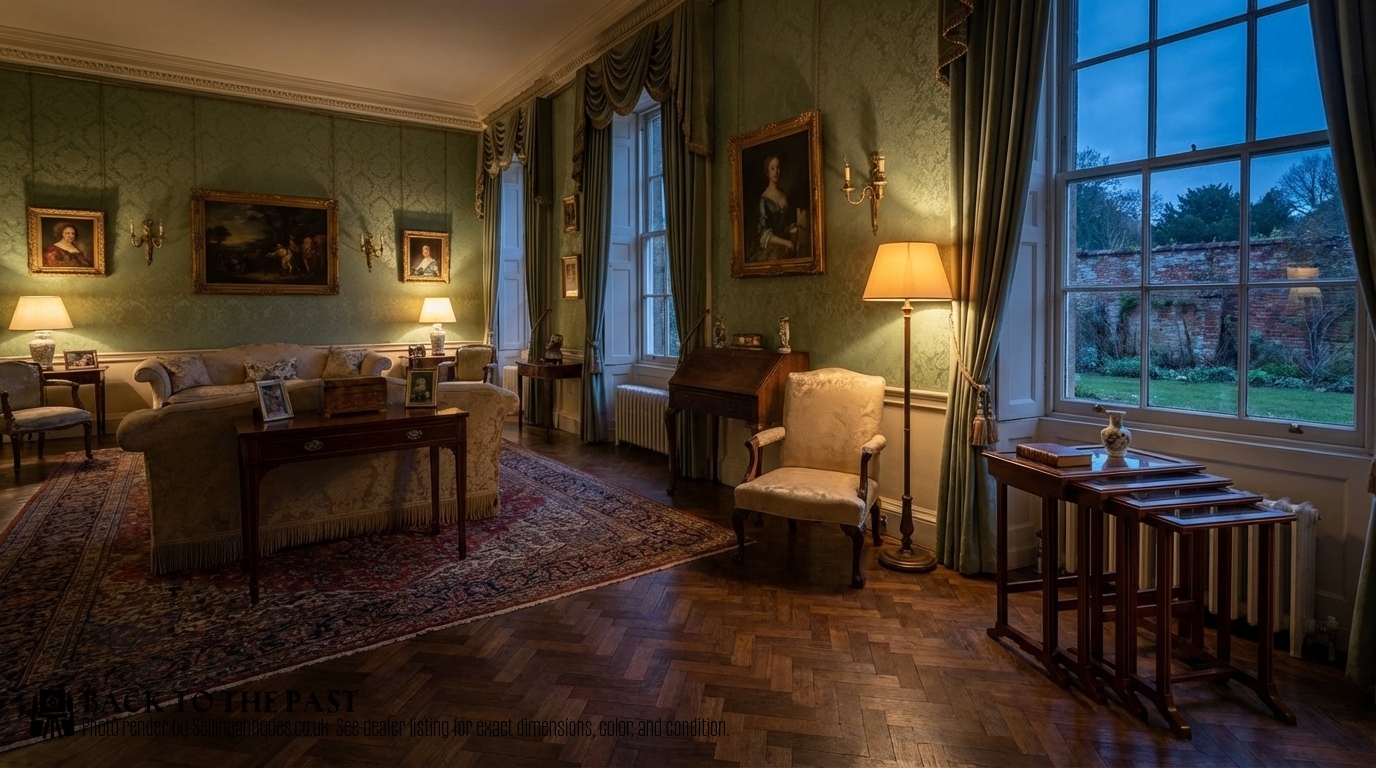
Stacked side tables appear primarily as nests of tables, offering a clever space-saving arrangement where smaller tables slide entirely beneath the largest one. These pieces range from sets of three to groups of five, with four-table configurations frequently described as quartetto sets.
The selections span multiple eras including the Victorian and Edwardian periods, alongside Regency and Art Deco examples, providing diverse architectural silhouettes for modern interiors. Mahogany remains the dominant timber, accompanied by rosewood, walnut, and exotic hardwoods.
Makers utilised various decorative techniques, incorporating satinwood crossbanding, boxwood stringing, and floral painted motifs upon table tops. Formats vary from simple rectangular frames to circular tops and serpentine shapes influenced by the Sheraton style.
Materials and Construction
Cabinetmakers constructed these tables using solid timbers and delicate veneers, selecting mahogany, burr walnut, and rosewood for their rich grain patterns. Hardwoods such as huanghuali and oak also appear, providing robust structural integrity for daily use.
Surface decoration relies on fine inlay work, utilising satinwood and boxwood to create contrasting geometric borders and delicate stringing. Lacquered finishes and hand-painted floral motifs further ornament specific regional and period variations.
The listings span multiple centuries, uniting Edwardian, Victorian, and Regency forms alongside Art Deco designs in mahogany, rosewood, and walnut.
Evaluating Craftsmanship
Quality rests in the precision of the joinery and the consistency with which the smaller tables slide beneath the primary surface without binding. Superior examples maintain structural rigidity across all tiers while keeping individual frames remarkably light.
The selection of timber veneers defines the visual hierarchy, with figured burr walnut, rich rosewood, and finely matched mahogany setting apart high-grade workshops from standard production. Crispness in inlay work and refined leg profiles, such as square tapered supports, distinguish the best examples.
Émile Gallé·Heal's
The Stacked Side Tables Glossary
- Quartetto
- A set of four graduating tables designed to stack inside one another. This term appears frequently in 19th-century and Edwardian cataloguing.
- Crossbanding
- A border of veneer laid with the grain running perpendicular to the main panel. This technique frames the top surface of many mahogany and satinwood tables.
- Stringing
- Thin inlaid lines of contrasting timber used to outline table edges and legs. Boxwood stringing is common on Edwardian inlaid furniture.
- Serpentine
- A gently undulating curved line forming the edge of a table top. This shape demands expert woodworking skill to execute cleanly.
Stacked Side Tables: Frequently Asked Questions
What is a quartetto nest of tables?
A quartetto nest consists of four graduating tables designed to slide neatly into one another. This configuration originated in the 19th century and gained immense popularity during the Edwardian era.
Each table diminishes incrementally in height and width. This clever engineering allows all four surfaces to occupy the footprint of a single small table when not in use.
How do I identify an Edwardian set?
Edwardian sets typically feature lighter timbers such as mahogany enhanced with satinwood inlay and boxwood stringing. The legs often take a slender, square tapered form.
These pieces frequently display refined proportions and graceful serpentine edges influenced by earlier Sheraton designs. The construction tends to be light yet sturdy.
Were these tables used as coffee tables originally?
Most historical nesting tables served as occasional or tea tables rather than low coffee tables. Their initial purpose involved placement beside seating for drinks or needlework.
Over time, lower proportions emerged, leading to contemporary applications as coffee tables. Their modular nature suits modern living spaces requiring flexible surface areas.
How should I care for veneered table tops?
Veneered surfaces require protection from excessive moisture and direct sunlight to prevent warping and fading. Regular dusting with a soft cloth preserves the polished finish.
Avoid placing hot cups or wet items directly on antique polish. Using protective coasters ensures the delicate satinwood inlay and fine grain remain undamaged.