


Dark Mahogany Nesting Tables
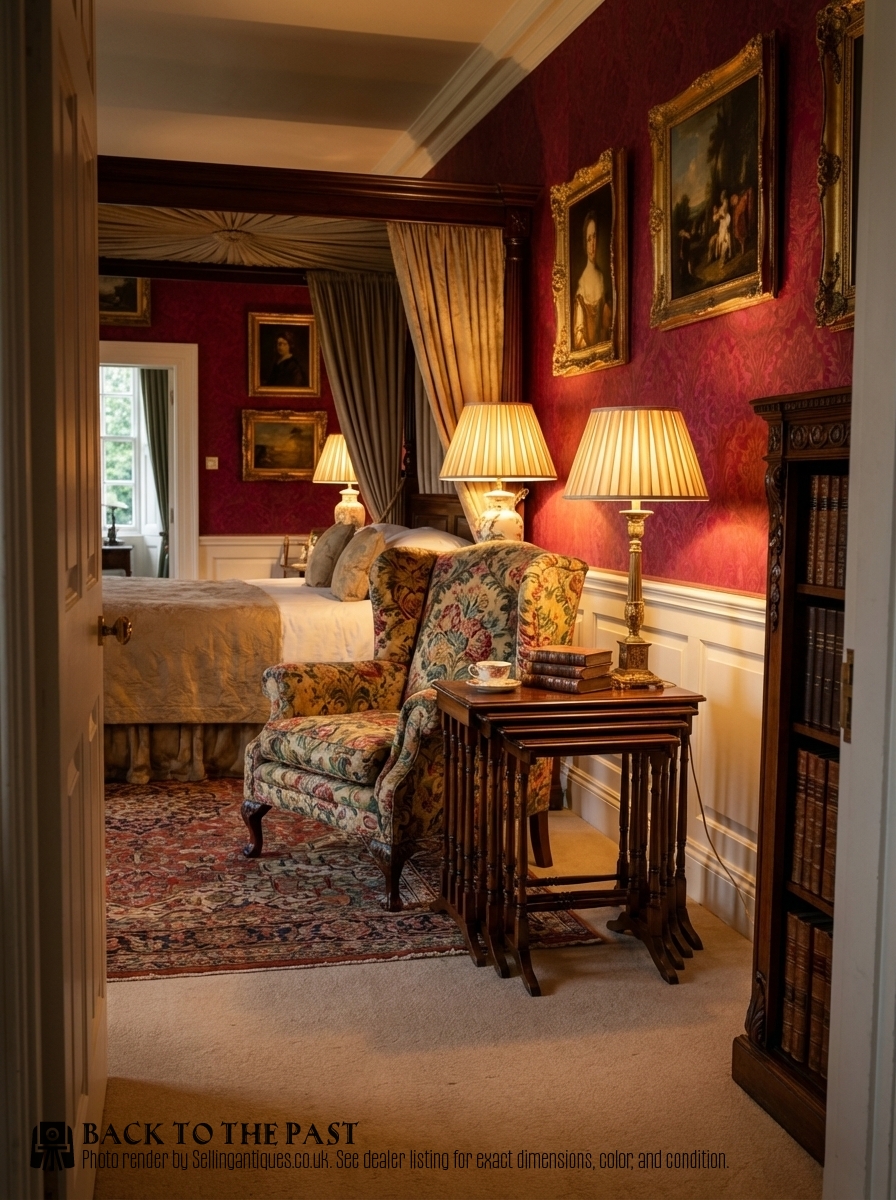
Dark mahogany nesting tables offer a practical tiered surface solution, sliding together to save space while bringing rich timber grain into a room.
Dark Mahogany Nesting Tables
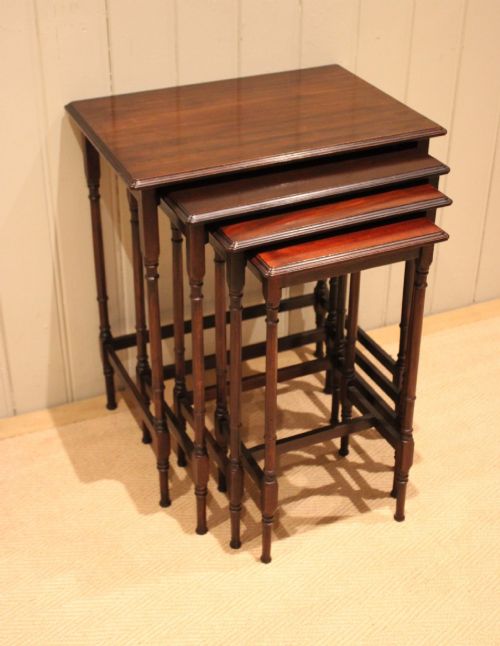
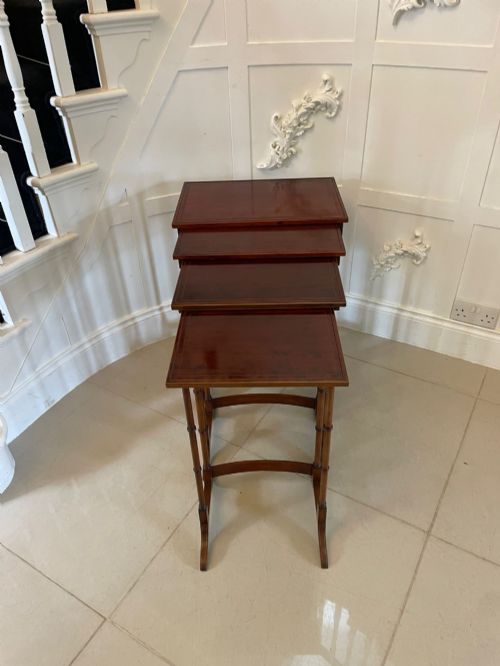
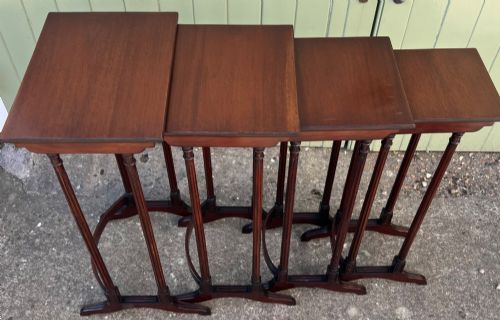
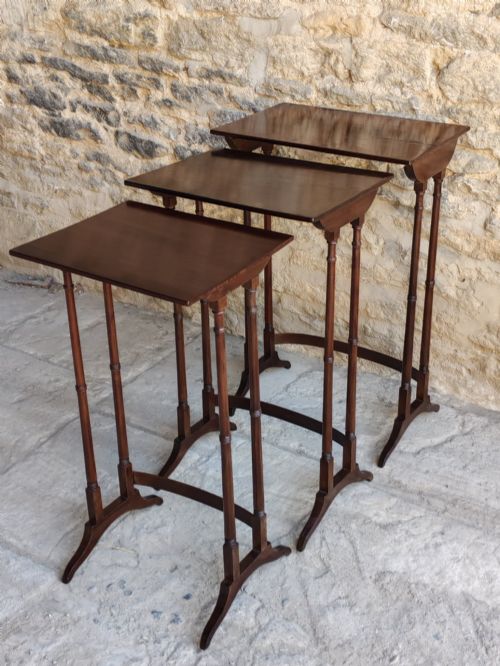
Dark mahogany nesting tables are sets of graduated occasional tables designed to fit neatly beneath one another when not in use. When you search for dark mahogany nesting tables, you encounter multiple variations spanning the Georgian, Victorian, and Edwardian periods, alongside later twentieth-century revivals.
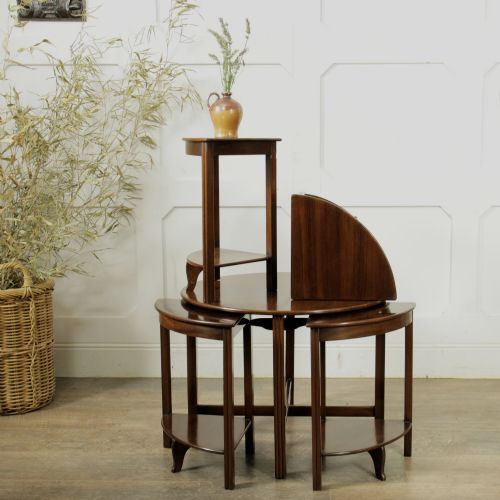
The most common formats on this page include quartetto sets of four tables, alongside sets of three and occasional circular or oval top variations. These pieces originate from workshops operating across the nineteenth and early twentieth centuries, capturing the enduring demand for versatile furniture.
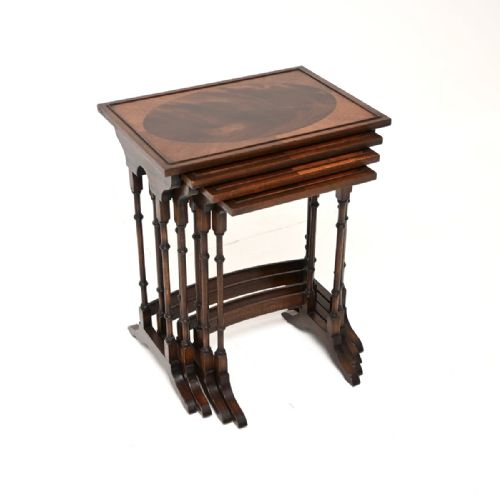
The forms range from plain rectangular surfaces to inlaid Edwardian designs and heavier Victorian timber constructions. Each set serves as a compact surface arrangement suited to daily use in sitting rooms and studies.
What varies in quality
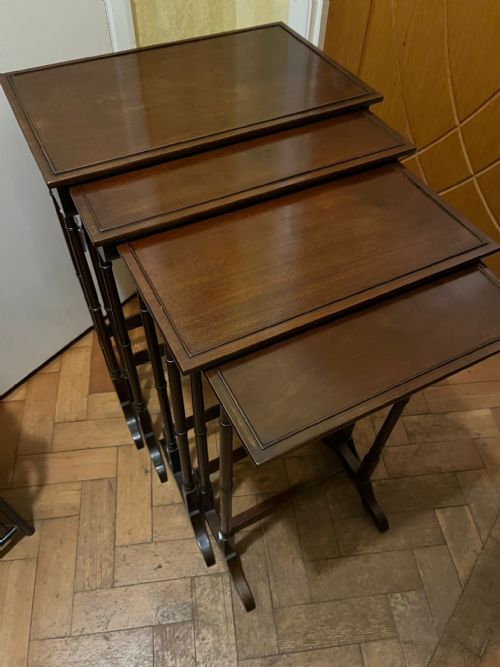
Quality in these sets depends heavily on the selection of timber and the precision of the graduated framing. Superior examples display carefully matched veneer grain across the tabletops and tight, clean joints that allow each table to slide smoothly into position without binding.
Refinement in decorative details separates standard production from finer work. Hand-inlaid stringing, well-turned supports, and subtle mouldings indicate skilled cabinetmaking, whereas simpler sets rely purely on plain timber surfaces and straightforward leg profiles.
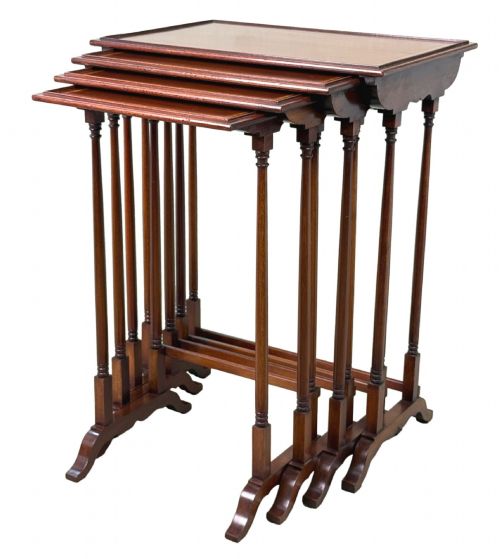
Some Edwardian tables stack into a neat rectangular column that hides four separate surfaces inside the footprint of one.
Waring & Gillow
The Dark Mahogany Nesting Tables Glossary
- Quartetto
- A matched set of four tables designed to nest together. This term appears frequently in nineteenth-century and Edwardian listings.
- Veneer
- A thin layer of figured wood applied over a stable secondary timber base. It allows makers to display decorative grain patterns across table tops.
- Boxwood Inlay
- Contrasting pale wood inserted into recesses in the mahogany surface. This technique creates delicate borders and geometric motifs.
- Satinwood
- A light-colored exotic wood used for contrasting stringing and inlay details. It provides a bright visual accent against dark mahogany.
Dark Mahogany Nesting Tables: Frequently Asked Questions
How do I date a set of nesting tables?
Dating relies on timber characteristics, construction methods, and decorative styles visible across the pieces. Georgian and Victorian examples often show heavier timber proportions, while Edwardian sets frequently feature lighter frames with delicate inlay.
Secondary wood choices and edge profiles also provide clues to the period of manufacture. Comparing the joinery style helps narrow down the decade in which the set was produced.
Are these tables sturdy enough for daily use?
These tables were built for functional entertaining, serving originally for tea or needlework. Their nested design requires lightweight construction, but well-made examples remain stable for holding cups and books.
Care should be taken when sliding the smaller tables in and out to prevent unnecessary wear on the runners. Regular gentle use suits most antique nests provided the joints remain firm.
What is a quartetto set?
A quartetto set consists of four graduated tables designed to slide neatly into one another. This Victorian and Edwardian configuration maximises surface area while occupying the footprint of a single small table.
Each table diminishes slightly in height and width to fit beneath the next largest one. This form became particularly popular in English homes during the late nineteenth century.
How should I care for mahogany surfaces?
Mahogany benefits from occasional application of quality wax polish to maintain the finish and protect the timber. Avoiding direct sunlight prevents the rich reddish-brown colour from fading unevenly.
Using coasters and placemats safeguards the polished top from moisture and heat marks. Gentle dusting with a soft cloth keeps the grain clean and visible.