
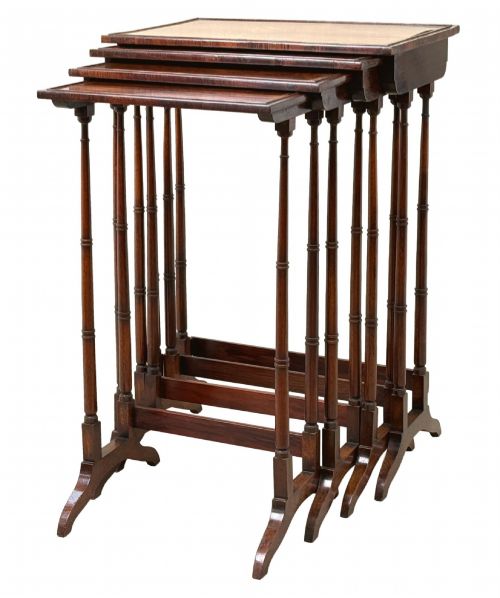
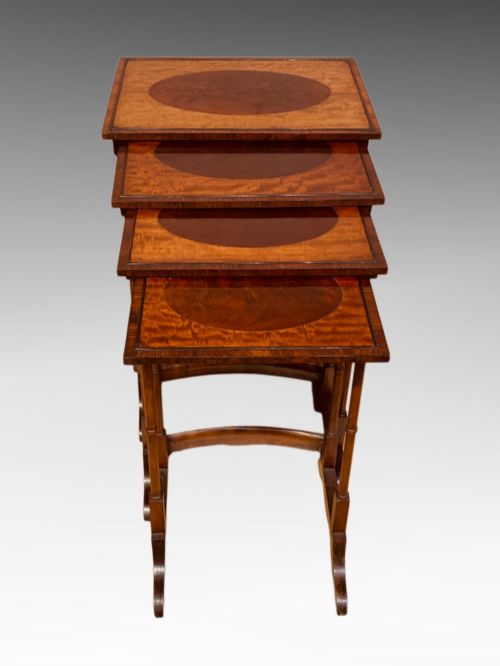

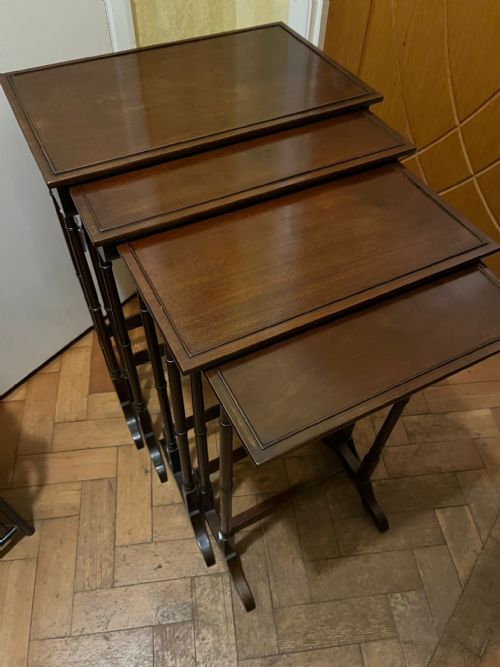


Traditional Nest of Four Tables
These traditional nest of four tables are clever graduating sets designed to tuck away neatly until needed for tea or guests.
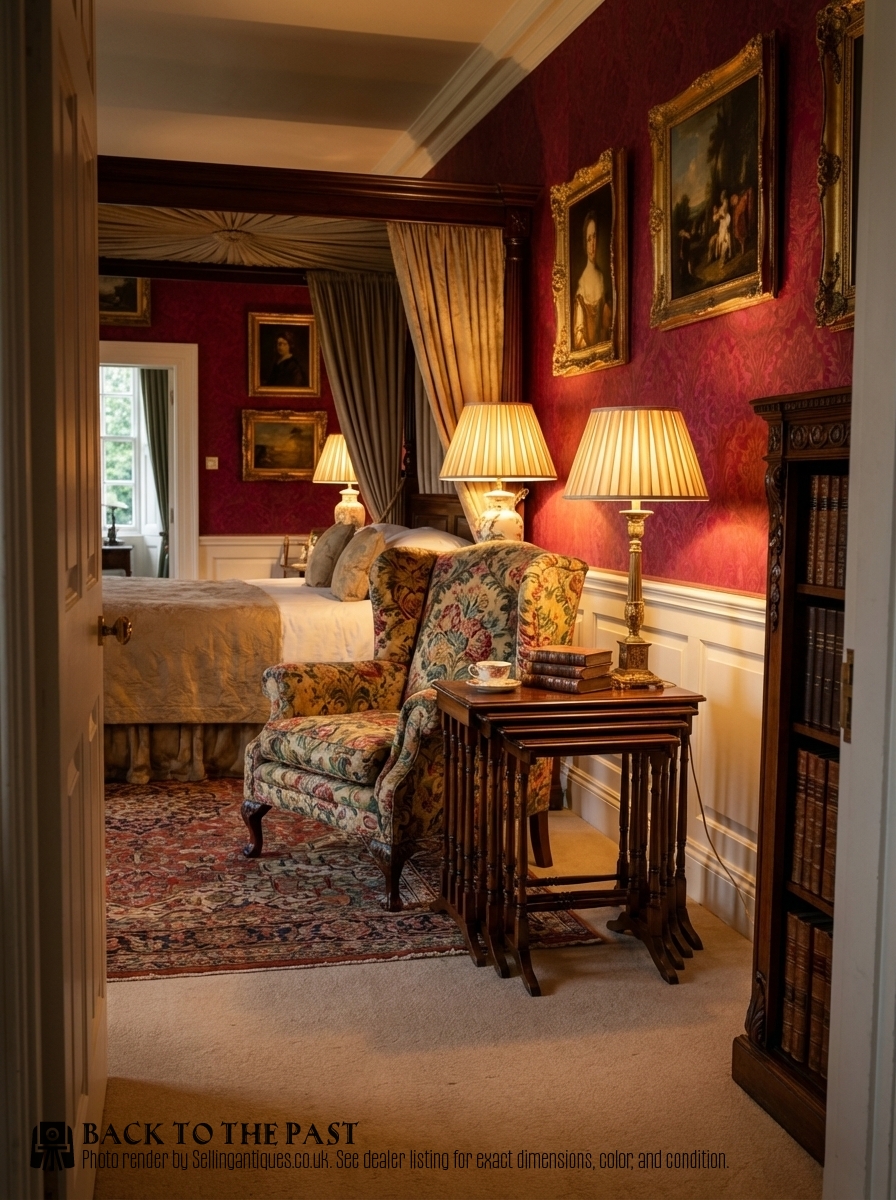
Traditional Nest of Four Tables
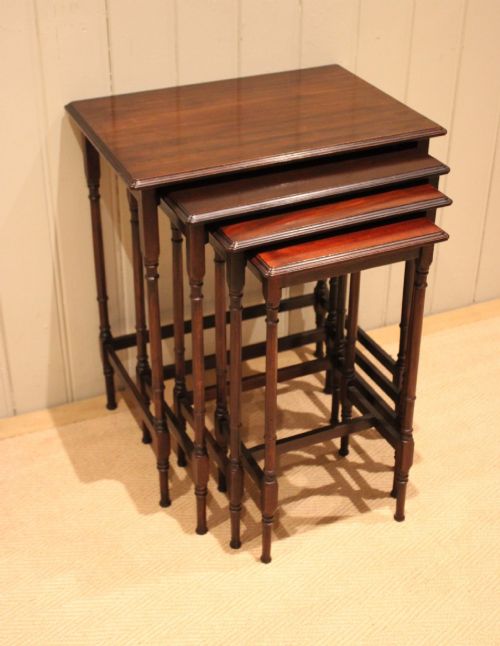
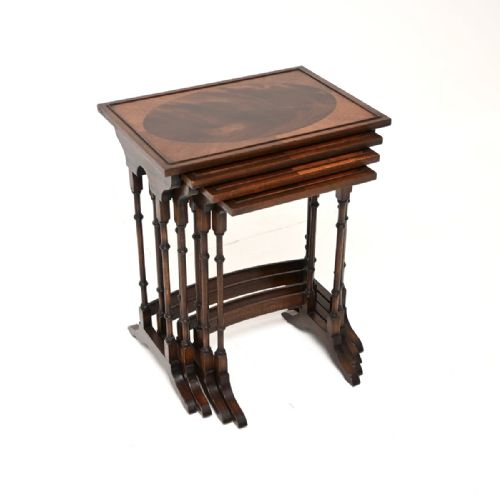
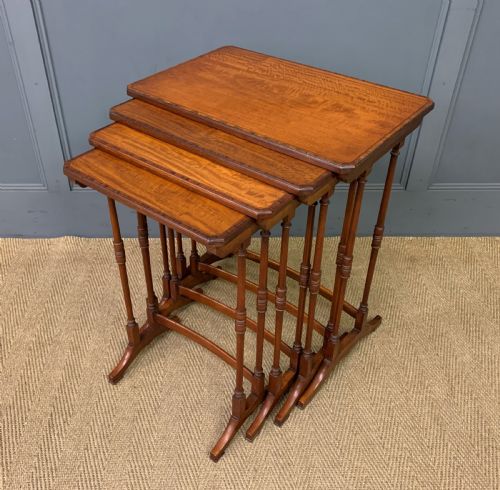
A traditional nest of four tables brings together four graduated pieces that slide one beneath the other to save floor space. Buyers searching this phrase encounter examples ranging from Victorian and Edwardian periods up to the nineteen-thirties.
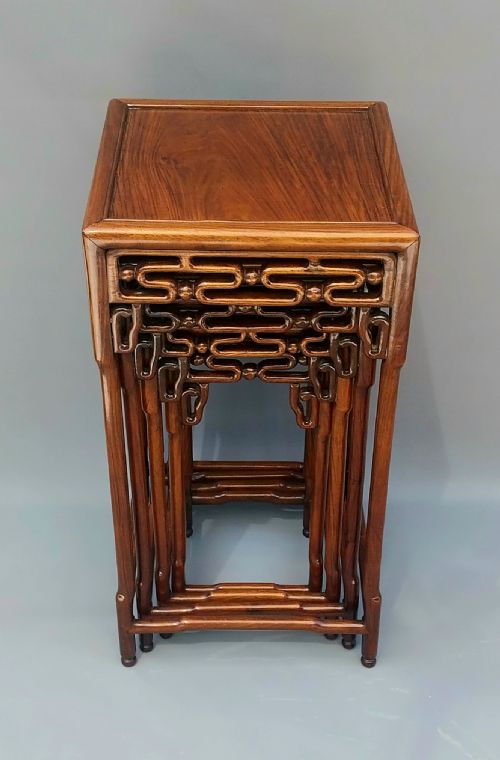
The selection includes English pieces in mahogany, walnut, oak, and satinwood alongside Chinese rosewood and hardwood sets. Most follow classic forms such as the quartetto style or simple rectangular frames.
How they were made
Cabinetmakers constructed these sets using dense timbers like mahogany, walnut, and rosewood, often applying decorative veneers to the top surfaces. Inlaid details in satinwood and subtle stringing frequently accent the borders of the tabletops.
Chinese workshops utilised dense hardwoods such as hongmu, shaping them into interlocking graduated frames. English iterations rely on traditional joinery methods to ensure each smaller table slides smoothly into the one above it.
A set of four graduating tables gives you three spare surfaces to misplace your teacup on.
What varies in quality
The distinction between standard examples and finer pieces lies in the selection of the timber and the crispness of the secondary details. Figured mahogany, rich rosewood, and precise inlay work elevate a set above plain utilitarian versions.
Proportion and structural integrity also dictate the calibre of the piece. Superior sets maintain stability across all four graduating sizes without excessive clearance or wobble in the joints.
The Traditional Nest of Four Tables Glossary
- Quartetto
- A set of four graduating tables designed to fit together. This term appears frequently in nineteenth-century descriptions of nests.
- Graduating
- Refers to tables built in diminishing sizes so each smaller one slides neatly beneath the next. This sizing allows the entire set to occupy the footprint of a single small table.
- Hongmu
- A traditional Chinese term for dense hardwoods, often translated as red wood. It encompasses timbers like rosewood used in oriental furniture.
- Veneer
- A thin layer of figured timber applied over a secondary wood base. This technique displays decorative grain patterns across the tabletop without using solid costly lumber throughout.
- Inlay
- Contrasting woods or materials set flush into the surface to create decorative patterns. Satinwood and lighter stringing are typical examples found on Edwardian and Victorian pieces.
Traditional Nest of Four Tables: Frequently Asked Questions
How were nests of four tables originally used?
These sets served domestic entertaining by providing extra surfaces for tea, writing, or small items that could be pulled out as guests arrived.
Once the gathering finished, the smaller tables stacked back into the largest frame to clear the room.
Can I use them as coffee tables?
Most traditional sets sit lower than standard dining furniture, making them suitable for placing beside a sofa or chair.
Separating the four pieces also allows them to function as individual side tables around a room.
How do I tell Victorian sets from later ones?
Victorian and nineteenth-century examples often feature deeper mahogany tones and heavier construction. Edwardian and nineteen-twenties pieces frequently incorporate lighter satinwood inlay and more slender frames.
Are Chinese and English nests constructed differently?
Chinese sets often utilise dense rosewood or oriental hardwoods with distinct joinery traditions. English versions typically draw on mahogany, walnut, or oak within Victorian or Edwardian stylistic frameworks.