

Wooden Coffee Tables
Wooden coffee tables bring warmth and utility to a sitting room, ranging from Edwardian mahogany tray stands to rustic pine farmhouse designs.
Wooden Coffee Tables
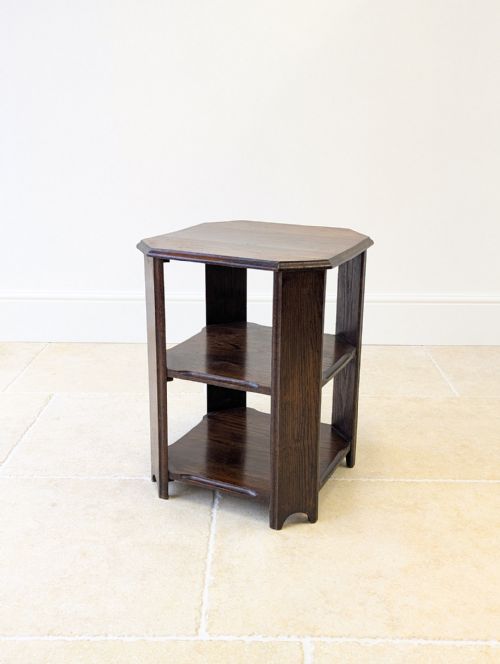
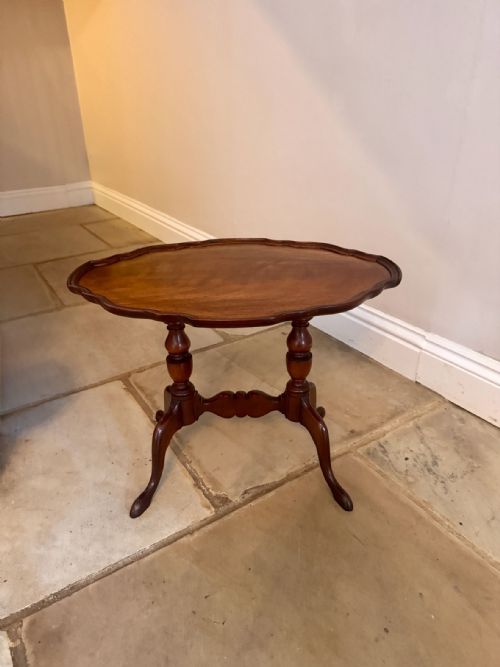
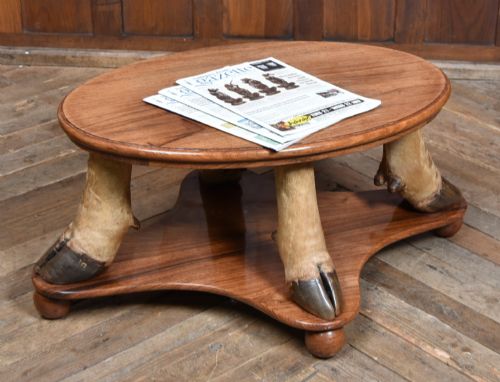
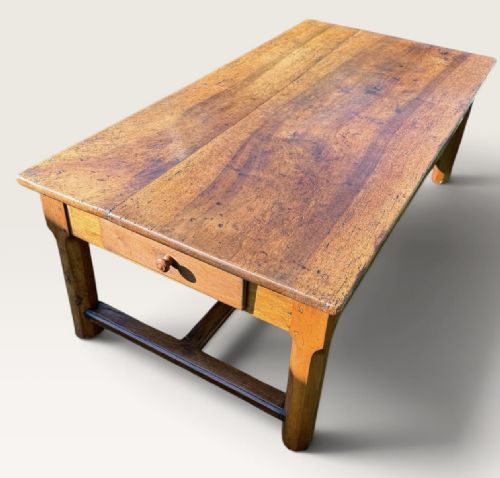
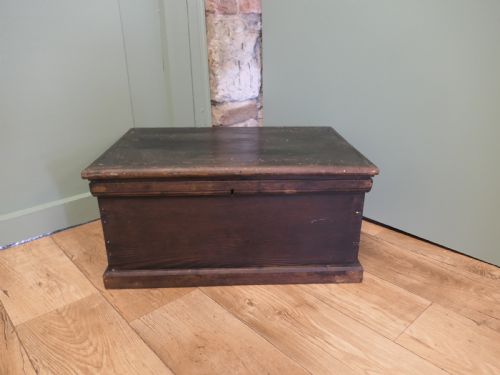
Wooden coffee tables encompass a wide variety of low tables and adapted storage pieces designed for living spaces. When you search for wooden coffee tables, you encounter low forms derived from nineteenth-century side tables, occasional tables, nests of tables, and converted campaign trunks or butlers trays.
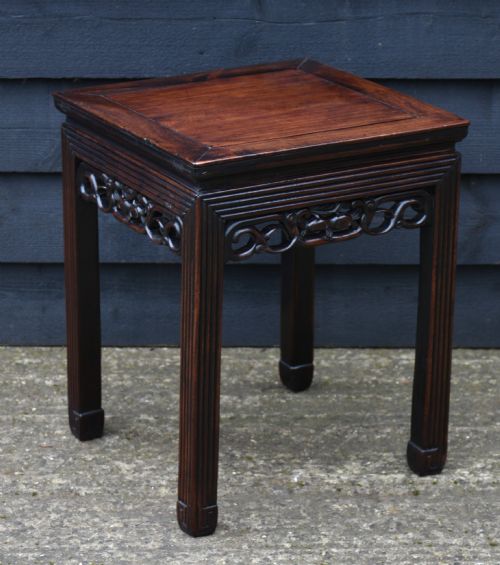
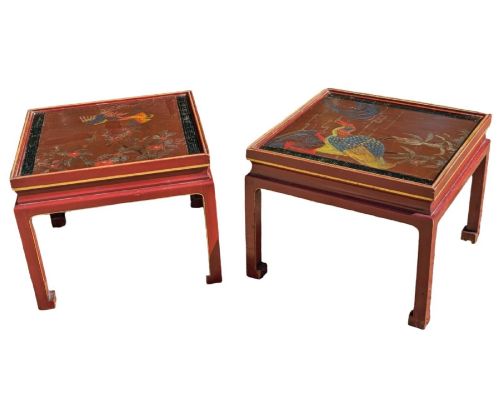
Regional variations appear regularly, from French parquetry and oak Normandy designs to Anglo-Indian, Chinese rosewood, and Kashmiri walnut low tables. Many items function centrally in a room, while nests of tables and folding tray stands offer flexible surface space.
How they were made
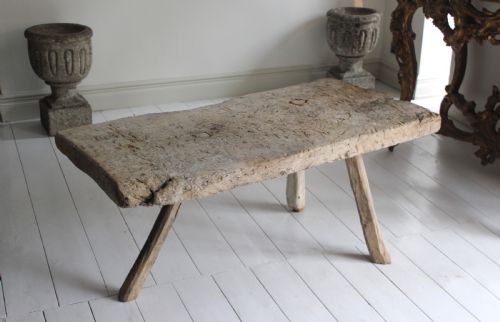
Cabinetmakers utilised solid hardwoods like mahogany, oak, walnut, and teak alongside softer timbers such as pine and camphor wood. Construction often involved traditional joinery, turned legs, and sturdy frames designed to support everyday use.
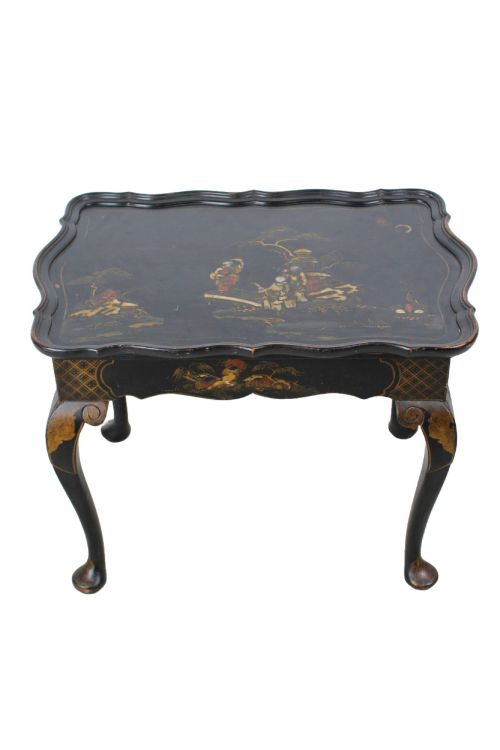
Surface ornamentation included intricate parquetry, marquetry, brass bound edges, copper insets, and lacquer work. Butler's trays utilised hinged drop-flaps paired with folding wooden stands, while campaign pieces incorporated brass corners and flush carrying handles.
Wooden Coffee Tables Retail Price Guide 2026
Typical asking prices for wooden coffee tables among the pieces listed under this phrase on Sellingantiques today, from the lower quarter to the upper quarter. They describe what is for sale here now, not the wider market.
Several tables began life as travelling luggage or tea trays before finding permanent retirement beside a modern sofa.
What varies in quality
Quality rests in the selection of timber and the precision of the joinery and inlay work. Finely figured mahogany or walnut veneers and detailed marquetry distinguish superior examples from simpler utilitarian pine or oak boards.
The integrity of original brass hardware, folding mechanisms, and structural framing dictates the standard of execution. Pieces retaining their original finish and authentic period characteristics hold greater integrity than heavily altered items.
The Wooden Coffee Tables Glossary
- Butler's tray
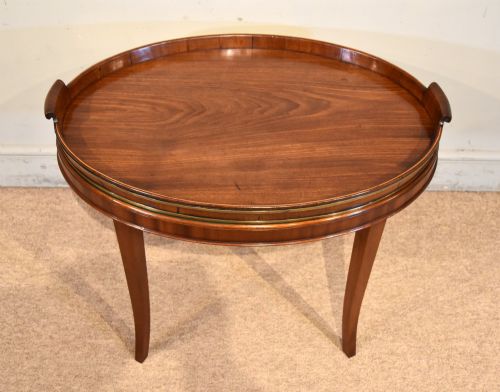
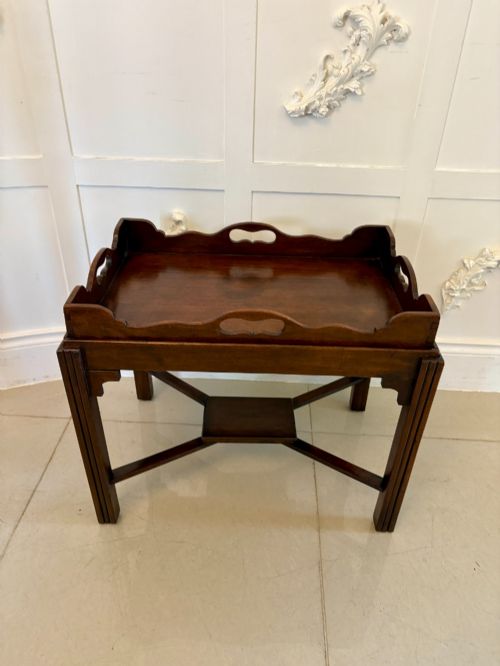
- A removable wooden tray with hinged sides, designed to sit upon a folding X-frame stand for serving. These pieces convert readily into low tables.
- Campaign trunk
- A portable storage chest constructed from camphor wood, pine, or teak, fitted with brass corners and recessed handles for transport. They frequently serve as low coffee tables today.
- Parquetry
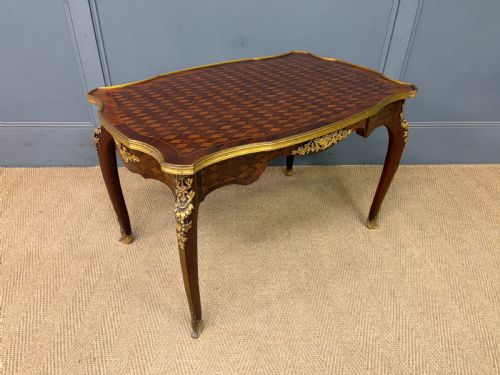
- Geometric wood mosaic work used for decorative tabletops, creating patterns from contrasting timbers. French examples utilise this technique extensively.
- Nest of tables
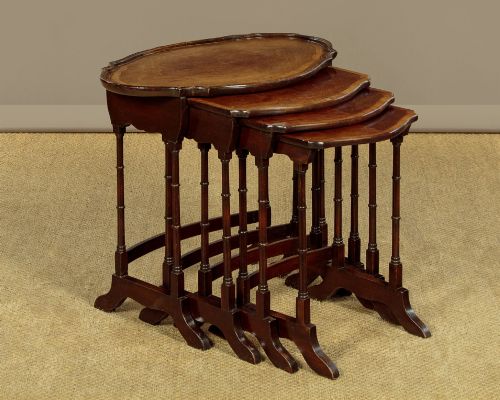
- A set of graduated tables designed to slide neatly beneath one another when not in use. They appear in oak, mahogany, and low quartetto formats.
- Occasional table
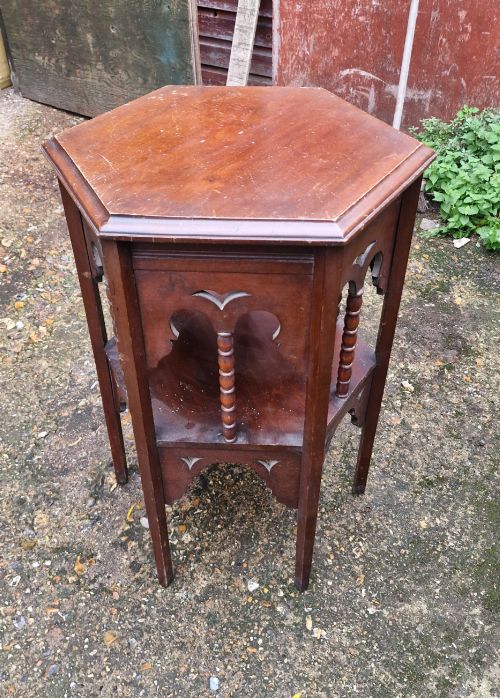
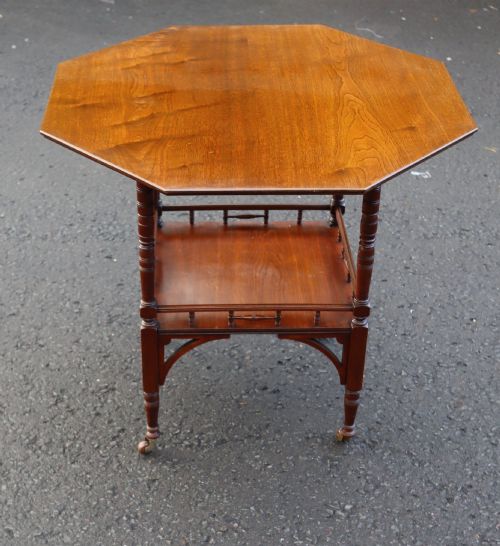
- A small, versatile table intended for light use around a principal room. They occur in circular, oval, and octagonal configurations.
Wooden Coffee Tables: Frequently Asked Questions
How do I choose a wooden coffee table?
Consider the scale of your seating area and the primary function you require, whether for display, serving, or general surface space. Different periods and regional styles offer distinct aesthetic weights, from dark mahogany to pale pine.
Examine the timber and construction methods to ensure the piece suits your household usage. Height and footprint are vital measurements to check against your existing furniture layout.
What woods were used for these tables?
Cabinetmakers employed a diverse selection of timbers depending on the origin and period of the piece. Hardwoods such as mahogany, oak, walnut, teak, and rosewood provide formal character and durability.
Softer or aromatic woods like pine, camphor, and cedar appear in utilitarian or travel pieces. Exotic accents include Kashmiri walnut and Chinese lacquer finishes.
Are butler's tray tables stable?
Butler's tray tables utilise a folding wooden stand that supports the removable tray top securely via fitted ledges or crossbars. The design is engineered for firm placement during serving.
While the tray lifts off easily for cleaning or storage, the assembled stand remains balanced for daily placement in a sitting room.