
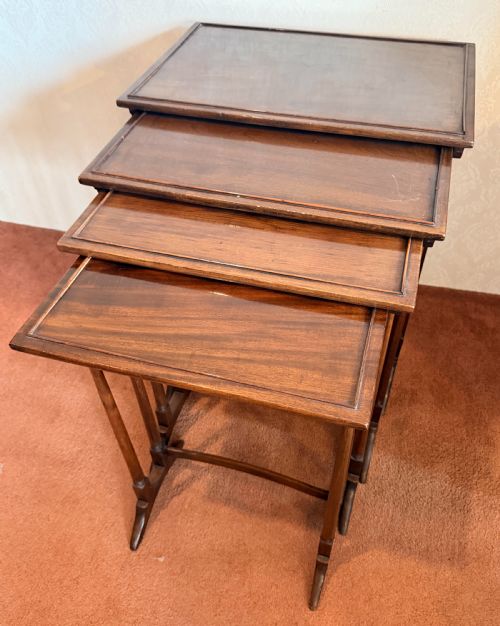
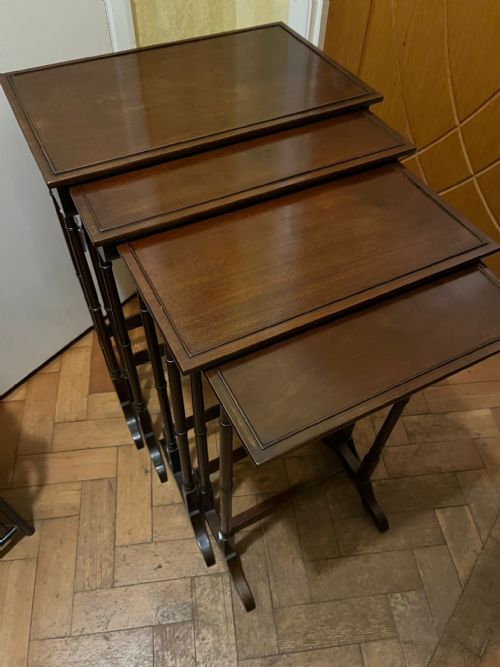


Nest of Four Mahogany Tables
A nest of four mahogany tables brings descending tiers of timber surface into a room without claiming space.
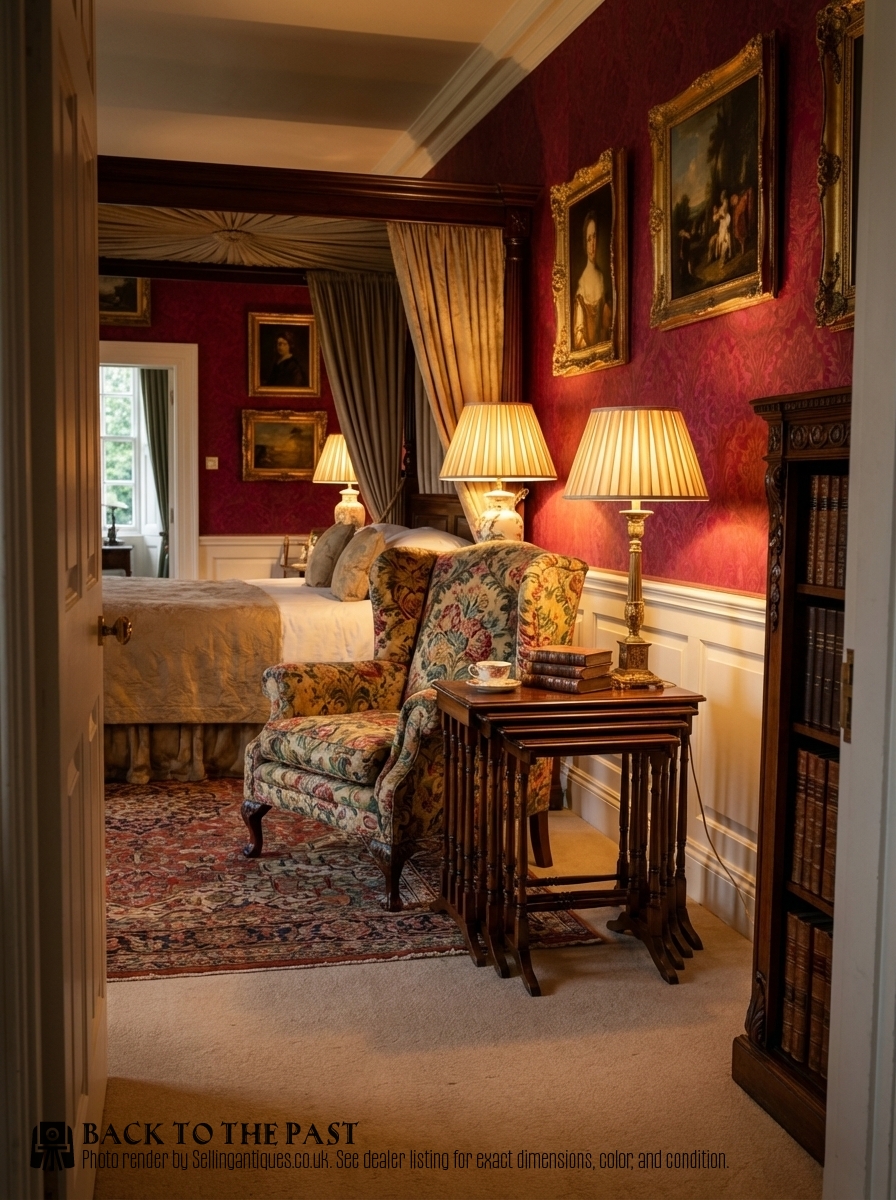
Nest of Four Mahogany Tables
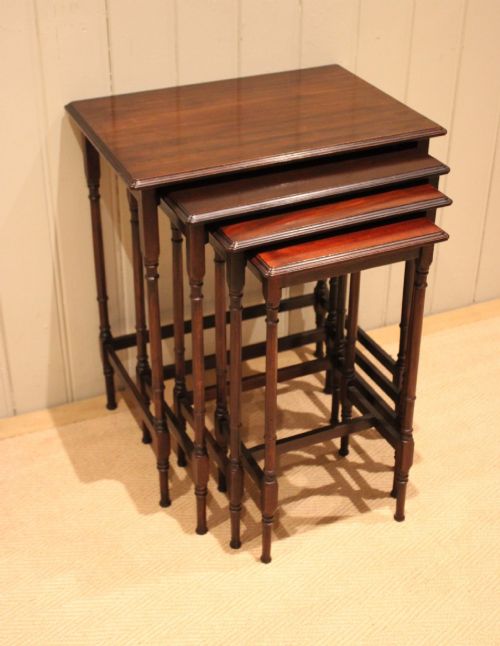
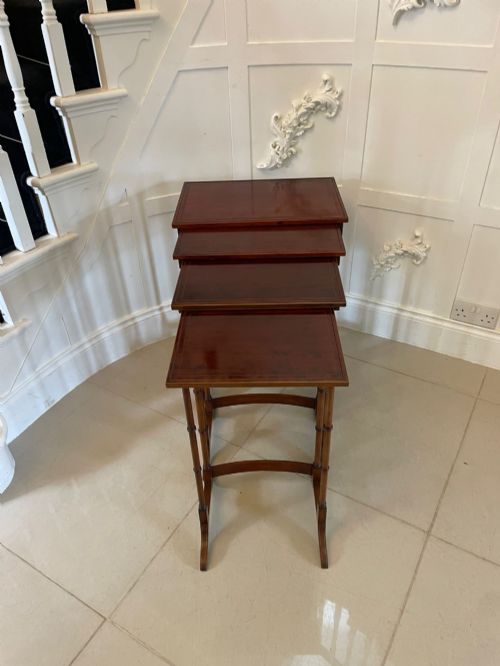
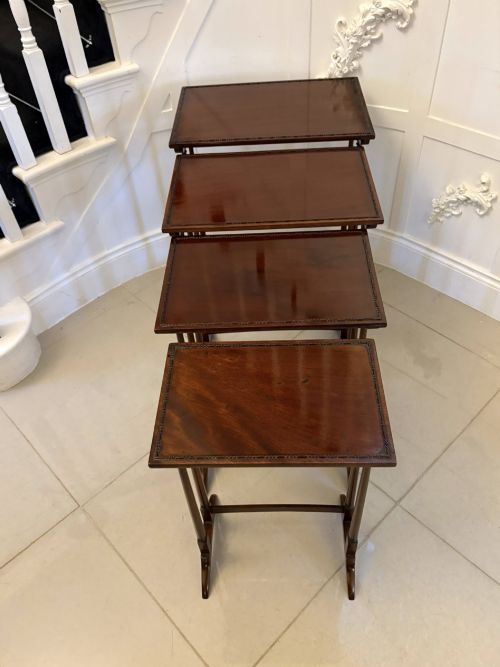
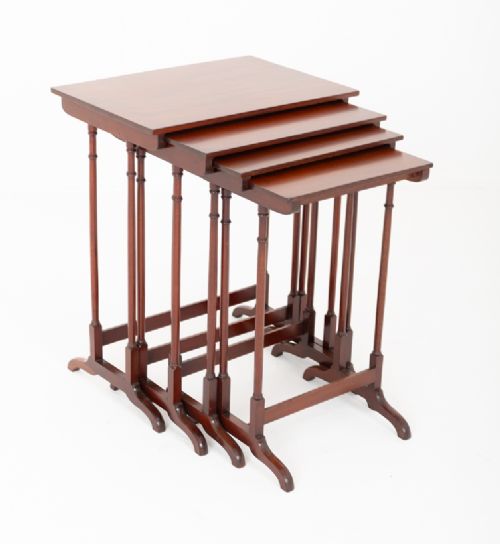
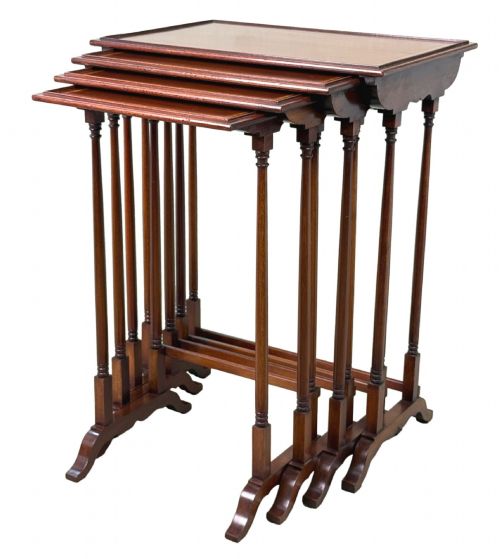
A nest of four mahogany tables comprises a graduating set of four occasional tables designed to slide neatly beneath one another when not in use. The form appears most frequently from the Edwardian period and the nineteenth century, often designated under the older term quartetto.
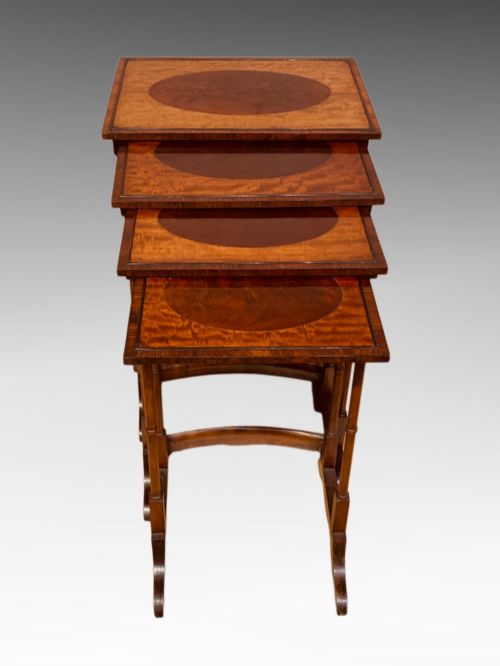
The pieces serve flexibly as side, coffee, wine, or lamp tables, pulling out individually to provide multiple surfaces around a room. Edwardian examples often feature delicate inlay, whilst nineteenth-century and Victorian pieces lean towards solid figured timber.
Buyers seeking a nest of four mahogany tables encounter variations ranging from plain vernacular sets to refined Sheraton Revival interpretations with cross-banding and tapered legs.
How they were made
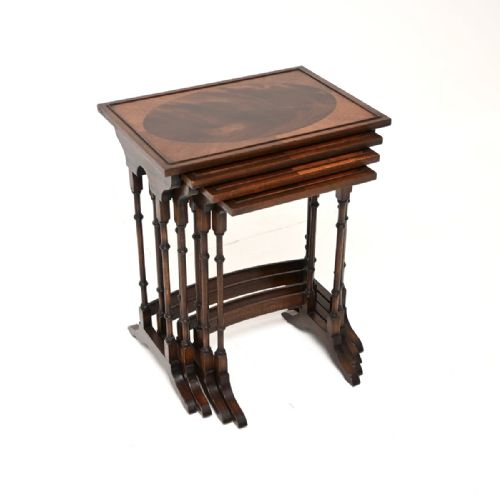
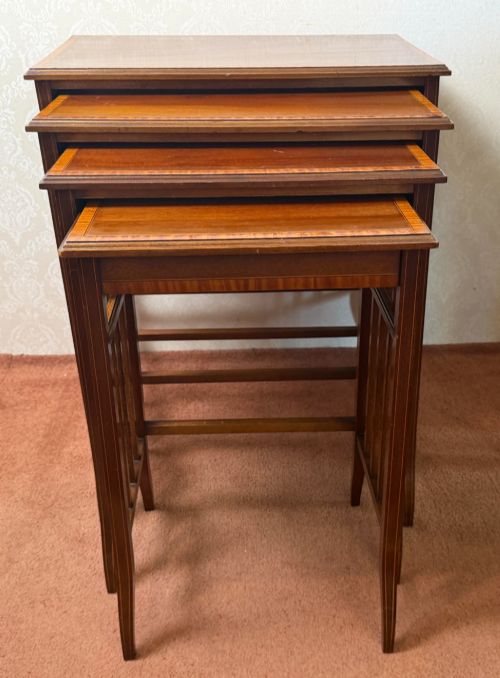
Cabinet makers constructed these tables primarily from mahogany, frequently utilising veneer over secondary woods for the table tops to display figured grain patterns. Satinwood, boxwood, and ebony formed contrasting stringing and geometric inlays.
Construction relies on slender turned or square tapered legs that allow each smaller table to clear the frame of the one above it. Joints such as mortise and tenon secure the small proportions without adding unnecessary weight.
Listings span the nineteenth century through the 1930s, with Edwardian examples appearing most frequently alongside Victorian and Regency revival pieces.
What varies in quality
The distinction between standard and superior sets rests on the selection of the timber and the precision of the graduated sizing. Figured mahogany grain and crisp boxwood or satinwood inlay denote higher workshop standards.
Stability under load and smoothness of the nesting action separate fine examples from simpler utilitarian versions. Tables that slide effortlessly into place without binding demonstrate careful initial joinery.
The Nest of Four Mahogany Tables Glossary
- Quartetto
- A nineteenth-century term for a set of four nesting tables designed to stack together. The word derives from Italian musical terminology.
- Cross banding
- A border of veneer laid with the grain running perpendicular to the main panel. This technique frames the top of the table.
- Stringing
- Thin lines of contrasting wood inlaid into channels in the mahogany surface. Boxwood and ebony commonly provide this linear detail.
- Tapered legs
- Legs that narrow gradually towards the foot. This shape lightens the visual weight of the furniture.
Nest of Four Mahogany Tables: Frequently Asked Questions
What is a quartetto table set?
A quartetto set is simply a nineteenth-century name for a nest of four tables. These pieces stack inside one another to save floor space.
Cabinet makers designed them so that each table descends in height and width. This allows the smallest table to slide into the base of the largest.
How were these tables used originally?
Victorian and Edwardian households deployed these tables for serving tea, holding lamps, or placing books near seating. Servants or hosts could pull them out independently as guests required extra surfaces.
When tea was finished, the tables returned to their stacked formation against a wall or beside a chair. This kept rooms uncluttered while maintaining functionality.
How do I date an Edwardian set?
Edwardian nests typically date between 1900 and 1910, often showing Sheraton Revival influence through satinwood inlay and boxwood stringing. The timber tends to have a lighter reddish-brown tone than earlier Georgian pieces.
Construction methods also help, as machine-sawn veneers and lighter framing timbers became standard during this era. Makers frequently focused on decorative refinement rather than heavy structural mass.
Do the tables fit tightly together?
Properly proportioned nests slide smoothly into one another with minimal clearance between the legs and the underside of the top. Each tier steps down precisely in height and width.
If tables stick or wobble during stacking, it often indicates past repairs or humidity warping of the slender mahogany frames.