



Vintage Stacking Tables
Vintage stacking tables pack four surfaces into the footprint of one, offering clever adaptability without crowding a room.
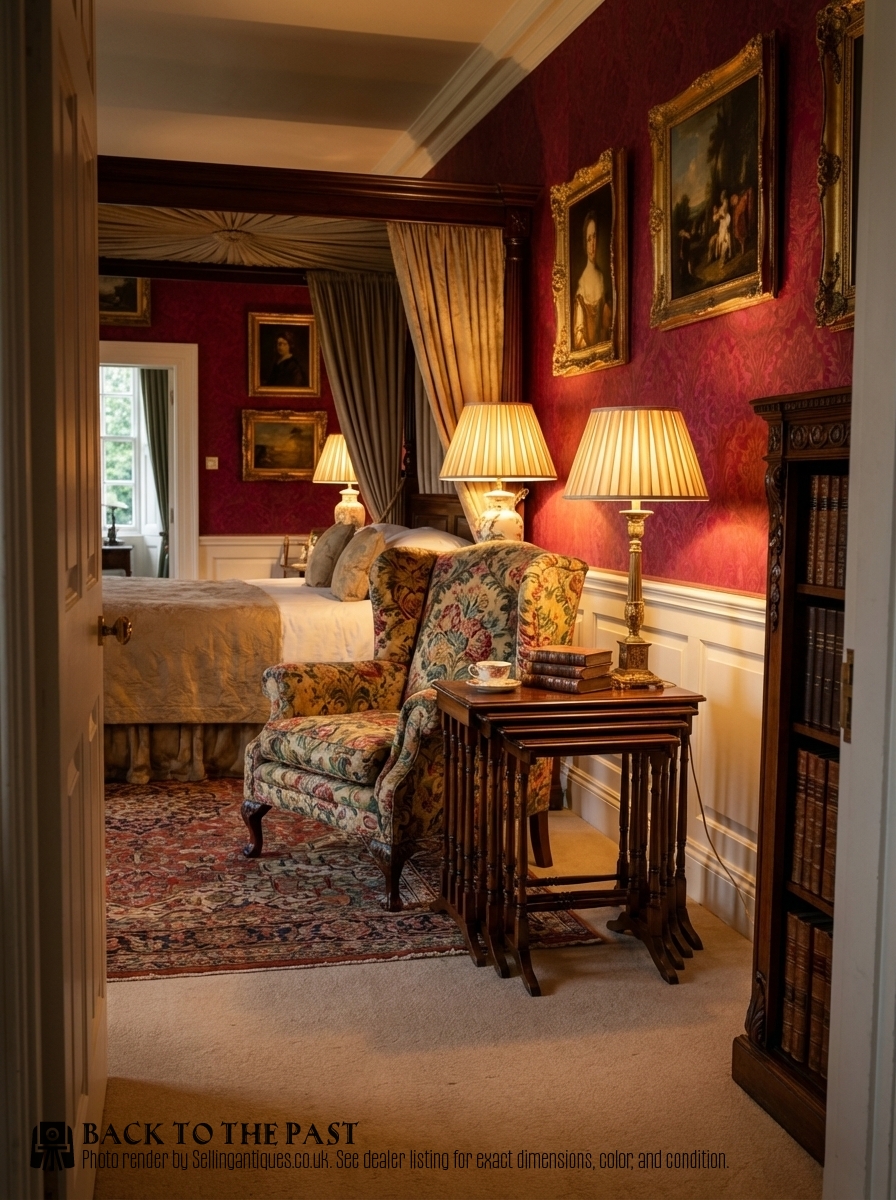
Vintage Stacking Tables
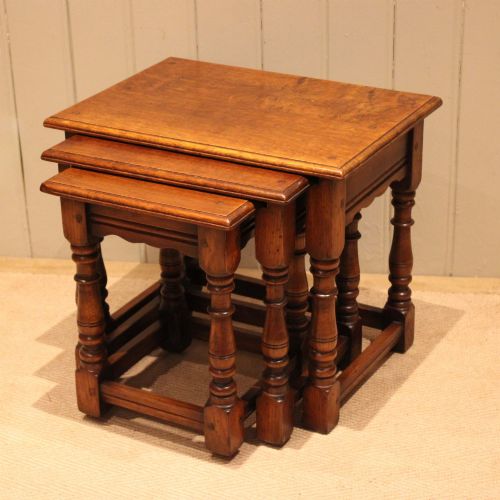
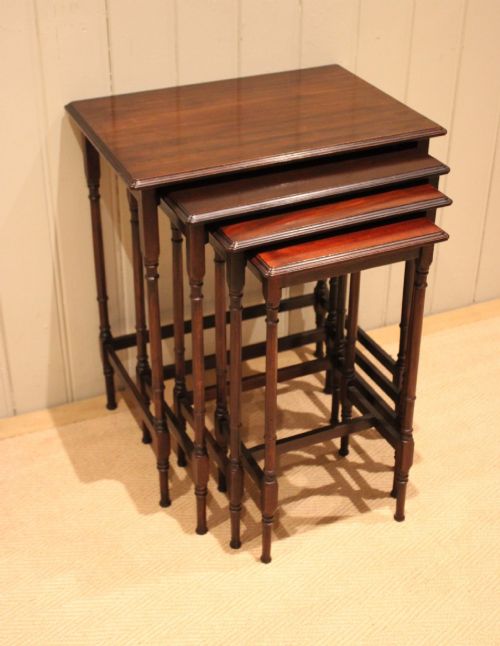
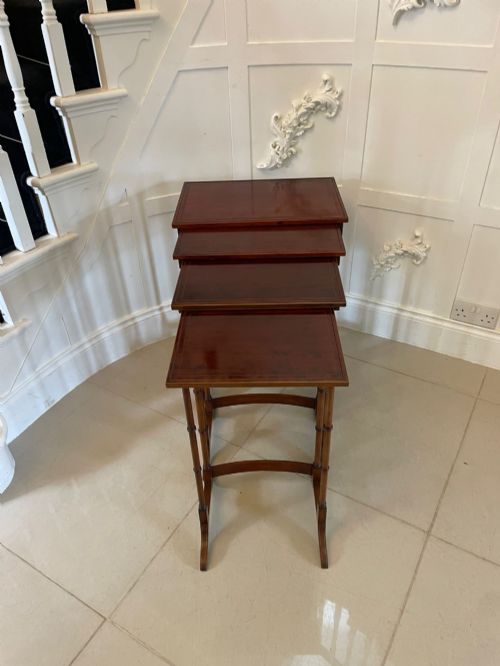
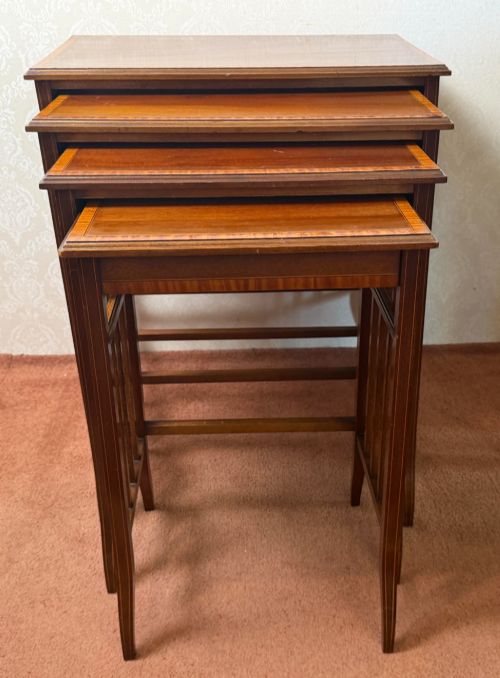
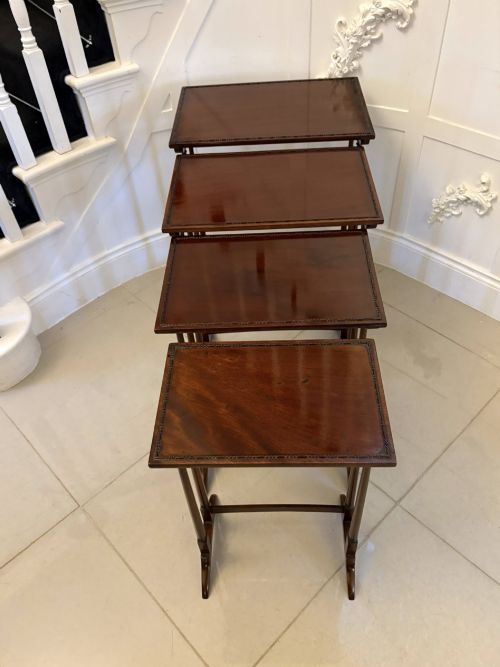
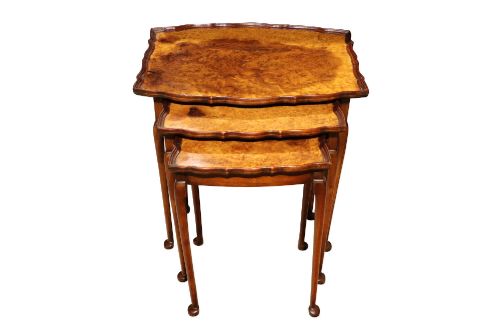
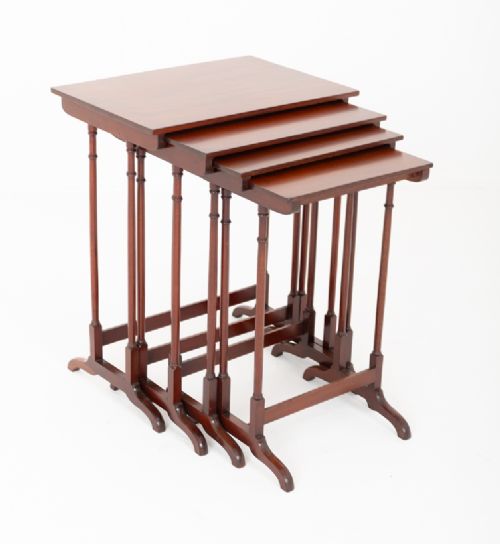
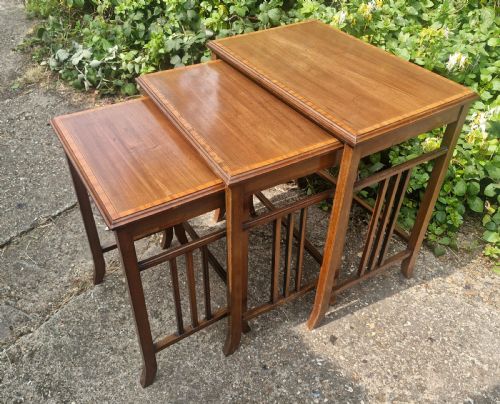
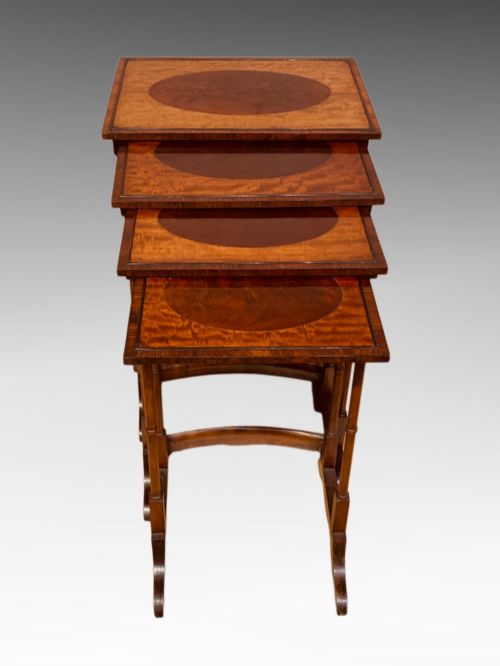
Vintage stacking tables, commonly catalogued as nests of tables, group multiple small surfaces that slide neatly beneath one another when not in use. You encounter Edwardian mahogany quartetto sets most frequently here, alongside walnut, oak, and rosewood iterations.
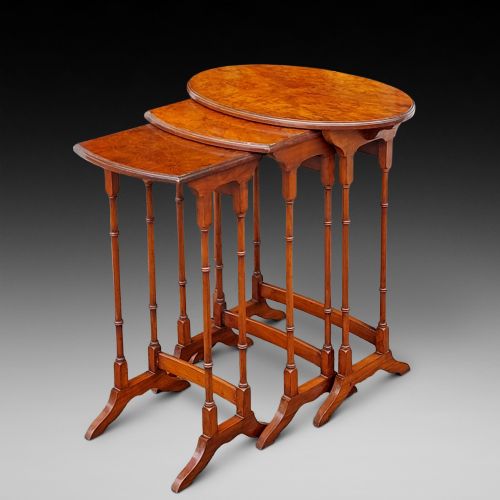
The form spans various configurations, from sets of three or four graduating tables to circular designs and oval tops. Makers adapted these nests for occasional entertaining or compact daily living across the nineteenth and twentieth centuries.
Origin influences appearance significantly, with English Edwardian examples sitting alongside French marquetry pieces, Chinoiserie lacquered surfaces, and Art Deco Indian rosewood creations.
Materials and construction
Cabinet makers utilised dense hardwoods such as mahogany, walnut, and oak for structural integrity, frequently applying burr walnut or satinwood veneers for decorative grain patterns. These timbers formed the primary framework of the sliding frames and table tops.
Surface embellishment involved intricate techniques including cross banding, floral marquetry, brass inlays, and embossed leather panels. Artisans also employed hand carving and Chinoiserie lacquering to achieve distinct stylistic finishes.
Vintage Stacking Tables Retail Price Guide 2026
Typical asking prices for vintage stacking tables among the pieces listed under this phrase on Sellingantiques today, from the lower quarter to the upper quarter. They describe what is for sale here now, not the wider market.
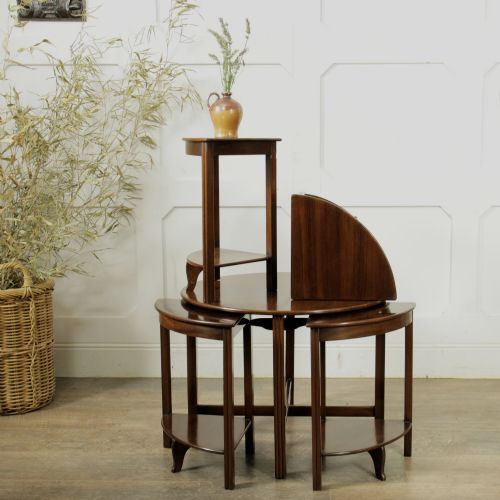
One unexpected set brings five circular mahogany tables together in a single tumbling cascade.
Evaluating craftsmanship
Superior examples demonstrate precision in the graduation of the frames, ensuring each smaller table slides smoothly and locks flush within the next without binding or excessive gap. The timber selection dictates the visual depth, with matched burr veneers and fine satinwood inlay marking higher tiers of production.
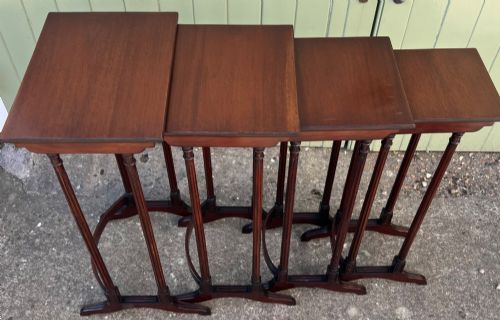
Refinement in leg joinery and support structure separates standard output from exceptional work, particularly in quartetto sets where four slender tables must maintain rigid stability.
Émile Gallé·Heal's
The Vintage Stacking Tables Glossary
- Quartetto
- A set of four graduating tables designed to stack inside one another. This term appears frequently in Edwardian and nineteenth-century cabinet work descriptions.
- Cross banding
- A decorative border of veneer laid perpendicular to the grain of the main surface. It frames table tops to create a defined visual edge.
- Marquetry
- The art of applying pieces of veneer to a structure to form decorative patterns or pictures. French walnut examples often display floral variations of this technique.
- Chinoiserie
- European imitation of Chinese and East Asian artistic traditions. Pieces decorated in this manner feature distinctive lacquered finishes and motifs.
- Satinwood
- A durable, lustrous yellowish timber native to India and Sri Lanka. It serves primarily for banding and inlay work on mahogany furniture.
Vintage Stacking Tables: Frequently Asked Questions
What is a quartetto nest?
A quartetto nest consists specifically of four tables that scale down in size to stack together. The term derives from Italian origins and surfaces regularly in Edwardian furniture classifications.
These sets offer maximum surface utility while occupying minimal floor space when nested.
How do I date a nesting set?
Dating relies on timber choices, inlay styles, and structural forms visible in the legs and aprons. Edwardian pieces often show delicate satinwood stringing on mahogany, while Art Deco examples display cleaner lines in Indian rosewood.
Period markers also appear in the hardware and the specific method of veneer application.
Where were these tables used?
Historically, nests of tables served drawing rooms and parlours for holding tea, books, or writing materials during social calls. Their portability allowed hosts to deploy extra surfaces instantly.
Today, they function equally well beside modern seating as modular side tables.
Are French and English sets different?
French examples often incorporate parquetry, floral marquetry, or brass inlay on walnut and rosewood. English variants lean heavily towards Edwardian mahogany with subtle stringing or oak construction.
Both traditions prioritise space-saving design but execute the decorative elements distinctly.