


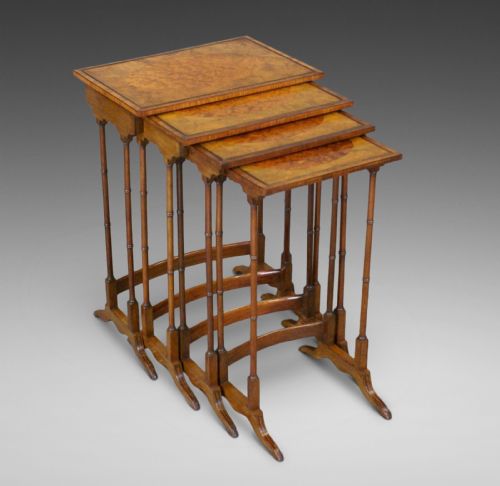

Burr Walnut Nesting Tables
Burr walnut nesting tables bring richly figured grain and practical tiered surfaces into a room, offering adaptable space without clutter.
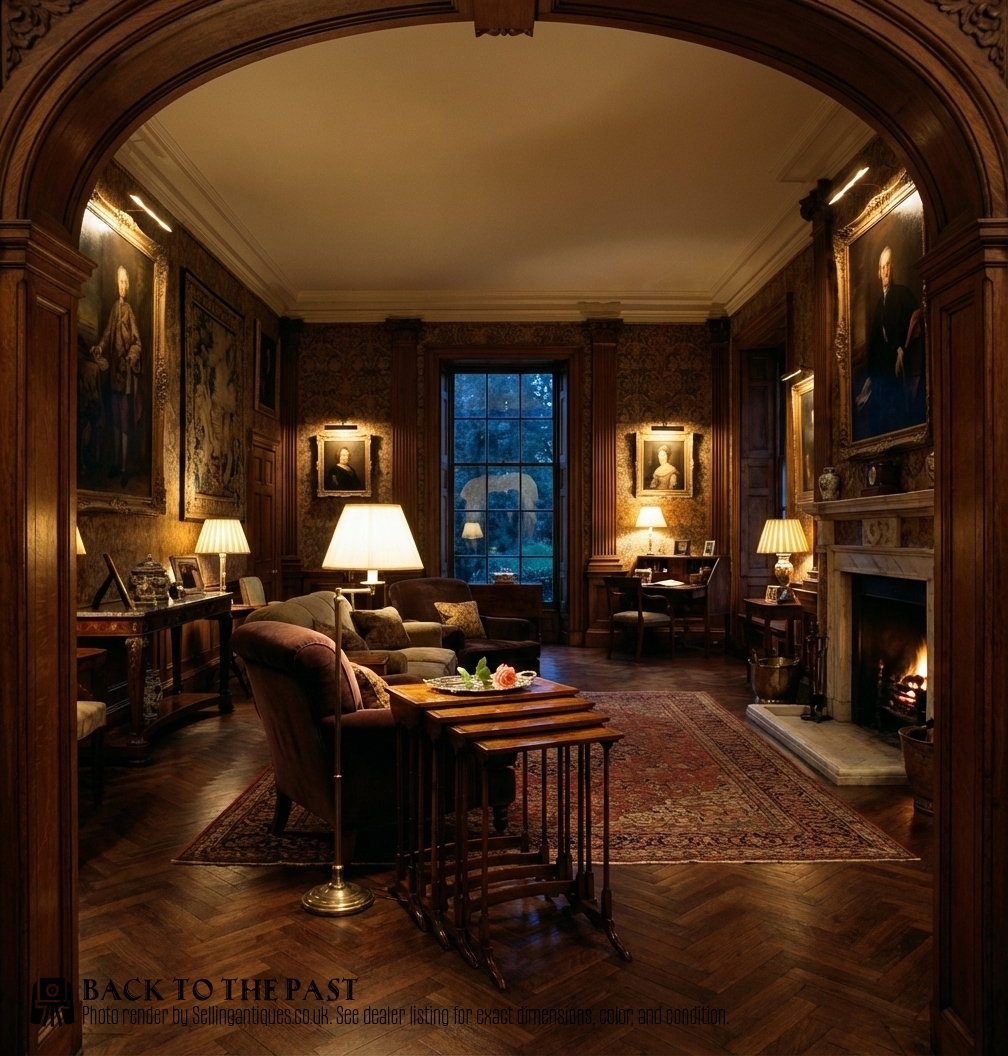
Burr Walnut Nesting Tables
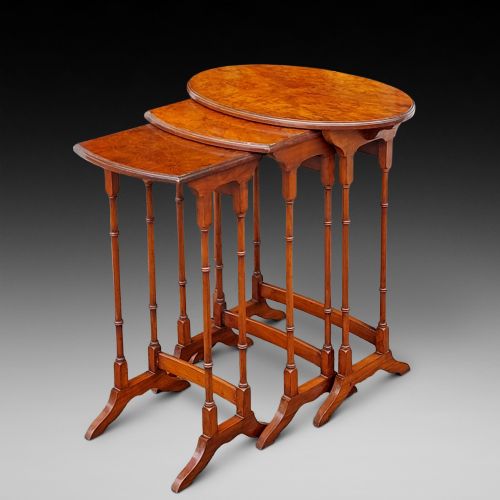
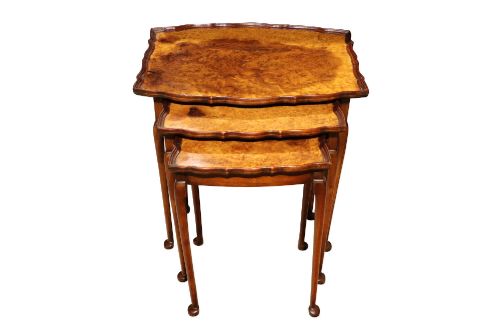
When you search for burr walnut nesting tables, you encounter sets of graduated tables designed to slide neatly beneath one another when not in use. These pieces appear primarily in Edwardian, Art Deco, and Queen Anne Revival styles, alongside Victorian examples.
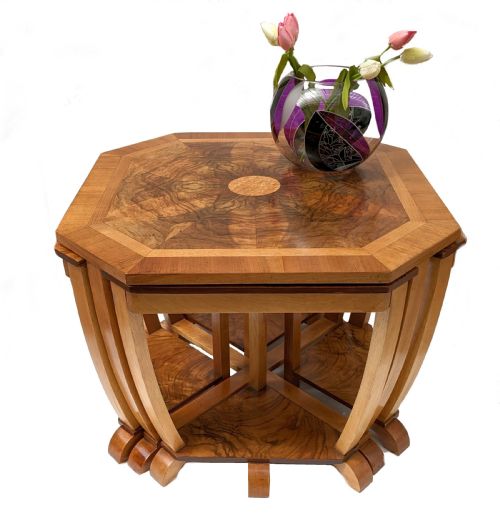
The selection ranges from traditional three-piece trios to larger Art Deco nests containing four or five tables. Most examples on this page utilise walnut, mahogany, or teak frameworks finished with distinctive burr walnut veneer tops.
How they were made
Cabinet makers produced these sets using solid hardwoods like mahogany and walnut for the structural frames and legs. Skilled artisans applied thin slices of burr walnut veneer to the table tops to highlight the intricate, swirling patterns of the wood grain.
The construction relied on traditional joinery to ensure each smaller table glides smoothly into the recess of the one above it. French polishing or similar traditional finishes were applied to protect the delicate veneer and deepen the natural colour of the timber.
Art Deco makers packed up to five tables into a single stack so tightly that guests often suspected witchcraft before finding the handle.
What varies in quality
Quality rests principally in the selection and matching of the burr walnut veneer across the graduated surfaces. Finer sets display harmonious, highly figured grain patterns that align thoughtfully from the largest top down to the smallest.
Construction robustness also distinguishes standard examples from exceptional ones, particularly in the stability of the leg joints and the precision of the under-tier clearances. Superior pieces maintain crisp proportions and retain their original warm finish without heavy restoration.
Harry and Lou Epstein
The Burr Walnut Nesting Tables Glossary
- Burr walnut
- A thin slice of wood taken from a growth deformation on a walnut tree, highly prized for its swirling, organic pattern. This figure forms the decorative surface on the top of each table.
- Quartetto
- A matched set of four small tables designed to nest together. This term appears frequently in Edwardian and late nineteenth-century pieces.
- Quintetto
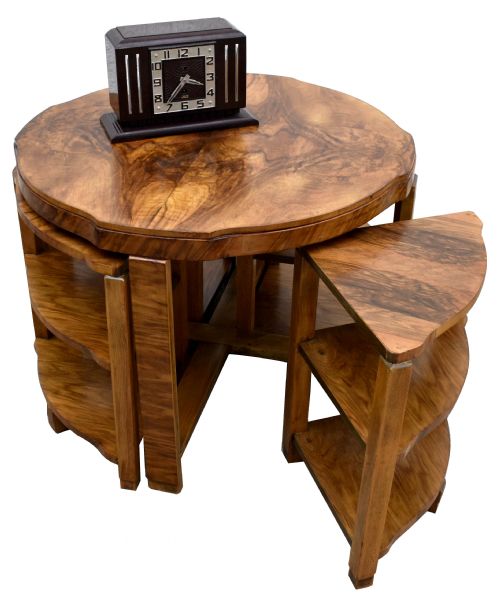
- A set of five tables designed to nest within a single footprint. These larger nests are characteristic of the Art Deco period represented in the archive.
- Veneer
- A thin layer of superior wood glued to a secondary hardwood base. It allows makers to display striking grain patterns economically.
- Edwardian
- A stylistic period spanning the reign of King Edward VII, noted for lighter furniture designs and revived historical influences.
Burr Walnut Nesting Tables: Frequently Asked Questions
How are nesting tables best used in a room?
These tables provide versatile surface space that expands when you entertain and contracts when you require open floor area. You can separate the tiers around a seating arrangement to hold drinks or books.
When the gathering ends, simply slide the tables back into a single compact stack. This efficient design suits both drawing rooms and compact living spaces.
How do I distinguish Art Deco nests from Edwardian ones?
Art Deco nests, often dating from the nineteen-thirties, favour geometric forms, streamlined silhouettes, and larger sets of four or five tables. Makers like Harry and Lou Epstein defined this streamlined aesthetic.
Edwardian examples typically feature lighter proportions, slender cabriole or turned legs, and sets of three or four tables. They lean towards traditional revival styles rather than modernist geometry.
Why do some sets contain five tables?
Larger nests, particularly those from the Art Deco era, often comprise a primary large table accompanied by four smaller subsidiary tables. This arrangement maximised utility while retaining a compact storage footprint.
Such sets required precise carpentry to ensure the graduation allowed all five pieces to fit together harmoniously. They represent a more ambitious undertaking than the standard trio.