



Art Deco Low Circular Table
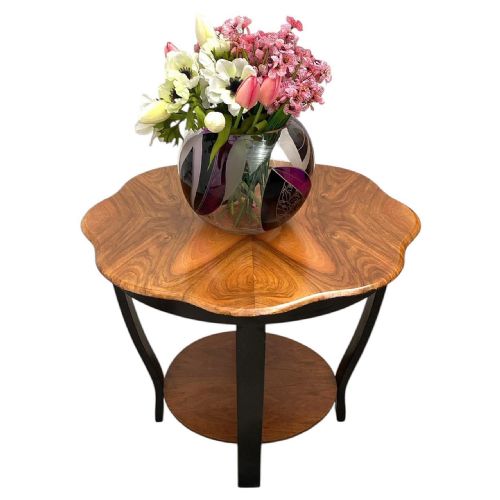
An art deco low circular table brings distinct geometry and rich woods to a room, offering both surface space and period character.
Art Deco Low Circular Table
An art deco low circular table is a compact surface designed for living spaces, usually taking the form of a coffee table or occasional table. These pieces date primarily from the 1920s and 1930s, reflecting the streamlined aesthetics of the period.
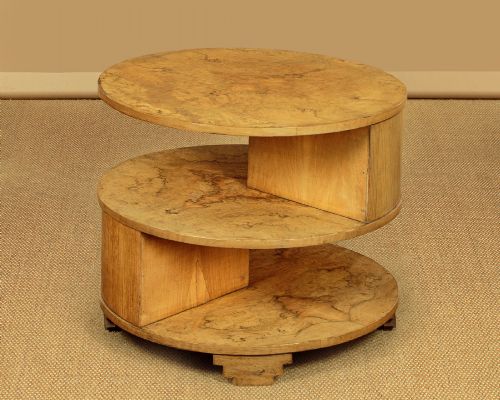
The most common versions encountered here feature warm timbers and circular tops, occasionally arranged as tiered designs or multi-part nests. English and Scandinavian origins predominate among the surviving examples.
Makers of the era utilised distinct regional styles, ranging from English walnut coffee tables to Swedish Grace interpretations in birch and elm. Buyers find both simple occasional tables and larger statement pieces scaled for modern rooms.
How they were made
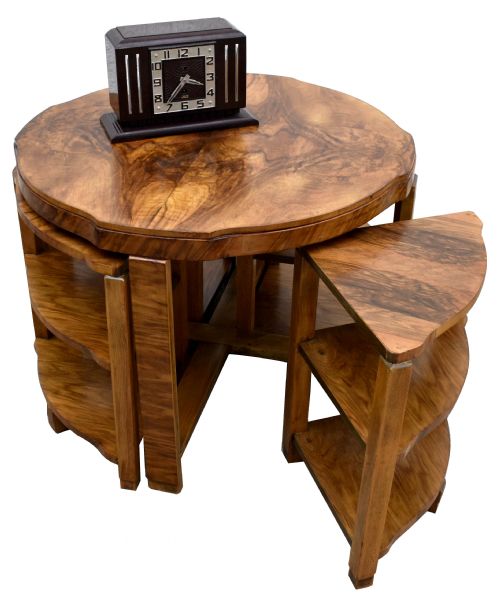
Cabinetmakers constructed these tables using solid woods and complex veneers over timber bases. Walnut, burr walnut, and figured walnut appear frequently, selected for their prominent grain patterns.
Workshops also employed oak, birch veneer, and satin birch to achieve lighter tones or specific textural effects. Skilled joinery combined these materials into stable circular frames, low tiers, and nested configurations.
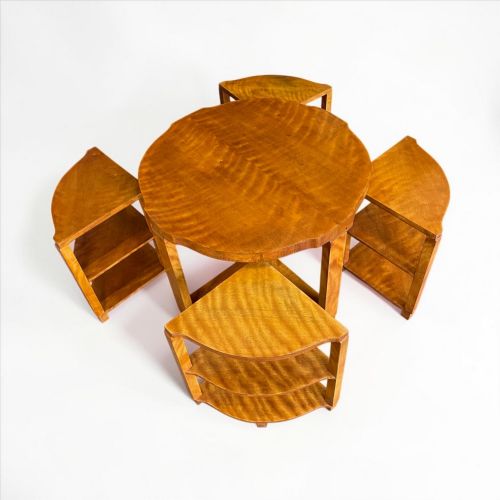
Some sets manage to tuck five separate tables into a single footprint, proving that interwar designers understood the eternal struggle for living room space.
What varies in quality
The sophistication of the timber selection determines the visual impact of each table. Highly figured veneers and carefully matched burr walnut distinguish the finer examples from plain oak or standard timber constructions.
Design complexity also separates pieces, with multi-tiered structures, nested sets, and carved Swedish elements representing more ambitious cabinetmaking than simple single-tier occasional tables.
The Art Deco Low Circular Table Glossary
- Burr Walnut
- A decorative wood cut from walnut tree growths, yielding intricate, swirling grain patterns. This material was highly favoured for tabletops during the interwar period.
- Veneer
- A thin layer of superior wood applied over a secondary timber base. This technique allowed makers to display dramatic grain figures across wide circular surfaces.
- Swedish Grace
- A sophisticated architectural and design style bridging neoclassical restraint and early modernism. It appears in Scandinavian pieces featuring refined carving and pale timbers.
- Quintetto
- A specific form of nested table set containing five pieces arranged together. These compact units maximise surface area while maintaining a small footprint.
Art Deco Low Circular Table: Frequently Asked Questions
What is an art deco low circular table used for?
These tables function primarily as coffee tables or occasional surfaces in sitting rooms. Their low height and circular shape make them suitable for placing drinks, books, or decorative objects.
They also serve as sculptural focal points in an interior, displaying the distinctive grain of walnut or birch veneers.
How do I date an art deco low circular table?
Dating relies on stylistic markers and material choices typical of the interwar decades. Most examples on record originate from the nineteen-twenties and nineteen-thirties.
Construction methods and regional traits, such as Swedish Grace carving or English walnut veneering, help narrow the period of manufacture.
Are these tables usually made of solid wood?
Many tables combine solid timber frames with decorative wood veneers applied to the top surfaces. Walnut, burr walnut, and birch veneers allowed makers to showcase striking grain figures.
Other examples utilise solid oak or blonde oak throughout, reflecting different regional preferences of the era.
What is a nest of tables?
A nest comprises multiple smaller tables designed to fit neatly underneath one another when not in use. Some period sets contain up to five graduating pieces.
This format provides flexible surface space in compact living areas without permanently cluttering the room.