
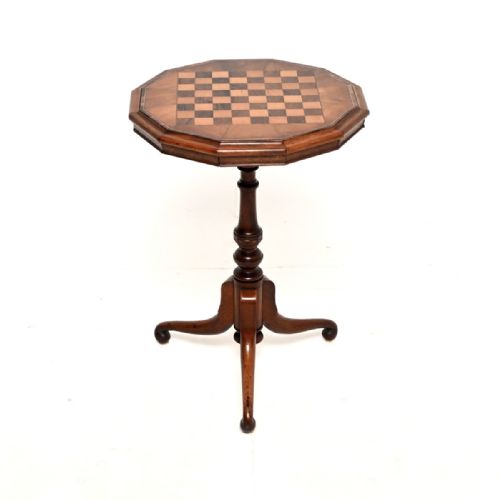


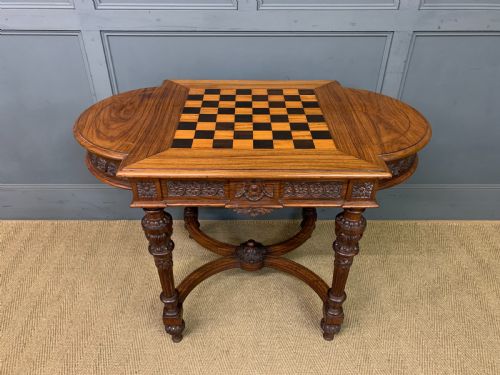


Inlaid Chess Board Table
An inlaid chess board table brings a functional playing surface into a sitting room, combining fine cabinet work with parlour entertainment across the centuries.
Inlaid Chess Board Table
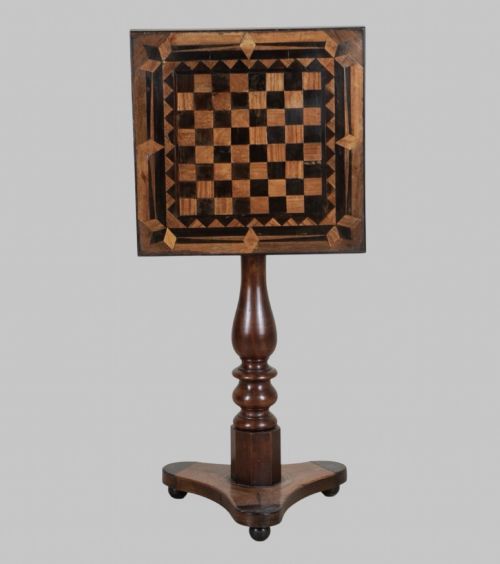
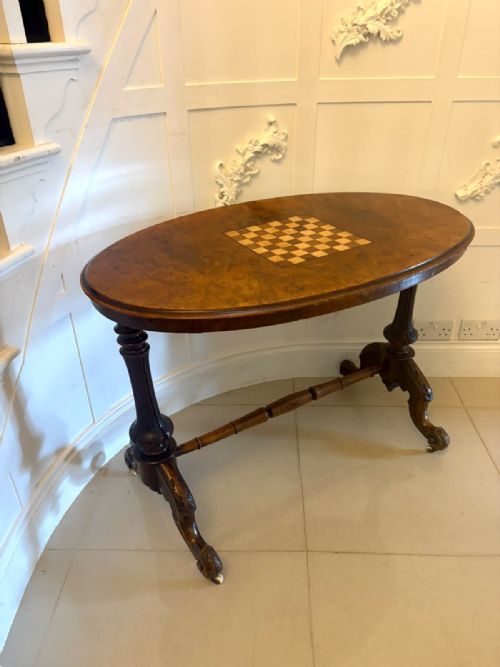
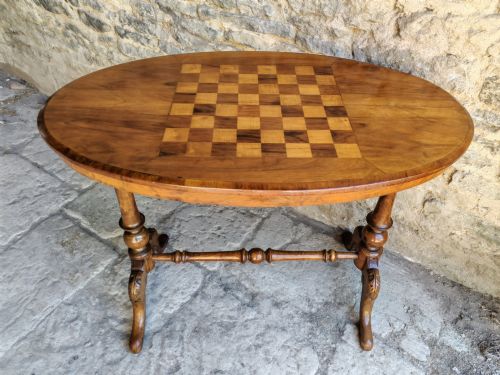
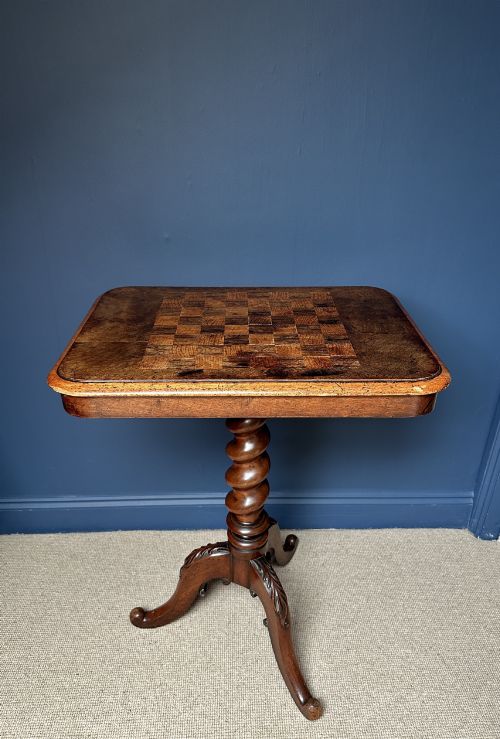
An inlaid chess board table serves as both a functional writing or occasional surface and a dedicated board for play. These pieces cross several eras, appearing in Georgian, Regency, and Victorian formats.
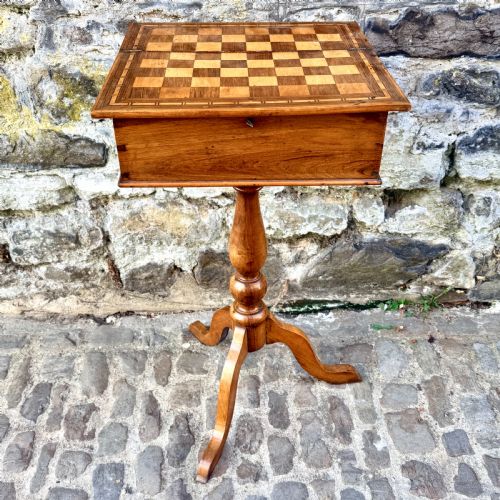
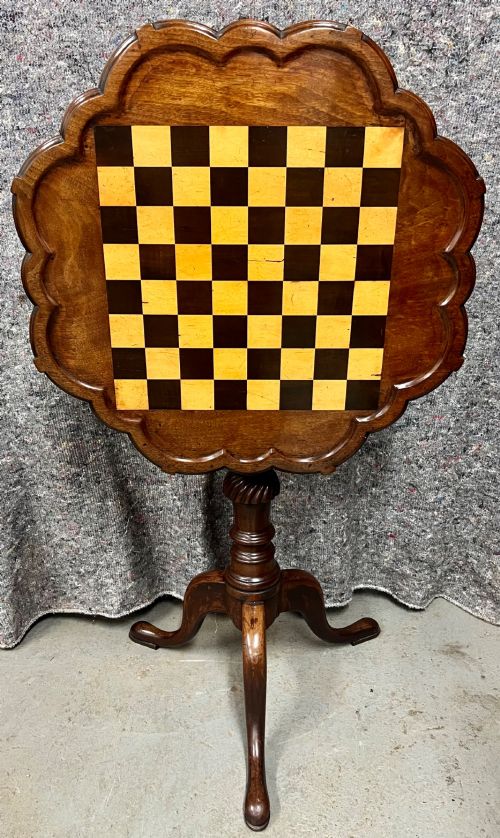
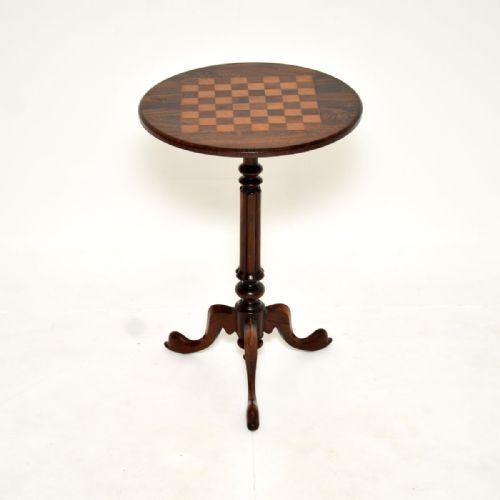
The most common examples on this page date from the nineteenth century, utilising standard timber supports like tripod bases, pedestal columns, and pillar structures. Some pieces combine the playing top with sewing compartments, drawers, or removable boards for backgammon and cribbage.
Origins stretch beyond standard English workshops to include French Provincial, Anglo-Indian, and Swedish Biedermeier examples. Buyers encounter everything from simple occasional tables to elaborate specimen wood designs.
Materials and construction
Cabinet makers constructed these surfaces using dense tropical hardwoods and native timbers, notably rosewood, walnut, burr walnut, and mahogany. Lighter woods such as boxwood, satinwood, and birch provided the contrasting squares for the chequer board.
Inlay techniques demanded precise cutting of individual wood tiles to form the grid pattern across the top. Many examples incorporate brass mounts, carved pedestals, and specialised turned columns to support the heavier timber tops.
Inlaid Chess Board Table Retail Price Guide 2026
Typical asking prices for inlaid chess board table among the pieces listed under this phrase on Sellingantiques today, from the lower quarter to the upper quarter. They describe what is for sale here now, not the wider market.
Some tables double as sewing desks, proving that eighteenth century parlour life required efficient multitasking.
Assessing the work
Quality rests in the selection of veneer and the precision of the timber squares set into the top. Burr walnut and figured rosewood show superior figure and grain matching against plainer timber grounds.
Structural stability in the pillar and tripod supports separates standard production pieces from finer cabinet work. Tight joints, clean inlay without excessive filler, and original turning determine the standing of an individual table.
Gillows·British Chess Company
The Inlaid Chess Board Table Glossary
- Chequer board
- A playing surface divided into alternating light and dark squares used for chess and draughts. On these tables, it is permanently inlaid directly into the timber top.
- Specimen wood
- Furniture constructed using a variety of decorative timbers, often gathered from different regions. This technique highlights contrasting natural colours and grain figures.
- Tripod base
- A table support consisting of three legs radiating from a central pillar. This construction appears frequently on nineteenth century occasional and games tables.
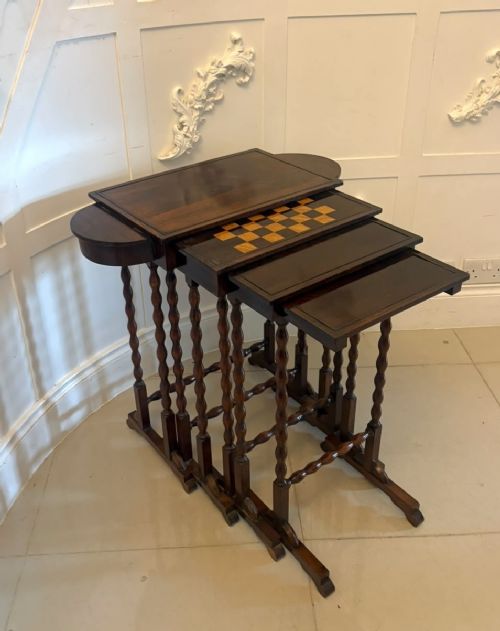
- Quartetto nest
- A set of four graduating tables that fit one beneath another. Evidence shows examples incorporating integrated chess tops.
- Work table
- A piece of furniture containing compartments, drawers, or fabric bags for sewing and needlework. Many incorporate games boards on the sliding top or lid.
Inlaid Chess Board Table: Frequently Asked Questions
Can I use these tables for daily dining?
These tables function best as occasional surfaces, lamp tables, or dedicated games areas rather than heavy dining furniture. The inlaid top requires protection from moisture, heat, and heavy impacts to preserve the delicate wood tiles.
Placing coasters on the surface and avoiding direct sunlight prevents warping and fading of the rosewood or burr walnut veneers. Regular polishing with appropriate wax maintains the historical finish without building up residue.
Are the chess boards always fixed?
Many boards are permanently inlaid directly into the solid wood or veneered top of the table. However, some examples feature reversible tops or sliding panels that reveal backgammon or cribbage boards underneath.
Removable boards allow the table to convert entirely into a plain surface for writing or tea. Checking the mechanism reveals whether the top lifts, turns, or slides to expose secondary games.
What is the difference between a games compendium and a chess table?
A chess table provides a dedicated surface primarily for playing chess, sometimes combined with a drawer or sewing compartment. A games compendium houses multiple board games, pieces, and accessories within a single portable box or fitted cabinet.
Compendiums bundle chess, backgammon, dominoes, and card games together rather than mounting a permanent playing surface onto a table base. Both forms reflect the popularity of parlour games in the nineteenth century.