





Rosewood Chess Table
A rosewood chess table brings refined leisure into a room, offering a dedicated surface for play that doubles as a handsome piece of furniture.
Rosewood Chess Table
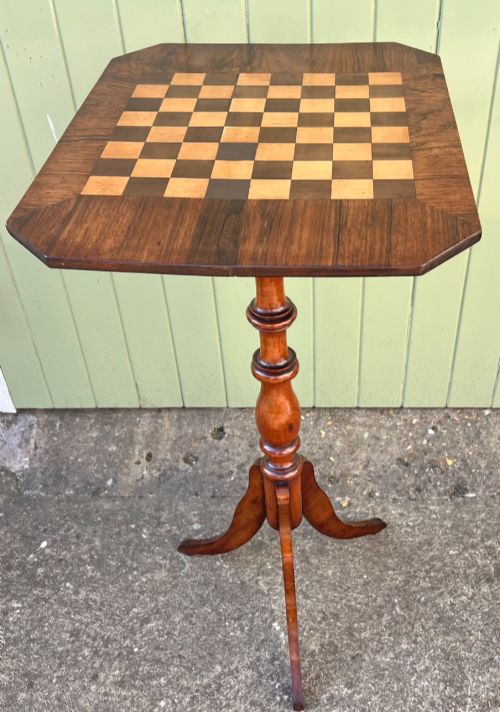
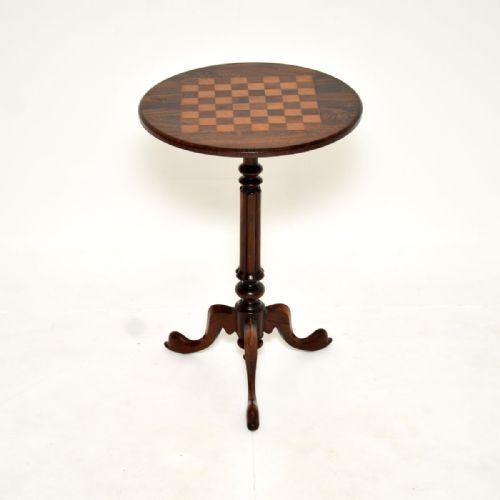
A rosewood chess table serves dual purposes as a playable surface and a decorative item for the home. The pieces found here span the Georgian, Regency, William IV, and Victorian periods, often taking the form of games tables, occasional tables, or nests of tables.
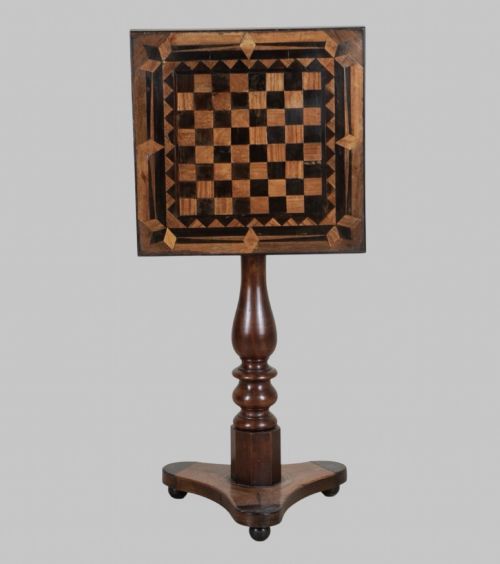
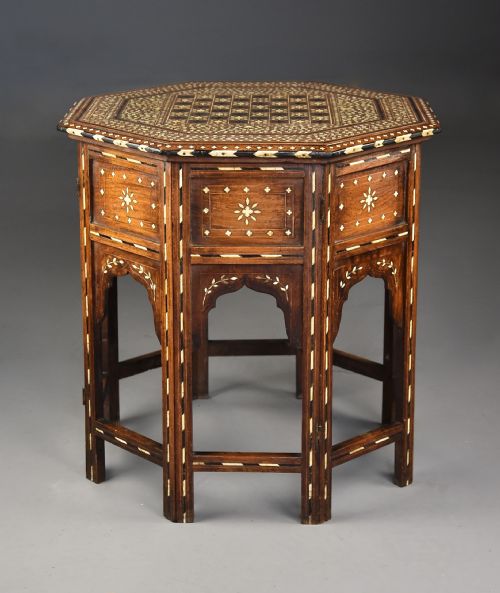
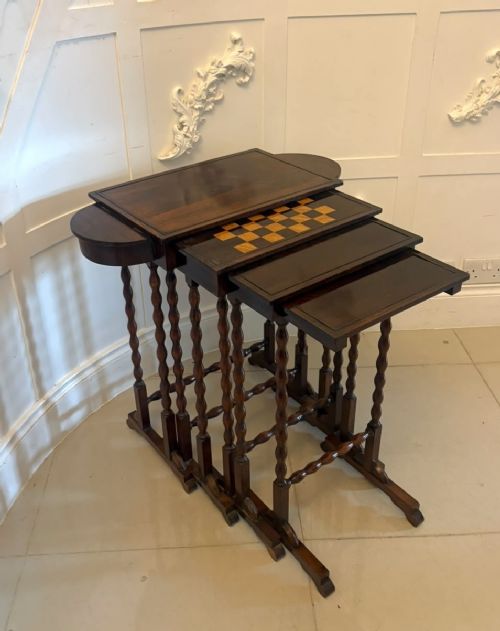
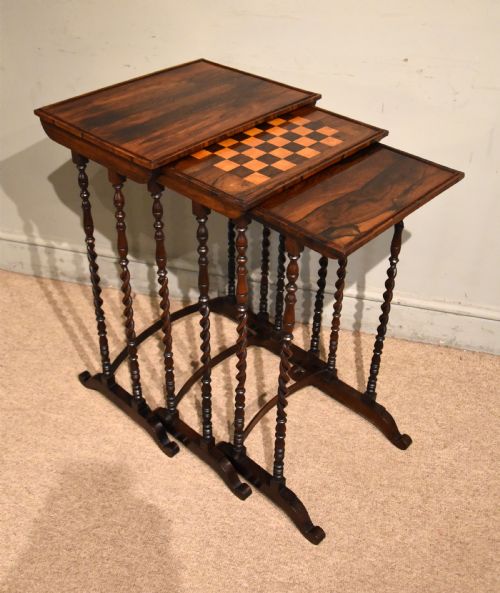
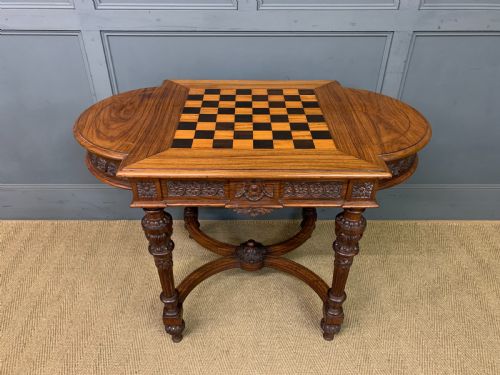
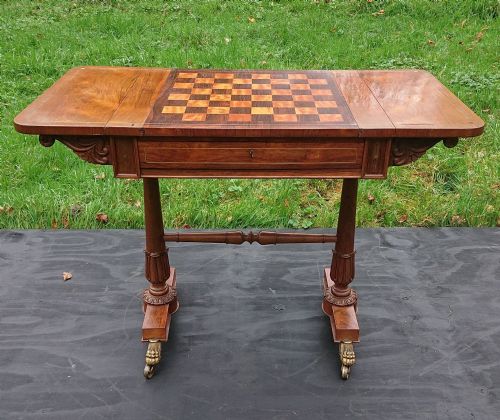
Buyers meet various configurations, from folding top tables with split swivelling mechanisms to pedestal bases and occasional tables with inlaid chequer boards. Anglo-Indian examples and work tables incorporating sewing compartments also appear frequently within these periods.
How they were made
Cabinet makers utilised dense rosewood as the primary timber, often contrasting it with lighter woods such as satinwood, boxwood, and ebony for the inlaid chequer boards. Brass mounts, pen-work, and parquetry further decorated the surfaces.
Structural forms rely on tripod bases, barley twist pedestals, and clever pivoting or folding mechanisms that conceal backgammon boards or sewing wells beneath the playing surface.
Materials recorded across the tables include boxwood, brass, ebony, mahogany, walnut, and satinwood.
What varies in quality
The precision of the inlay work separates standard examples from superior ones, particularly in the crispness of the contrasting light and dark squares on the board. The harmony between the rosewood grain and the secondary timbers like satinwood or mahogany dictates the visual balance of the piece.
Mechanical execution in folding, swivelling, or sliding components also marks the difference between basic utilitarian items and finer cabinet making attributed to major workshops.
Gillows
The Rosewood Chess Table Glossary
- Rosewood
- A dense, heavily figured timber prized for its dark grain and rich colour. It forms the primary structural and surface material for these tables.
- Chequer-board
- A patterned playing surface composed of alternating dark and light squares utilised for chess or draughts. This inlay frequently combines boxwood with ebony or rosewood.
- Quartetto tables
- A set of four graduating tables designed to nest together when not in use. Some Regency examples incorporate an integrated chess board into the design.
- Parquetry
- A geometric mosaic of wood pieces used for decorative surfaces on tables. This technique creates the contrasting patterns found on many games tops.
- Work table
- A multi-functional piece containing drawers or fabric bags for sewing and needlework. These often combine utility with a removable or reversible chess top.
Rosewood Chess Table: Frequently Asked Questions
How were folding chess tables used?
Folding chess tables allowed households to save space in parlours and drawing rooms by converting from a standard occasional table into a gaming surface. The tops typically swivelled and folded out to reveal a felt-lined card table or a backgammon board underneath.
Many examples also functioned as work tables, holding sewing implements in integrated silk bags or small drawers beneath the board. This versatility made them central pieces for entertaining and domestic crafts.
How do I date a rosewood chess table?
Dating relies on observing the prevailing style, structural proportions, and secondary materials used in the construction. Georgian and Regency pieces often feature cleaner architectural lines and brass mounts, whereas Victorian versions frequently display heavier pedestal bases, barley twists, or elaborate marquetry.
The integration of specific woods like satinwood or birdseye maple, alongside the complexity of any mechanical folding action, helps narrow the decade of manufacture.
How do I care for antique rosewood furniture?
Antique rosewood benefits from being kept away from direct sunlight and excessive temperature fluctuations, which can dry out the timber and cause the veneer to warp. Regular dusting with a soft, dry cloth maintains the finish without building up residue.
Occasional application of a suitable wax preserves the lustre of the rosewood grain. Avoid using modern liquid polishes or placing damp items directly onto the vulnerable inlaid playing surface.