

Brass Marquetry Side Table
A brass marquetry side table brings French revival elegance into a room through contrasting woods and polished metal mounts.
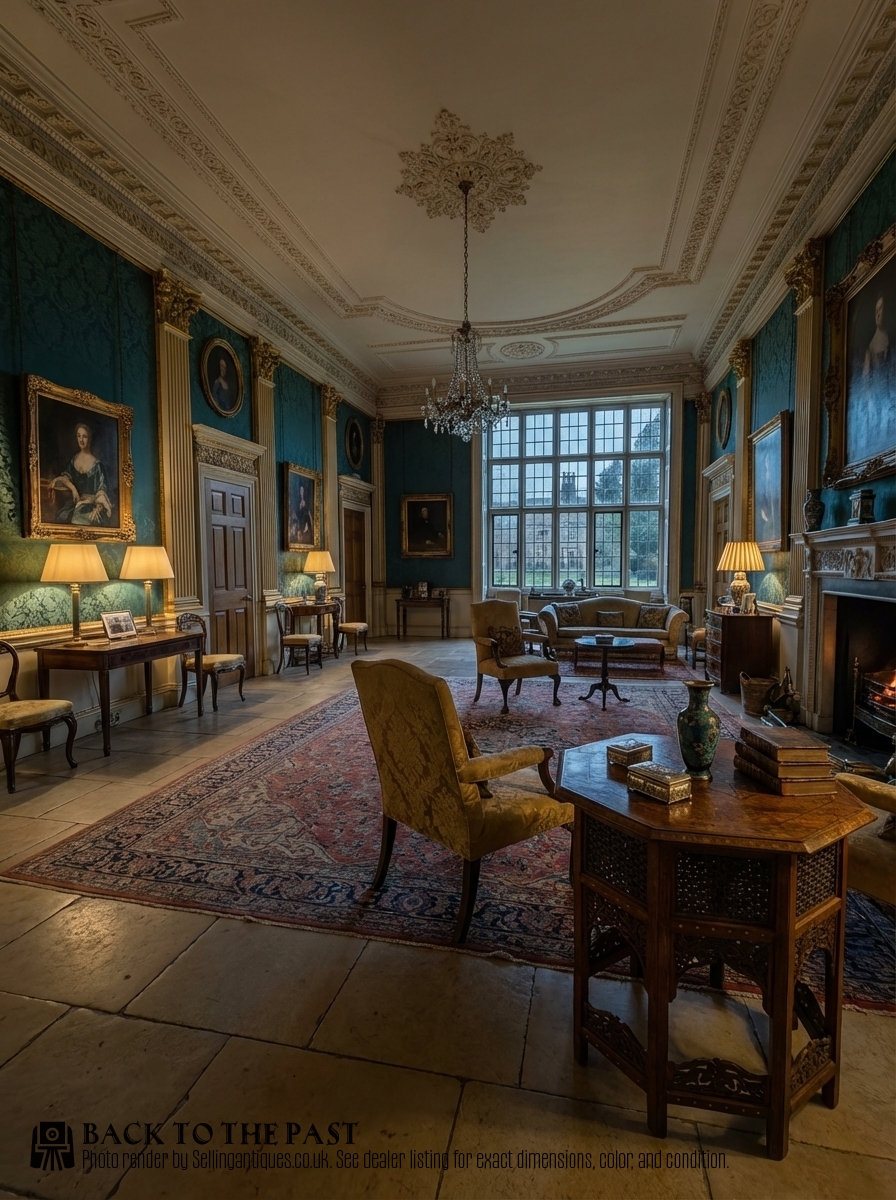
Brass Marquetry Side Table
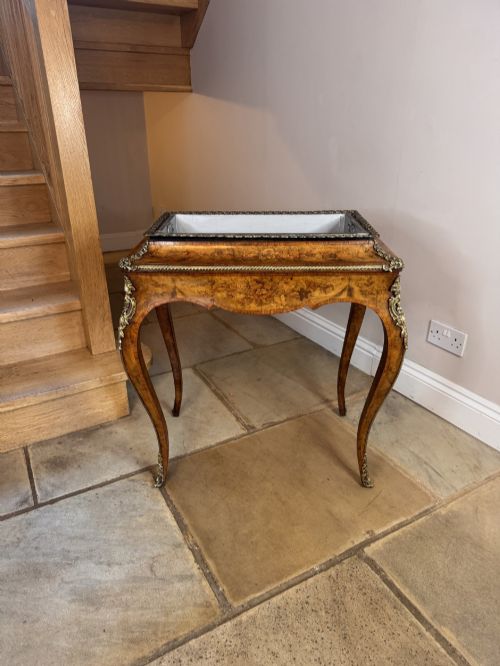
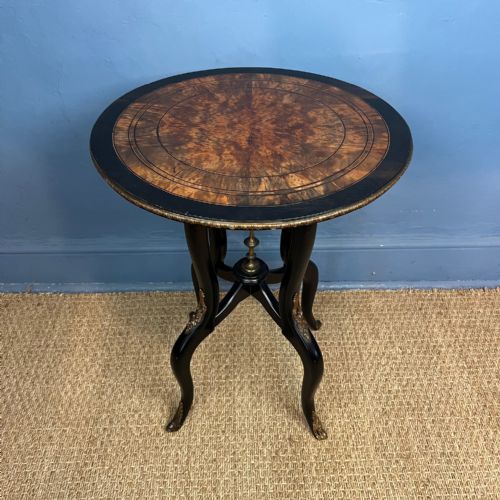
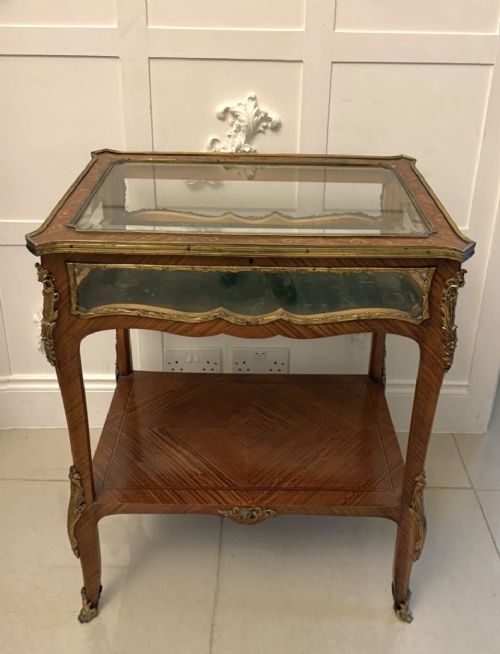
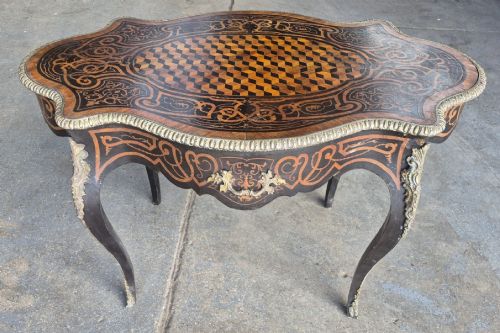
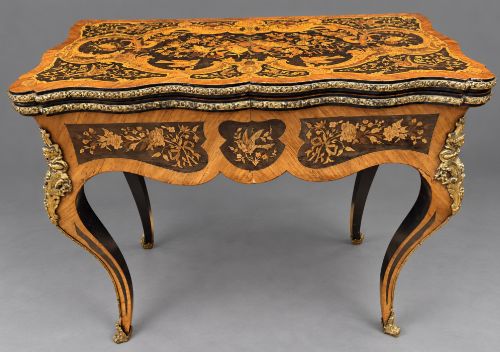
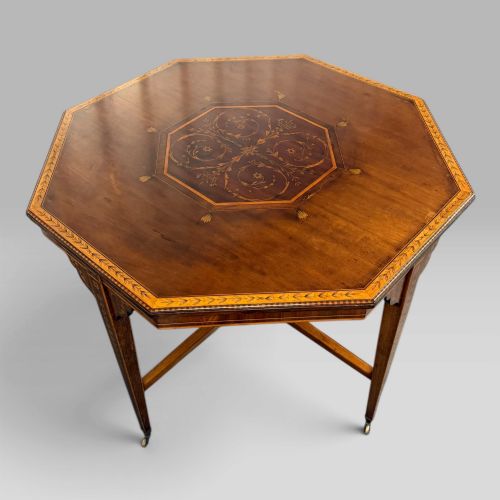
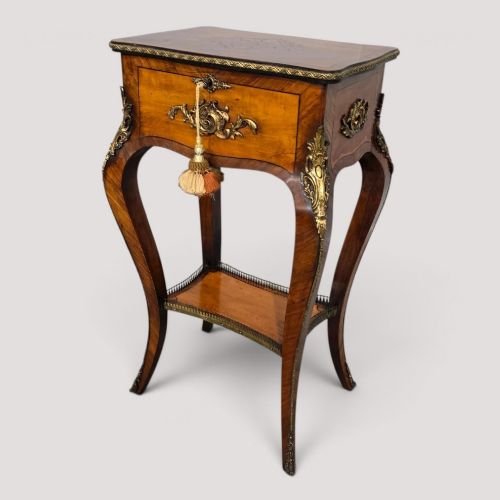
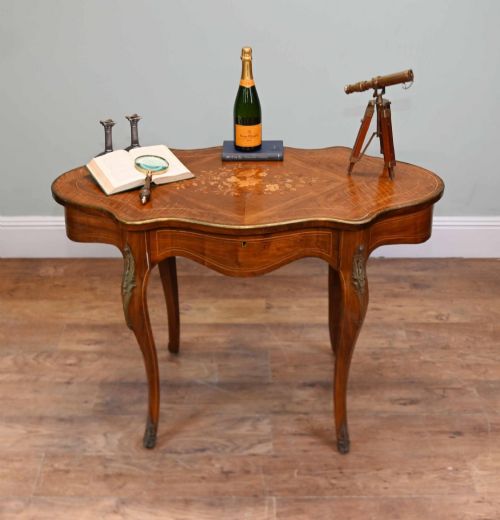
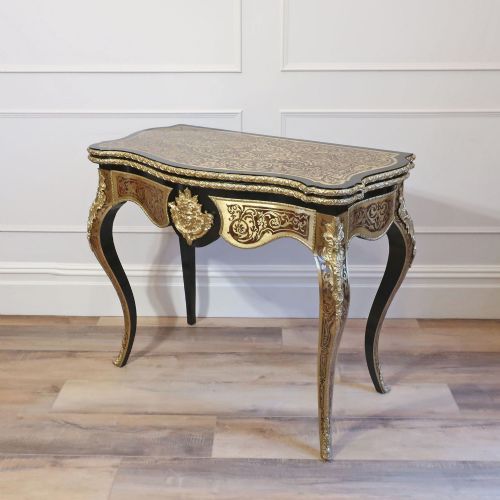
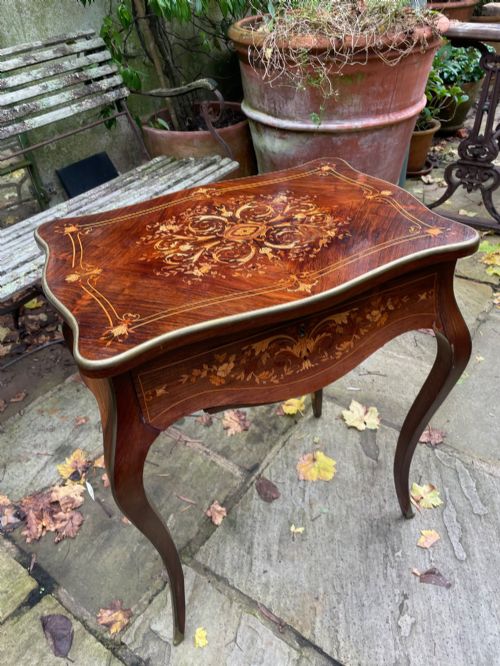
A brass marquetry side table combines utilitarian surface space with ornamental wood veneers and metallic detailing, mostly originating from nineteenth and early twentieth century French workshops. The selection here leans heavily towards Louis XV and Louis XVI revival pieces, alongside occasional tables, etageres, and bedside cabinets.
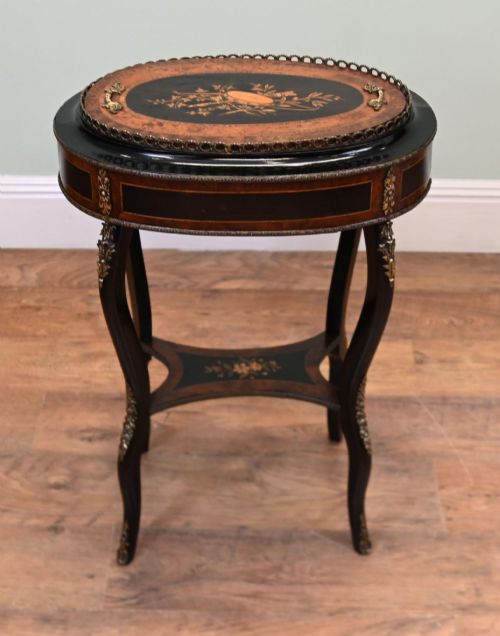
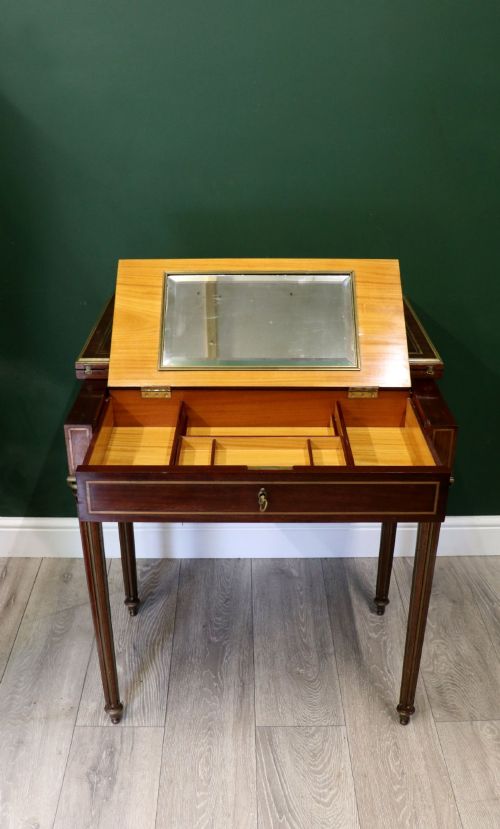
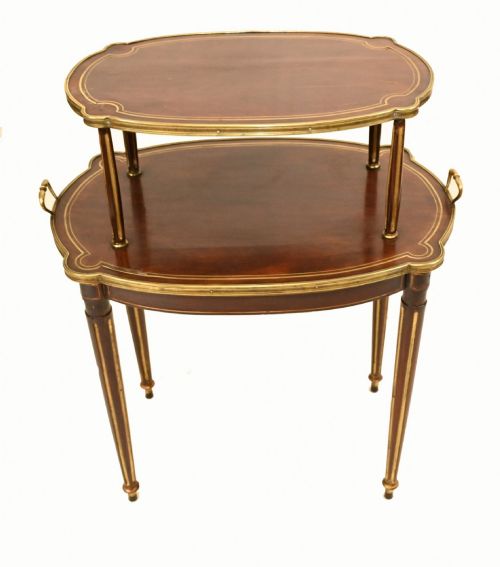
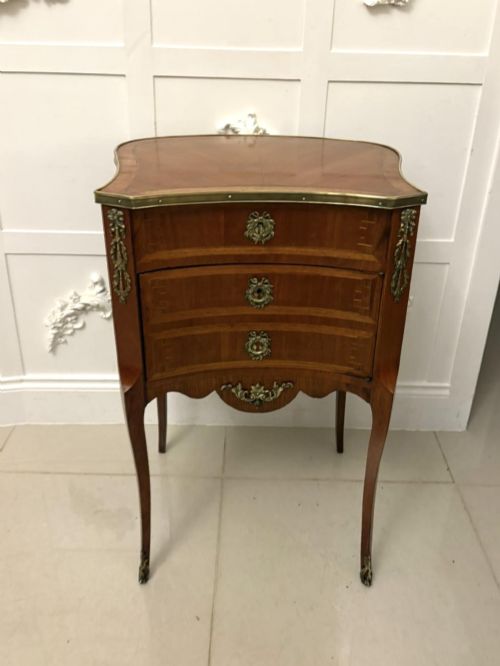
Buyers encounter various formats ranging from single-drawer occasional tables to two-tier display stands and bedside cabinets fitted with marble tops or gallery rails. Walnut, rosewood, kingwood, and ebonised wood provide the primary foundational surfaces for these intricate decorative schemes.
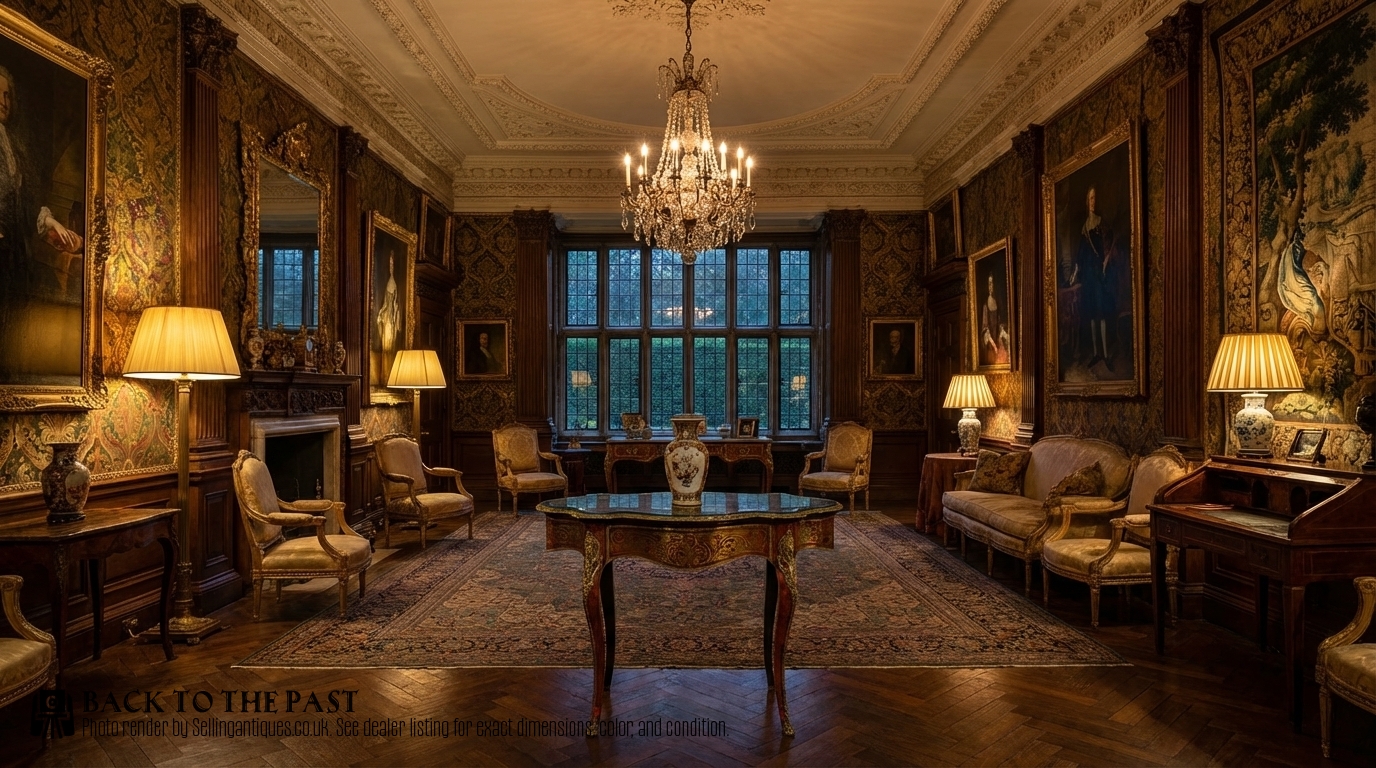
How They Were Made
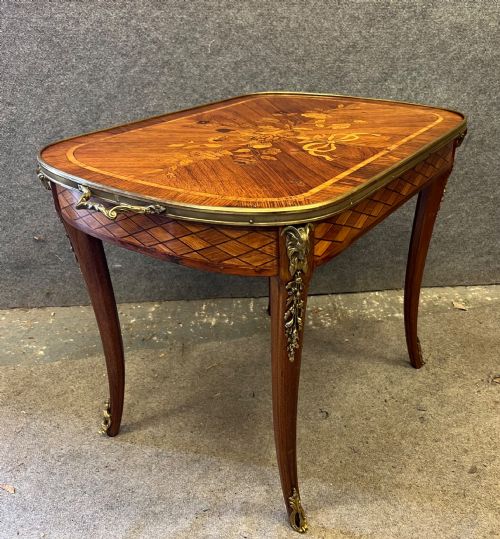
Cabinetmakers constructed these tables using a sturdy timber carcass of mahogany, walnut, or oak, layered with decorative veneers of kingwood, rosewood, and satinwood. Artisans then meticulously hand-cut floral or geometric marquetry inlay into the surface to create pictorial motifs.
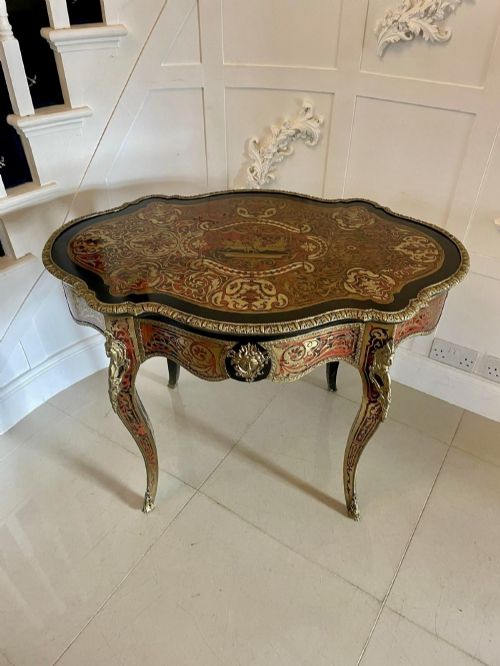
Gilt bronze ormolu mounts, cast brass galleries, and brass stringing edge the tops, aprons, and legs to accentuate the curvilinear contours typical of French taste. Ebonised finishes often serve to heighten the visual contrast against the polished brass elements.
Brass Marquetry Side Table Retail Price Guide 2026
Typical asking prices for brass marquetry side table among the pieces listed under this phrase on Sellingantiques today, from the lower quarter to the upper quarter. They describe what is for sale here now, not the wider market.
Listings feature walnut, kingwood, rosewood, and mahogany as primary woods alongside brass marquetry and ormolu mounts.
What Varies in Quality
The precision and depth of the marquetry cutting separate standard production pieces from finer examples, where intricate shading and varied wood species create genuine pictorial relief. Castings of ormolu mounts display sharper chiselling and heavier gilding on superior items.
Structural integrity depends on the stability of the timber substrate and the retention of delicate brass stringing without shrinkage gaps. Higher-grade tables exhibit harmonious proportions and consistent finishing across concealed secondary timbers.
François Linke·George Bullock·A Hugnet Paris·Tehan
The Brass Marquetry Side Table Glossary
- Marquetry Inlay
- Decorative patterns formed by fitting contrasting pieces of wood veneer into a prepared ground. This technique defines the pictorial surfaces seen on nineteenth-century French furniture.
- Ormolu
- Gilt bronze mounts applied to furniture edges, feet, and aprons for ornamental emphasis. The term derives from the French for milled gold.
- Etagere
- A set of open display shelves supported by columns or slender legs. These tiered tables provide vertical storage for decorative objects.
- Guéridon
- A small round table supported by a central pillar or curved legs. They frequently feature inlaid tops and brass galleries.
- Boulle
- A style of marquetry utilising brass and tortoiseshell inlaid together in contrasting positive and negative patterns. It appears on mid-nineteenth-century French centre tables.
Brass Marquetry Side Table: Frequently Asked Questions
What is a brass marquetry side table used for?
These tables function as surface spaces for lamps, books, and decorative objects in drawing rooms or bedrooms. Their compact footprints allow them to sit beside seating or against hallway walls.
Many examples include lower tiers or drawers for supplementary storage while maintaining a decorative focal point.
How do I identify French revival styles?
Louis XV revival pieces display sweeping cabriole legs and asymmetrical floral marquetry. Louis XVI style pieces show straighter tapered legs and neoclassical geometric symmetry.
Ormolu mounts and brass galleries frequently accompany both styles across nineteenth-century productions.
Are these tables strictly French?
While the vast majority reflect French design tastes and manufacturing methods from the nineteenth century, variations appear from English and Anglo-Indian workshops. Makers across Europe adopted French revival aesthetics during this period.
Local timber choices and distinct brass inlay techniques help differentiate these regional interpretations.
How do I care for inlaid wood surfaces?
Keep wooden tables away from direct sunlight and excessive radiator heat to prevent veneer lifting and timber shrinkage. Dust regularly with a dry cloth and apply occasional specialist wax.
Avoid commercial polishes containing harsh chemicals that might degrade the old polish or tarnish the brass elements.