


Boulle Work Desk
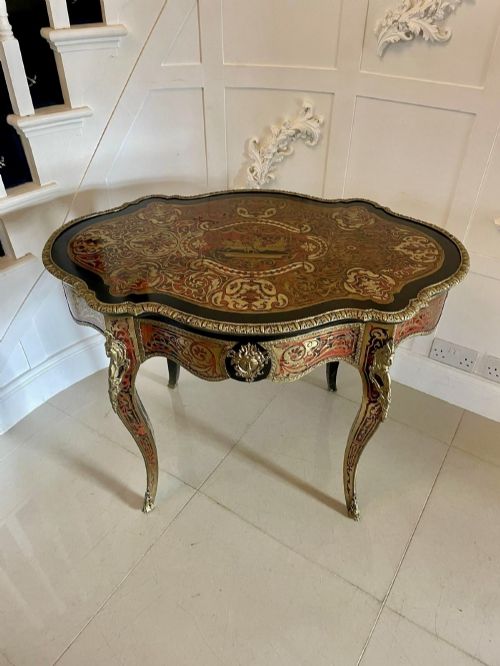
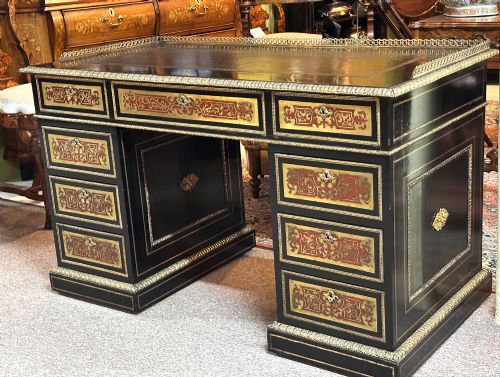
A boulle work desk brings together rich tortoiseshell and gleaming brass inlay in a traditional form designed for writing.
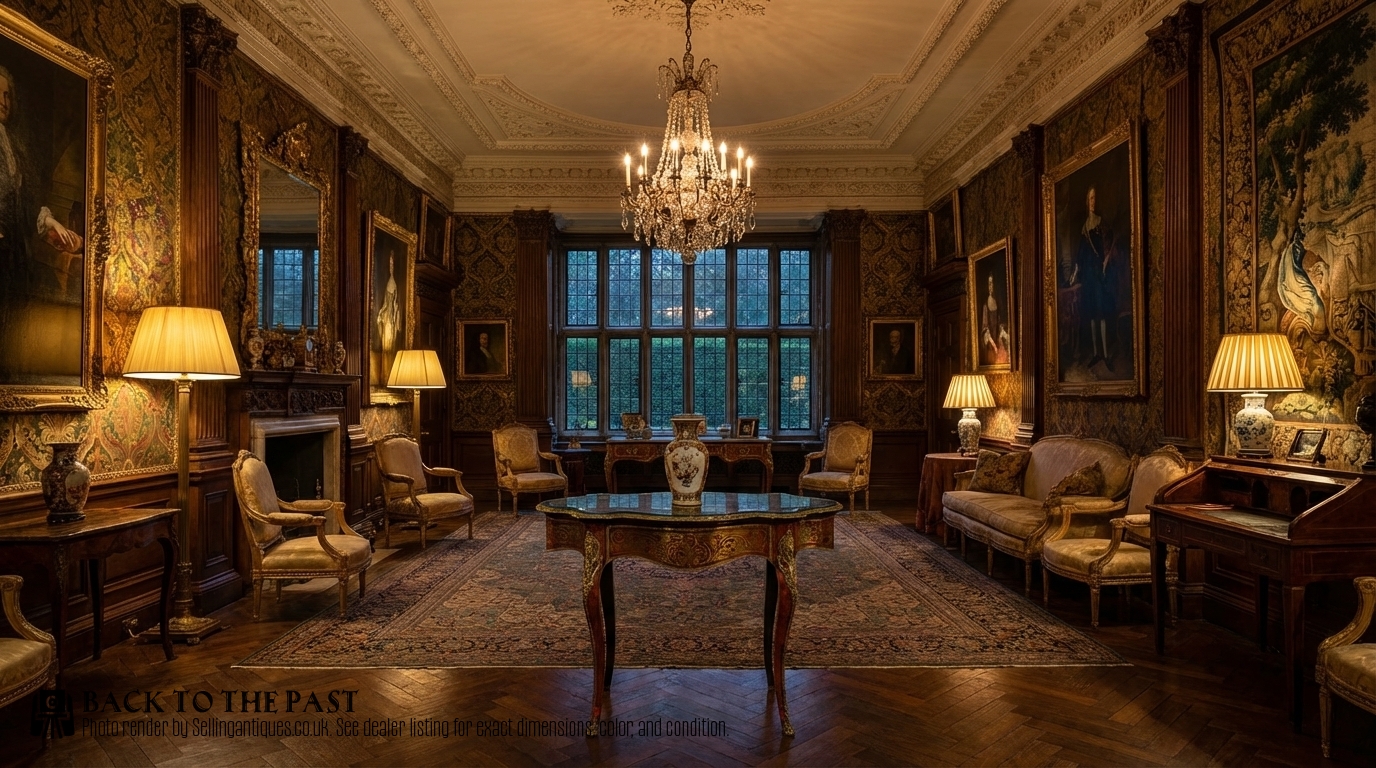
Boulle Work Desk
A boulle work desk combines intricate marquetry of brass and tortoiseshell across timber surfaces, creating a striking visual pattern. Buyers searching for a boulle work desk encounter pieces largely from the nineteenth century, including Victorian interpretations and French Napoleon III designs.
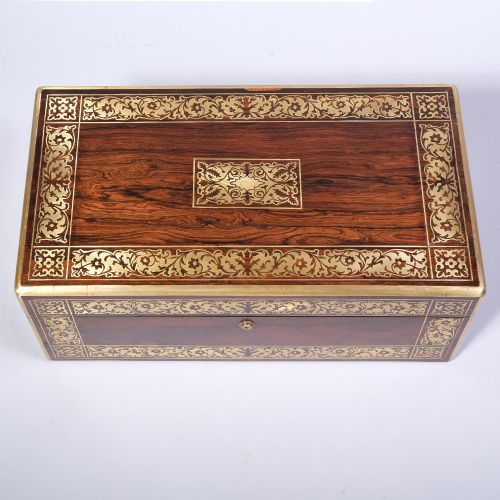
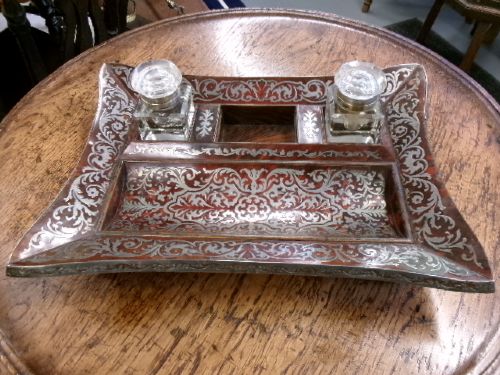
The selection ranges from larger freestanding centre tables and writing cabinets down to smaller desk accessories like inkstands and writing boxes. Many examples display influences of French Rococo Revival and Louis XV styles, reflecting nineteenth-century tastes for Continental decoration.
While tables and writing desks form the core of the category, smaller items such as tea caddies and mantel clocks also share the distinct brass and tortoiseshell technique. These pieces bring nineteenth-century craftsmanship into domestic settings as both decorative objects and functional writing furniture.
How they were made
Maker's workshops built these pieces using timbers like ebonised wood and rosewood as a dark foundation for intricate metal and shell decoration. Artisans cut thin sheets of brass and tortoiseshell simultaneously, a technique that produced matching positive and negative motifs known as première partie and contre-partie.
Gilt bronze or ormolu mounts were cast and chased to edge the corners, framing the panels and protecting the vulnerable edges of the wood. Glass components often served for inkwells within desk stands, while leather panels provided a durable writing surface on tables and cabinets.
Listings feature nineteenth-century items combining brass, tortoiseshell, ebonised wood, and ormolu in French and English revival styles.
What varies in quality
Quality rests on the crispness of the brass cutting and the precision with which the tortoiseshell fits against the metal inlay. Finer examples maintain tight joints and secure retention of the delicate marquetry across complex curved surfaces.
The selection of secondary woods and the weight of the cast ormolu mounts further distinguish standard production from exceptional workshop output. Pieces bearing signatures or documentation from known makers often display a higher grade of hand-chased detail in the metalwork.
Maison Millet·Asprey London
The Boulle Work Desk Glossary
- Boulle work
- A style of marquetry using brass and tortoiseshell inlay, named after André-Charles Boulle. This technique became popular during the seventeenth century and saw a major revival across nineteenth-century European furniture.
- Ormolu
- Gilt bronze mounts used as decorative trim and protective edging on furniture. Artisans cast and chased the metal before applying a gold finish to complement the inlaid panels.
- Napoleon III style
- A nineteenth-century French revival aesthetic favouring opulent eclecticism, heavily incorporating boulle work and gilt mounts. This style draws inspiration from earlier Louis XIV, XV, and XVI designs.
- Bonheur du jour
- A small ladies writing desk featuring a cabinet or small drawers above the main writing surface. These pieces often incorporate elaborate marquetry and slender cabriole legs.
- Ebonised wood
- Timber treated to resemble ebony, providing a dark contrast to bright brass and tortoiseshell inlay. This finish was common in nineteenth-century cabinet making to highlight metallic decoration.
Boulle Work Desk: Frequently Asked Questions
What is a boulle work desk?
A boulle work desk is a nineteenth-century writing table or cabinet decorated with brass and tortoiseshell marquetry. These pieces often feature French revival styling and ornate gilt bronze mounts.
Cabinet makers produced them in various sizes, ranging from large freestanding centre tables to compact writing cabinets designed for domestic studies.
How do I identify a Victorian boulle desk?
Victorian examples typically date from the mid to late nineteenth century and incorporate ebonised wood or rosewood structures. They frequently display Napoleon III or Louis XV revival design motifs.
Examine the construction methods and the integration of the brass and tortoiseshell panels to determine the period of manufacture.
Were these desks used for writing?
Yes, these surfaces served as practical writing furniture in nineteenth-century homes. Many incorporate leather writing inserts, integrated inkstands, and compartments for documents and stationery.
Smaller pieces like desk stands and writing boxes provided portable solutions for correspondence before the widespread use of fountain pens.
How do I care for tortoiseshell and brass inlay?
Maintaining these pieces requires stable room temperatures and protection from direct sunlight to prevent the tortoiseshell from drying or warping. Gentle dusting with a dry cloth keeps the surface clean without risking the delicate inlay.
Avoid liquid cleaners and harsh polishes, as moisture can loosen the adhesives holding the brass and shell to the wooden substrate.